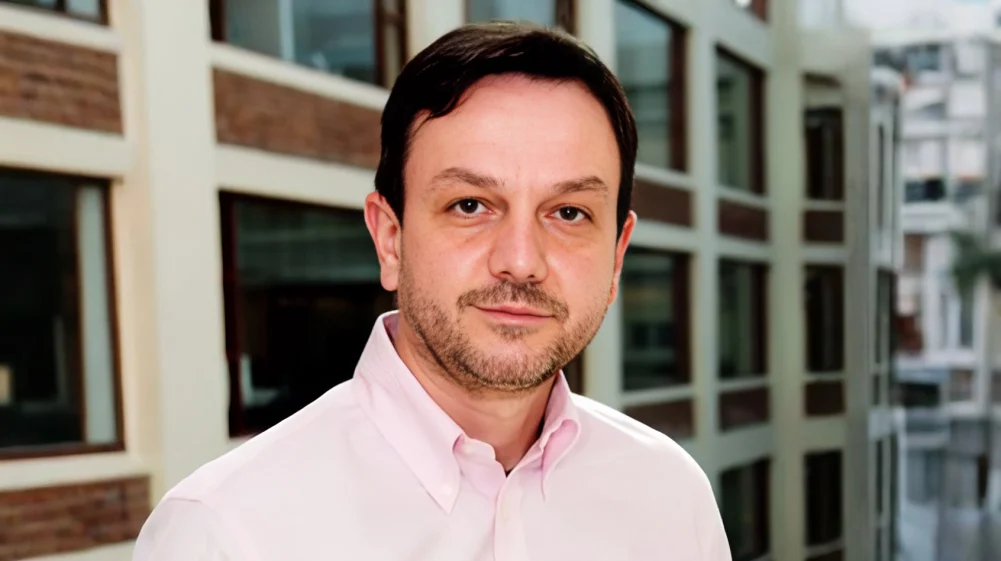
Ioannis Sanidas, Assistant Professor at Harvard Medical School, shared on LinkedIn:
“I am excited to share that our latest work has been published in the AACR Journals Cancer Research.
Title: CDK2 Inhibition Exerts RB-Independent Antitumor Activity in CDK4/6 Inhibitor–Resistant HR+/HER2− Breast Cancer
Authors: Dejan Juric, Kazi N. Islam, Ioanna-Maria Gkotinakou, Alice Zheng, Hanjun Lee, Sneha Saxena, Johannes Kreuzer, Robert Morris, Connor G. McGrath, Ramin Sakhtemani, Nicholas J. Chevalier, Allison M. Kehlmann, Anastasia Maria Stavridi, Shahein Tajmir, Marcello Stanzione, Eric F. Zaniewski, Sidney Mahan, Karl Hodel, Maci Meyers, Srihari Sampath, Christian Schmedt, Srinath C. Sampath, Tun Tun Lin, Feng Liu, Todd VanArsdale, Steven J. Isakoff, Amy Comander, Janice S. Kim, Seth A. Wander, Erik S. Knudsen, Agnieszka K. Witkiewicz, Lee Zou, Aaron N. Hata, Michael S. Lawrence, Wilhelm Haas, Andreas Varkaris, Ioannis Sanidas
Read the full article.
Take-home message
By integrating clinical data from patients with refractory HR+/HER2- metastatic breast cancer and mechanistic studies in patient-derived models, we uncover the distinct mechanisms of action of selective CDK2 and CDK4/6 inhibitors and provide a mechanistic rationale for their therapeutic combination in CDK4/6 inhibitor-resistant tumors.
Although CDK4/6 inhibitors have transformed the treatment of HR+/HER2- metastatic breast cancer, resistance remains a major clinical challenge. Understanding how cancer cells adapt after progression on these therapies is essential for developing the next generation of targeted treatments.
Key findings
- CDK2 inhibition remains effective after resistance to CDK4/6 inhibitors develops, revealing a shift in kinase dependency as tumors adapt to therapy.
- HR+/HER2- breast cancer is mostly a Cyclin D-driven disease. We show that, in this context, selective CDK2 inhibitors act through a mechanism distinct from CDK4/6 inhibitors. CDK2 is dispensable for RB inactivation, and the antitumor activity of selective CDK2 inhibitors is largely independent of RB status.
- Rather than inducing a G1 arrest, CDK2 inhibition reduces DNA replication, induces DNA damage and attenuates mitotic entry, uncovering a previously underappreciated therapeutic vulnerability in resistant tumors.
- Clinical and experimental data further suggest that TP53 status, rather than RB status, may serve as a biomarker of response to selective CDK2 inhibition.
Impact
Together, these findings support a model in which progression on CDK4/6 inhibitors rewires cell-cycle dependency toward CDK2, providing a strong rationale for combining selective CDK2 and CDK4/6 inhibitors to improve treatment of resistant disease.
This work was only possible through an outstanding multidisciplinary collaboration among laboratory scientists, clinicians, computational biologists, and our industry partners. I especially thank the patients who participated in this research and made these discoveries possible.
Congratulations to Dejan Juric, Kazi Islam, Ioanna Maria Gkotinakou, Andreas Varkaris, and the entire team on this exciting achievement!”
The CDK4/6 Inhibitor Story Is Entering Its Next Chapter in Breast Cancer