Ibrahim Mansoor, Pathologist at King’s College Hospital London, Jeddah, shared on X:
“A negative ureteric margin answers a local question. How much does it tell us about the ureter upstream?
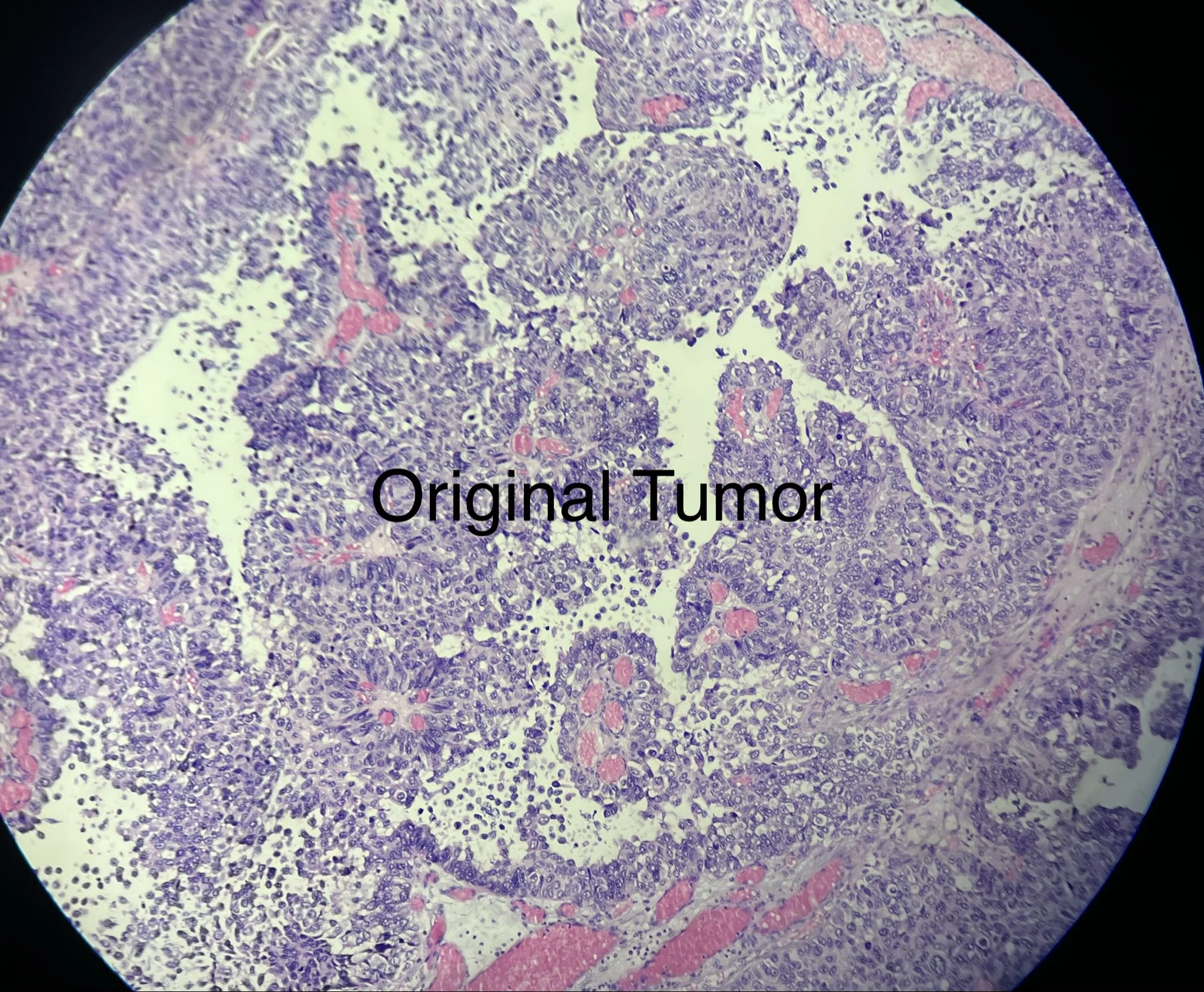
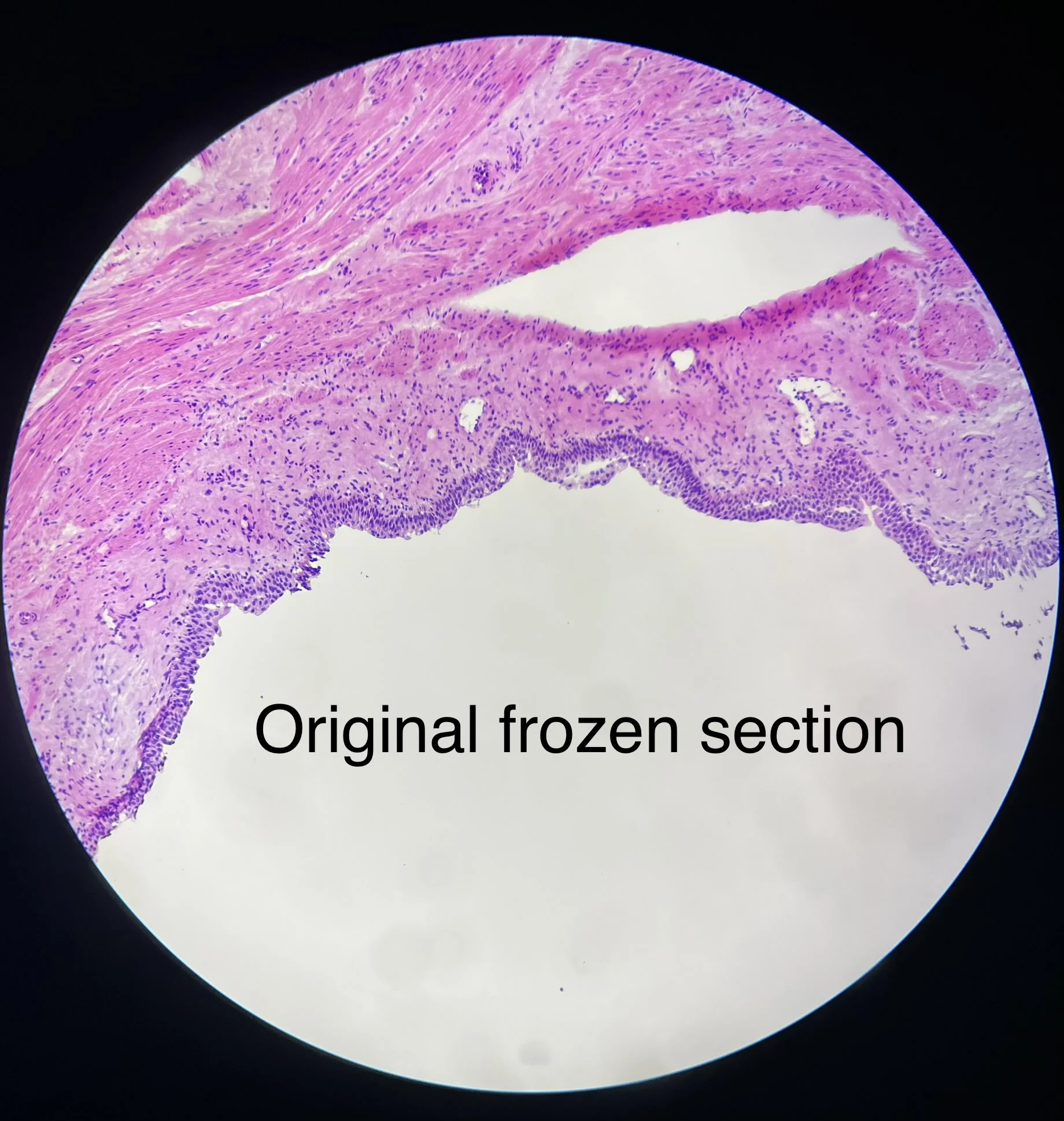
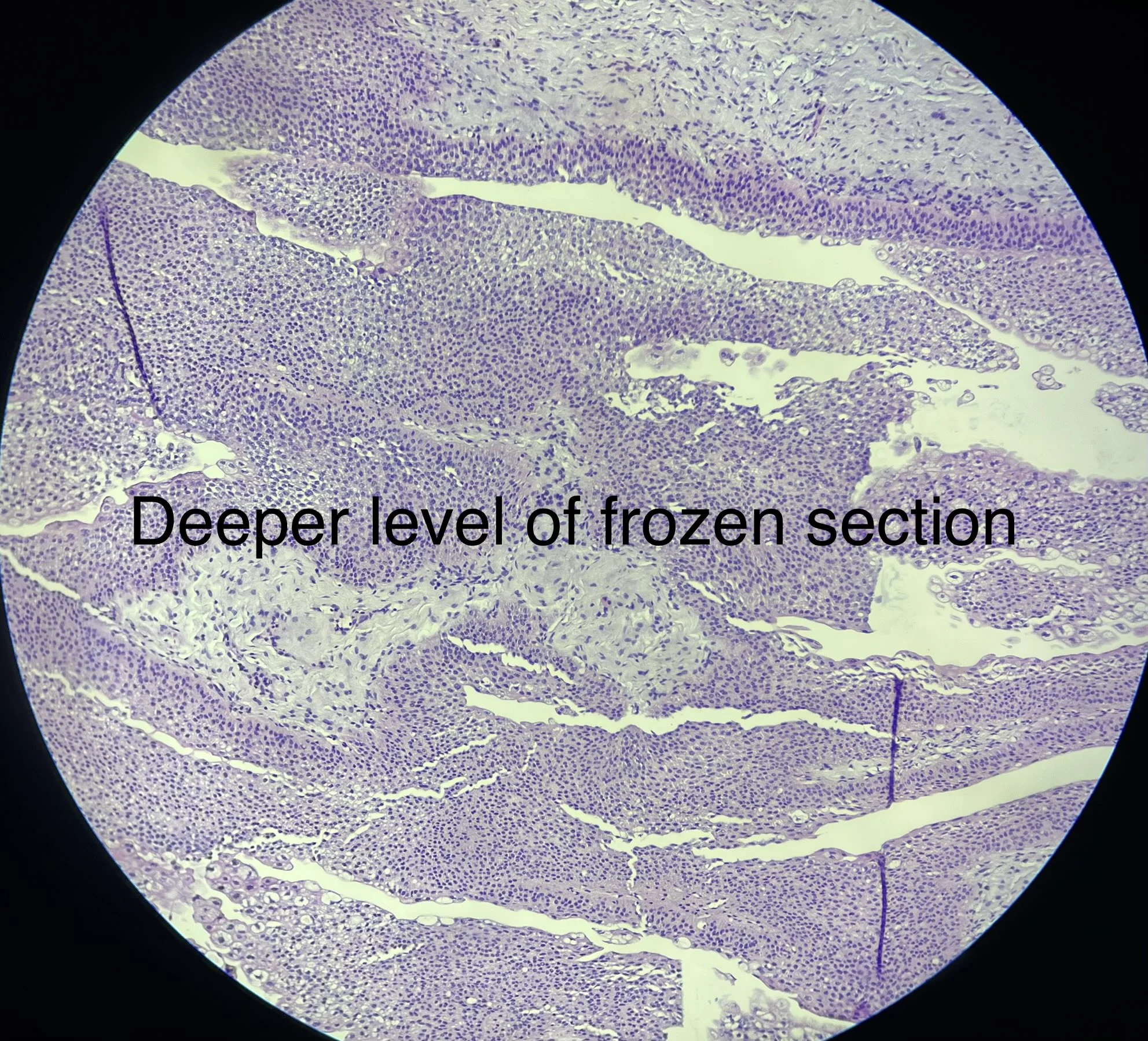
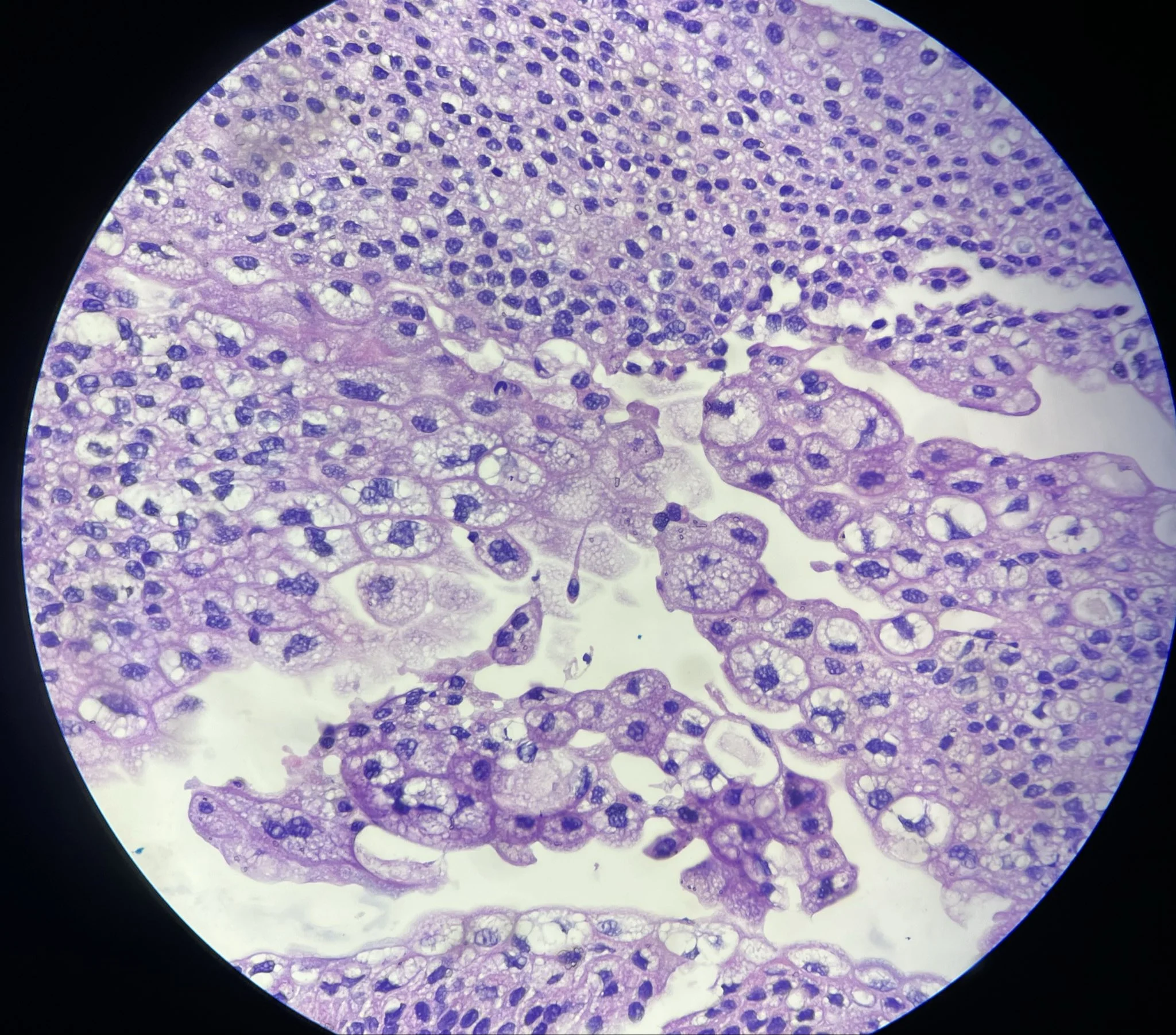
A patient with high-grade bladder urothelial carcinoma and associated CIS underwent resection. The initial ureteric frozen section was negative for carcinoma. Deeper levels from the same block showed bland, papillary-appearing projections.
Were these ureteric mucosal folds, a papilloma, or a papillary urothelial neoplasm of low malignant potential (PUNLMP)? At low power, the broad, parallel folds favored folded mucosa. The narrower projections raised the question of a true papillary lesion.
This case brings up two different sampling questions. Deeper levels show more of the same tissue block. A skip lesion is a separate focus of disease farther along the ureter, with uninvolved mucosa in between. The deeper finding in this case did not establish a skip lesion, but it prompted a discussion about what a negative distal margin can tell us.
For the surgeon and pathologist, there are three questions worth keeping separate.
- What is the lesion?
- Does it reach the true final cut surface?
- And what does the patient’s history of bladder CIS mean for upper-tract surveillance?
What would you call the projections at low power?”
Title: Clinical significance of ureteric ‘skip lesions’ at the time of radical cystectomy: the M.D. Anderson experience and literature review
Authors: Anthony N. Hoang, Piyush K. Agarwal, Annerleim Walton-Diaz, Christopher G. Wood, Adam R. Metwalli, Wassim Kassouf, Gordon A. Brown, Peter C. Black, Diana L. Urbauer, H. Barton Grossman, Colin P.N. Dinney, Ashish M. KamatAnthony N. Hoang, Piyush K. Agarwal, Annerleim Walton-Diaz, Christopher G. Wood, Adam R. Metwalli, Wassim Kassouf, Gordon A. Brown, Peter C. Black, Diana L. Urbauer, H. Barton Grossman, Colin P.N. Dinney, Ashish M. Kamat
You can also read an interesting article about urothelial carcinoma from ESMO26: