Hossam Abdulkhalek, Divisional Clinical Director of Cancer and Clinical services at Western Health and Social Care Trust, shared on LinkedIn:
“One of the discussed presentations at ESMO was the exploratory analysis from (TROPION-Breast02) evaluating first-line datopotamab deruxtecan (Dato-DXd) in patients with metastatic TNBC and asymptomatic brain metastases.
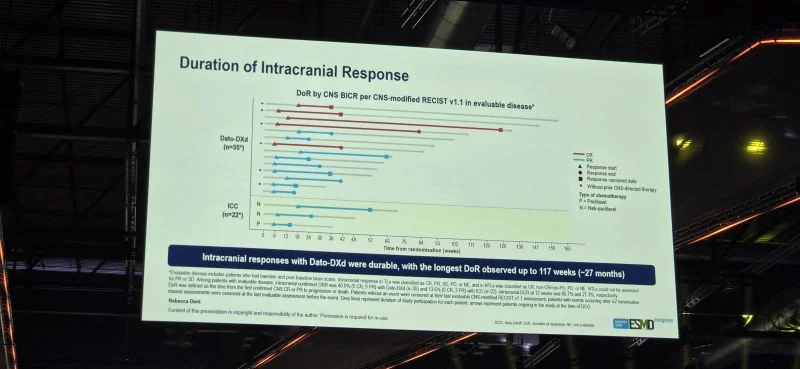
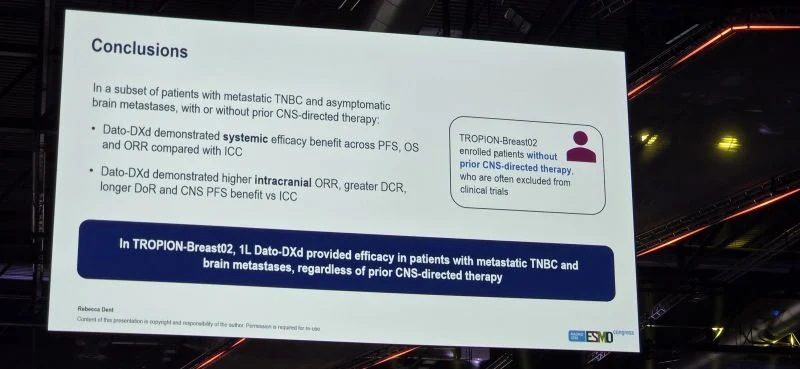
Higher intracranial response rates and longer CNS control.
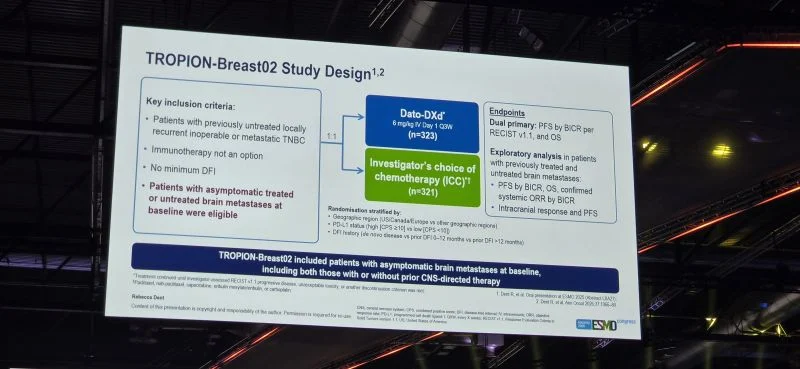
Inclusion of patients with untreated brain metastases, a population frequently excluded from registration studies. However, as with any subgroup analysis, there are important caveats worth discussing.
Points in favour
- Brain metastases remain a major unmet need in TNBC, and prospective data are scarce.
- The study included patients with both treated and untreated asymptomatic brain metastases, improving real-world relevance.
- Signals of intracranial activity are clinically meaningful because many ADC trials provide limited CNS-specific evidence.
- Consistency between systemic and intracranial efficacy suggests Dato-DXd may have activity beyond extracranial disease control.
- The findings support considering ADCs as important treatment options in this challenging population.
Points critics
- This was an exploratory subgroup analysis, not a study powered specifically for patients with brain metastases.
- The number of patients with brain metastases was relatively small, increasing the possibility of statistical uncertainty.
- Patients had asymptomatic brain metastases only; the results may not apply to symptomatic patients, leptomeningeal disease, or those requiring corticosteroids.
- Intracranial endpoints were not primary endpoints of the parent trial.
- Potential imbalances between treatment arms become more influential when analysing small subgroups.
- The study compared Dato-DXd against investigator’s choice chemotherapy rather than another ADC, limiting conclusions about relative efficacy within the ADC class.
Take home message
Rather than viewing this as definitive evidence, I see it as a strong signal that Dato-DXd deserves serious consideration and further prospective evaluation in TNBC patients with CNS involvement.
The most important message may be that patients with brain metastases were included rather than excluded. That alone helps move the field toward generating evidence in the population that often needs it most.”
You can also read:
TROPION-Breast02: Datopotamab Deruxtecan Shows Intracranial Activity in TNBC With Brain Metastases