
Harpreet Singh, Chief Medical Officer of Precision for Medicine, shared on LinkedIn:
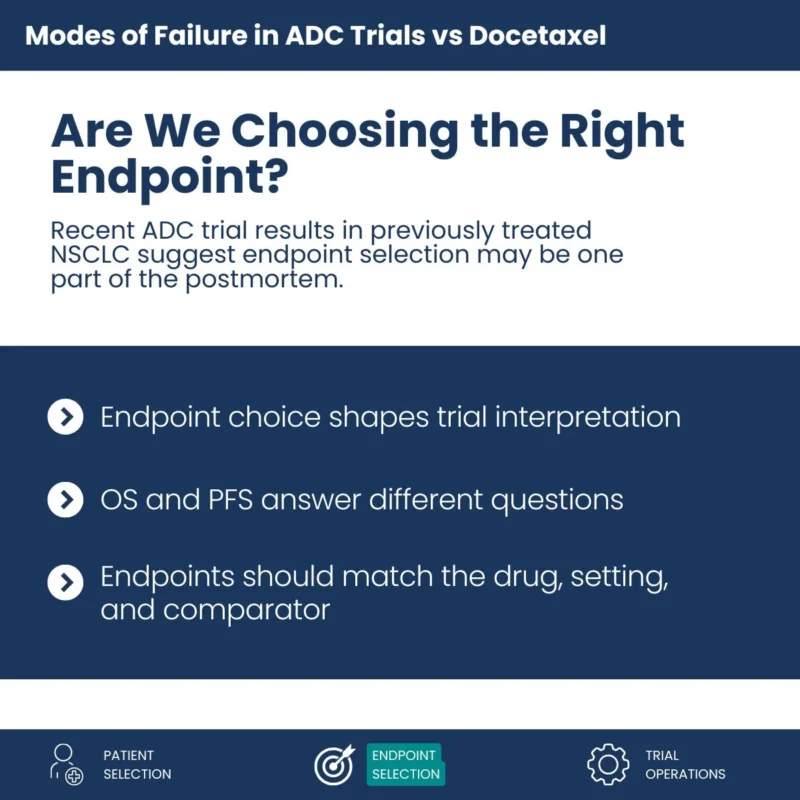
”When a clinical trial fails, endpoint selection is one of the first areas worth examining. This is especially true in previously treated NSCLC, where several recent ADC studies have struggled against docetaxel.
Overall survival is often the most definitive endpoint because it is clinically meaningful and difficult to dispute. At the same time, OS can be influenced by subsequent therapy, treatment exposure, supportive care, and regional practice patterns.
Progression-free survival can sometimes better capture direct drug activity, especially when the mechanism is expected to delay tumor growth before affecting survival. But PFS comes with its own limitations, including a dependence on imaging schedules, assessment rules, censoring, and whether the magnitude of benefit is meaningful enough for patients.
For ADCs in lung cancer, the question is whether the endpoint matches the biology of the drug, the disease setting, the comparator, and the clinical question the study is trying to answer.
If docetaxel is performing differently in the modern post-immunotherapy landscape, our assumptions about endpoints and effect size may also need to be revisited.
I’d love to hear how others are interpreting endpoint selection in these recent ADC trial results.”
You can also read ‘Early-Stage Lung Cancer Diagnoses Rise Across the United States‘