





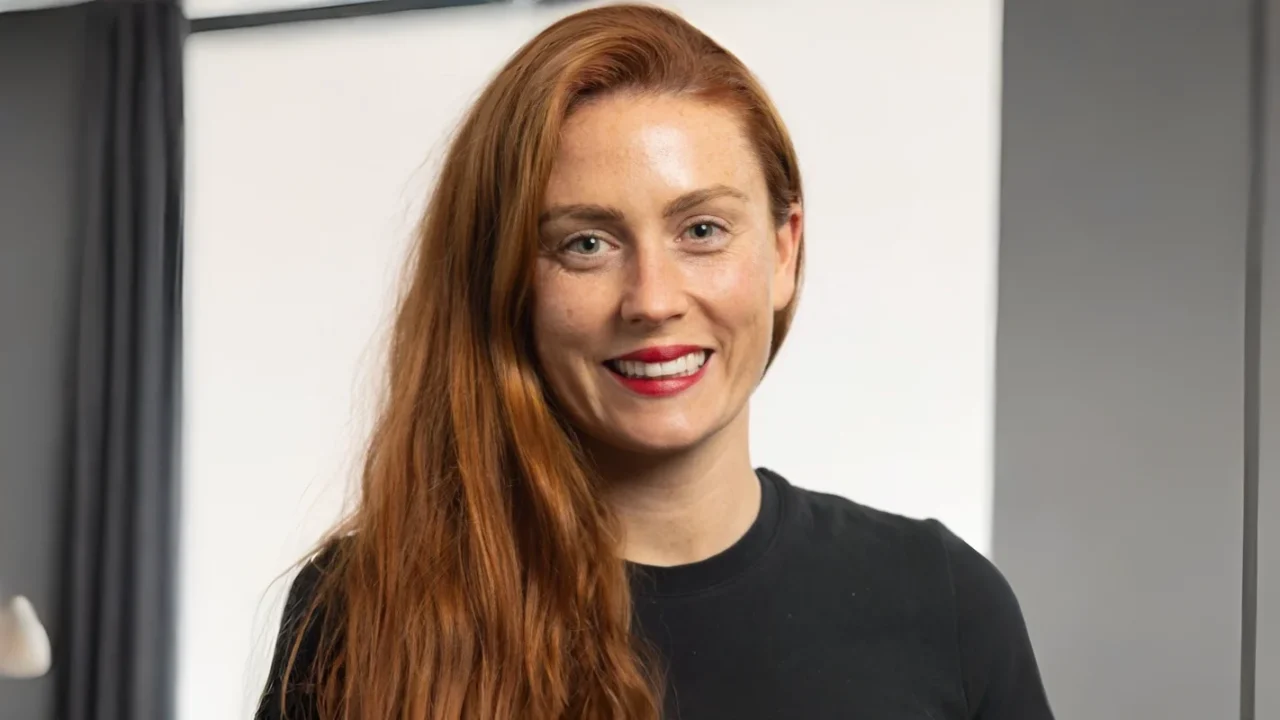
Hannah Wardill, NHMRC/Hospital Research Foundation Fellow and Lead of Supportive Oncology Research Group at SAHMRI/Uni AdelaideMASCC Board Member, shared a post on LinkedIn:
“New paper out in the Springer Nature Journal of Neuroinflammation!
Can the gut microbiota shape how the host experiences cancer therapy toxicity?
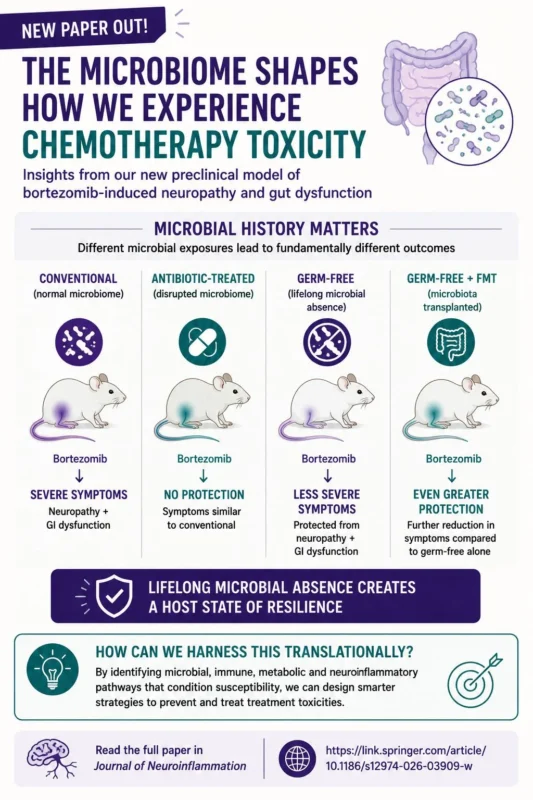
In this study, we explored the role of the microbiome in bortezomib-induced peripheral neuropathy and gastrointestinal dysfunction. The findings were not as simple as ‘remove the microbiome, remove the toxicity.’
Instead, we found something more intriguing:
- Germ-free mice developed less severe symptoms following bortezomib.
- Antibiotic-treated mice did not show the same protection.
- Faecal microbiota transplantation did not restore bortezomib sensitivity in germ-free mice – and in fact, appeared to provide further symptomatic protection.
Together, these findings suggest that lifelong microbial absence creates a host state of resilience.
This raises an exciting translational question: Can we harness the protective host adaptations seen in germ-free mice without needing to remove the microbiome?
That could mean identifying microbial, immune, metabolic or neuroinflammatory pathways that condition susceptibility to treatment toxicity – and using them to design smarter supportive care interventions for people receiving neurotoxic cancer therapies.
A huge congratulations to Supportive Oncology Research Group (SORG)’s Jacqui Scott and the broader multidisciplinary team who brought this complex story together. Special thank you to Krzysztof Mrozik, Kate Vandyke, Andrew Zannettino (and the broader Myeloma Research Laboratory), David Lynn, Miriam Lynn, Mark Hutchinson, Luke Grundy, Joel Castro Kraftchenko, Angie Yong, Andrea Harrington, Stuart Brierley, Dr Courtney Cross, Feargal Ryan and all other co-authors for the collaboration.”
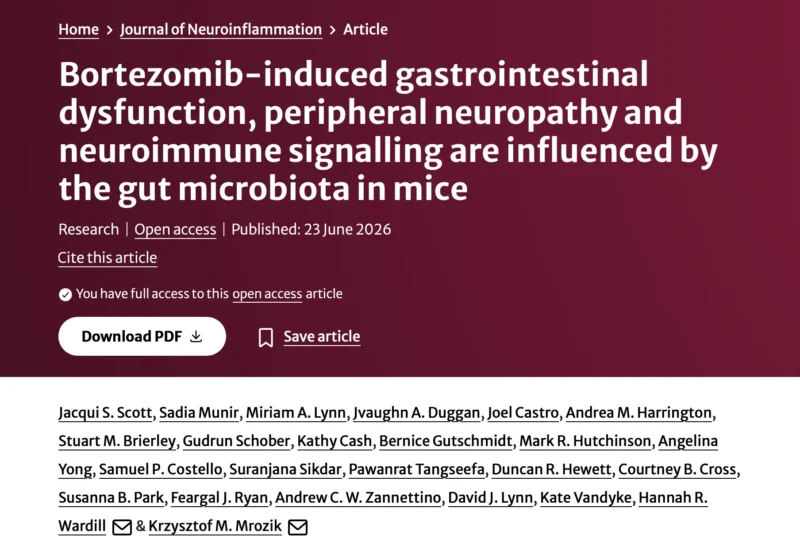
Title: Bortezomib-induced gastrointestinal dysfunction, peripheral neuropathy and neuroimmune signalling are influenced by the gut microbiota in mice
Authors: Jacqui S. Scott, Sadia Munir, Miriam A. Lynn, Jvaughn A. Duggan, Joel Castro, Andrea M. Harrington, Stuart M. Brierley, Gudrun Schober, Kathy Cash, Bernice Gutschmidt, Mark R. Hutchinson, Angelina Yong, Samuel P. Costello, Suranjana Sikdar, Pawanrat Tangseefa, Duncan R. Hewett, Courtney B. Cross, Susanna B. Park, Feargal J. Ryan, Andrew C. W. Zannettino, David J. Lynn, Kate Vandyke, Hannah R. Wardill, Krzysztof M. Mrozik
Read the Full Article.
Other articles featuring Hannah Wardill on OncoDaily.