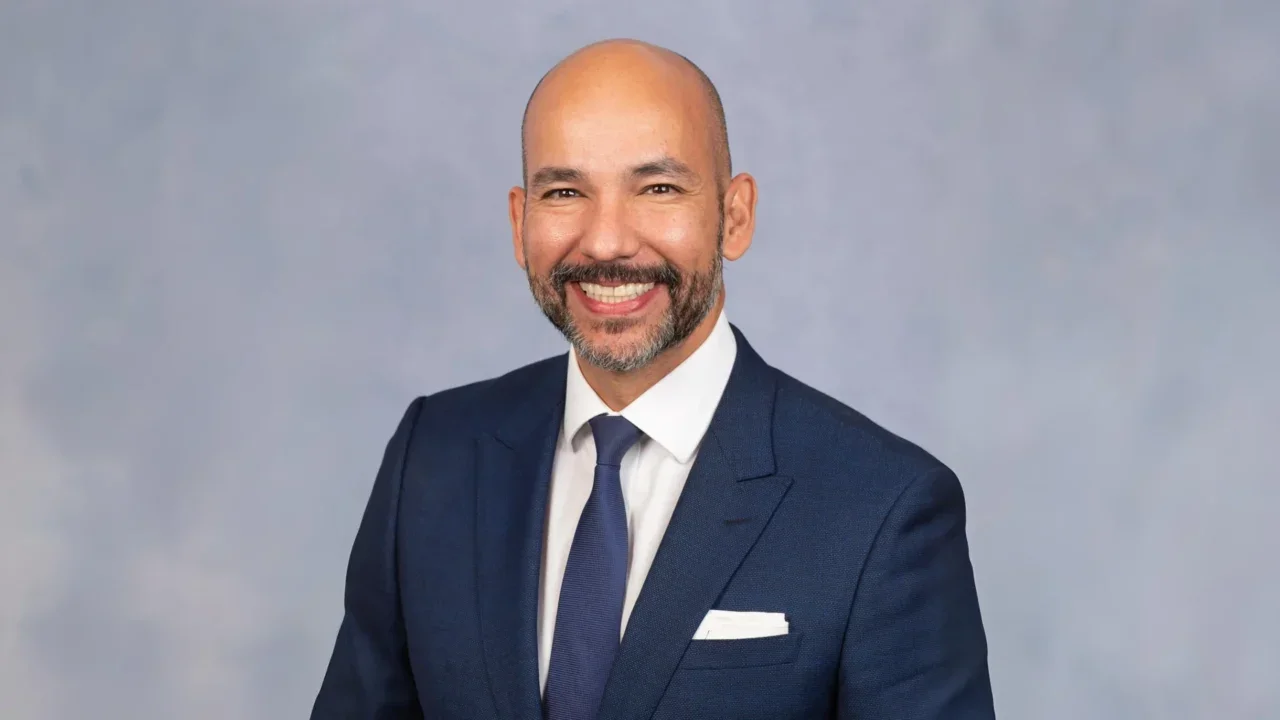
Gilberto Lopes, Chief, Division of Medical Oncology at Sylvester Comprehensive Cancer Center, shared on X:
“Here we go with our second tweet on IASLC WCLC26 preperation!
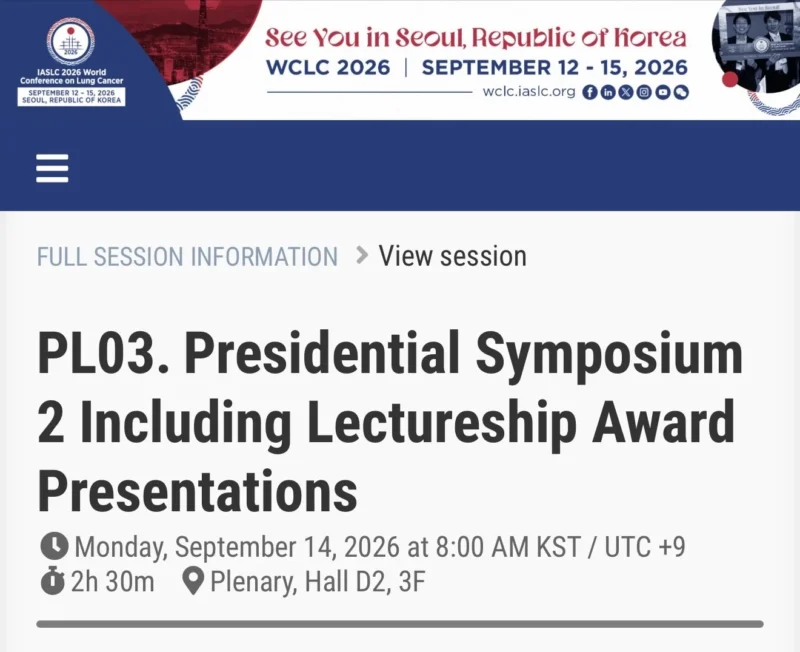
If Presidential Symposium 1 at WCLC26 is eclectic, Symposium 2 has a remarkably clear theme:
Targeted therapy moving earlier – and getting better.
ADAURA to PAPILLON to REZILIENT3 to ARROS-1.
Here’s what we already know – and what Monday morning in Seoul should tell us.
1. ADAURA – 8-year update:
We already know that 3 years of adjuvant osimertinib improves DFS and OS after resection of EGFR-mutant NSCLC.
Now comes the fascinating long-term question:
- Does that benefit remain durable years after osimertinib has stopped?
At WCLC: the 8-year OS landmark and the shape of those survival curves. This is less about establishing the standard – and more about understanding how durable that standard really is.
2. PAPILLON:
1L amivantamab + chemotherapy changed treatment for EGFR exon20ins NSCLC.
What we know:
- PFS: 11.4 vs 6.7 months
- HR 0.40
ORR: 73% vs 47%
The initial OS analysis showed a favorable but immature trend.
At WCLC: mature overall survival.
That is the missing piece.
3. REZILIENT3:
And immediately after PAPILLON comes a potential challenger:
- Zipalertinib + chemotherapy in first-line EGFR exon20ins NSCLC.
We already know from the public topline announcement:
- REZILIENT3 met its primary PFS endpoint.
But we don’t know the numbers.
At WCLC: the HR, median PFS, response, CNS activity, safety and OS maturity.
Back-to-back with PAPILLON, this should be fascinating.
4. ARROS-1:
One I’m particularly looking forward to – and I’m pleased to be a co-author.
Zidesamtinib is a next-generation ROS1 inhibitor designed for potent CNS activity and resistance coverage.
Preliminary TKI-naïve ARROS-1 data were striking:
- ORR 89%
- Intracranial ORR 83% in a small evaluable CNS cohort.
Now WCLC brings updated efficacy and safety in the TKI-naïve population.
The big question: Could zidesamtinib ultimately move into first-line ROS1+ NSCLC?
Presidential Symposium 2 tells a larger story about where precision oncology is going:
- Targeted therapy after surgery.
- Targeted therapy + chemotherapy upfront.
- Competing strategies for the same genomic subgroup.
- Next-generation drugs designed for the brain and resistance.
We’re no longer asking simply ‘Can we target this alteration?’
We’re asking:
Which drug? When? In what sequence? And how early can we use it?
That’s a good sign of how far lung cancer has come.”
You cna also read:
REZILIENT3 Trial: Major Positive Phase 3 Result in Exon 20 NSCLC