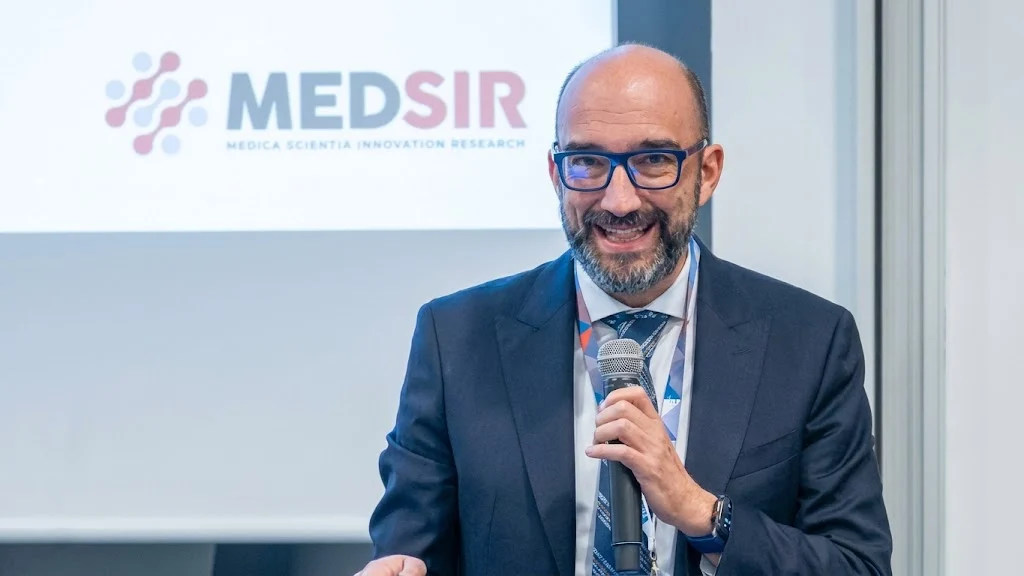
Enrique Grande, One Oncology Madrid Program Director at Quironsalud, shared on LinkedIn:
“ESMO 2026: my key takeaways in muscle-ivasive bladder cancer
Back from ESMO – European Society for Medical Oncology in Madrid, one message stands out: progress means improving survival while carefully considering what treatment asks of our patients.
Three findings worth reflecting on:
- VOLGA: perioperative durvalumab plus three cycles of enfortumab vedotin before surgery improved event-free and overall survival versus the surgery-based control in patients with muscle-invasive bladder cancer who were ineligible for or declined cisplatin. At two years, event-free survival was 63.5% versus 45.1%, and overall survival was 78.4% versus 69.4%.
- KEYNOTE-866: adding perioperative pembrolizumab to neoadjuvant cisplatin–gemcitabine did not significantly improve event-free survival in cisplatin-eligible patients.
- ENERGIZE: perioperative nivolumab combined with neoadjuvant chemotherapy also did not significantly improve event-free survival.
What this means for practice:
- Evidence belongs to the specific regimen and population studied. We should not assume that the benefit of one perioperative immunotherapy strategy automatically extends to another.
- Treatment duration matters. VOLGA delivered enfortumab vedotin only before surgery, while durvalumab continued afterwards. This raises important questions about how much treatment patients need. It does not establish equivalence to longer EV schedules or prove lower toxicity than those approaches.
- Survival, side effects, quality of life and time spent receiving treatment must all inform our decisions. Positive and negative trials both help us provide better care.
As VOLGA’s second author and a steering committee member, I am grateful to have contributed alongside Tom Powles and our international colleagues. Above all, thank you to the patients and families who made this research possible, and to AstraZeneca for funding the study.
At Quirónsalud and One Oncology Madrid, these findings reinforce our commitment to bringing meaningful advances to patients through multidisciplinary care.
The field continues to move fast. ESMO has given us more evidence to work with- – and important questions to debate.
Our responsibility is to turn that evidence into longer and better lives.”
Title: Durvalumab, Tremelimumab, and Enfortumab Vedotin in Muscle-Invasive Bladder Cancer
Authors: Thomas Powles, Enrique Grande, Giuseppe Simone, Alfonso Gómez de Liaño, Marco Maruzzo, Pedro Isaacsson Velho, Eiji Kikuchi, Toan Quang Vu, Lazar Popovic, Timuçin Çil, Gwenaelle Gravis, Robert Radkowski, Luis Raúl Novelo Hernández, Hernán Javier Cutuli, Aristotelis Bamias, Thomas Bauernhofer, Michel Pavic, Yoon Ji Choi, Chao-Hsiang Chang, Hiroshi Kitamura, Jonathan E. Rosenberg, Jacqui Rowbottom, Svetlana Ho, Ashok Gupta, Alexandra Drakaki
You can also read: