Drew Moghanaki, Professor and Chief of Thoracic Oncology at UCLA’s Department of Radiation Oncology and Co-Director of the Lung Precision Oncology Program at VA Greater Los Angeles, shared on X:
“Today I am thankful for this important discovery from Max Diehn’s lab, which helps us better counsel patients with stage I NSCLC who are more interested in SBRT than a lung resection.
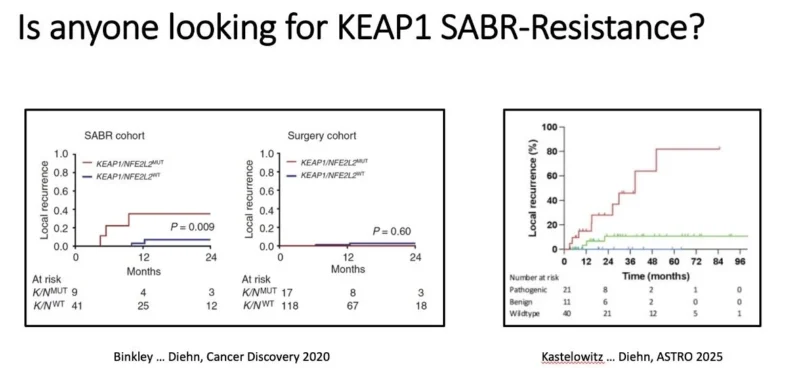
I trust all radoncs who learn these data will ask for an NGS report when offering SBRT to a patient who is otherwise fully fit for an operation, and encourage surgery instead when the tumor has a KEAP1 mutation.”
Overview of Non-Small Cell Lung Cancer
NSCLC is the most common type of lung cancer, accounting for approximately 85% of all lung cancer cases.
- Types: Includes adenocarcinoma, squamous cell carcinoma, and large cell carcinoma.
- Stages: Ranges from Stage I (early-stage disease) to Stage IV (advanced disease).
- Diagnosis: May involve imaging, biopsy, and molecular testing such as next-generation sequencing (NGS).
- Treatment: Options include surgery, stereotactic body radiotherapy (SBRT), chemotherapy, immunotherapy, and targeted therapy.
- Biomarkers: Mutations such as EGFR, ALK, KRAS, and KEAP1 can provide important information for treatment decisions.
You may also be interested in: