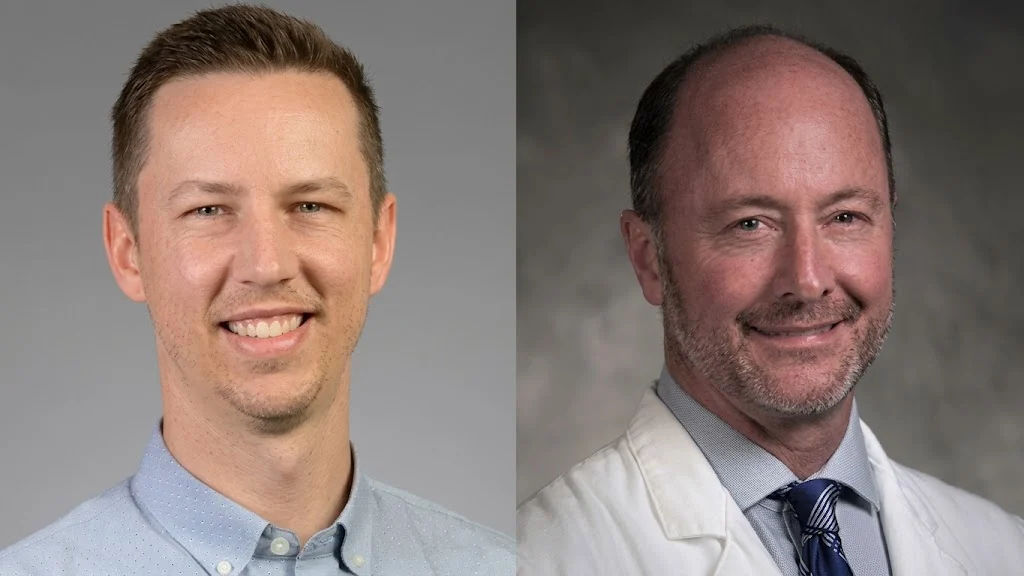
Dillon Cockrell, GU Medical Oncologist at Duke Cancer Institute, shared on LinkedIn:
“Newly reported early results for an entirely new approach to treating advanced prostate cancer at ESMO 2026.
Benjamin Garmezy presented Abstract 2216O with updated Phase I results for JNJ-6143 (formerly HLD-0915), a first-in-class oral RIPTAC targeting the androgen receptor (AR) and BRD4 in heavily pretreated metastatic prostate cancer.
I’m grateful to have contributed to this study as a site PI and coauthor along with Andrew Armstrong.
Unlike traditional AR pathway inhibitors, RIPTACs bring AR into proximity with BRD4, disrupting an essential cellular survival mechanism and potentially overcoming established resistance pathways.
Key findings at the selected 50 mg daily dose:
- 77% confirmed PSA50 response (24/31 patients)
- 48% confirmed PSA90 response (15/31)
- 69% confirmed objective response rate (11/16 with measurable disease) at the data cutoff, increasing to 75% with a subsequently confirmed response
- 71% remained on treatment at a median follow-up of 5.6 months
- Encouraging early tolerability at the selected dose, with most treatment-related adverse events being low grade
Activity was observed across several high-risk molecular subgroups, including patients with alterations in AR, TP53, PTEN, and RB1.
Why does this matter?
Patients with metastatic androgen pathway modulation-resistant prostate cancer (mAPMR/mCRPC) often progress despite multiple lines of AR-directed therapy, chemotherapy, and radioligand therapy. A therapy that leverages AR expression through an entirely different mechanism could represent an important addition to our treatment strategies.
These are still early, single-arm data from relatively small cohorts. Durability, longer-term safety, and efficacy in larger studies remain essential questions. But the depth of responses in such a heavily pretreated population is certainly encouraging.
On a personal note, it has been especially rewarding to participate in the development of this molecule, which began as HLD-0915 with Halda Therapeutics and is now advancing through Johnson & Johnson Innovative Medicine.
At Duke Health this study also helped us establish our first phase I oncology trial at Duke Raleigh Cancer Center, expanding access to early-phase research for patients in our Wake County community.
Thank you to the patients and families who make this research possible, our outstanding Duke Cancer Institute research team (especially tireless work from Tanya Mutdosch), and the many investigators and industry colleagues who have helped move this program forward.”
You can also read: