David Liu, Professor at Harvard and the Broad Institute, shared on X:
“Today in Nature Biotech we report the use of phage-assisted evolution (PACE) to reprogram botulinum neurotoxin (BoNT) proteases to trigger cancer cell death. We evolved proteases to cleave procaspase-1 or gasdermin D, inducing cell death and slowing tumor growth in a highly drug-resistant mouse model.”
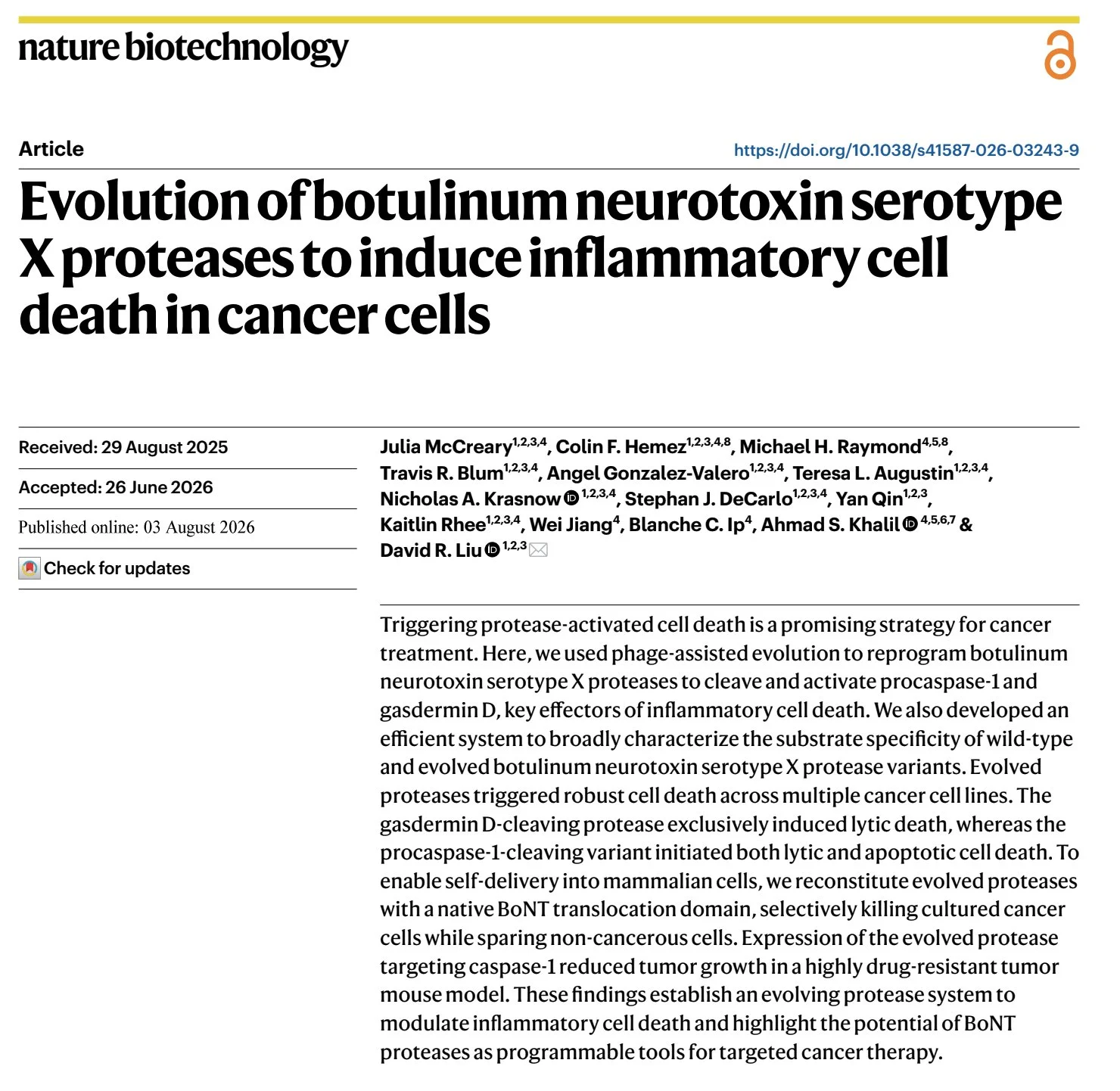
Title: Evolution of botulinum neurotoxin serotype X proteases to induce inflammatory cell death in cancer cells
Authors: Julia McCreary, Colin F. Hemez, Michael H. Raymond, Travis R. Blum, Angel Gonzalez-Valero, Teresa L. Augustin, Nicholas A. Krasnow, Stephan J. DeCarlo, Yan Qin, Kaitlin Rhee, Wei Jiang, Blanche C. Ip, Ahmad S. Khalil, David R. Liu.
Read the full article.
“Triggering pyroptosis (an inflammatory, lytic form of cell death), is promising for cancer therapy because it releases neoantigens and cytokines that recruit immune cells. We evolved proteases that cleave and activate two key effectors of pyroptosis: procaspase-1, which initiates the caspase cascade, and gasdermin D, which forms pores in the cell membrane to promote lysis.
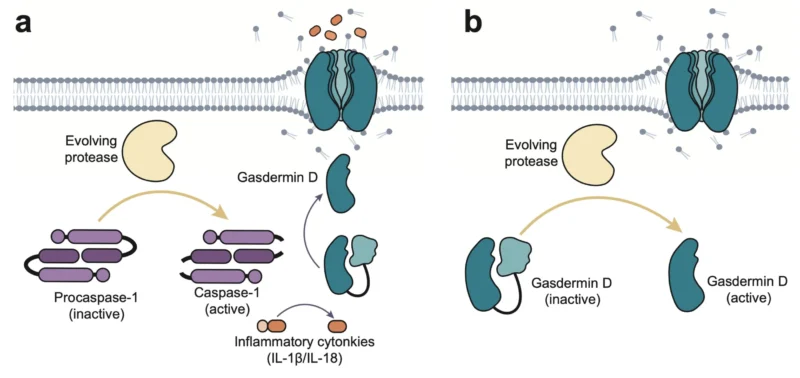
BoNT proteases are promising protein engineering starting points as they are used clinically, able to self-deliver into cells, and can be evolved in our protease PACE system, a continuous directed evolution platform we previously reported. We therefore applied protease PACE using dual selection to simultaneously evolve BoNT/X proteases to cleave procaspase-1 or gasdermin D, while selecting against cleavage of VAMP1, a native substrate of BoNT/X.
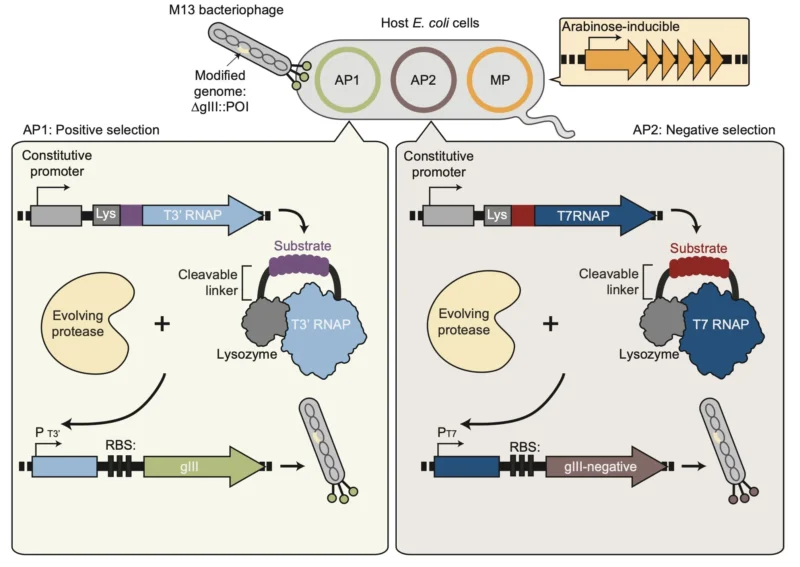
We evolved BoNT/X protease to cleave the interdomain linker of procaspase-1, an inactive precursor to caspase-1, to mimic endogenous autoproteolytic activation. To guide protease evolution towards procaspase-1 cleavage, we used two intermediate stepping-stone sequences, PC_SS1 wand PC_SS2. Sequential PACE and PANCE campaigns, followed by dual selection against VAMP1, yielded the protease X(PC)4c, which we renamed X(PC).
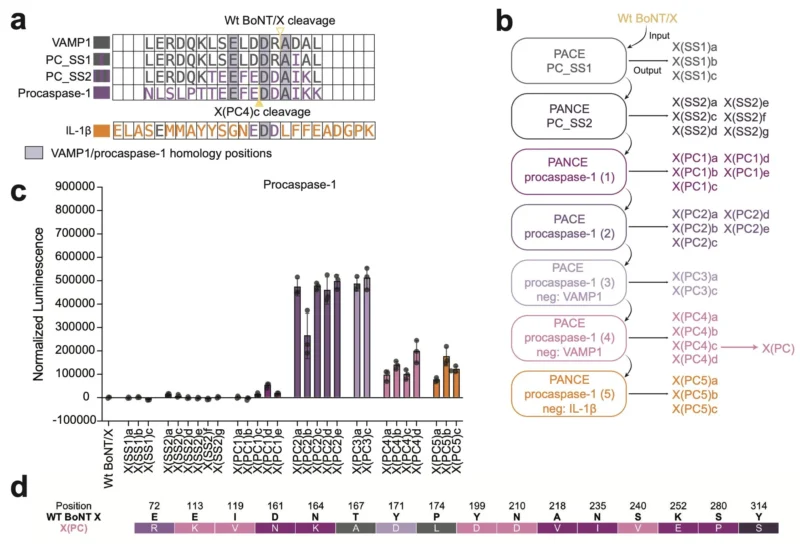
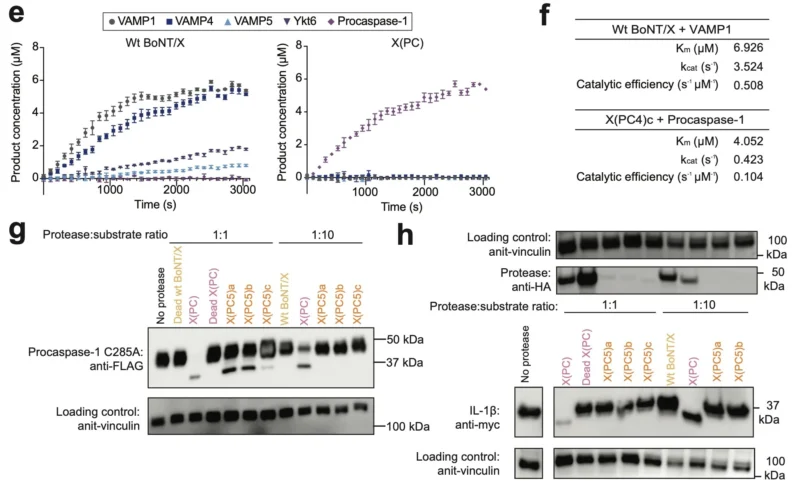
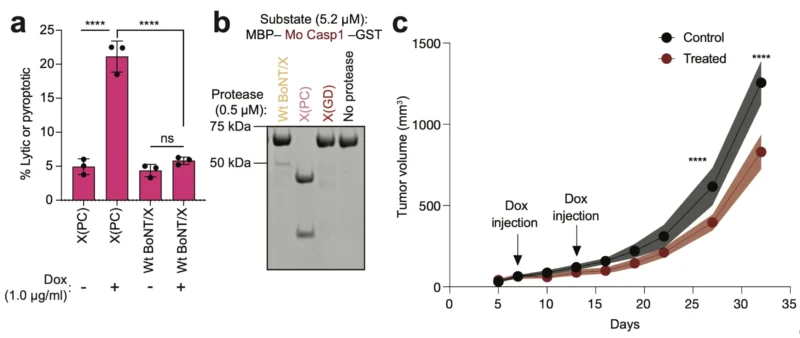
X(PC) efficiently cleaves procaspase-1 and does not cleave any of the four native BoNT/X substrates, demonstrating successful reprogramming of protease specificity rather than simply increasing promiscuity. X(PC) cleaves procaspase-1 only 5-fold less efficiently than wild-type BoNT/X cleaves VAMP1. X(PC) retains activity in mammalian cells, cleaving full-length procaspase-1 co-transfected in HEK293T cells. While characterizing X(PC), we discovered that it also cleaves another caspase-1 substrate, IL-1β likely at a sequence with homology to procaspase-1. We performed additional negative selection against IL-1β cleavage to remove IL-1β cleavage activity while retaining activity on procaspase-1.
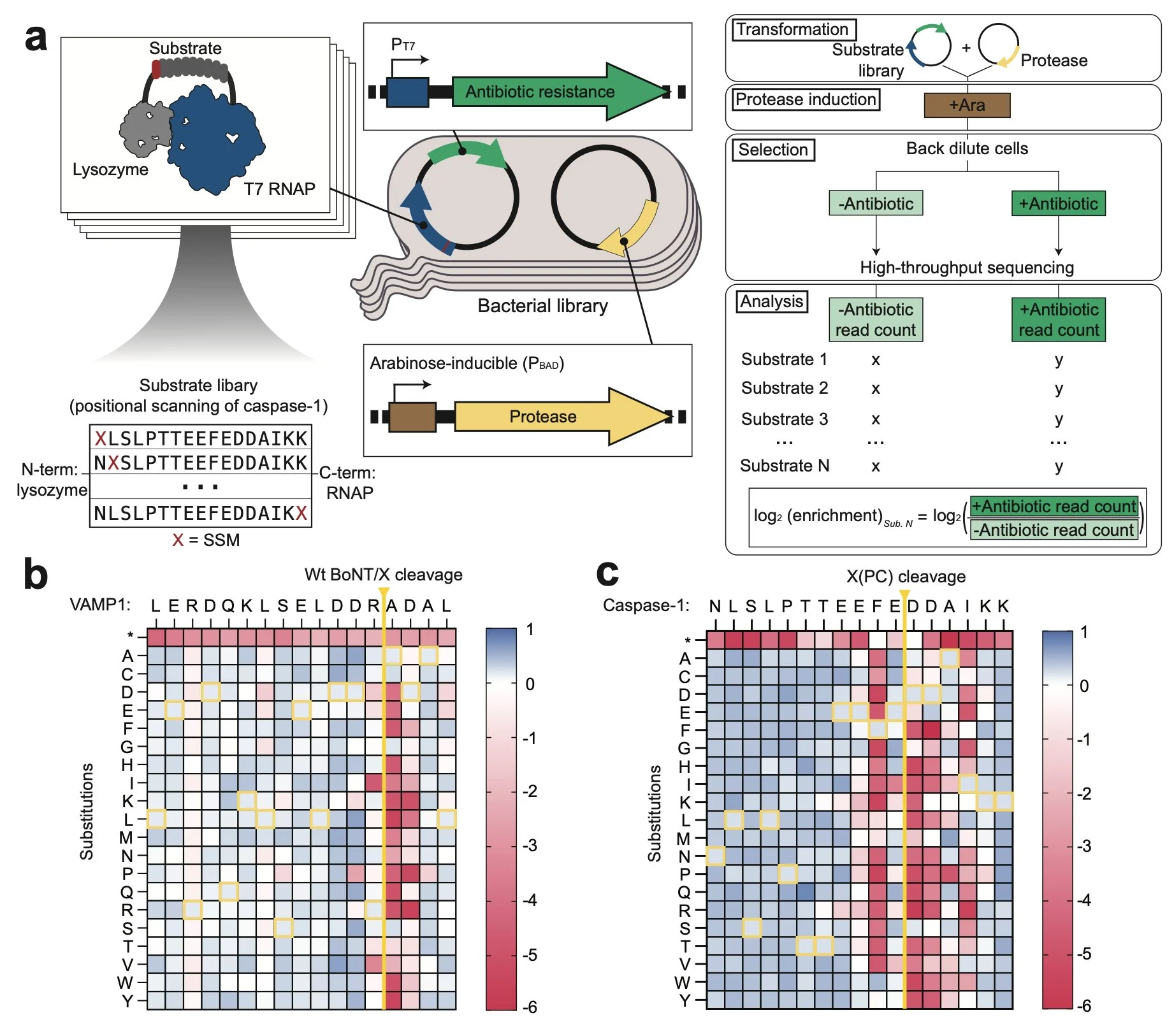
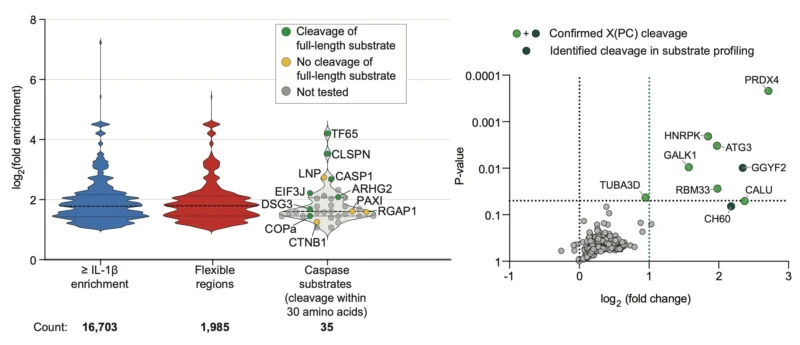
To thoroughly characterize X(PC) substrate preferences and off-target activity, we developed a bacterial substrate profiling method. Protease cleavage is coupled to antibiotic resistance and read out by high-throughput sequencing, enabling quantitative scoring of thousands of substrates without requiring purified protein. We profiled wild-type BoNT/X and X(PC) revealing the specificity requirements of both proteases.
To identify potential X(PC) off-target substrates, we created a library of cleavage site variants and matched enriched sequences with flexible regions of the human proteome. We confirmed cleavage of six full-length proteins identified in our profiling method. Furthermore, we performed TMT-TAILS N-terminomics and identified nine high-confidence X(PC) off-target substrates, including several known caspase targets. Thus X(PC) mimics facets of caspase proteolysis, likely because the sequence chosen for selection is a caspase substrate itself, and may activate multi-pathway death beyond procaspase-1-associated death alone.
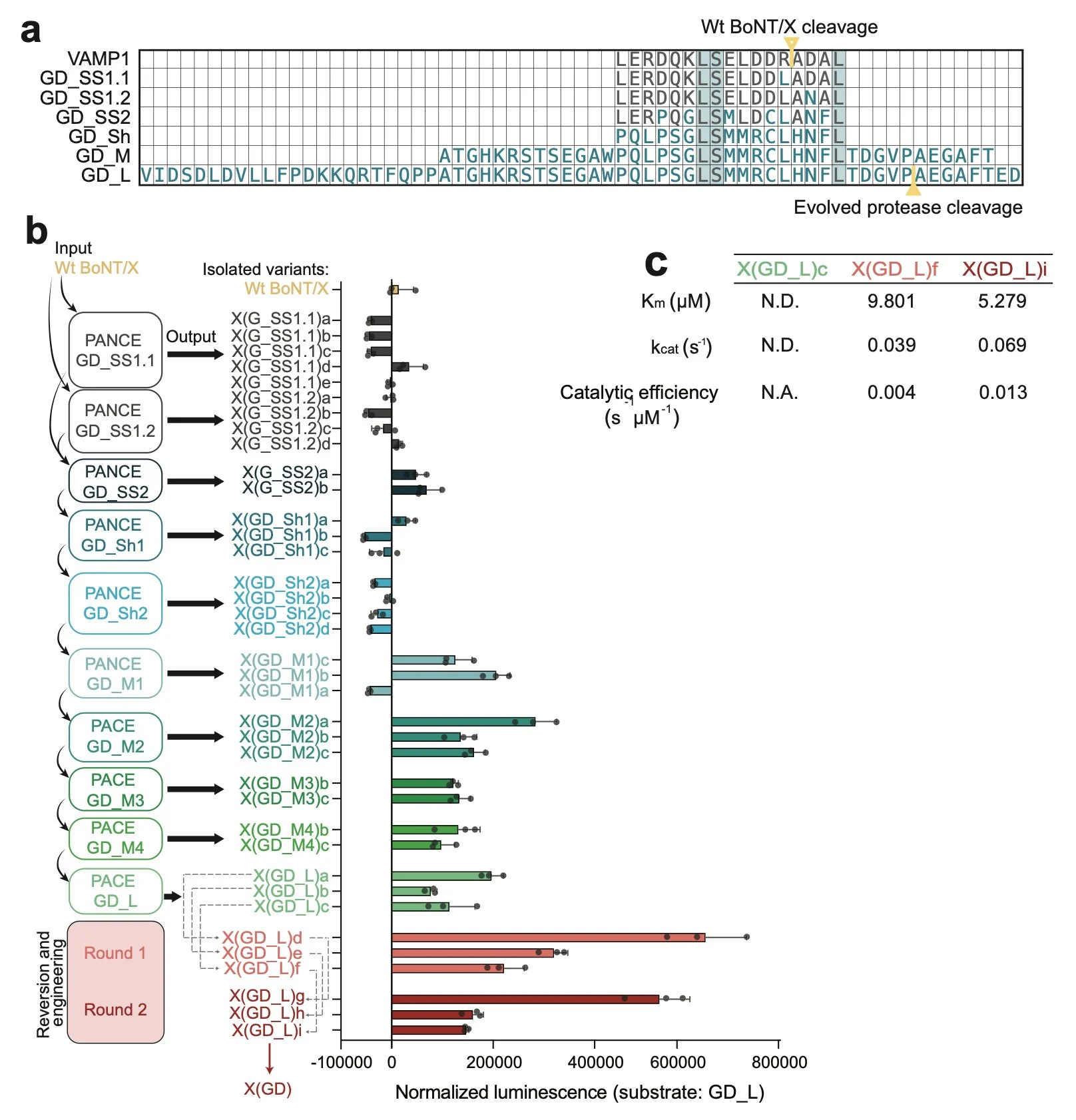
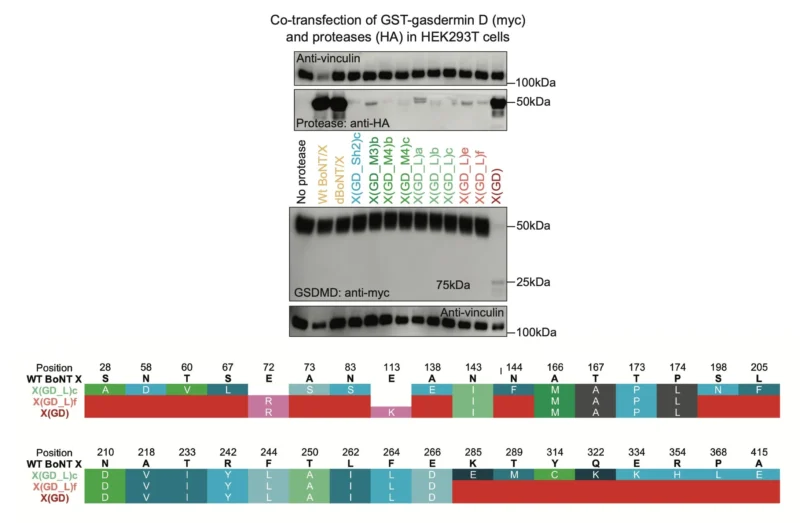
We also evolved BoNT/X to cleave gasdermin D, the pore-forming executioner of pyroptosis. An extensive campaign of stepping-stone evolution, substrate lengthening, negative selection, and mutational dissection yielded X(GD_L)i (renamed X(GD)), an evolved BoNT/X protease that cleaves gasdermin D.
X(GD) cleaves a GST-gasdermin D chimera in HEK293T cells. Reversions (red boxes) and grafted mutations from the procaspase-1 evolution (pink boxes) were needed to support activity in mammalian cells.
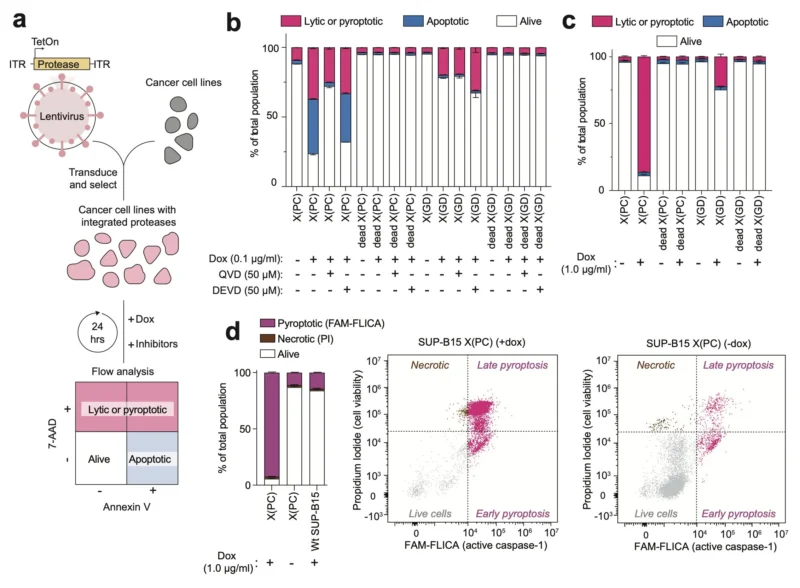
In THP-1 monocytic leukemia cells, X(PC) triggered concurrent apoptotic and lytic death, while X(GD) induced exclusively lytic death. In SUP-B15 B-lymphoblasts, ~86% of X(PC)-expressing cells underwent lytic death. To determine if X(PC)-induced lytic death was truly pyroptotic, we used FAM-FLICA, a covalent active caspase-1 reporter, and showed >90% of X(PC)-induced SUP-B15 cells were caspase-1 active. ~80% were also PI+, confirming that X(PC) induces caspase-1 driven pyroptosis in SUP-B15 cells.
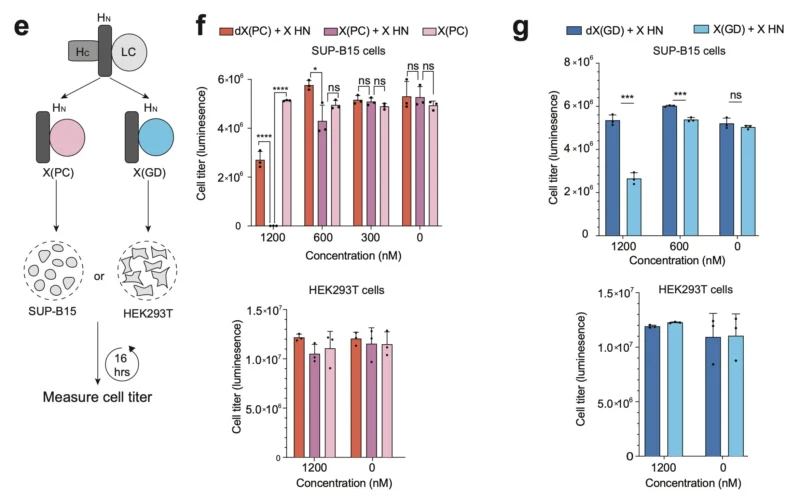
Both evolved proteases self-deliver when fused to BoNT’s translocation domain (HN). X(PC)-HN killed SUP-B15 cancer cells at 1.2 µM of protein, while sparing HEK293T cells, demonstrating cell-type selective killing. X(GD)-HN also selectively killed SUP-B15 cells selectively at 1.2 µM, though less potently than X(PC). These experiments demonstrate the first self-delivery of an evolved BoNT protease targeting a non-SNARE substrate.
In the aggressive KPCY pancreatic cancer mouse model, resistant to ‘GAFCP’ combination immunotherapy (gemcitabine+Abraxane+CD40 agonist+anti-CTLA-4+anti-PD-1), X(PC) expression slowed tumor growth (P < 0.0001), demonstrating that evolved BoNT proteases can impede drug-resistant solid tumors in an animal. Together, these results establish a versatile platform for engineering proteases with programmable cancer cell death activity. The distinct phenotypes of X(PC), concurrent apoptotic and lytic cell death, and X(GD), exclusively lytic death, demonstrate that substrate choice can tune the nature of evolved protease-induced cell death. Future directions include engineering of receptor-binding domains to enable systemic, tumor-targeted delivery.
This highly collaborative work was led by Julia McCreary with key contributions from Colin Hemez, Mike Raymond, Travis Blum, Angel Gonzalez-Valero, Teresa Augustin, Nicholas Krasnow, Stephan DeCarlo, Yan Qin, Kaitlin Rhee, Wei Jiang, Blanche Ip, and Mo Khalil. Congratulations to the team!”
You might be interested in:
Tumor Microenvironment: Why It Matters for Cancer Immunotherapy