






Daniel De Carvalho, Co-Founder and Chief Scientific Officer of Adela, shared on LinkedIn:
“Excited to share our new collaborative study, led by Nicholas Cheng, and Philip Awadalla, in Cell Genomics, exploring the potential of cell-free DNA methylation to identify cancer risk years before diagnosis.
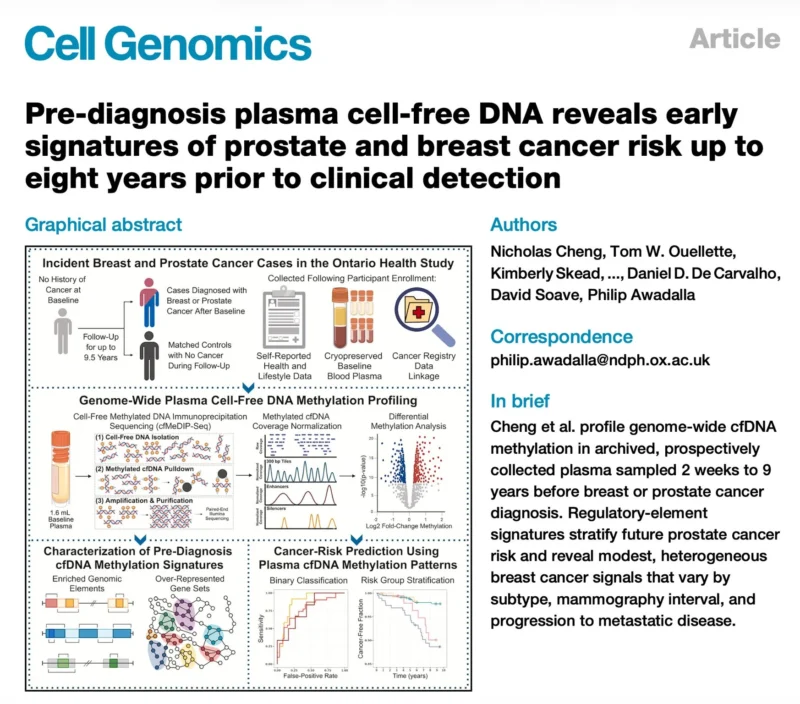
The study analysed blood samples from the Ontario Health Study, a long-term Canadian population health study, using the first-generation academic version of our cfMeDIP-seq assay.
A key strength of this work is its design:
Samples were collected before cancer diagnosis, allowing us to compare individuals who subsequently developed breast or prostate cancer with matched participants who remained without a cancer diagnosis over the same follow-up period.
cfDNA methylation signals were associated with subsequent cancer development, years before clinical diagnosis. The pre-diagnostic breast cancer signature also identified advanced breast cancers in samples collected after diagnosis, supporting a biological connection between the early circulating signal and established disease.
One of the most exciting implications is the potential to extend cfDNA methylation beyond multi-cancer early detection (MCED) into individual-level risk stratification. With further validation, integrating these signals with established risk factors could help personalize both the intensity and timing of screening. People at higher risk could benefit from enhanced screening and targeted surveillance, while those at lower risk might safely undergo less frequent testing. This could reduce unnecessary investigations and their associated burden, while directing healthcare resources toward those most likely to benefit.
Identifying elevated risk earlier could also create opportunities for prevention:
Supporting lifestyle changes associated with lower cancer risk and, where evidence supports their use, preventive therapeutics. It could also help identify high-risk populations for trials evaluating new approaches to cancer prevention.
These applications will require studies demonstrating that decisions guided by molecular risk improve outcomes, including whether screening can safely be reduced for those classified as lower risk.
This study provides a foundation for pursuing that goal.”
Other articles featuring Daniel De Carvalho on OncoDaily.