Dana-Farber Cancer Institute shared on LinkedIn:
”When Elizabeth Mittendorf first joined Dana-Farber, she noticed an overlap: each clinical investigator running an investigator-initiated clinical trial was collecting biospecimens from patients and managing the processing and storage of samples.
“People were effectively doing the same thing in that they were collecting specimens, but they were doing it in their own silos, and not sharing knowledge or expertise,”
says Mittendorf, who is chief of Multi-Disciplinary Oncology at Dana-Farber and chief of the Division of Breast Surgery at Beth Israel Deaconess Medical Center.
“We saw an opportunity to change that through centralization.”
The result was the Breast Oncology Center Translational Hub, or “BOC T-Hub.”
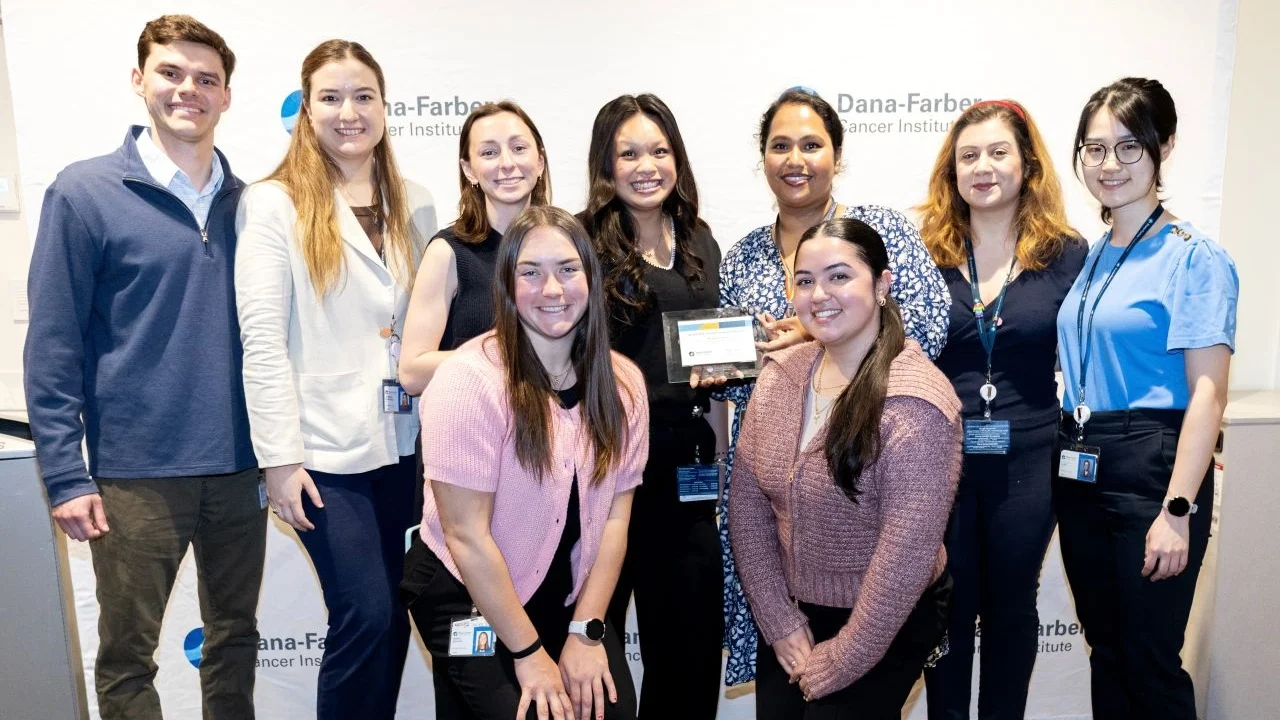
The T-Hub handles biospecimen collection, processing, validation, and storage for investigator-initiated clinical trials so the samples can reliably be used for research. Mittendorf formed the BOC T-Hub in collaboration with Nancy Lin associate chief of the Division of Breast Oncology, and Sara Tolaney, MD, chief of the Division of Breast Oncology. Tasnim Rahman, MBA, joined as laboratory manager.
“The T-Hub supports investigators, freeing them to focus on the trial they want to run, the drug they want to test, and the science they want to pursue,”
says Mittendorf.
“When it comes time to do correlative studies associated with their trial, the specimens they need will be of high quality and can yield important results.”
The T-Hub has grown to a team of six research technicians, two research pathologists, and a computational biologist – supporting 30 clinical trials and receiving an average of 165 blood samples, six to eight tissue samples, and five to seven stool samples each week. The total volume of all samples collected has increased more than sevenfold since the formation of the T-Hub. But the focus isn’t only on volume. The T-Hub puts patients at the center of their work, even though the team never interacts directly with patients. When they receive samples, team members take time to recognize that each sample comes from a person who is going through treatment for cancer.
“These patients are giving us a gift, which is often a precious specimen that we can only get once, at that specific moment during their treatment,”
says Rahman.
“We see ourselves as the safe keepers of those samples.”
The T-Hub stores samples in freezers for future use. Tissue samples are also preserved on slides, which are added to digital pathology pipeline to preserve slides as digital files that can be accessed and analyzed computationally, including by artificial intelligence. While the BOC T-Hub continues to evolve to support our breast cancer clinical research, Mittendorf envisions future possibilities for expansion of the effort.”
You can also read ‘CDK2 Inhibition in CDK4/6 – Resistant Breast Cancer: A New Escape Route Under Study‘