


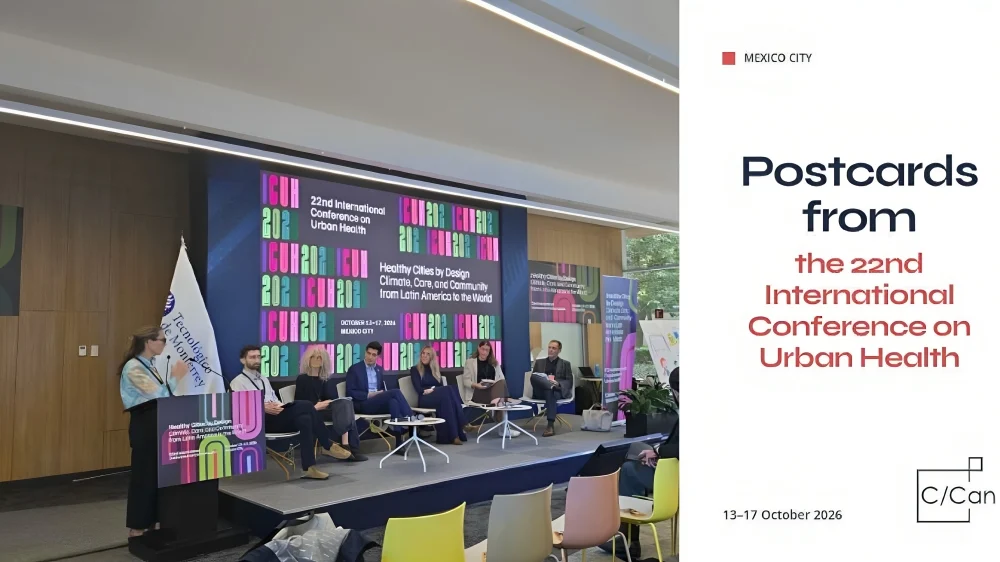
City Cancer Challenge (C/Can) shared on LinkedIn:
“Postcards from the 22nd International Conference on Urban Health Mexico City
Our CEO Isabel Mestres, our Regional Director for Latin America Maria F Navarro, and our León City Manager Elia Lara Lona joined the 22nd International Conference on Urban Health (ICUH2026) in Mexico City to share why cities are where health systems can start working as systems.
A city holds every piece of the health system in one place: primary care centres, hospitals, laboratories, public and private providers, local and national authorities. That makes it possible to follow the patient’s journey, see exactly where the connections break down, and bring the people responsible for each piece together to fix them. In every C/Can city, we bring decision-makers from the city, regional and national levels together in a City Executive Committee, turning shared goals into collective responsibility.
In Cali, Colombia, local partners tracked patients, coordinated diagnostic steps, and assigned clear follow-up responsibilities. The average time from suspected breast cancer to biopsy result fell from 64 to 37 days.
What works in cities can also shape national change. In Georgia, Tbilisi’s governance model became the blueprint for the country’s National Cancer Board.
Where you live and who you are shouldn’t determine the quality of care you receive. Thank you to the International Society for Urban Health (ISUH), Tecnológico de Monterrey, World Health Organization and our partner MSD for bringing these conversations together.”
Other articles about City Cancer Challenge on OncoDaily.