Nearly four decades after the Chernobyl nuclear disaster, a surprising scientific narrative is emerging from one of the most heavily contaminated regions on Earth. Within the Chernobyl Exclusion Zone (CEZ), gray wolves are not only surviving but thriving. Recent research suggests that prolonged exposure to ionizing radiation may have driven genetic adaptations that help these animals better tolerate cancer offering potential insights for human health research.
The Chernobyl Exclusion Zone as a Living Laboratory
Following the catastrophic reactor meltdown on April 26, 1986, a roughly 1,000-square-mile area surrounding the nuclear plant was evacuated and largely abandoned by humans. Over time, this absence of human activity transformed the CEZ into an unintended long-term ecological experiment. Scientists now view the region as a unique opportunity to study the biological effects of chronic, low-dose radiation exposure across multiple generations of wildlife.
Wolves at the Top of a Radioactive Food Chain
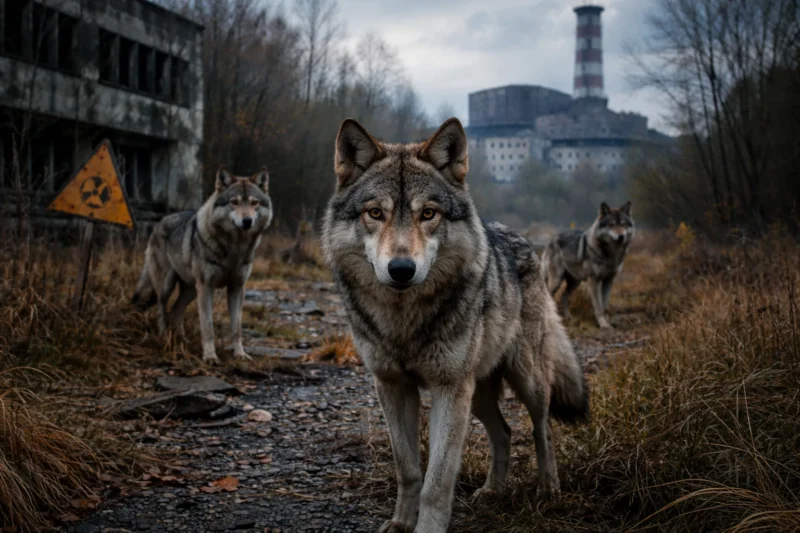
Among the species studied, gray wolves have drawn particular attention due to their role as apex predators. Feeding on prey that consume irradiated plants and inhabit contaminated soil, these animals experience radiation exposure throughout the entire food chain. Despite this, studies show that wolf populations in the CEZ are significantly denser—up to seven times higher than those in nearby protected areas.
Long-Term Research and Key Findings
Biologists from Princeton University, including Cara Love and Shane Campbell-Stanton, have studied CEZ wolves for over a decade. Beginning in 2014, the research team fitted wolves with GPS collars and radiation dosimeters to track both movement and exposure. Results revealed that these animals consistently encountered radiation levels approximately six times higher than the legal limit for humans.
The findings were presented at the 2024 Annual Meeting of the Society of Integrative and Comparative Biology, highlighting the scale and significance of the research.
Genetic Adaptation and Cancer Resistance
The researchers propose that rapid environmental change in the CEZ has acted as a powerful selective pressure. Certain wolves appear to carry genetic variants linked to immune responses against tumors. While these animals may still develop cancer, they seem less affected by the disease, allowing them to survive longer and pass on these protective traits.
Genomic analyses indicate that the fastest-evolving regions of the wolves’ DNA are associated with cancer-related immune pathways suggesting a form of accelerated natural selection driven by chronic radiation exposure.
Reduced Human Pressure as a Contributing Factor
Importantly, scientists caution that radiation is not the only variable influencing wolf health. The near-total absence of humans has removed threats such as hunting, habitat fragmentation, and vehicle collisions. This reduction in external pressures likely contributes to the wolves’ overall population growth and resilience, complicating direct comparisons with human cancer biology.
Implications for Human Cancer Research
The Princeton team is now collaborating with cancer specialists to explore whether insights from these genetic adaptations could inform future therapeutic strategies. While translation to human medicine remains speculative, the research underscores how extreme environments can reveal unexpected mechanisms of disease resistance.
More about Oncology news on OncoDaily
Written by Nare Hovhannisyan, MD