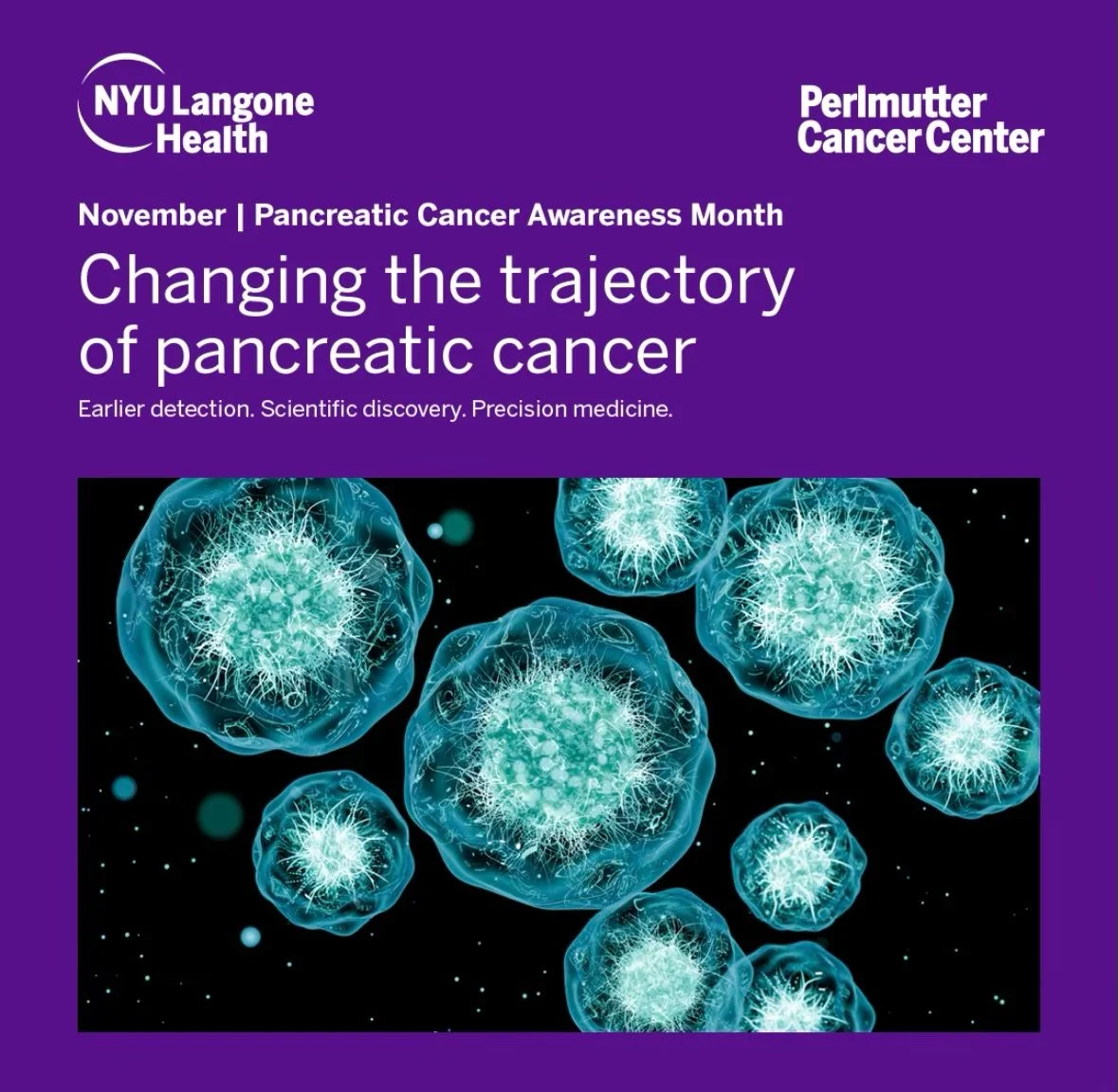
Anirban Maitra, Director of Perlmutter Cancer Center at NYU Langone Health, shared on LinkedIn:
“Pancreatic Cancer Awareness Month is an important reminder of both the progress we have made and the urgent work that remains.
One of the greatest challenges in pancreatic cancer is that it often presents with few or no symptoms until more advanced stages. Advancing our understanding of inherited risk, identifying opportunities for earlier detection, and developing more personalized therapeutic approaches are critical to changing the trajectory of this disease.
At NYU Langone Health Perlmutter Cancer Center, our multidisciplinary teams are working across the continuum of pancreatic cancer care, from high-risk screening and genetic testing to translational research and the development of novel targeted therapies, including those directed at KRAS.
Through scientific discovery, clinical innovation, and collaboration, we have an opportunity to improve outcomes for patients and families affected by pancreatic cancer.
This November, I am especially thankful to our clinicians, scientists, and research partners who have dedicated their careers to advancing this mission.”
Introducing NYU Langone’s Perlmutter Cancer Center
NYU Langone Health’s Laura and Isaac Perlmutter Cancer Center is a National Cancer Institute (NCI)-designated Comprehensive Cancer Center in New York. It focuses on advancing cancer research, developing innovative treatments, and providing personalized, multidisciplinary care for patients with various types of cancer.
Key Areas of Focus:
- Cancer Research: Basic, translational, clinical, and population-based research.
- Clinical Trials: Access to innovative therapies and early-phase clinical trials.
- Precision Medicine: Molecular profiling to guide personalized cancer treatment.
- Immunotherapy: Development and use of immune-based cancer treatments.
- Advanced Radiation Therapy: Technologies such as MRI-guided radiation therapy (MR-LINAC).
- Cancer Care: Comprehensive diagnosis, treatment, prevention, and supportive care.
- Education and Training: Training future oncologists and educating healthcare professionals.
You may also be interested in: