Al-Ola A Abdallah, Associate Professor at the University of Kansas Medical Center, shared posts on X:
“Phase III CERVINO: Could etentamig redefine BCMA×CD3 bispecific therapy in RRMM?
The results show impressive efficacy, deep responses, convenient monthly dosing-and a potentially differentiated CRS profile.
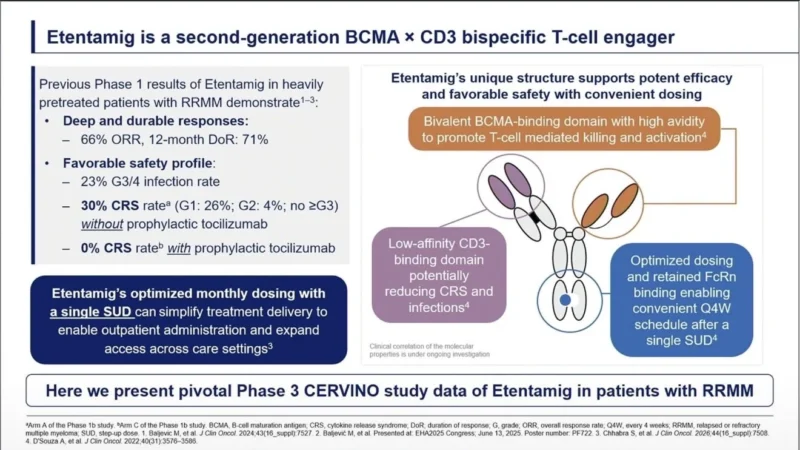
Etentamig is a second-generation BCMA×CD3 bispecific with:
- Bivalent BCMA binding
- Low-affinity CD3 binding
- One step-up dose
- 60-mg full dose followed by Q4W dosing.
A design intended to preserve efficacy while reducing toxicity and treatment burden.
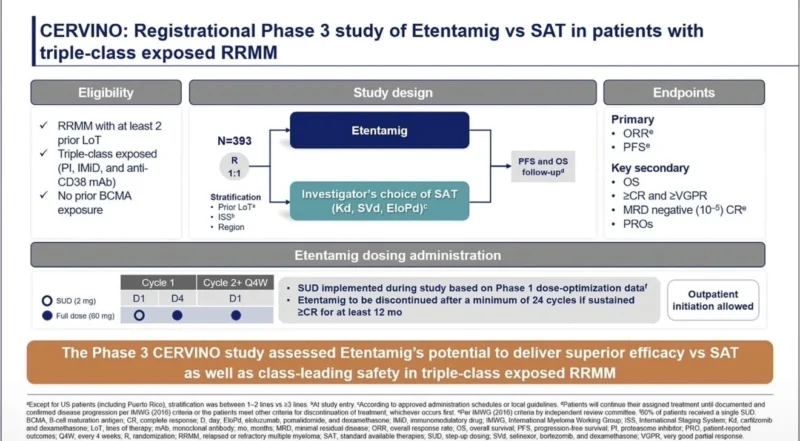
CERVINO randomized 393 patients with anti-BCMA-naïve, triple-class-exposed RRMM after ≥2 prior lines:
- Etentamig: n=196
- Investigator’s-choice SAT: n=197 (Kd, SVd, or EloPd)
Median follow-up: 11.4 months.
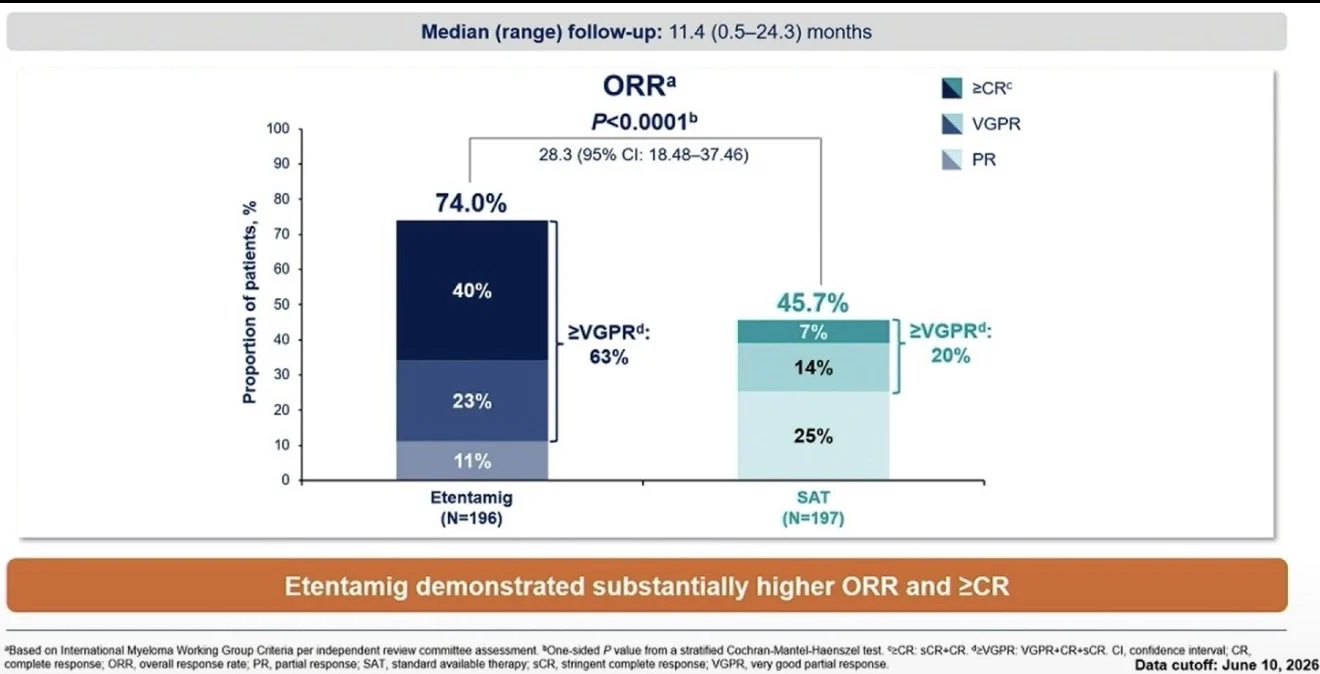
Etentamig significantly improved response:
- ORR: 74.0% vs 45.7%
- ≥VGPR: 63% vs 20%
- ≥CR: 40% vs 7%
- P<0.0001.
This was not merely a higher response rate-the responses were substantially deeper.
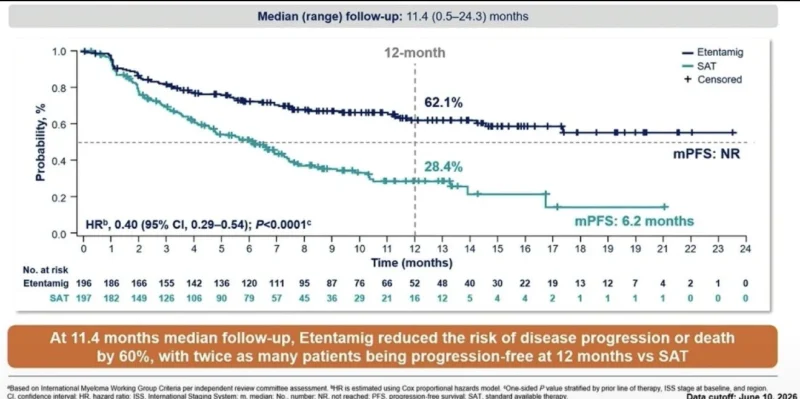
PFS showed a clinically meaningful benefit:
- HR 0.40; P<0.0001,
- 60% reduction in progression or death,
- Median PFS: not reached vs 6.2 months,
- 12-month PFS: 62.1% vs 28.4%.
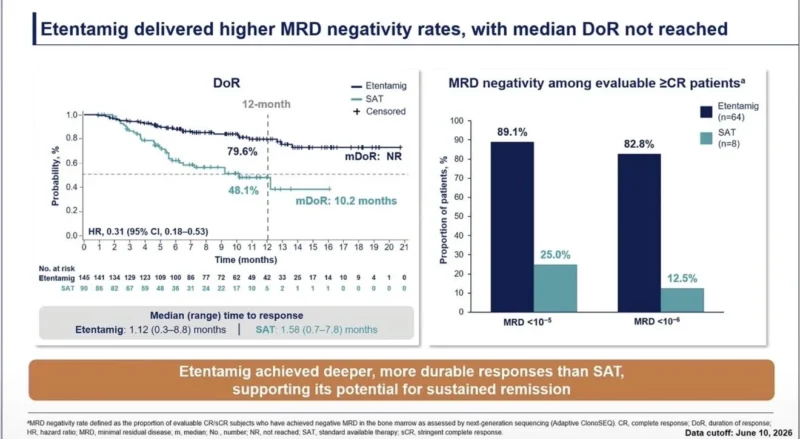
More than twice as many patients remained progression-free at one year. Responses also appeared durable:
- Median DoR: not reached vs 10.2 months,
- 12-month ongoing response: 79.6% vs 48.1%,
- DoR HR: 0.31.
Median time to response was rapid: 1.12 months with etentamig.
MRD negativity among evaluable patients achieving ≥CR was striking:
- MRD <10⁻⁵: 89.1% vs 25.0%,
- MRD <10⁻⁶: 82.8% vs 12.5%.
Important caveat: the SAT comparison included only 8 evaluable patients versus 64 with etentamig.
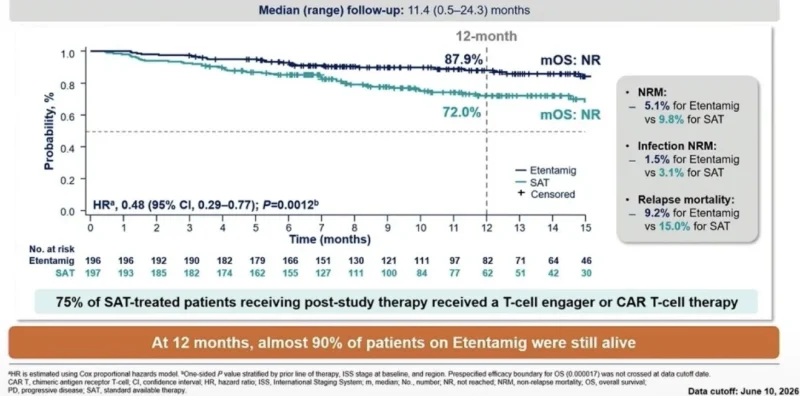
An encouraging early OS signal also emerged:
- HR 0.48
- 12-month OS: 87.9% vs 72.0%
- Median OS: not reached in either arm.
However, the prespecified OS efficacy boundary was not crossed, and longer follow-up is required.
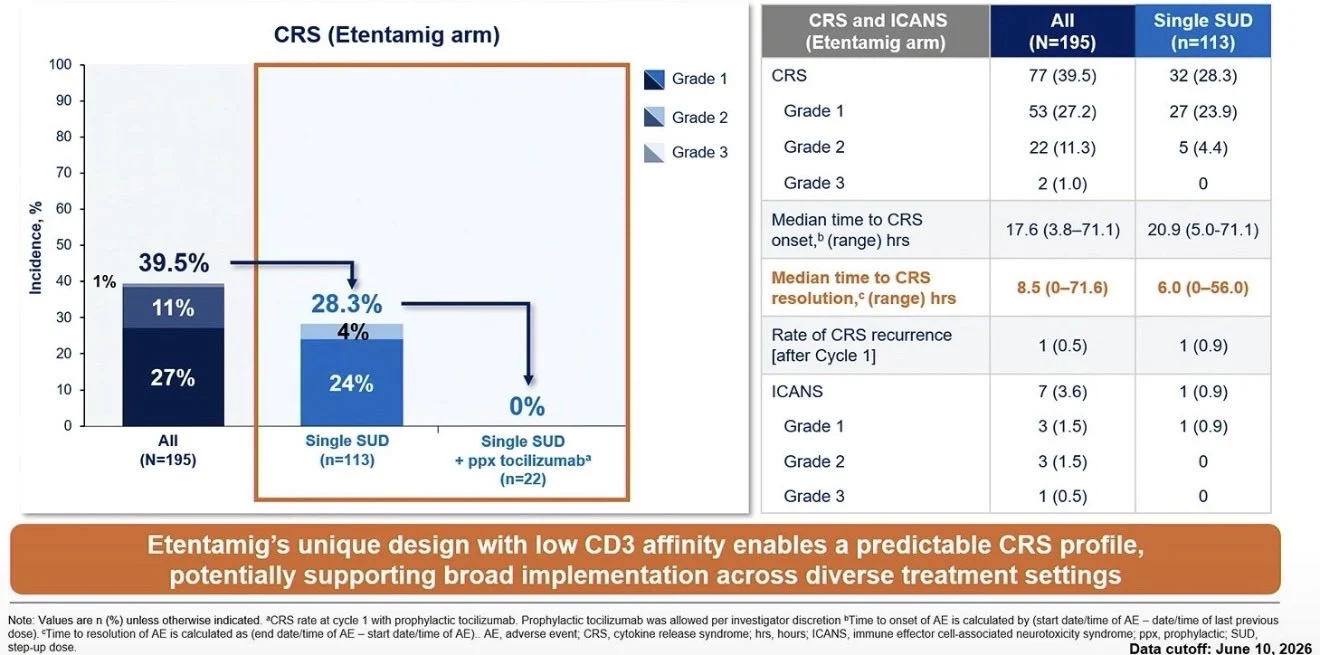
CRS with the optimized single step-up dose:
- Any CRS: 28.3%,
- Grade 1: 23.9%
- Grade 2: 4.4%
- No grade 3 CRS
- Median resolution: 6 hours
- ICANS: 0.9%, grade 1.
Among 22 patients receiving prophylactic tocilizumab, no CRS occurred. Safety requires a balanced interpretation:
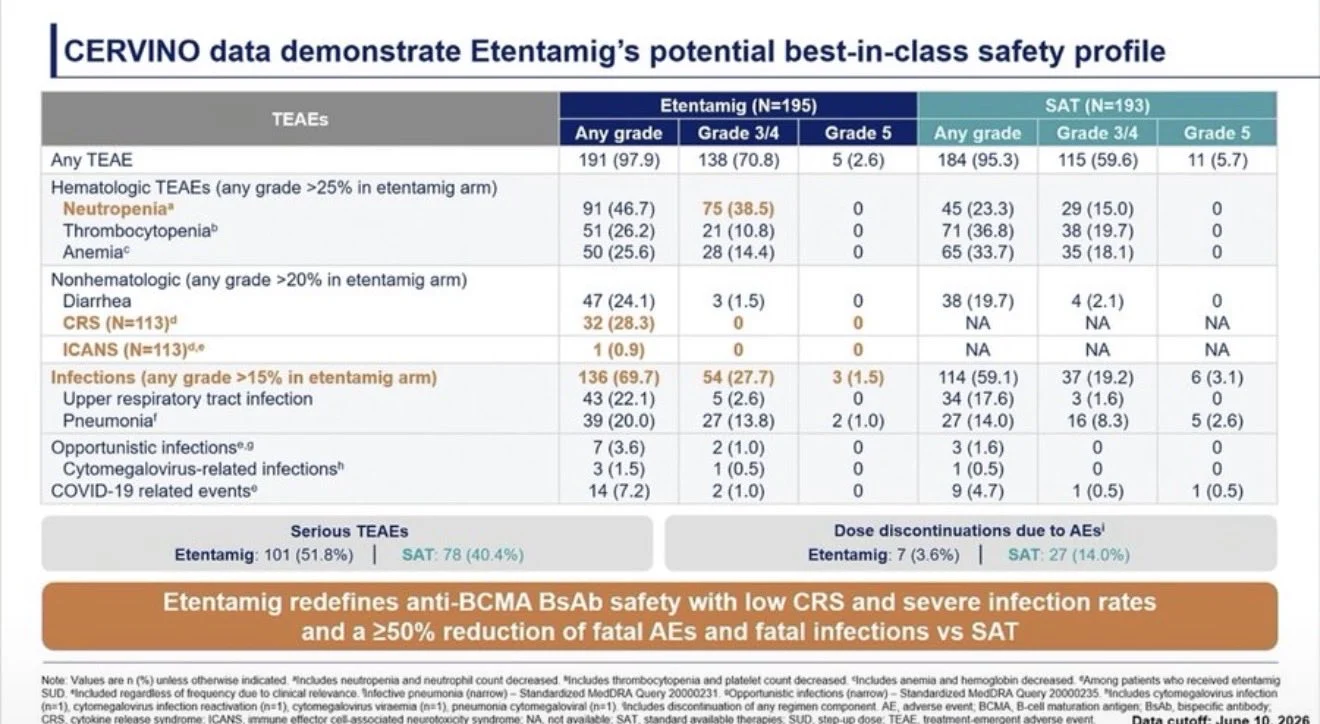
- Grade 3/4 TEAEs: 70.8% vs 59.6%,
- Grade 3/4 infections: 27.7% vs 19.2%
- Fatal AEs: 2.6% vs 5.7%,
- Discontinuation for AEs: 3.6% vs 14.0%.
Neutropenia and early infections remain important.”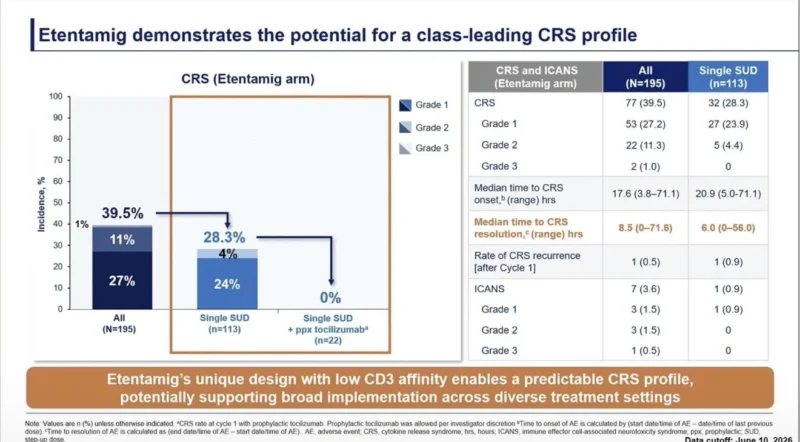
You can also read ‘Bristol Myers Squibb Presents First Data From Phase 3 EXCALIBER-RRMM Trial Evaluating Iberdomide Combination in Multiple Myeloma‘