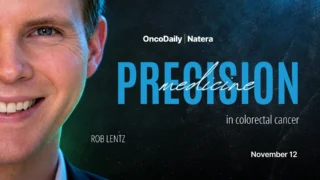
On November 13, 2026, OncoDaily, in partnership with Natera, will host a virtual educational session titled “Precision Medicine in Colorectal Cancer: Harnessing the Power of MRD Surveillance and Emerging Guidelines.” The webinar will examine the growing role of circulating tumor DNA (ctDNA) molecular residual disease (MRD) testing in colorectal cancer (CRC), with particular attention to postoperative surveillance, adjuvant treatment decisions, and emerging clinical guidelines.
The event will take place from 4pm Pacific Time and will be broadcast live on OncoDaily’s X platform.
Featuring Rob Lentz, MD, Medical Director for GI Oncology at Natera, and hosted by Mariam Khachatryan of OncoDaily, the discussion will address recent clinical evidence, practical applications of serial ctDNA monitoring, and the evolving use of molecular information in personalized colorectal cancer management.
Beyond Conventional Surveillance: The Growing Role of ctDNA in Colorectal Cancer
Colorectal cancer management is entering a new phase as molecular testing becomes increasingly relevant to postoperative monitoring and treatment planning.
Among the developments receiving considerable attention is ctDNA-based MRD testing, which can identify molecular evidence of residual cancer following treatment and provide additional information about recurrence risk.
Longitudinal ctDNA surveillance offers an opportunity to monitor molecular changes over time, potentially identifying recurrence months before it becomes apparent through conventional imaging.
During the webinar, Dr. Lentz will review the clinical evidence supporting serial ctDNA monitoring and discuss its potential role in informing postoperative care.
The presentation will also examine how molecular surveillance findings may contribute to clinical decision-making alongside established diagnostic and prognostic assessments.
From Molecular Detection to Treatment Decisions
An important focus of the session will be the potential application of MRD findings in adjuvant treatment planning.
As evidence continues to develop, ctDNA testing has been established as a tool for identifying patients who may benefit from treatment intensification and those for whom treatment de-escalation may be appropriate.
Dr. Lentz will discuss emerging decision-making frameworks, including the interpretation of serial ctDNA results, their relevance to recurrence risk assessment, and the clinical evidence informing treatment escalation or de-escalation strategies.
The webinar will also address emerging neoadjuvant immunotherapy combinations and their potential implications for personalized colorectal cancer treatment.
Emerging Guidelines and Real-World Evidence
The increasing availability of molecular testing has introduced important questions regarding its integration into routine oncology practice.
Updated consensus guidelines, recent clinical studies, and real-world evidence will form a central part of the discussion, with attention to the opportunities and remaining challenges associated with MRD-guided care.
The session will provide an overview of current evidence and examine how longitudinal molecular monitoring may contribute to more individualized surveillance and treatment strategies.
Natera’s Contribution to Molecular Residual Disease Research
The webinar is presented in collaboration with Natera, a global leader in cell-free DNA testing with a focus on oncology, women’s health, and organ health.
Natera develops personalized genetic testing and molecular diagnostic technologies intended to support earlier detection and more informed clinical decisions.
Among its oncology offerings is Signatera™, a personalized, tumor-informed ctDNA assay designed for molecular residual disease assessment and longitudinal monitoring.
The assay reports whether ctDNA is detected and provides quantitative measurements in mean tumor molecules per milliliter (MTM/mL), allowing molecular findings to be assessed over time.
Natera has also participated in major prospective clinical research initiatives, including CIRCULATE, a study involving more than 3,000 patients with colorectal cancer investigating MRD-guided treatment using Signatera.
The company reports more than 400 peer-reviewed publications and conducts testing through CLIA-certified and CAP-accredited laboratories.
Through its research and diagnostic development programs, Natera continues to investigate the clinical applications of cfDNA technologies across oncology and other areas of medicine.
Meet the Presenter and Host
Rob Lentz, MD — Presenter
Medical Director for GI Oncology at Natera
Dr. Lentz will lead the scientific presentation, reviewing developments in ctDNA surveillance, clinical evidence, emerging guidelines, and the potential application of molecular monitoring to treatment decisions in colorectal cancer.
Mariam Khachatryan — Host
OncoDaily
Mariam Khachatryan will host the virtual session, bringing together the discussion of recent research findings and their relevance to multidisciplinary colorectal cancer care.
Event Details and Registration
- Event: Precision Medicine in Colorectal Cancer: Harnessing the Power of MRD Surveillance and Emerging Guidelines
- Date: November 13, 2026
- Time: 4PM PT
- Format: Virtual webinar
- Platform: X (OncoDaily)
- Presenter: Rob Lentz, MD
- Host: Mariam Khachatryan
- Organized by: OncoDaily
- Partner: Natera
- Registration: Open
The webinar is intended for medical oncologists, surgical oncologists, gastrointestinal specialists, clinical pathologists, and other healthcare professionals involved in the multidisciplinary management of colorectal cancer.
Registration is now open for healthcare professionals interested in the latest developments in molecular residual disease surveillance, emerging clinical guidelines, and personalized treatment strategies in colorectal cancer.