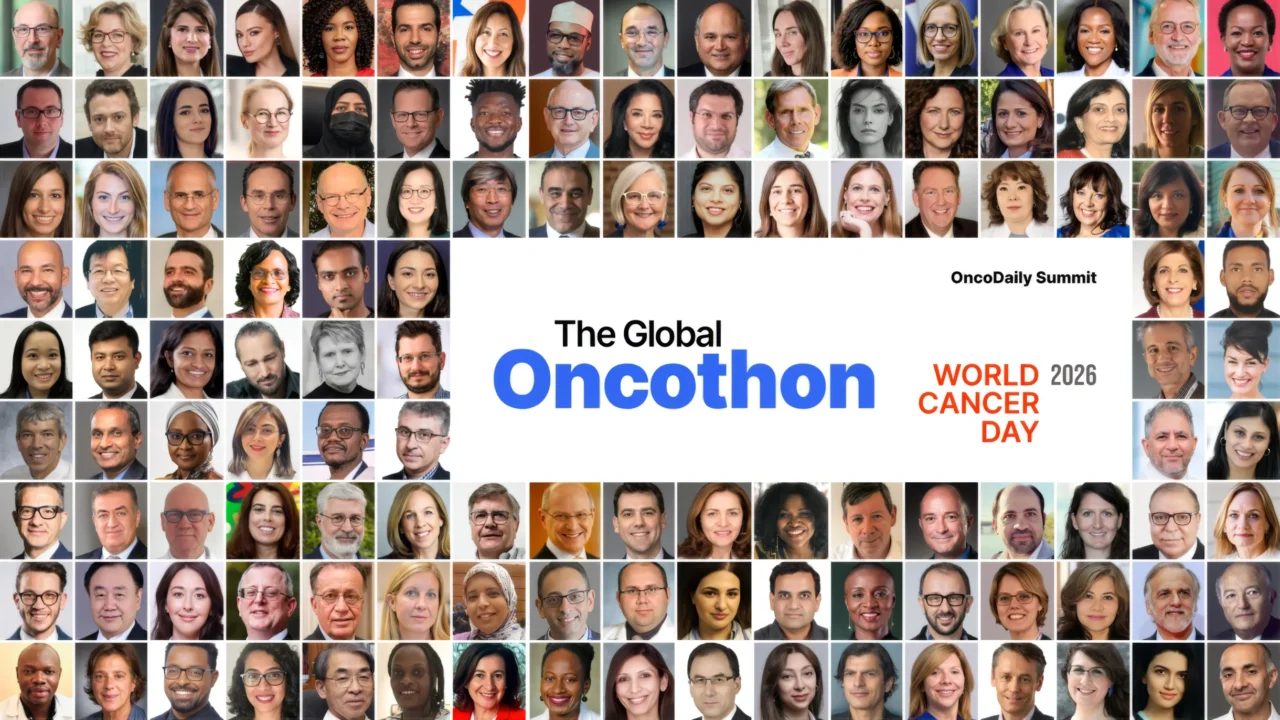
On World Cancer Day, OncoThon 2026 stood as a global call to action bringing together voices from around the world to address one of the most pressing challenges in oncology today: how to ensure equitable, patient-centered cancer care, regardless of geography, resources, or health system capacity.
Organized by OncoDaily in collaboration with the Union for International Cancer Control, Global OncoThon 2026 united more than 120 speakers and reached over 200,000 viewers worldwide through multilingual live streams and real-time translation on X. Advocates, clinicians, scientists, cancer survivors, innovators, and leaders of cancer awareness movements came together reflecting the full ecosystem required to drive meaningful change in cancer outcomes.
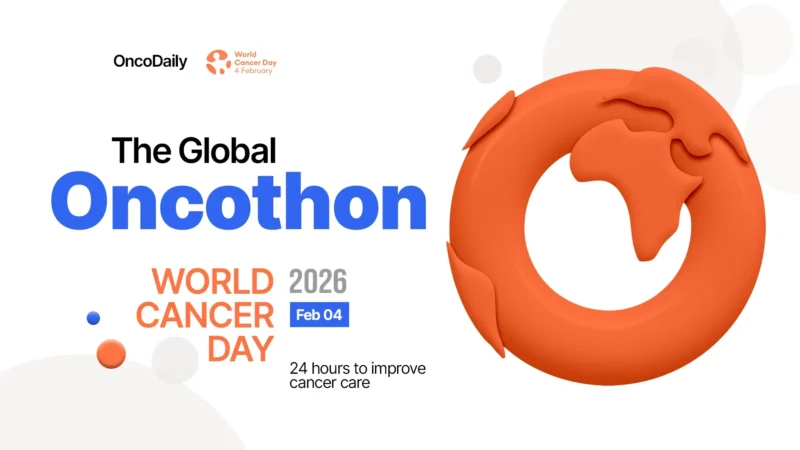
Thank you to all our speakers, partners, volunteers, and team members who made OncoThon 2026 possible. Your time, commitment, and belief in equitable cancer care turned a global vision into meaningful action. Together, you showed the power of collaboration and compassion in driving real change. Because cancer doesn’t take days off and neither do we.
Putting People at the Center of Global Cancer Care
A defining theme of Global OncoThon 2026 was the need to reframe cancer care around people, not disease alone. As emphasized by Zainab Shinkafi-Bagudu, patient advocates must be actively and formally integrated into cancer systems. Advocacy was positioned not as a complementary voice, but as a structural pillar essential for building trust, improving care navigation, and ensuring that services align with the realities of patients and communities, particularly in evolving health systems.
This perspective was reinforced by Julie Gralow, who challenged traditional oncology decision-making models. She called for a shift from tumor-centered discussions toward patient-centered boards, where treatment decisions prioritize the individual their values, quality of life, social context, and long-term goals rather than focusing exclusively on tumor biology. This approach was framed as critical to delivering care that is not only effective, but humane and equitable.
The conversation also highlighted the financial and educational burden cancer places on families, a point underscored by Guillermo Chantada. He drew attention to how financial toxicity, loss of income, transportation costs, and disrupted education particularly in pediatric and adolescent cancer care can undermine outcomes even when treatment is available. Speakers stressed that comprehensive cancer care must extend beyond clinical treatment to include financial counseling, educational continuity, psychosocial support, and policies that protect families from catastrophic health expenditure.
At the same time, discussions emphasized that meaningful progress does not rely solely on new scientific breakthroughs. As noted by Petros Grivas, the oncology community already possesses strong evidence on what improves outcomes early diagnosis, guideline-based treatment, multidisciplinary care, and equitable access. Fully implementing what is already known, particularly in underserved settings, could accelerate progress by years, reinforcing the importance of execution, accountability, and systems-level commitment.
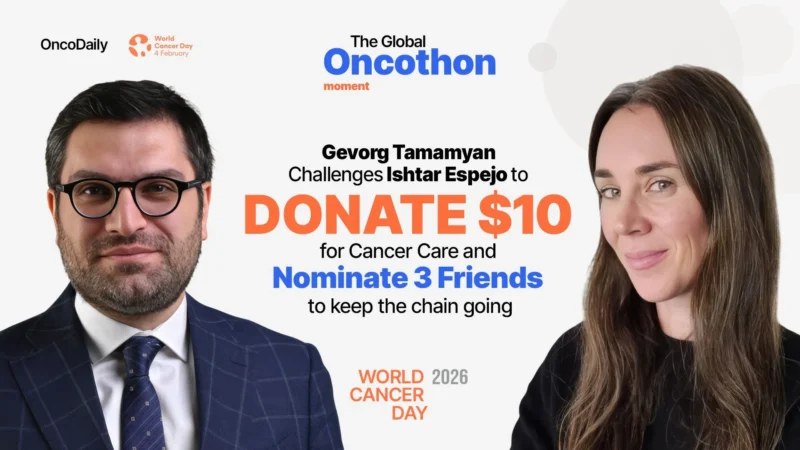
You Can Also Read From Gevorg Tamamyan to Ishtar Espejo: A $10 Challenge That Continues Worldwide by OncoDaily
Prevention, Early Detection, and Moving From Awareness to Action
OncoThon 2026 reflected a broader evolution of World Cancer Day initiatives from awareness toward action. Speakers addressed persistent stigma surrounding cancer screening, prevention, and vaccination, emphasizing that education must translate into uptake and access.
Early detection was repeatedly highlighted as one of the most effective tools to improve survival and reduce inequities, particularly in low-resource settings. Progress in HPV vaccination was presented as a tangible example of how coordinated advocacy, policy support, and community engagement can drive equitable cancer prevention.
Innovation With Responsibility
Scientific advances featured prominently throughout the event. Breakthroughs such as CAR T-cell therapy, bone marrow transplantation, and genetic engineering were discussed as transformative developments reshaping cancer treatment.
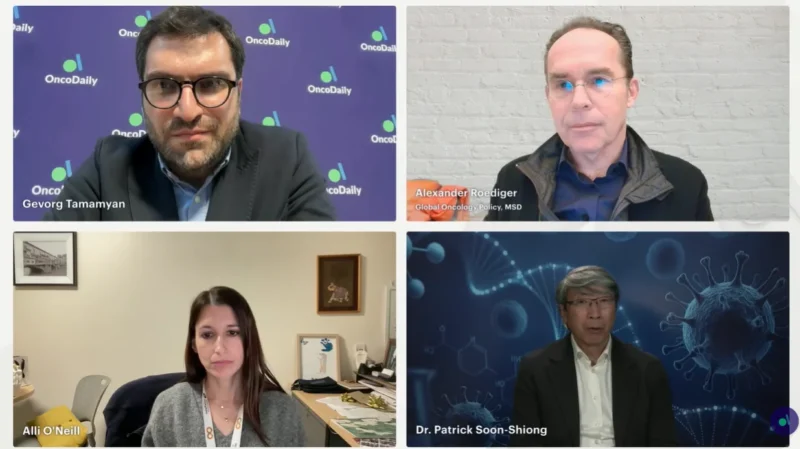
At the same time, sessions maintained a balanced perspective acknowledging the limitations of immunotherapy, treatment-related toxicity, and the need for personalized, context-aware decision-making. Innovation, speakers agreed, must be matched with patient safety, affordability, and access. Progress cannot be considered complete if it remains out of reach for large segments of the global population.
Expanding Clinical Trials and Research Capacity
Clinical trials were identified as a cornerstone of equitable cancer progress, particularly in low- and middle-income countries. Discussions emphasized the need to expand trial access, build local research infrastructure, and secure sustainable funding and regulatory systems that allow trials to be conducted ethically and effectively.
Examples of targeted investment and international collaboration illustrated how advanced cancer services can be established in resource-limited settings when global expertise aligns with local leadership and long-term commitment.
Cancer Care in Humanitarian and Fragile Settings
OncoThon 2026 also addressed the realities of cancer care in humanitarian, conflict-affected, and fragile settings. Participants highlighted how instability and displacement disrupt early diagnosis, treatment continuity, and follow-up placing patients, particularly children with cancer, at heightened risk.
Despite these challenges, discussions showcased resilience through adaptive care models, cross-border partnerships, and innovative approaches that help sustain oncology services under extreme pressure. These sessions underscored the need for international solidarity, coordinated policy action, and systems capable of functioning amid crisis.
Across all sessions, one conclusion resonated clearly: collaboration and knowledge exchange are essential to closing global cancer care gaps. Strengthening infrastructure, expanding and upskilling the oncology workforce, integrating community-based models, and ensuring patient voices shape decisions were all identified as critical pathways forward.
By connecting scientific expertise with lived experience and policy action, Global OncoThon 2026 demonstrated how collective effort across disciplines, borders, and sectors can transform shared challenges into shared solutions.