A new federal update to cervical cancer screening guidance is set to broaden how eligible patients can access screening, including the option to use patient-collected and in certain cases at-home high-risk human papillomavirus (hrHPV) testing. The update was published on January 5, 2026 through the Health Resources and Services Administration (HRSA) Women’s Preventive Services Guidelines and described in a JAMA viewpoint.
This development is expected to influence clinical practice and insurance coverage because HRSA’s preventive services guidelines are closely tied to requirements for many private health plans to cover recommended preventive services without patient cost-sharing. HRSA indicates that coverage under this updated cervical cancer screening guideline begins January 1, 2027.
What the Guidance Changes
The HRSA update maintains an age-based approach to screening, while elevating HPV testing and formally incorporating patient-collected sampling into the screening options for average-risk patients. For individuals ages 21 to 29 who are at average risk, the guideline continues to recommend cervical cytology (Pap testing) at routine intervals.
For average-risk individuals ages 30 to 65, the guidance emphasizes primary hrHPV testing as the preferred screening approach at recommended intervals, while preserving other established options when primary hrHPV testing is not used. The notable expansion is that patient-collected hrHPV testing should be offered as an option for average-risk patients in this age group; depending on the FDA-authorized test, self-collection may be performed in a clinical setting or at home.
The guideline is intended for average-risk screening and does not replace individualized management for patients with higher-risk clinical situations, such as those with certain immunocompromising conditions or those undergoing surveillance after significant prior abnormalities, where clinician-directed evaluation and follow-up pathways are essential.
Why Self-Collection is a Meaningful Access Shift
Cervical cancer is among the most preventable cancers when screening and timely follow-up are consistently completed. Yet screening gaps remain. The HRSA JAMA viewpoint underscores that a substantial proportion of patients are not up to date with screening and that many cervical cancer diagnoses occur among people who have not been screened or are overdue, a pattern associated with later-stage detection.
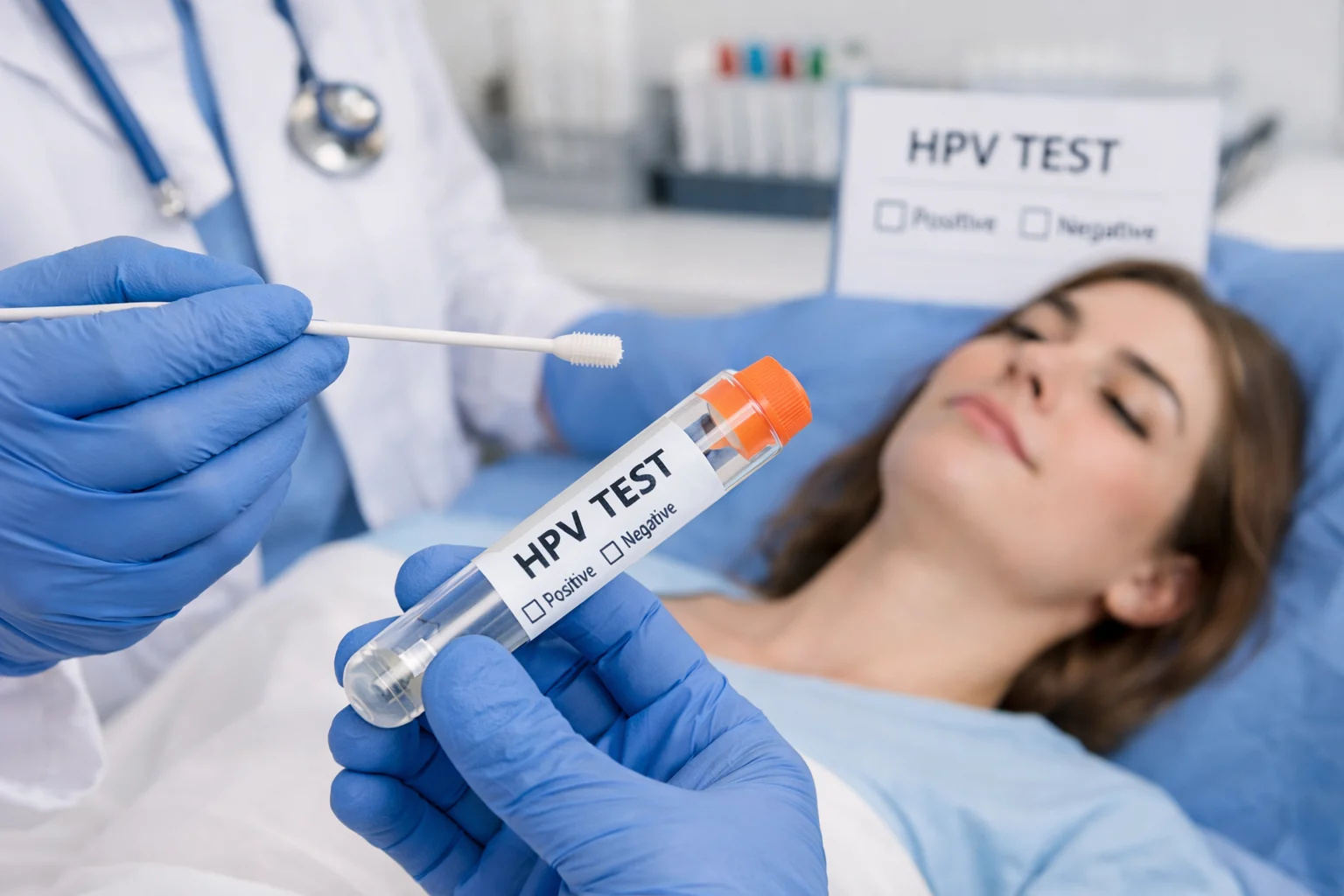
By adding patient-collected hrHPV testing including at-home collection where authorized HRSA’s guidance aims to reduce practical and personal barriers that can discourage screening participation. These barriers may include discomfort with pelvic exams, scheduling constraints, transportation challenges, and limited access to clinical services in underserved areas. Expanding screening modalities is therefore positioned as an access strategy intended to increase participation without weakening clinical rigor.
Evidence and Performance Considerations
Self-collected vaginal sampling for HPV testing has been evaluated across multiple studies, with evidence supporting strong concordance between HPV detection in patient-collected samples and clinician-collected specimens when validated methods are used. This body of evidence has helped justify the inclusion of self-collection as a screening option for appropriately selected, average-risk individuals.
At the same time, implementation success depends on standardized pathways for result management. The National Cancer Institute has emphasized the importance of clear clinical follow-up processes after self-collected HPV testing, particularly to ensure that positive results reliably lead to appropriate next steps, such as triage testing and diagnostic evaluation when indicated.
Regulatory Milestones Supporting At-Home Options
The HRSA update arrives after key regulatory developments that expanded where and how HPV sample collection can occur. In May 2024, the U.S. Food and Drug Administration (FDA) expanded certain approvals to allow patients to self-collect vaginal samples for HPV testing in health care settings under specified conditions.
In May 2025, the FDA approved the first prescription-based at-home cervical cancer screening collection kit, enabling eligible patients to collect a sample at home and send it to a laboratory for testing.
Together, these milestones created the practical regulatory pathway for HRSA to incorporate patient self-collection—including at-home options where FDA-authorized—into its preventive services guidance.
Coverage Implications and the Importance of Follow-Up
The coverage dimension of HRSA guidance is central to its expected impact. The JAMA viewpoint highlights that coverage requirements extend beyond the initial screening test to include additional services needed to complete the screening process, depending on results and clinical context.
This is particularly important for self-collected HPV testing, which can improve screening uptake only if systems ensure that patients with positive results receive timely follow-up. Clinically, an HPV-positive screening result signals elevated risk that may require further evaluation; it is not, by itself, a diagnosis of cancer. The effectiveness of expanded screening options therefore depends on coordinated workflows, patient communication, and access to diagnostic services when needed.
Alignment With Broader Guideline Trends
The HRSA update reflects a broader trend toward HPV-based screening strategies and an increasing willingness among guideline-setting organizations to recognize self-collection as an access-expanding tool. For example, the American Cancer Society’s updated guidance released in December 2025 also addressed self-collection for HPV testing within its screening framework.
While details differ across organizations, the overall direction is consistent: HPV testing is increasingly emphasized as a central screening modality, and self-collection is being adopted as a practical approach to improve screening participation among people who might otherwise remain unscreened.
Written by Nare Hovhannisyan, MD