
Hantaviruses have recently returned to public attention, with many people discussing their potential health impact and outbreak potential. But while most conversations focus on hantavirus as an acute infectious disease, another member of this viral family deserves attention for a different reason. Puumala virus, a rodent-borne hantavirus common in parts of Europe, has been studied not only for its role in hemorrhagic fever with renal syndrome, but also for its possible long-term links to hematologic cancers.
According to a paper published on June 2023 in the International Journal of Infectious Diseases by Kääriäinen et al., Puumala virus infection was associated with an increased risk of lymphoid malignancies in the Finnish population, particularly mature B-cell neoplasms, during the first five years after infection.
Puumala virus, or PUUV, is a hantavirus carried mainly by the bank vole and transmitted to humans through inhalation of aerosolized rodent excreta. In humans, it causes a generally milder form of hemorrhagic fever with renal syndrome, characterized by fever, acute kidney injury, thrombocytopenia, and capillary leakage. Although the acute illness is well described, much less is known about its long-term health consequences.
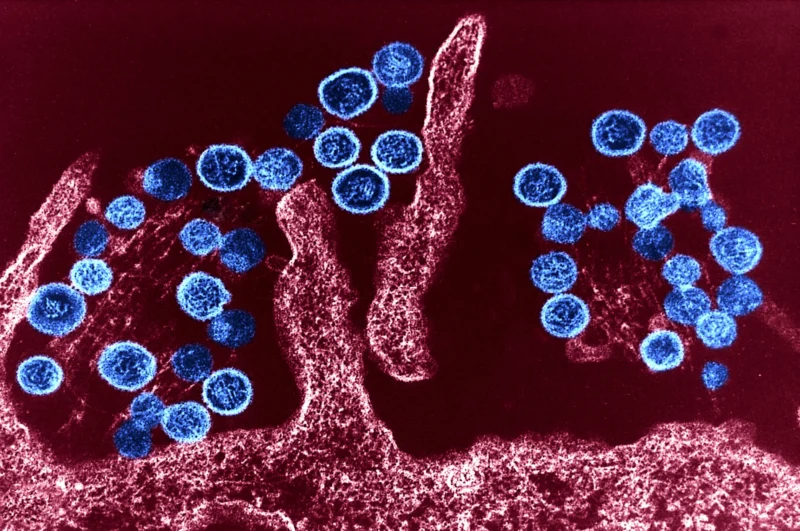
The Finnish study was motivated by earlier research from Sweden and South Korea suggesting that hantavirus infections may be followed by an increased risk of lymphoma or other cancers. Another important biological clue is that PUUV does not only infect endothelial cells, which are classically involved in hantavirus disease, but has also been shown to infect B cells and trigger strong B-cell activation. This raised the question of whether PUUV infection could contribute to later lymphoid malignancies.
To investigate this, the researchers conducted a large retrospective register-based cohort study using nationwide Finnish data. They linked the Finnish Cancer Registry with the National Infectious Diseases Register for the years 2009 to 2019. The analysis included 16,075 people with laboratory-confirmed PUUV infection and compared their subsequent risk of lymphoid malignancy with the rest of the Finnish population.
During more than 61 million person-years of follow-up, the researchers identified 24,691 cases of lymphoid malignancy in Finland. Among people with PUUV infection, 90 lymphoid malignancies were diagnosed, and 68 of these occurred after the PUUV infection and were included in the main analysis.
The timing of cancer diagnosis was important. Three cases occurred within the first three months after PUUV infection, a period the investigators treated as a wash-out interval because an existing but undiagnosed malignancy could have been detected during care for the infection. Ten cases occurred between 3 and less than 12 months after PUUV infection, while 38 cases occurred between 1 and less than 5 years after infection.
In the main Cox regression analysis, PUUV infection was associated with a twofold increased risk of lymphoid malignancy between 3 and less than 12 months after infection. The hazard ratio was 2.0, with a 95% confidence interval of 1.1 to 3.7. The risk remained elevated from 1 to less than 5 years after infection, with a hazard ratio of 1.6 and a 95% confidence interval of 1.2 to 2.3. After five years, the increased risk was no longer statistically significant.
The strongest signal was seen for mature B-cell neoplasms. These cancers represented the majority of lymphoid malignancies both in the general population and among patients who developed cancer after PUUV infection. Of the 68 lymphoid malignancies diagnosed after PUUV infection, 60 were mature B-cell neoplasms.
For this group, the risk was significantly increased both 3 to less than 12 months after infection and 1 to less than 5 years after infection. The hazard ratio was 2.2 in the 3-to-12-month period and 1.8 in the 1-to-5-year period. The authors also reported a signal for myeloma and other plasma cell neoplasms during the 1-to-5-year period, although smaller subgroup numbers limited the reliability of analyses for several lymphoma categories.
The findings are notable because they align closely with earlier Swedish data. In the Finnish study, the standardized incidence ratio for lymphoid malignancy was 2.0 during the 3-to-12-month period and 1.6 during the 1-to-5-year period after PUUV infection. The Swedish study reported similar estimates, with an increased lymphoma risk within the first year and during the following years after infection.
The biological explanation remains uncertain, but the authors point to several plausible mechanisms. Hantaviruses have been shown to infect B lymphocytes, and PUUV can induce polyclonal B-cell activation. During infection, activated B cells and plasmablasts may expand substantially. In theory, this intense immune stimulation, combined with possible anti-apoptotic effects of hantavirus proteins, could create conditions that favor the development of mature B-cell neoplasms in susceptible individuals.
However, the study does not prove that PUUV directly causes lymphoma or other lymphoid cancers. As a register-based analysis, it can show association, not causation. The authors also noted several limitations. Only laboratory-confirmed PUUV infections were included, meaning that mild or undiagnosed infections were likely missed. Given the relatively high PUUV seroprevalence in Finland, some people classified as uninfected may actually have had previous PUUV infection, which could weaken the observed association.
The study also lacked data on possible confounding factors such as smoking, chronic diseases, socioeconomic status, or other exposures. Smoking is already known to be associated with PUUV infection risk and disease severity, and it may also influence cancer risk. These missing variables mean the results should be interpreted cautiously.
Still, the national scope of the study strengthens the findings. Finland has high-quality population registries and a relatively high burden of PUUV infection, making it a useful setting for studying rare long-term outcomes. The use of the HAEMACARE classification also allowed the researchers to examine lymphoid malignancies in more clinically meaningful categories rather than relying only on broad cancer codes.
The absolute numbers remain small. Only 68 lymphoid malignancies were diagnosed after PUUV infection among more than 16,000 infected individuals. The authors also emphasized that only a small fraction of all lymphoid malignancies in Finland occurred in people with a documented history of PUUV infection. Therefore, even if the association is real, the public health impact may be limited in absolute terms.
The study adds to a growing body of evidence that some viral infections may have longer-term hematologic consequences beyond the acute illness. For PUUV specifically, it supports the need for further research into how hantavirus infection interacts with B-cell biology and whether certain patients are at higher risk.
For clinicians, the findings do not suggest immediate changes in routine care, but they raise awareness of a possible post-infectious cancer association. For researchers, they provide a strong rationale for mechanistic studies, validation in other populations, and deeper investigation of PUUV-related immune activation.
In conclusion, Kääriäinen et al. found that PUUV infection in Finland was associated with a significantly increased risk of lymphoid malignancies during the first five years after infection, with the strongest association seen for mature B-cell neoplasms. The study does not establish causality, but it strengthens previous observations and highlights an important area for future infectious disease and hematologic cancer research.