
After 42 days without a single new case, the Democratic Republic of Congo has officially declared the end of its 16th Ebola outbreak in Kasai Province – a flare that began with one pregnant woman and grew to 53 confirmed cases and 45 deaths before being brought under control.
On 2 December 2025, Africa CDC Director General Dr Jean Kaseya stood alongside Prime Minister Judith Suminwa Tuluka to mark the moment. More than 48,000 vaccine doses were deployed to protect over 44,400 people, including frontline health workers and high-risk contacts. The final patient was discharged on 19 October, starting the official countdown to zero.
But the message from Africa CDC is clear: the job is not done when the outbreak ends. With USD 1 million committed to post-epidemic studies in partnership with the DRC Ministry of Health and global partners, work is now focused on strengthening alert systems, lab capacity and risk communication so that the next threat can be detected and contained even faster.
Text Messages Take on Tuberculosis in Ethiopia and Liberia
Instant mobile messages are being turned into lifesaving tools in a new Africa CDC study testing whether simple SMS reminders can keep tuberculosis patients on their medication. The trial is underway in Ethiopia and Liberia, two of Africa’s highest TB-burden countries, supported by a US$100,000 World Bank grant.
TB remains a major killer: 10.8 million infections and 1.25 million deaths were recorded globally in 2023. Incidence in Ethiopia and Liberia stands at 119 and 308 cases per 100,000 people, respectively. Poor adherence to long TB drug regimens continues to fuel relapse and drug-resistant strains.
The study, running from 17 November to 12 December 2025, will enrol 844 patients, with around 200 receiving SMS reminders in a pilot phase. Researchers will track not only whether adherence improves, but also what stops people from using digital tools in the first place. The findings are expected to inform national TB strategies and wider digital health policy across Africa.
Health Security, Sovereignty and the Push to “Make in Africa”
Africa CDC’s Health Security and Sovereignty (AHSS) agenda builds on the New Public Health Order adopted after COVID-19. The goal: resilient, self-reliant systems that are less dependent on external aid and fragile supply chains.
As highlighted in the five-pillar graphic on page 1 of the bulletin, AHSS focuses on: governance, preparedness, financing, digital innovation and local manufacturing. By 2040, Africa aims to produce 60% of the essential health products it uses, secure its health data and become a rule-shaper in global health.
In parallel, a new concept note, “Rethinking Africa’s Health Financing in a New Era,” calls for sustainable, domestically anchored health financing architecture that can weather shocks and support universal coverage.
depositphotos.com
Investing in Primary Care to Make Systems Shock-Proof
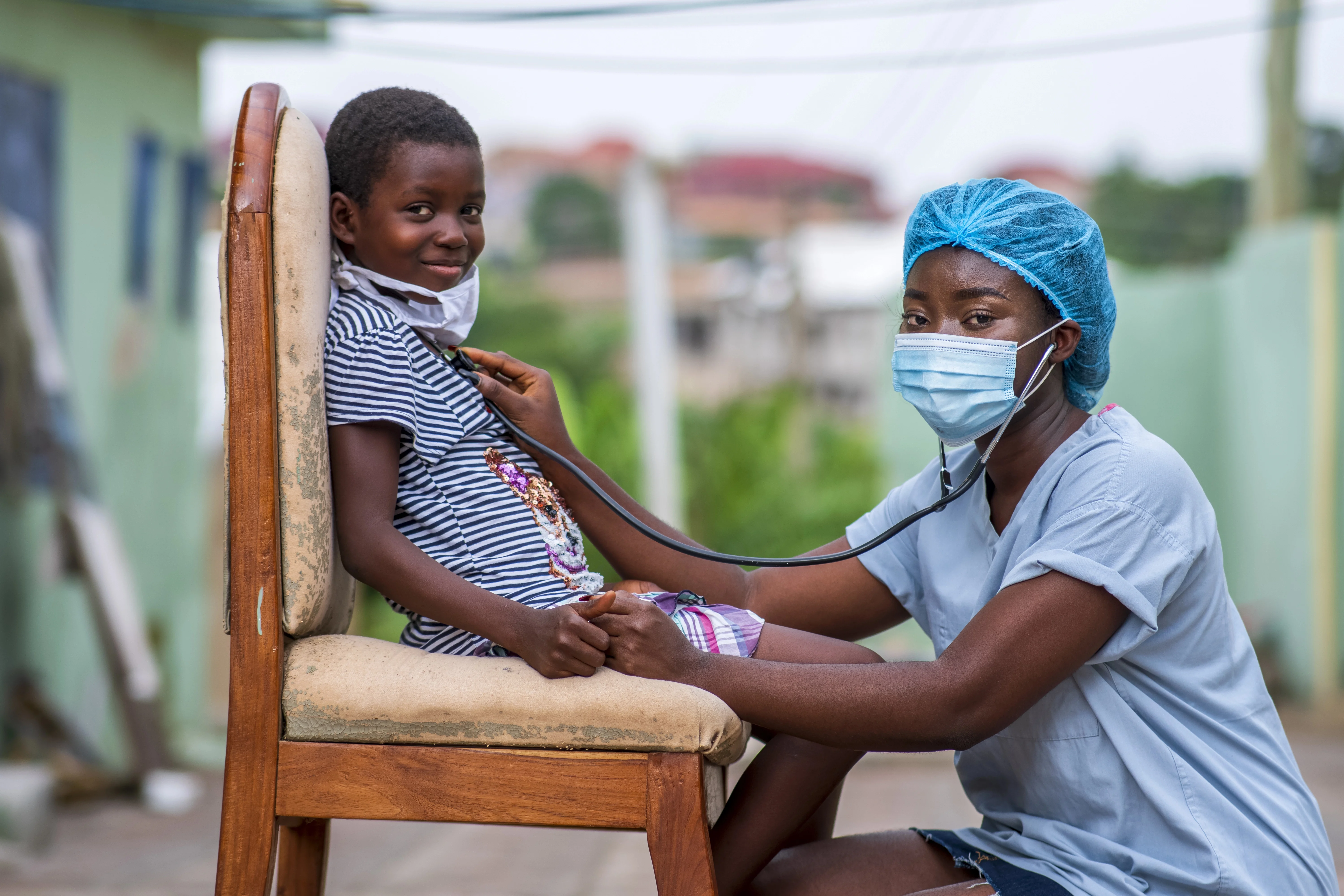
At the Universal Health Coverage High-Level Forum in Tokyo, Dr Kaseya showcased how African countries are putting health sovereignty into practice: boosting domestic financing, expanding primary care and investing in local manufacturing.
Examples highlighted in the bulletin include:
- Nigeria increasing its health budget by 60% in 2025
- Ghana raising funding for its National Health Insurance Scheme by 66%
- Rwanda’s community-based health insurance now covering more than 85% of its population
- Egypt aligning universal insurance, unified procurement and local production to reinforce resilience
Africa CDC is also helping drive reforms by launching the African Epidemic Fund in 2026, advancing pooled procurement and supporting 25 vaccine manufacturing projects across the continent.
Smarter Decisions, Stronger Systems
Quality decision-making doesn’t happen automatically. Africa CDC is investing in “Decision Quality” (DQ) as a core organisational skill – just as critical as any lab or clinical capability. A five-day workshop for staff, highlighted in the bulletin, focused on building a culture where decisions are transparent, well-documented and based on clear frameworks rather than intuition alone.
This internal shift is designed to speed up collaboration and raise the standard of strategic choices, from emergency responses to long-term investments.
Social and Behaviour Change Moves Into the Budget Line
From vaccine uptake to outbreak response, social and behaviour change (SBC) is essential – but often under-funded. In partnership with UNICEF and John Snow Inc., Africa CDC has worked with Malawi, Burundi, Uganda, The Gambia and Libya to cost SBC activities properly and secure space for them in national budgets.
Countries piloted a new costing framework and monitoring scorecard, developed standard budget codes, and built stronger investment cases for domestic financing. The result is a pathway to institutionalise SBC within core health financing – making campaigns more predictable, sustainable and less donor-dependent.
Training Regulators to Power Africa’s Vaccine Factories
As vaccine production on the continent ramps up, regulators need the skills and authority to keep pace. Africa CDC, AUDA-NEPAD and Institut Pasteur Dakar recently brought together regulators from 10 African Union Member States for hands-on training in inspecting production sites, checking batch quality and reviewing scientific dossiers.
The aim is to build robust, trusted regulatory systems—so that vaccines made in Africa meet global standards and can move quickly from factory floor to clinic. Strong regulators underpin the broader AHSS vision of “local production for local health security.”
Watching the Horizon: Real-Time Epidemic Intelligence
Finally, the Africa CDC Epidemic Intelligence Weekly Report continues to track moderate to very high-risk events across the continent—from emerging infectious diseases to natural disasters—using a One Health, multisectoral lens. The report, illustrated with a map of events on page 2 of the bulletin, provides Member States with real-time situational awareness for faster, more targeted responses.
Together, these developments—ending Ebola in DRC, testing digital tools for TB, investing in primary care, financing, regulation and behaviour change—signal a continent not only reacting to crises, but actively reshaping its health future.