





 USA, Providence

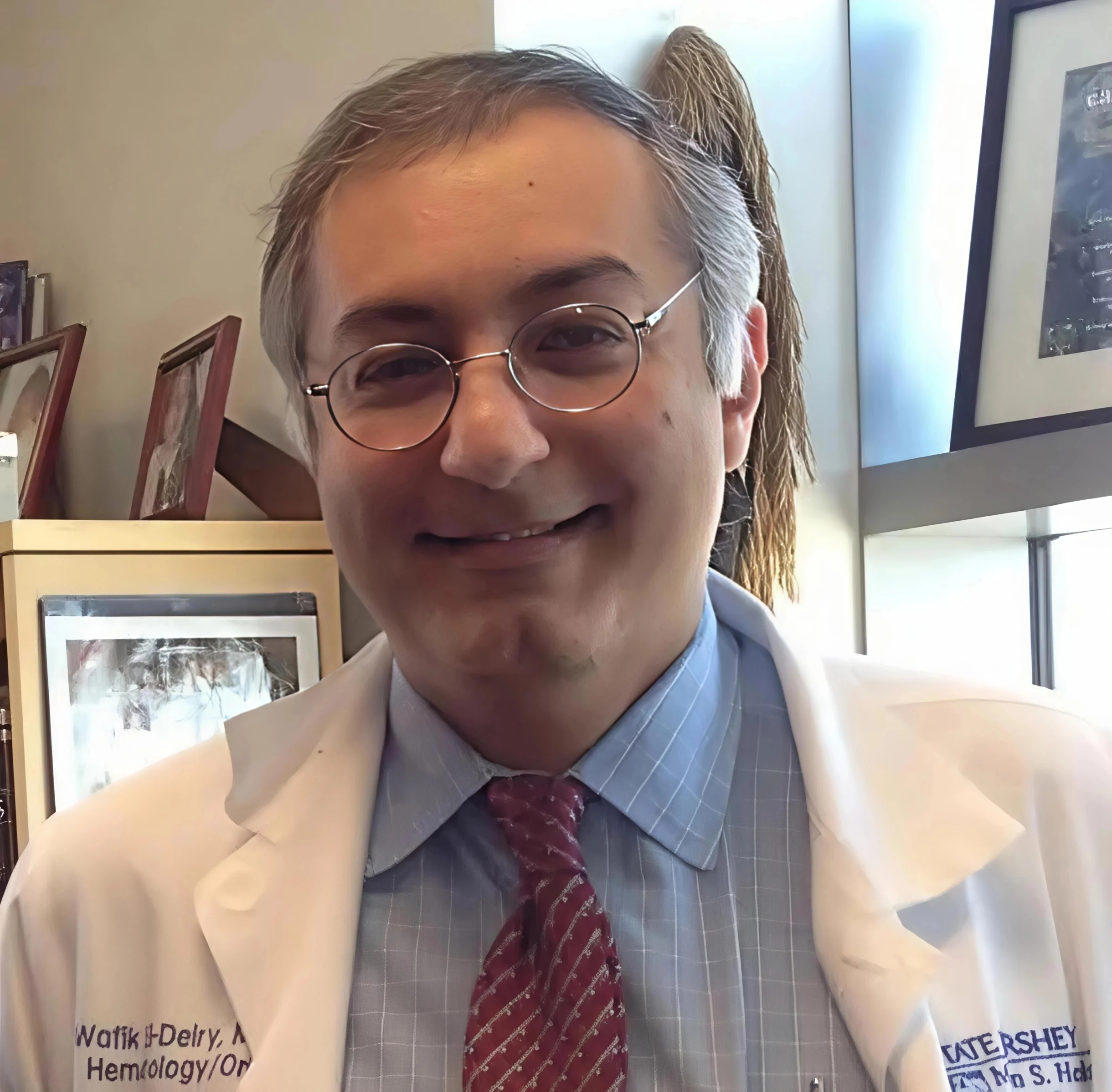
Wafik El-Deiry, MD, PhD, FACP is an American physician-scientist, cancer biologist, and practicing medical oncologist whose discoveries have fundamentally shaped the fields of tumor suppression, cell death signaling, and cancer therapeutics. He is the Founding Director of the Legorreta Cancer Center at Brown University, Associate Dean for Oncologic Sciences at the Warren Alpert Medical School, and the elected Chair of the Worldwide Innovation Network (WIN) Consortium in Personalized Cancer Medicine. With an H-index of 134 and over 115,000 citations, Wafik El-Deiry is among the most highly cited cancer researchers in the world. His laboratory discovery of the small molecule ONC201 (dordaviprone/modeyso) led to the first-ever FDA approval for recurrent H3K27M-mutated diffuse glioma on August 6, 2025 — a milestone that took nearly two decades from bench to clinic.
Current Positions
- Founding Director, Legorreta Cancer Center at Brown University (December 2021 – Present)
- Associate Dean for Oncologic Sciences, Warren Alpert Medical School, Brown University (January 2019 – Present)
- Mencoff Family University Professor of Medical Science, Brown University (January 2019 – Present)
- American Cancer Society Research Professor (January 2009 – Present; title held for life)
- Tenured Professor of Pathology and Laboratory Medicine, Warren Alpert Medical School, Brown University (January 2019 – Present)
- Director, Joint Program in Cancer Biology, Brown Institute for Translational Science and Brown University Health System (January 2019 – Present)
- Attending Physician, Hematology/Oncology, Brown University Health Cancer Institute, Rhode Island Hospital (January 2019 – Present)
- Chair, Worldwide Innovation Network (WIN) Consortium in Personalized Cancer Medicine (Elected December 2023 – Present)
- Director, Laboratory of Translational Oncology and Experimental Cancer Therapeutics, Warren Alpert Medical School, Brown University (January 2019 – Present)
- Co-Editor-in-Chief, Oncotarget (2024 – Present)
- Associate Editor-in-Chief, American Journal of Cancer Research (2021 – Present)
Education & Training
- B.S., Chemistry (Magna Cum Laude), University of Miami (1978–1981)
- M.D., University of Miami School of Medicine (1981–1987)
- Ph.D., Biochemistry, University of Miami School of Medicine (1981–1987)
- Internship (Osler Medicine), Department of Medicine, The Johns Hopkins Hospital (1987–1988)
- Residency, Internal Medicine, The Johns Hopkins Hospital (1988–1990)
- Senior Clinical Fellowship, Medical Oncology, The Johns Hopkins Oncology Center (1990–1994)
- Postdoctoral Fellowship, Laboratory of Dr. Bert Vogelstein, The Johns Hopkins Oncology Center (1991–1994)
Professional Experience
- Assistant Professor of Medicine (Hematology/Oncology) and Genetics, University of Pennsylvania (1994–1999)
- Investigator, Howard Hughes Medical Institute (1995–2004)
- Associate Professor of Medicine, Genetics, and Pharmacology (with Tenure), University of Pennsylvania (1999–2005)
- Professor of Medicine, Genetics, and Pharmacology (with Tenure), University of Pennsylvania (2005–2010)
- Co-Leader, Radiobiology and Imaging Program, Abramson Cancer Center, University of Pennsylvania (2004–2010)
- Associate Director for Physician-Scientist Training, Hematology/Oncology, University of Pennsylvania (2007–2010)
- Division Chief, Hematology/Oncology; Rose Dunlap Division Chair; Associate Director for Translational Research, Penn State Cancer Institute (2010–2014)
- Interim Director, Penn State Hershey Cancer Institute (2013–2014)
- Deputy Director for Translational Research; Co-Leader, Molecular Therapeutics Program; William Wikoff Smith Endowed Chair in Cancer Research, Fox
- Chase Cancer Center (2014–2018)
- Chair, Precision Medicine Steering Committee, Fox Chase Cancer Center (2015–2018)
- Founding Director, Cancer Center at Brown University (March 2020 – December 2021)
Research Activity
Wafik El-Deiry’s research program spans over three decades of continuous investigation into the molecular mechanisms of tumor suppression, apoptosis, cell cycle regulation, and cancer drug discovery. His laboratory operates at the intersection of basic cancer biology and translational therapeutics, with a focus on converting mechanistic insights into clinically actionable interventions. Core areas of active investigation include:
- p53 pathway biology and restoration — Discovery and functional characterization of p21(WAF1/CIP1) as the primary mediator of p53-dependent cell cycle arrest; ongoing development of small molecules that restore p53 pathway signaling in tumors harboring mutant p53, including NSC59984, CB002, and PG3 compounds
- TRAIL death receptor signaling — Discovery of TRAIL receptor DR5 (KILLER/DR5) as a p53 target gene; mechanistic investigation of TRAIL pathway induction, sensitization, and resistance across tumor types; preclinical and clinical development of TRAIL pathway-inducing agents
- Imipridone cancer therapeutics — Discovery of ONC201/TIC10 in a 2007 chemical library screen; 15+ years of mechanistic investigation demonstrating engagement of ClpP mitochondrial protease, integrated stress response (ISR) induction, dopamine receptor antagonism, and TRAIL pathway activation; investigation of ONC201 analogues ONC206 and ONC212 across tumor types including DIPG, glioblastoma, pancreatic cancer, prostate cancer, and hematologic malignancies
- Integrated stress response (ISR) in cancer therapy — Characterization of eIF2α kinases HRI and PKR as mediators of ONC201 anti-cancer activity; ATF4 as a downstream transcriptional effector of ISR-mediated tumor cell death
- HIF-1α and hypoxia in cancer — Non-canonical approaches to HIF destabilization including dual CDK/HSP90 inhibition; identification of Smurf2 as a VHL-independent HIF-1α E3 ubiquitin ligase
- Tumor microenvironment and immunotherapy — GSK-3β inhibition to enhance anti-PD-L1 efficacy; integrin/TGF-β axis modulation by GLPG-0187 to bypass immune evasion; NK cell activation and TRAIL-NK adoptive therapy strategies in prostate and pancreatic cancer
- Radiation injury rescue — Demonstration that TRAIL pathway agonists (TLY012, ONC201) rescue mice from radiation-induced pneumonitis, dermatitis, and esophageal injury, with translational implications for cancer radiotherapy toxicity mitigation
- Liquid biopsy and circulating tumor cells — Development of multiplex marker-based CTC platforms; clinical correlation studies in colorectal, breast, and carcinoma of unknown primary
- Precision oncology — Leadership of the WIN Consortium in personalized cancer medicine; molecular tumor board activity; pan-cancer genomic analyses in collaboration with Caris Life Sciences
Academic Impact
- H-index: 134 (Google Scholar, May 2026)
- Total citations: over 116,655 (Google Scholar, May 2026)
- Discovery of p21(WAF1) published in Cell (1993) was the most highly cited original work in that journal for over two decades
- Over 380 peer-reviewed research publications; 8 edited books; extensive editorial, review, and chapter contributions
- Named a Highly Cited Researcher by ISI/Thomson Reuters in Molecular Biology and Genetics (2005)
- Recipient of Brown University Inventor of the Year Award: 2021, 2022, and 2023
- Elected Senior Member, National Academy of Inventors (2024), in recognition of 19 issued patents
- Over 100 laboratory trainees who have gone on to academic, clinical, and industry careers globally
- Led successful advocacy resulting in a $374M State of Rhode Island commitment to support the Legorreta Cancer Center, including funding for new research infrastructure
- Finalist as Candidate for Director, U.S. National Cancer Institute (December 2024 – September 2025)
- Drug discovered in El-Deiry laboratory in 2007 (ONC201/TIC10, dordaviprone/modeyso) received first-ever FDA approval on August 6, 2025 for recurrent
- H3K27M-mutated diffuse glioma
Memberships, Honors & Awards
- Phi Kappa Phi (1980)
- Magna Cum Laude, University of Miami (1981)
- Michael S. Brown Junior Faculty Research Achievement Award, University of Pennsylvania School of Medicine (1998)
- Elected Member, American Society for Clinical Investigation (1999)
- Honorary Master of Arts Degree, University of Pennsylvania (2001)
- Pioneer in Technology Award, Sbarro Health Research Organization (2004)
- Elizabeth and John Cox Award for Molecular Advances in GI Diseases and Cancer, Georgetown University Medical Center (2005)
- Elected Member, Interurban Clinical Club (founded by Sir William Osler, 1905); Councilor (2007); Secretary/Treasurer (2008); President (2013–2014)
- ISI Highly Cited Researcher, Molecular Biology and Genetics (2005)
- Elected Member, Association of American Physicians (2008)
- Named America’s Top Oncologist, Consumer Research Council of America (2008, 2009)
- 2009 Kuwait International Prize in Applied Sciences (International Prize, $100K)
- American Cancer Society Research Professorship (2009–2018; title held for life from 2009)
- Fellow, American College of Physicians (FACP) (2012)
- Dean’s Award for Excellence in Teaching, Penn State College of Medicine (2012)
- Excellence in Mentoring Award, Department of Medicine, Penn State College of Medicine (2013)
- Elected Member, The Johns Hopkins University Society of Scholars (2014)
- ACS Fostering Innovation Award (FIA) between Morehouse School of Medicine and Brown University (2022; one of four awarded nationally)
- Brown University Inventor of the Year Award (2021, 2022, 2023)
- 2022 AACR-Novocure Research Award
- Elected Senior Member, National Academy of Inventors (2024)
- Finalist as Candidate for Director, U.S. National Cancer Institute (December 2024 – September 2025)
- FDA Approval of Drug Discovered in El-Deiry Laboratory (ONC201/TIC10, dordaviprone/modeyso) for recurrent H3K27M-mutated diffuse glioma (August 6, 2025)
- Lifetime Achievement Award in Precision Oncology, Mumbai, India (February 2026)
- Named Top Doctor in Rhode Island and Pennsylvania (2023)
- Member, American Association for the Advancement of Science
- Member, American Association for Cancer Research (1995)
- Member, American Society of Clinical Oncology (1997)
- Member, American Society for Clinical Investigation (1999)
- Fellow, American Academy of Nanomedicine (2006)
- Member, Association of American Physicians (2008)
- Member, Society for Translational Oncology (2011)
Areas of Specialization
- Medical oncology: colorectal cancer, precision oncology
- Hematology/oncology (attending physician)
- Tumor suppressor biology: p53 pathway, p21(WAF1/CIP1), BRCA1
- TRAIL death receptor signaling and apoptosis
- Cancer drug discovery and translational therapeutics
- Imipridone compounds: ONC201, ONC206, ONC212, dordaviprone
- Integrated stress response (ISR) in cancer therapy
- Diffuse midline glioma and glioblastoma therapeutics
- HIF-1α regulation and hypoxic tumor biology
- Tumor microenvironment and cancer immunotherapy
- Circulating tumor cells and liquid biopsy
- Precision oncology and molecular tumor boards
- Cancer center leadership and NCI designation strategy
- Biomedical entrepreneurship and cancer drug company founding
Publications
Wafik El-Deiry is the author or co-author of more than 380 peer-reviewed research publications, in addition to hundreds of published abstracts, editorials, reviews, book chapters, and 8 edited books. His full bibliography is available on PubMed. His work appears in journals including Cell, Nature Genetics, Nature Medicine, Nature Cell Biology, NEJM, JAMA Oncology, Science Translational Medicine, Journal of Clinical Investigation, Cancer Cell, Cancer Research, and Journal of Clinical Oncology, among many others.
Select Recent Publications
El-Deiry WS et al. Worldwide Innovative Network (WIN) Consortium in Personalized Cancer Medicine: Bringing next-generation precision oncology to patients. Oncotarget. 2025 Mar 12;16:140–162.
Strandberg J, Louie A, Lee S, Hahn M, Srinivasan P, et al. TRAIL agonists rescue mice from radiation-induced lung, skin, or esophageal injury. J Clin Invest. 2025 Jan 14;135(5):e173649.
Zhou L, Zhang L, Zhang J, Wu LJ, et al. Imipridones ONC201/ONC206 + RT/TMZ triple (IRT) therapy reduces intracranial tumor burden, prolongs survival in orthotopic IDH-WT GBM mouse model, and suppresses MGMT. Oncotarget. 2025 Mar 27;16:230–248.
Zhang Y, Huntington KE, Seyhan AA, et al. Reduced EZH1/2 expression in imipridone-treated cells correlates with synergy following combinations with EZH1/2 or HDAC inhibitors in diffuse glioma and other tumors. Am J Cancer Res. 2025 Mar 15;15(3):1307–1320.
Muquith M, Espinoza M, Elliott A, Xiu J, Seeber A, El-Deiry W, et al. Tissue-specific thresholds of mutation burden associated with anti-PD-1/L1 therapy benefit and prognosis in microsatellite-stable cancers. Nat Cancer. 2024 Jul;5(7):1121–1129.
Tian X, Srinivasan PR, Tajiknia V, et al. Targeting apoptotic pathways for cancer therapy. J Clin Invest. 2024 Jul 15;134(14):e179570.
Zhang S, El-Deiry WS. Transfected SARS-CoV-2 spike DNA for mammalian cell expression inhibits p53 activation of p21(WAF1), TRAIL Death Receptor DR5 and MDM2 proteins in cancer cells and increases cancer cell viability after chemotherapy exposure. Oncotarget. 2024 May 3;15:275–284.
Almhanna K, Breakstone R, Raufi A, et al. Nivolumab plus ONC201 in microsatellite stable (MSS) metastatic colorectal cancer patients: a Brown University Oncology Research Group phase Ib/II study (BrUOG379). Transl Gastroenterol Hepatol. 2024 Mar 15;9:15.
Carneiro BA, El-Deiry WS. Targeting apoptosis in cancer therapy. Nat Rev Clin Oncol. 2020 Jul;17(7):395–417.
Allen JE, Kline CLB, Prabhu VV, et al. Discovery and clinical introduction of first-in-class imipridone ONC201. Oncotarget. 2016;7:74380–74392.
El-Deiry WS, Tokino T, Velculescu VE, et al. WAF1, a potential mediator of p53 tumor suppression. Cell. 1993;75:817–825.
Wu GS, Burns TF, McDonald ER III, et al. KILLER/DR5 is a DNA damage-inducible p53-regulated death receptor gene. Nature Genetics. 1997;17:141–143.