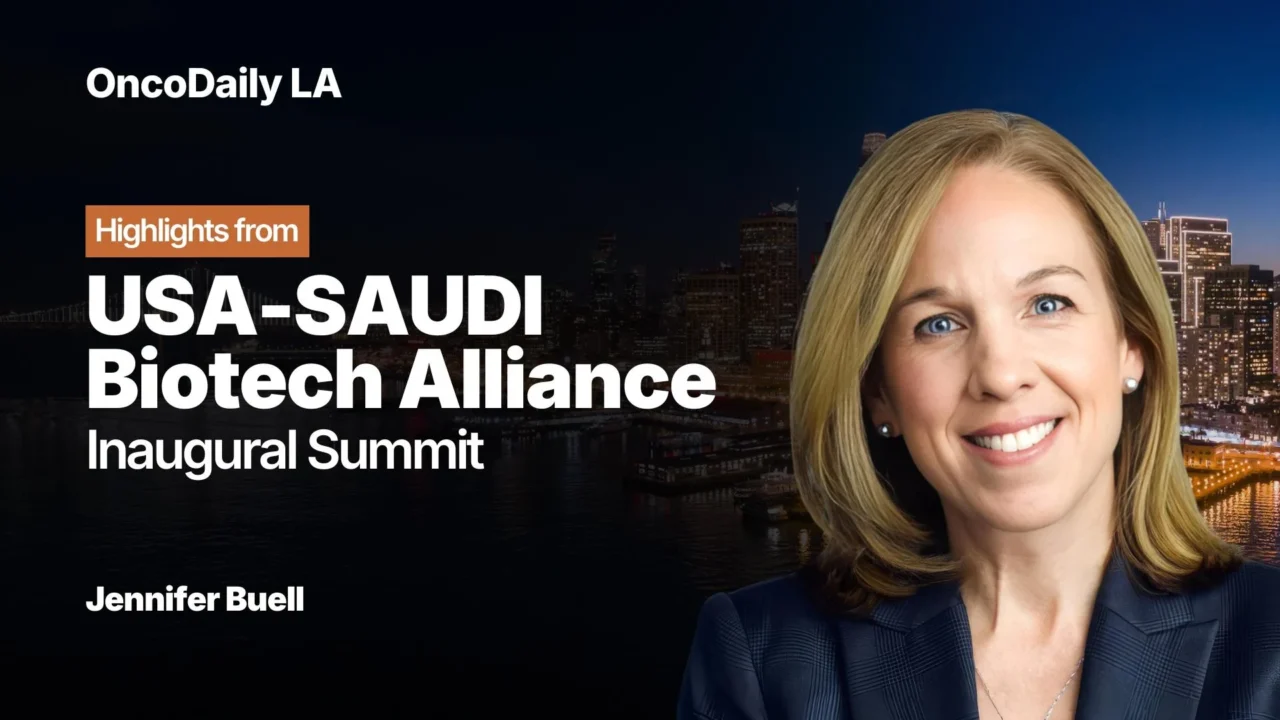
On Wednesday, January 14, 2026, during the USA–Saudi Biotech Alliance Inaugural Summit in San Francisco, Jennifer Buell outlined a next-generation immunotherapy strategy centered on invariant natural killer T (iNKT) cells, positioning immune restoration as a foundational pillar for cancer care, infectious disease management, and global pandemic preparedness.
Held alongside the 44th Annual J.P. Morgan Healthcare Conference and convened by NantWorks and ImmunityBio, the summit brought together leaders across science, government, and biotechnology to advance what participants described as Immunotherapy 2.0—a shift from disease-specific intervention toward immune system preservation and recovery.
Invariant Natural Killer T Cells: A Master Coordinator of Immunity
Jennifer Buell began by framing the biological importance of the iNKT platform:
“We are advancing in all off the shelf and variant natural killer T cell. So this is an important and one of the most highly conserved cells in immunity, in its for rares as far as we can tell. It represents and comprises about 0.01% of the lymphocytes, and it’s actually a coordinator, a master coordinator of immunity.”
She emphasized the evolutionary conservation of these cells as evidence of their central role in immune defense and homeostasis.
Clinical-Stage Development and Scalable Manufacturing
Describing the company’s translational progress, Buell explained:
“We’re a clinical stage company and we’ve been advancing now, we have a couple of clinical trials in phase two, taking the cells, isolating these cells from healthy donors, purifying them, scaling them, and then delivering them.”
A core advantage, she stressed, is scalability:
“We can create thousands and thousands of doses from a single donor, and we can distribute these cells globally.”
No HLA Matching, No Lymphodepletion
A defining feature of the platform, Buell noted, is the ability to deliver therapy without the barriers typical of cellular immunotherapy:
“I can isolate cells from anyone here, and I can administer them to anyone else… without HLA matching, and without lymphodepletion.”
From Manufacturing Facilities to Community Care
Buell detailed the operational pathway from production to patient delivery:
“We essentially isolate cells, cryopreserve them, we scale them, activate them, cryopreserve them, and then distribute them internationally.”
She highlighted the simplicity of administration:
“The cells are thawed, and then they’re just hung like a standard IV infusion.”
Importantly, she underscored access beyond academic centers:
“We’ve been able to not only take these cells into academic centers, but now also community centers, which is a really important access point for us.”
Pandemic-Era Lessons: Immune Collapse as the Common Denominator
Reflecting on early deployment during COVID-19, Buell described initial use in acute lung injury and ARDS:
“We first took these cells into one of the most difficult settings… acute lung injury and ARDS.”
She linked outcomes to immune failure rather than age or diagnosis:
“What we see is that the health span collapses when the immune system fails to perform.”
This led to a central therapeutic question:
“Could we just take healthy donor cells and essentially transplant immunity?”
Survival Signals and Immune Reconstitution
Buell reported that a single administration produced meaningful immune recovery:
“When we administer a single dose of about a billion invariant natural killer T cells, we essentially reconstitute immunity by about 20 to 30%.”
She contextualized this biologically:
“If you have 20% of your liver function, you will have full function. 20% of renal function, full function.”
Clinical impact followed:
“Compared to in-hospital controls of about 10 to 15 percent survival, we were seeing more than 70% survival.”
Severe Disease, ECMO, and Safety
Addressing use in the most critically ill patients, Buell noted:
“We saw that we could administer the cells. They did not clog the oxygenator… and we saw these really profound signals.”
She shared real-world recoveries:
“With a single administration we were able not only to clear the patient’s lungs… he was off of life support within about 13 days… he’s now currently back to living a normal life and playing baseball.”
High-Threat Infections and Combination Immunotherapy
Buell described work in disseminated fungal pneumonia:
“This is a fungus that is a subject of biologic warfare… It’s fatal, almost uniformly.”
She detailed the therapeutic sequence:
“We saw upon administration first of Anktiva, we saw this profound immune activation… then within about 24, 48 hours, we added iNKT cells, and we saw that together, we completely cleared coccidioidomycosis.”
Immune Modulation Without Cytokine Storm
Despite treating patients at high risk of hyperinflammation, Buell reported:
“What we see is that the cells actually dampen the cytokine syndrome… you actually see an anti-inflammatory capability.”
She summarized the safety profile:
“The safety profile is very favorable… we have no cytokine release syndrome, we have no neurotoxicity.”
Extending the Platform Into Oncology
Closing her remarks, Buell highlighted oncology trials:
“We’ve also had two ongoing trials in patients with cancer… we could safely and tolerably combine these cells with widely available PD-1 therapy and have profound benefit.”
She concluded by emphasizing momentum across disease settings and thanked the audience for their engagement.
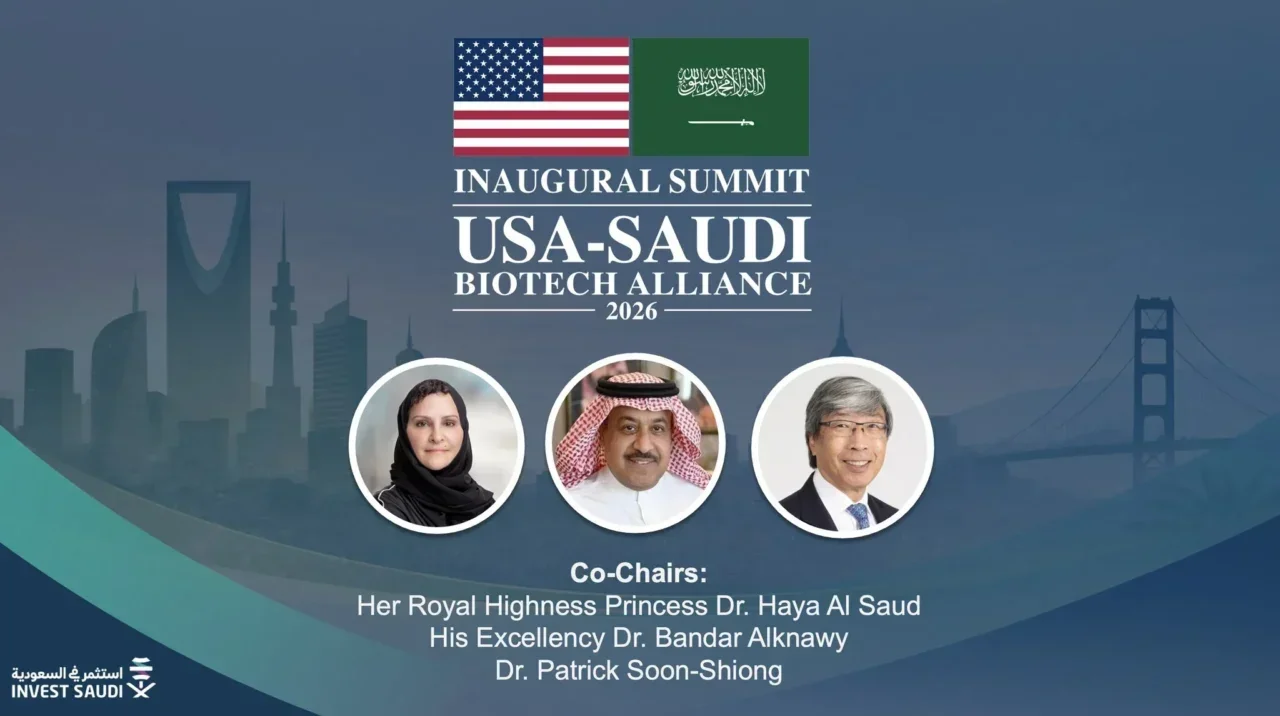
USA-SAUDI Biotech
More posts about USA-SAUDI Biotech Alliance Inaugural Summit 2026 on OncoDaily