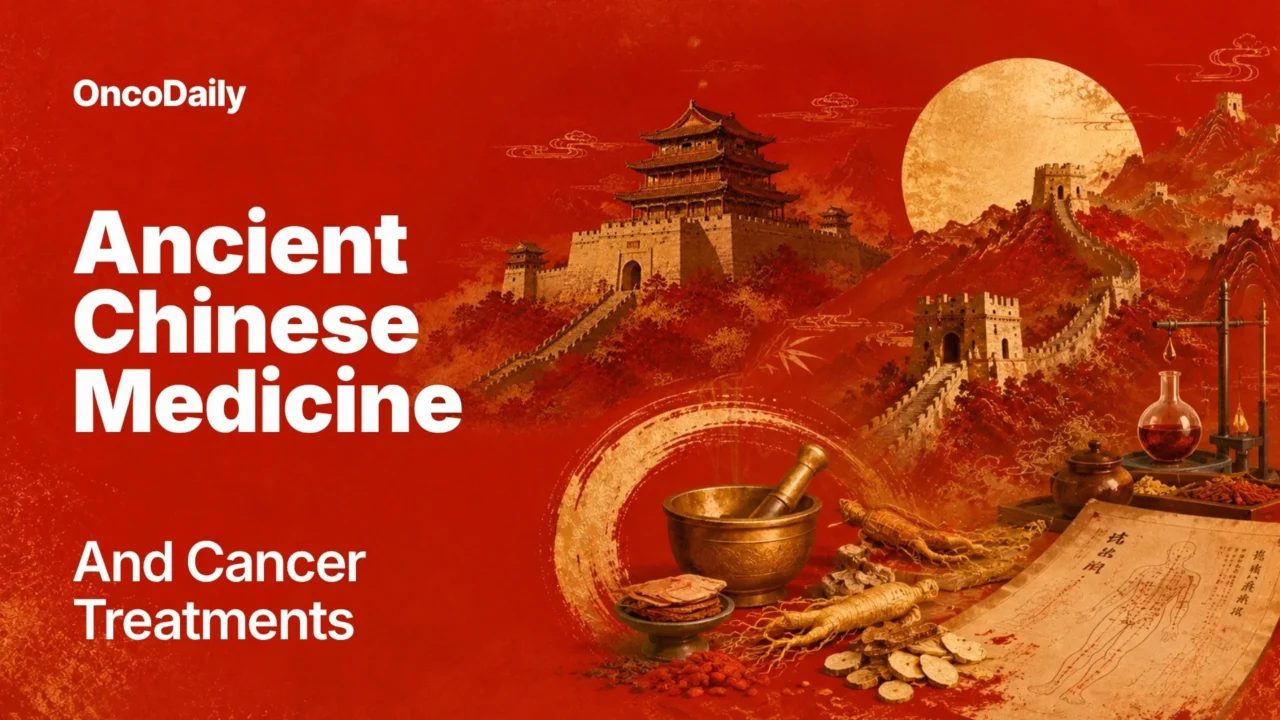
For thousands of years, Chinese physicians recorded abnormal masses, swellings, ulcers, and persistent lesions. These historical descriptions are sometimes presented as evidence that traditional Chinese medicine diagnosed and treated cancer. However, understanding the history of cancer requires separating ancient observations of disease from modern medical definitions of cancer. Ancient Chinese medicine recognized and attempted to manage tumor-like conditions, but it did not diagnose cancer according to modern oncology standards. Physicians did not have access to pathology, microscopy, imaging, immunohistochemistry, molecular testing, or staging systems that are now essential for confirming cancer diagnosis and guiding treatment decisions.
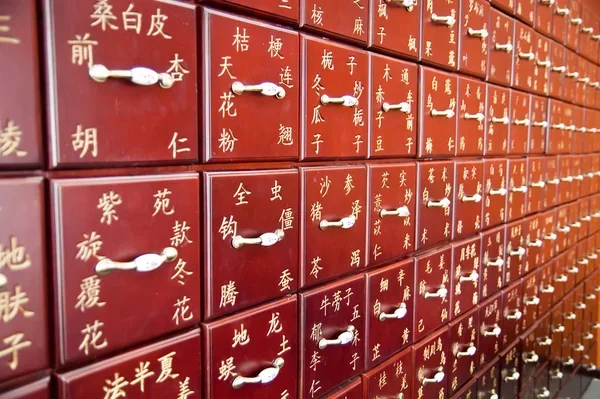
Photo: Depositphotos
Therefore, historical descriptions of masses cannot automatically be interpreted as confirmed cancer cases. The relationship between traditional medicine and modern oncology is more complex than simply asking whether ancient treatments “cured cancer.” Ancient medical practices provide valuable insight into how physicians observed disease and attempted to relieve symptoms, while some traditional substances later became subjects of modern pharmacological research. However, historical use alone cannot demonstrate anticancer effectiveness, improved survival, or cure. Modern oncology is built on a different foundation: accurate diagnosis, understanding tumor biology, evidence from clinical trials, standardized treatment approaches, and long-term outcomes.
Early Observations of Tumor-Like Disease in China
Some of the earliest Chinese descriptions of abnormal masses appear in historical records dating back approximately to the 16th–11th centuries BCE, including inscriptions on bones and tortoise shells. Later medical writings described hard masses, swelling, painful lesions, and ulcers that failed to heal. These observations demonstrate that ancient physicians carefully recognized persistent and concerning abnormalities. However, without microscopy or laboratory testing, they could not determine whether a mass represented a malignant tumor, a benign growth, infection, inflammation, or another disease process.
A physician thousands of years ago could describe a lesion based on its location, hardness, size, pain, and progression, but could not identify malignant cells or determine whether the disease had spread. Modern oncology distinguishes these conditions through biopsy, histopathology, imaging, immunohistochemistry, and genomic analysis. These methods allow clinicians to identify tumor type, determine stage, estimate prognosis, and select treatments based on biological characteristics. For this reason, historical terms translated today as “tumor” or “cancer” should generally be interpreted as descriptions of tumor-like conditions, rather than confirmed malignant diseases.
Ancient Chinese Medical Texts and the Understanding of Masses
One of the most influential works in Chinese medicine is the Huangdi Neijing (黄帝内经, The Yellow Emperor’s Inner Canon). Traditionally dated to the late Warring States period and early Han dynasty, this text became one of the foundations of traditional Chinese medical theory. It described health and disease through concepts such as balance, circulation, accumulation, obstruction, and changes in body function.
Photo: Depositphotos
The Huangdi Neijing did not describe cancer in the modern biological sense. Ancient physicians had no knowledge of DNA mutations, oncogenes, tumor suppressor genes, immune escape mechanisms, angiogenesis, or metastatic pathways. Instead, their understanding was based on clinical observation. They described what they could see and feel: whether a mass was hard, painful, growing, or associated with other symptoms. Some descriptions of persistent masses have been compared by historians with tumor-like conditions, but they cannot be directly equated with modern cancer diagnoses.
Zhang Zhongjing and Shang Han Za Bing Lun
Another major figure in Chinese medical history was Zhang Zhongjing (张仲景, approximately 150–219 CE), whose work Shang Han Za Bing Lun (Treatise on Cold Damage and Miscellaneous Diseases) became one of the most influential medical texts in East Asia. Zhang Zhongjing developed systematic approaches to diagnosis based on symptoms, disease progression, patient characteristics, and clinical patterns.
Although his work mainly focused on infectious diseases and internal disorders, it strongly influenced later herbal medicine and diagnostic thinking. However, like other ancient medical systems, his approach was based on clinical observation rather than pathological confirmation. Physicians could identify disease patterns but could not understand the cellular mechanisms responsible for malignancy.
Hua Tuo and Early Surgical Traditions
The physician Hua Tuo (华佗, approximately 140–208 CE) remains one of the most famous names in Chinese medical history. Historical accounts describe Hua Tuo as a skilled surgeon associated with advanced procedures and anesthesia-like techniques. Although some details are difficult to verify historically, his reputation reflects the existence of sophisticated surgical traditions in ancient China. Ancient surgery could sometimes remove visible masses and provide symptom relief. However, it lacked the pathological principles that define modern cancer surgery. Physicians could not determine:
- whether a mass was malignant,
- whether surgical margins were clear,
- whether microscopic disease remained,
- whether lymph nodes were involved,
- or whether cancer had already spread.
Removing a visible mass did not necessarily mean that a malignant disease had been eliminated.
Ancient Concepts Associated With Tumor-Like Conditions
Traditional Chinese medicine used several concepts to describe abnormal masses. These terms represented historical medical observations but should not be directly equated with modern cancer diagnoses. One important concept was ji ju (积聚), referring to accumulations or masses within the body. Historical descriptions included hardness, enlargement, discomfort, and progressive changes. Some historians have compared certain descriptions of ji ju with tumor-like disorders, although the category was much broader than modern oncology classifications. Another concept was zheng jia (癥瘕), which referred particularly to palpable abdominal masses. These descriptions could represent many different conditions, including tumors, cysts, fibroids, infections, or inflammatory processes. Without imaging, pathology, and laboratory testing, ancient physicians could not determine the exact biological nature of these masses.
Ancient Approaches to Treating Abnormal Masses
Historical Chinese medical practice included several approaches for managing abnormal growths and chronic lesions, including surgery, cautery, herbal preparations, and supportive care. Surgical removal of visible masses could sometimes provide local control or symptom relief, particularly when lesions were accessible. However, ancient surgery lacked the pathological evaluation that defines modern oncology.
Physicians could not assess microscopic residual disease, tumor margins, lymph-node involvement, or metastatic spread. Similarly, cautery and destructive procedures could damage visible abnormal tissue, but they could not reliably eliminate hidden cancer cells beneath the surface or treat disease that had already spread throughout the body. These limitations highlight one of the biggest differences between historical medicine and modern oncology: today, treatment decisions are based not only on visible disease but also on microscopic and molecular information.
Herbal Medicine: Ancient Recipes and Modern Scientific Interest
Herbal medicine was a central component of traditional Chinese medical practice. Ancient physicians developed thousands of formulas combining different plants, minerals, and natural substances. Some traditional ingredients have attracted modern scientific interest because researchers have identified biologically active compounds.
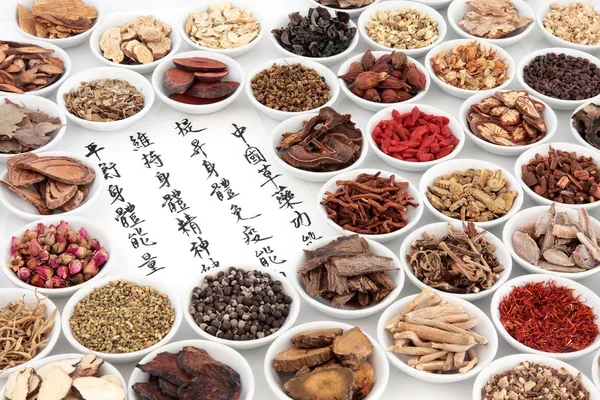
Photo: Depositphotos
One of the most famous examples is Artemisia annua (Qing Hao, 青蒿). This plant was historically used in Chinese medicine, and research into its active compound led to the discovery of artemisinin, a highly effective antimalarial medicine. The story of artemisinin demonstrates an important principle: traditional knowledge can inspire scientific discoveries, but successful medicines require identification of active compounds, laboratory studies, clinical trials, and safety evaluation.
Another example is Scutellaria baicalensis (Huang Qin, 黄芩), which contains compounds such as baicalin and baicalein that have been investigated for anti-inflammatory and anticancer mechanisms in laboratory studies. Similarly, Coptis chinensis (Huang Lian, 黄连) contains berberine, a compound studied for effects on cellular signaling, metabolism, and inflammation. However, laboratory findings do not automatically translate into proven cancer treatments. A compound must demonstrate safety, appropriate dosing, biological activity in humans, and meaningful clinical benefit.
Why Is It Difficult to Prove Ancient Cancer Treatments Worked?
Evaluating ancient cancer treatments is challenging because historical records rarely contain the information required by modern medicine. Ancient descriptions usually do not provide confirmed pathological diagnosis, tumor stage, molecular subtype, treatment dose, comparison groups, imaging response, recurrence rates, or survival outcomes. Without this information, researchers cannot determine whether:
- the patient truly had cancer,
- another disease process was responsible,
- the disease changed naturally,
- or the treatment influenced survival.
A historical case description is therefore not equivalent to evidence from a modern clinical trial.
What Does Modern Research Say About Traditional Chinese Medicine in Cancer?
Modern research has examined traditional Chinese medicine mainly as supportive care and, in some cases, alongside conventional cancer treatments. A major review by Li et al. (2013) analyzed 2,964 controlled clinical studies involving 253,434 cancer patients. The majority of studies evaluated traditional Chinese medicine combined with conventional treatment, while fewer investigated traditional medicine alone. Herbal medicine represented the most frequently studied approach.
The review found that many studies focused on symptom improvement, laboratory measurements, quality of life, and treatment-related side effects. However, survival outcomes, relapse, and metastasis were reported less frequently. The authors also highlighted limitations in study quality, including issues with study design, randomization, blinding, diagnostic criteria, and standardization of herbal products. These findings do not mean traditional medicine has no role. Instead, they demonstrate that individual treatments must be evaluated through rigorous scientific methods rather than historical popularity alone.
Safety Concerns: Natural Does Not Mean Risk-Free
Traditional and herbal products can still cause medical complications. Potential risks include liver injury, kidney injury, allergic reactions, bleeding complications, contamination, and interactions with anticancer drugs. This is particularly important for patients receiving chemotherapy, immunotherapy, targeted therapy, radiotherapy, or anticoagulant medications. Patients should always inform their oncology team about herbs, supplements, teas, injections, or traditional medicines they are using.
Did Ancient Chinese Medicine Cure Cancer?
Ancient Chinese physicians clearly observed and attempted to treat abnormal masses and chronic lesions. Their practices represent an important part of medical history and continue to inspire scientific research. However, there is no reliable evidence that ancient Chinese medicine diagnosed cancer according to modern standards or consistently cured malignant disease.
Modern oncology depends on accurate diagnosis, pathological confirmation, clinical trials, standardized treatments, and long-term outcome evaluation. The most balanced conclusion is that ancient Chinese medicine recognized and treated tumor-like conditions, while modern cancer care requires evidence-based treatments that demonstrate safety, effectiveness, and meaningful benefit for patients. Traditional knowledge can provide valuable scientific inspiration, but it should complement not replace proven cancer therapies.
You Can Also Read The Oldest Evidence of Cancer: What Ancient Egypt Knew 4,000 Years Ago by OncoDaily
Written by Aharon Tsaturyan, MD, Editor at OncoDaily Intelligence Unit
FAQ
Did ancient Chinese medicine treat cancer?
Ancient Chinese physicians recognized and treated tumor-like conditions, including abnormal masses, swellings, and chronic lesions. However, they did not diagnose cancer in the modern sense because they lacked pathology, imaging, molecular testing, and staging systems. Historical treatments should therefore be understood as approaches to managing abnormal growths rather than proven cancer cures.
Did ancient Chinese medicine cure cancer?
There is no reliable scientific evidence that ancient Chinese medicine cured cancer. Ancient practices may have included treatments that relieved symptoms or influenced certain biological processes, but modern cancer treatment requires evidence from clinical trials, standardized therapies, and long-term outcomes.
What did ancient Chinese doctors call cancer?
Ancient Chinese medical texts did not use the modern concept of cancer. They described various tumor-like conditions using terms such as ji ju (积聚) and zheng jia (癥瘕), which referred to abnormal accumulations or masses. These terms could represent many different diseases, not only malignant tumors.
What is Huangdi Neijing and how is it related to cancer?
The Huangdi Neijing (The Yellow Emperor’s Inner Canon) is one of the foundational texts of traditional Chinese medicine. It described disease concepts such as imbalance, accumulation, and obstruction. Although it contains descriptions of abnormal masses, it did not describe cancer according to modern biological understanding.
What ancient Chinese herbs have been studied for cancer?
Several traditional Chinese medicinal plants have been investigated in modern research. Examples include Artemisia annua (Qing Hao), which led to the discovery of artemisinin for malaria treatment, as well as Scutellaria baicalensis (Huang Qin) and Coptis chinensis (Huang Lian), which contain compounds studied for biological effects. However, these substances are not proven replacements for standard cancer therapies.
Can Chinese herbal medicine treat cancer?
Chinese herbal medicine may have potential roles in supportive care, symptom management, and research into new compounds. However, there is currently no general evidence that traditional Chinese herbal medicine can replace proven cancer treatments such as surgery, chemotherapy, radiotherapy, immunotherapy, or targeted therapy.
Is traditional Chinese medicine used in modern cancer treatment?
Yes, traditional Chinese medicine is studied and sometimes used as a complementary approach, particularly for supportive care. Research has explored its possible role in managing symptoms such as fatigue, nausea, appetite problems, and treatment-related side effects. It is generally considered an addition to, rather than a replacement for, evidence-based oncology treatments.
What did Li et al. (2013) find about traditional Chinese medicine and cancer?
Li et al. (2013) reviewed 2,964 controlled clinical studies involving more than 253,000 participants and found that most studies evaluated traditional Chinese medicine combined with conventional cancer treatment. Many focused on symptoms and quality of life, while stronger evidence for survival benefits remained limited due to methodological challenges.
Are Chinese herbal medicines safe during chemotherapy?
Not always. Some herbal products can interact with anticancer drugs or cause side effects, including liver injury, kidney problems, bleeding risks, or changes in drug metabolism. Cancer patients should always inform their oncology team before using herbal medicines or supplements.
Did ancient Chinese medicine discover any modern medicines?
Yes. One famous example is Artemisia annua (Qing Hao), traditionally used in Chinese medicine and later studied scientifically, leading to the discovery of artemisinin, an important antimalarial drug. This demonstrates how traditional knowledge can contribute to scientific discovery, although every potential medicine requires rigorous testing.
What is the difference between traditional Chinese medicine and modern oncology?
Traditional Chinese medicine historically focused on patterns of symptoms, balance, and overall health, while modern oncology is based on tumor biology, pathology, genetics, clinical trials, and evidence-based treatment protocols. Both approaches have different foundations and should not be considered equivalent.
古代中医治疗过癌症吗?
古代中医确实观察并治疗过一些类似肿瘤的疾病,例如身体异常肿块、积聚和长期不愈的病变。但由于当时没有现代医学中的病理检查、影像学、分子检测和肿瘤分期系统,因此不能认为古代中医能够诊断或治愈现代意义上的癌症。
古代中医能治愈癌症吗?
目前没有可靠的科学证据证明古代中医可以治愈癌症。一些传统疗法可能有助于缓解症状、改善生活质量,但现代癌症治疗需要经过临床试验和长期随访验证。