Key takeaways
- Chemotherapy can affect rapidly renewing skin and nail cells, causing dryness, itching, redness, peeling, pigmentation changes, brittle nails, ridges, tenderness, or nail separation.
- The type and severity of symptoms depend on the chemotherapy drug, dose, treatment schedule, cumulative exposure, and individual response.
- Hand-foot syndrome can cause burning, redness, swelling, pain, peeling, or blistering on the palms and soles, sometimes making everyday activities difficult.
- Gentle skin and nail care—including moisturising, sun protection, keeping nails short, avoiding harsh products, and reducing friction—can limit irritation, injury, and infection.
- Severe pain, rapidly spreading redness, swelling, drainage, open sores, fever, significant nail lifting, or breathing difficulty should be reported promptly to the healthcare team.
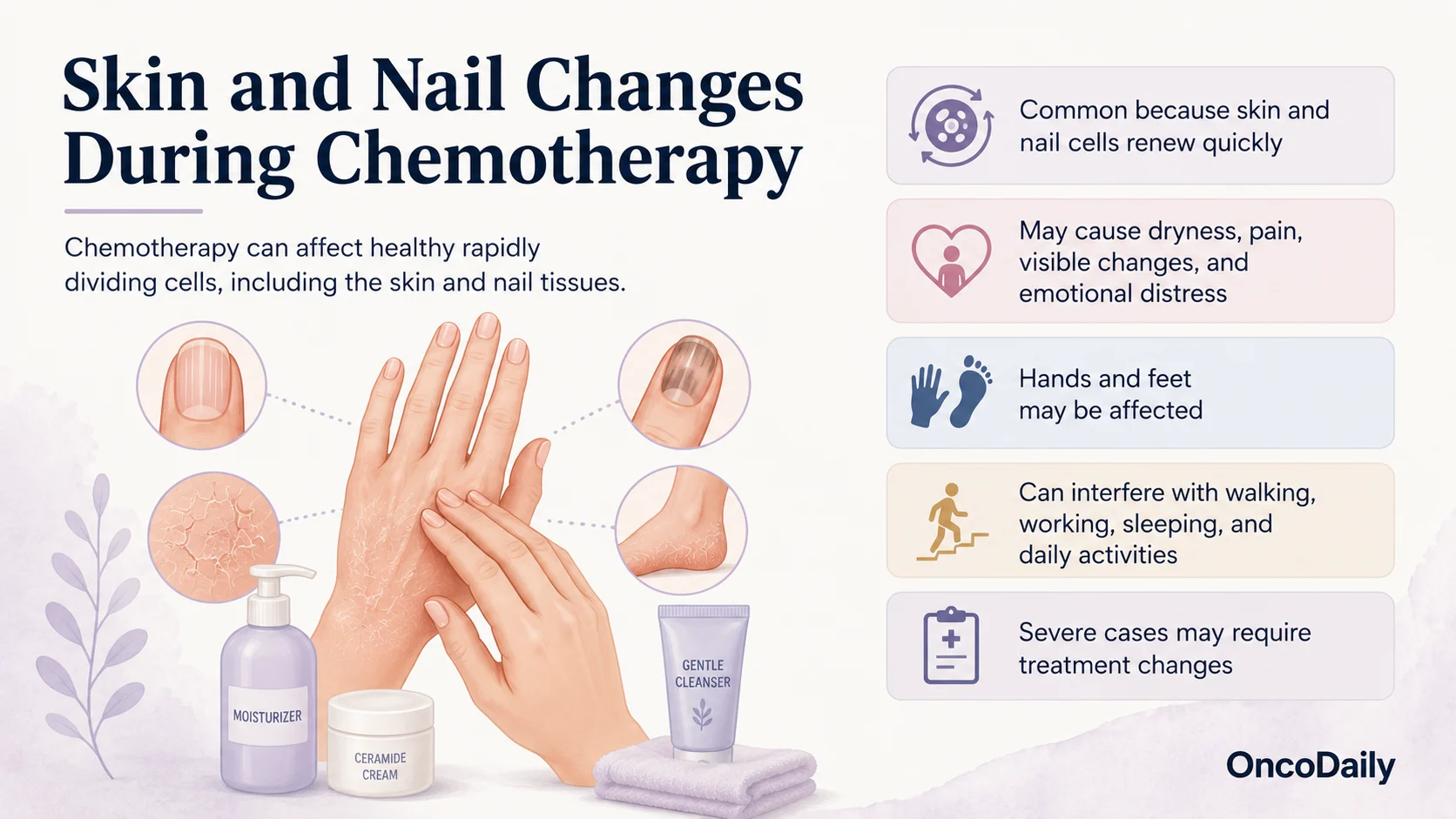
Skin and nail changes are common during chemotherapy because treatment can affect healthy, rapidly renewing cells as well as cancer cells. These changes may include dryness, itching, redness, sensitivity, discoloration, peeling, brittle nails, or soreness around the nail beds.
The exact symptoms depend on the chemotherapy drugs used, the dose, and the individual response to treatment. Most changes are temporary and gradually improve after chemotherapy ends.
Although they are usually not dangerous, skin and nail problems can sometimes cause discomfort or interfere with walking, sleeping, working, and other daily activities. Recognizing these changes early and using gentle care measures can help reduce irritation and lower the risk of infection or further damage.
Why Skin and Nail Changes Happen
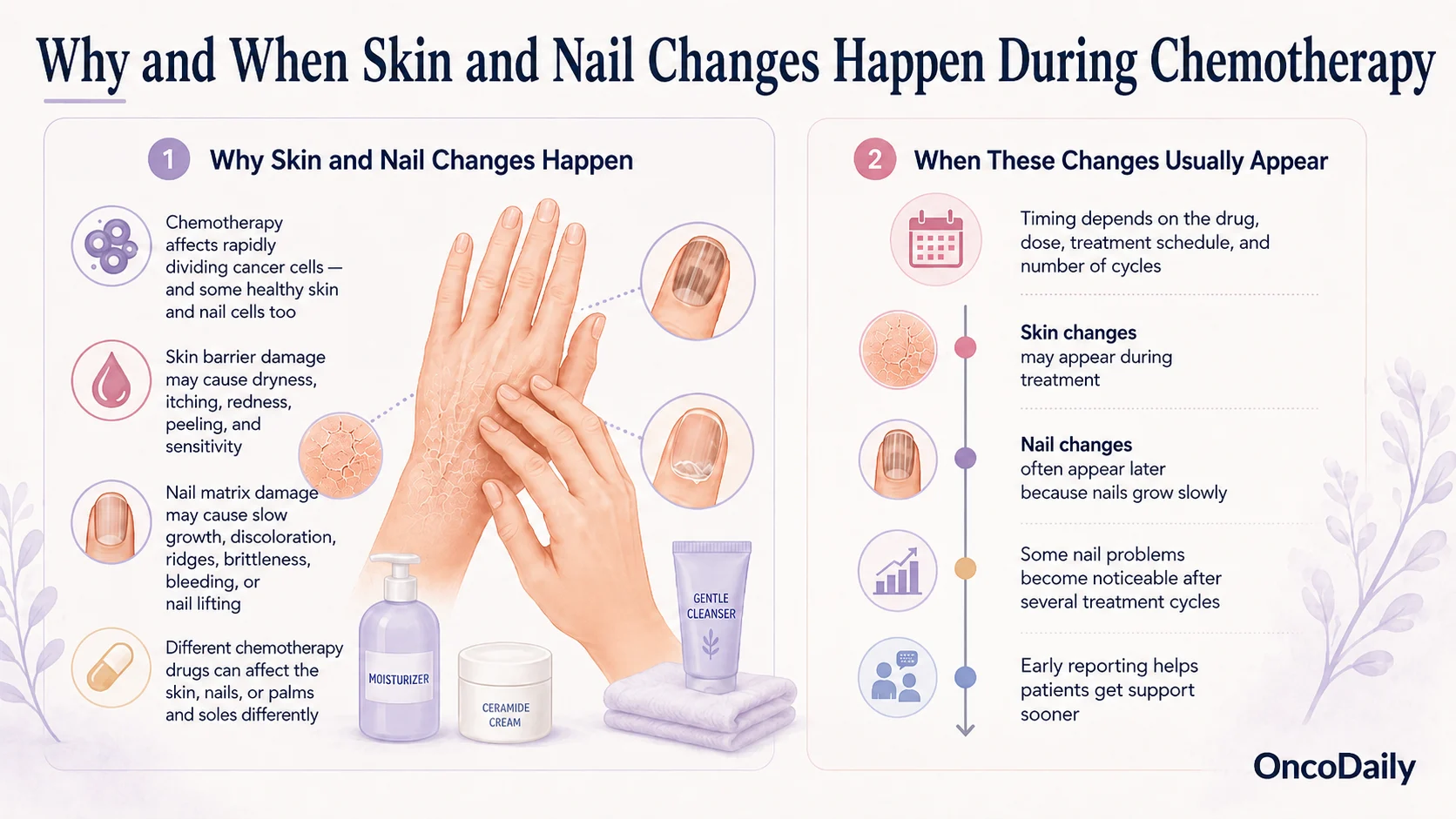
Chemotherapy is designed to damage or destroy rapidly dividing cancer cells. However, some healthy tissues also renew frequently and may be affected during treatment. Damage to these cells can weaken the skin barrier, reduce moisture retention, and contribute to dryness, itching, redness, peeling, or increased sensitivity. (National Cancer Institute, 2022)
The nails develop from specialized cells in the nail matrix. When chemotherapy disrupts these cells or affects the nail bed underneath the nail plate, nail growth may slow or temporarily change. This can lead to discoloration, ridges, brittleness, bleeding beneath the nail, or separation of the nail from the nail bed.
Different chemotherapy medicines can produce different reactions. Some mainly affect the skin, while others are more likely to damage the nails or cause inflammation of the palms and soles. The type and severity of the reaction therefore depend greatly on the specific treatment being used.
When These Changes Usually Appear
The timing of skin and nail changes varies according to the chemotherapy drug, dose, treatment schedule, and number of cycles received. Skin changes may develop during treatment and can include dryness, itching, redness, peeling, pigmentation changes, or increased sensitivity to sunlight.
Nail changes often become noticeable later because nails grow slowly. The damage may not be visible immediately, and some patients first notice changes after several treatment cycles. In a study of patients with taxane-related nail toxicity, Alessandrini et al., 2019 found that nail problems developed mainly toward the end of treatment and were associated with the total chemotherapy dose received.
This delayed pattern is important because patients may not immediately connect nail changes with chemotherapy. Discussing these effects before treatment can help patients recognize and report them early.
How Common Are Skin and Nail Changes?
The frequency of skin and nail toxicity varies considerably between chemotherapy regimens. Some patients experience no noticeable changes, while others develop several symptoms during treatment.
In a prospective observational study of 129 patients receiving chemotherapy, Zawar et al., 2019 reported nail changes in 71.3% of participants. Chromonychia, meaning a change in nail color, was the most common finding, followed by nail dystrophy. However, this percentage came from a single study population and should not be interpreted as the expected rate for every chemotherapy regimen.
The risk is particularly well documented with taxane chemotherapy. A systematic review and meta-analysis confirmed that nail changes are a clinically important adverse effect of taxane treatment. The exact risk depends on the taxane used, the dose, the treatment schedule, and the duration of treatment. (Capriotti et al., 2015)
You can also read UV Nail Lamps and Cancer Risk: Should You Worry? by OncoDaily.
What Skin Changes Can Look Like
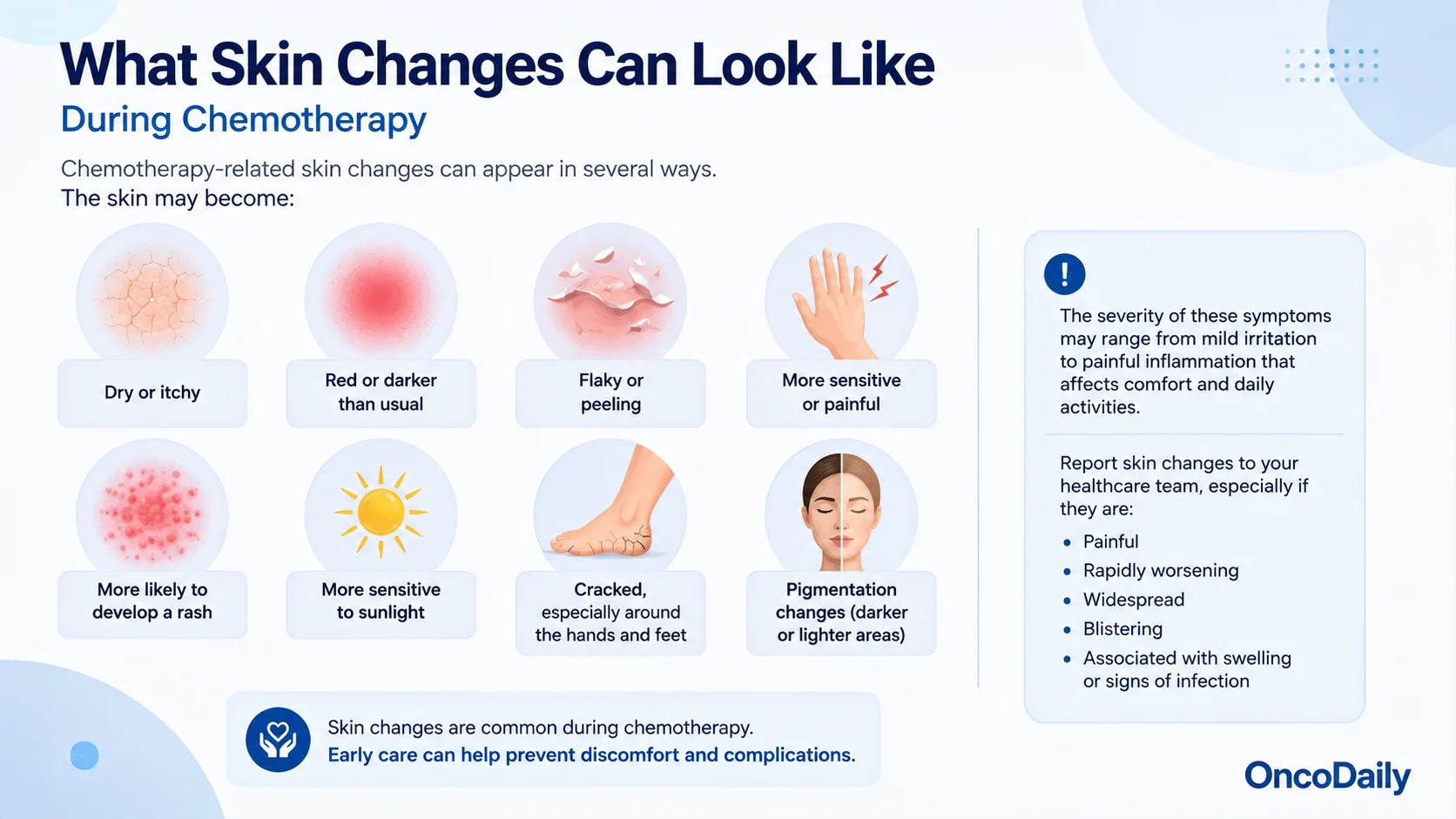
Chemotherapy-related skin changes can develop gradually or appear soon after treatment begins. The skin may feel dry, itchy, sensitive, or painful. Some people notice redness, darkening, flaking, peeling, or a new rash. The skin may also become more sensitive to sunlight, while cracks can develop around the hands, feet, or other areas exposed to frequent movement and pressure.
Changes in skin color may also occur, with some areas becoming darker or lighter than usual. These symptoms can range from mild irritation to more painful inflammation that affects sleep, movement, comfort, or everyday activities.
Any skin change should be discussed with the healthcare team, especially if it becomes painful, spreads quickly, worsens rapidly, causes blistering or swelling, or is accompanied by warmth, drainage, fever, or other signs of infection.
Hand-Foot Syndrome
Hand-foot syndrome, also called palmar-plantar erythrodysesthesia, is an important chemotherapy-related skin reaction. It most commonly affects the palms of the hands and the soles of the feet.
Early symptoms may include tingling, numbness, tenderness, or a burning sensation. As the reaction progresses, the skin may become red, swollen, painful, cracked, or peeled. Blisters may develop in more severe cases (Miller et al., 2014).
Because the hands and feet are used constantly, hand-foot syndrome can interfere with walking, writing, gripping objects, cooking, exercising, and completing routine household tasks. Severe symptoms may require supportive treatment, a dose reduction, or a temporary interruption of chemotherapy.
Capecitabine and fluorouracil are among the chemotherapy medicines commonly associated with hand-foot syndrome, although it can occur with other anticancer treatments as well.
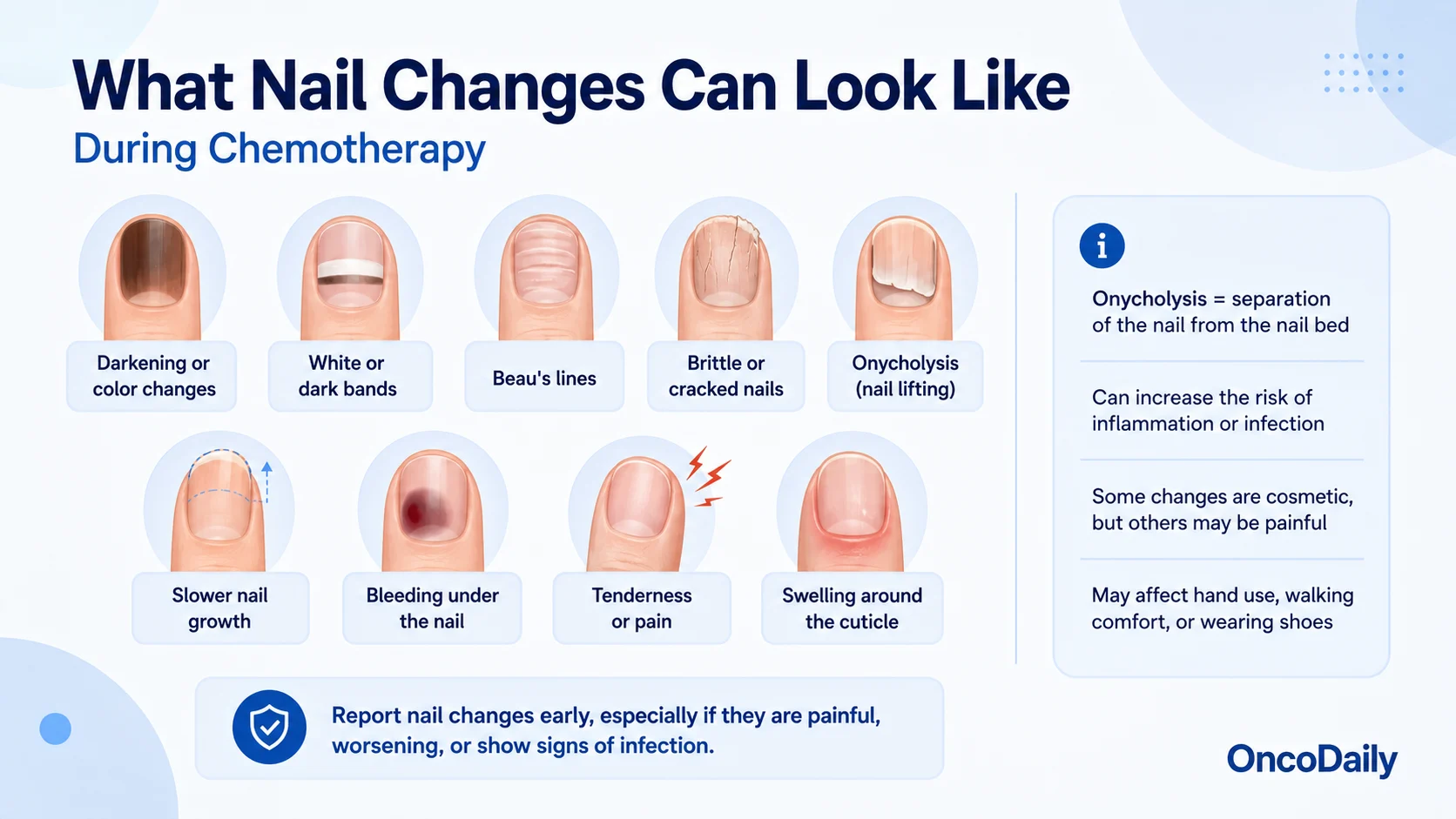
Chemotherapy can affect the nail, the tissue beneath it, and the surrounding skin. The nails may become darker, develop white or dark bands, or show horizontal grooves called Beau’s lines. They may also grow more slowly and become thin, brittle, cracked, tender, or painful.
Bleeding may occur beneath the nail, and the skin around the cuticle may become swollen or inflamed. In some cases, the nail separates from the nail bed, a condition called onycholysis. This can allow moisture and microorganisms to collect beneath the nail, increasing the risk of infection.
Taxane chemotherapy has been linked to pigmentation changes, bleeding beneath the nail, Beau’s lines, onycholysis, and infections around or beneath the nail.
Some changes are mainly cosmetic, while others may make it difficult to use the hands, walk comfortably, or wear shoes.
Why Some Patients Have More Severe Symptoms
Not everyone experiences the same type or severity of skin and nail changes. Some patients develop only mild dryness or subtle discoloration, while others experience painful symptoms that interfere with daily life.
Severity may be influenced by:
- The specific chemotherapy drug
- The dose and treatment schedule
- The total amount of treatment received
- The number of chemotherapy cycles
- Repeated pressure or trauma to the nails
- Friction or irritation affecting the hands and feet
Taxane exposure was associated with nail toxicity. The authors also suggested that repeated trauma may contribute to more severe changes, particularly in the great toenails. (Alessandrini et al., 2019)
These findings support the importance of protecting the hands, feet, and nails from avoidable pressure and injury during treatment.
How Skin and Nail Changes Are Managed
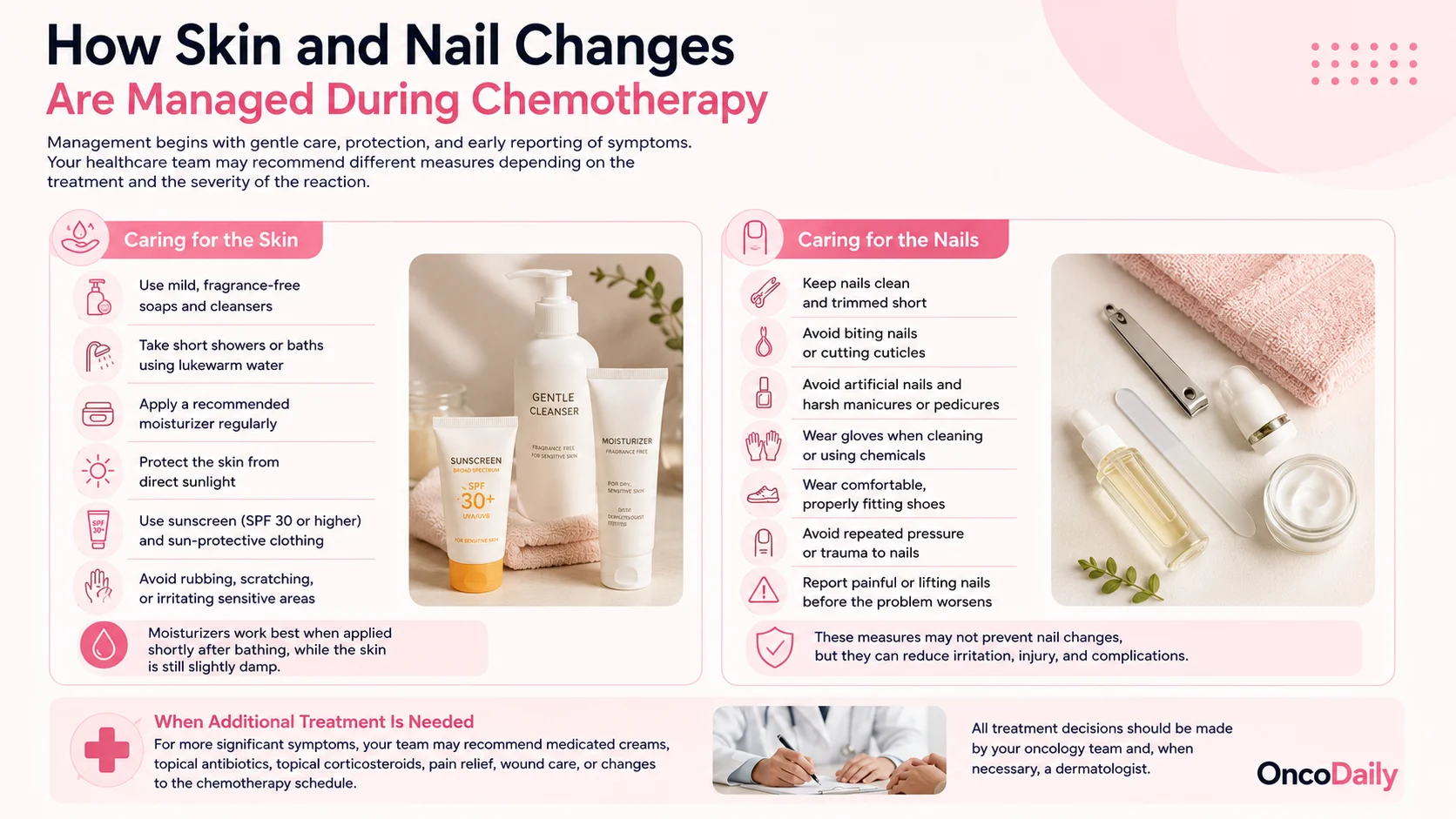
Management begins with gentle care, protection, and early reporting of symptoms. The healthcare team may recommend different measures depending on the treatment and the severity of the reaction.
Caring for the Skin
Gentle skin care can help reduce dryness and irritation during chemotherapy. Patients may be advised to use mild, fragrance-free cleansers, take short showers with lukewarm water, and apply moisturizer while the skin is still slightly damp.
Products containing alcohol or strong fragrances should be avoided. Sensitive skin should be protected from sunlight with sunscreen and protective clothing, and rubbing or scratching irritated areas should be minimized.
Caring for the Nails
Nails should be kept clean and trimmed short. Patients should avoid biting the nails, cutting the cuticles, using artificial nails, or having harsh manicures and pedicures.
Gloves can protect the hands during cleaning or dishwashing, while comfortable shoes may reduce pressure on the toenails. Painful, swollen, or lifting nails should be reported early.
These measures may not prevent all changes, but they can reduce irritation, injury, and infection. More severe symptoms may require medicated creams, antibiotics, pain relief, wound care, or adjustments to treatment under the guidance of the oncology team.
When to Contact the Healthcare Team
Patients should contact their healthcare team if they develop:
- Severe or rapidly worsening pain
- Spreading redness or swelling
- Warmth around a nail or affected area of skin
- Bleeding beneath or around a nail
- Pus, drainage, or an unpleasant odor
- A nail that is lifting significantly from the nail bed
- Blistering, open sores, or extensive peeling
- A widespread or rapidly developing rash
- Skin changes that interfere with walking or using the hands
- Fever or other symptoms suggesting infection
Sudden hives, a severe rash, facial swelling, difficulty breathing, or a burning sensation during or shortly after chemotherapy may indicate an allergic reaction and require urgent medical attention.
Patients should not stop chemotherapy or change the dose on their own. The oncology team can determine whether supportive care, medication, dose modification, or treatment interruption is necessary.
Recovery After Chemotherapy
Many skin changes gradually improve after chemotherapy has ended. Nail changes may take longer to disappear because the damaged portion of the nail must grow out and be replaced by new nail tissue.
Recovery may therefore be slow, especially when several nails are affected or when the nail has lifted from the nail bed. Continued gentle care and protection can help reduce further damage while the nails recover.
Any symptoms that persist, worsen, or remain painful after treatment should be discussed with the healthcare team.
Why These Changes Matter
Skin and nail changes are sometimes described as cosmetic side effects, but this can underestimate their impact. They may cause pain, discomfort, changes in self-image, sleep disruption, reduced mobility, and difficulty carrying out everyday activities.
When severe, these toxicities may also affect the planned dose or schedule of chemotherapy. Patients should therefore receive clear information before treatment about which changes may occur, how to care for their skin and nails, and which symptoms require medical attention. Early recognition and appropriate management can reduce complications and help patients remain as comfortable and active as possible throughout treatment.
Written by Marine Marachlian, MD
FAQ
Why does chemotherapy affect the skin and nails?
Chemotherapy can affect healthy cells that divide quickly, including those responsible for renewing the skin and producing nails.
What skin changes can chemotherapy cause?
Common changes include dryness, itching, redness, peeling, rashes, pigmentation changes, and greater sensitivity to sunlight.
What nail changes may occur during chemotherapy?
Nails may become brittle, ridged, discolored, painful, cracked, or separated from the nail bed.
When do these changes usually begin?
Skin changes may appear early in treatment, while nail changes often develop after several chemotherapy cycles because nails grow slowly.
Which chemotherapy drugs commonly cause nail problems?
Taxanes, including paclitaxel and docetaxel, are strongly associated with nail changes.
What is hand-foot syndrome?
It is a reaction that causes redness, burning, swelling, tenderness, peeling, or blistering on the palms and soles.
How can I care for my skin during chemotherapy?
Use mild cleansers, apply moisturizer regularly, avoid hot water, and protect your skin from sunlight.
How can I protect my nails?
Keep nails short and clean, avoid artificial nails and harsh manicures, wear gloves for household tasks, and choose comfortable shoes.
When should I contact my healthcare team if I get nail and skin symptoms after chemotherapy?
Report severe pain, swelling, spreading redness, drainage, open sores, blistering, fever, or a nail lifting significantly from the nail bed.
Will skin and nail changes improve after chemotherapy?
Most skin changes gradually improve after treatment. Nail recovery may take longer because the damaged nail must grow out and be replaced.