RASolute 302 Trial was presented by Brian M. Wolpin, MD, MPH, during the 2026 ASCO Annual Meeting.The Trial evaluated daraxonrasib, an oral RAS(ON) multi-selective inhibitor, against investigator’s choice chemotherapy in patients with previously treated metastatic pancreatic adenocarcinoma. The study met all primary and key secondary endpoints, showing statistically significant and clinically meaningful improvements in overall survival, progression-free survival, objective response rate, and patient-reported outcomes.
Background
Metastatic pancreatic adenocarcinoma remains one of the most difficult cancers to treat, with limited therapeutic options after first-line chemotherapy. The presentation noted that standard cytotoxic chemotherapy provides only modest benefit in previously treated mPDAC, with median progression-free survival of approximately 3–4 months and median overall survival of 6–7 months.
RAS biology was central to the study rationale. More than 90% of PDAC tumors harbor an oncogenic RAS mutation, and excessive RAS(ON) signaling can drive tumor growth across both RAS-mutant and RAS wild-type PDAC. The presentation also highlighted that no RAS-targeted therapies are approved for PDAC, underscoring the unmet need in this setting.
Daraxonrasib is an oral, potent RAS(ON) multi-selective tri-complex inhibitor of GTP-bound mutant RAS, including variants with G12, G13, and Q61 mutations, as well as wild-type RAS. The drug binds intracellular cyclophilin A to form a binary complex that engages RAS(ON) and suppresses downstream signaling. A prior Phase 1/2 trial had shown clinical activity and a manageable safety profile in previously treated advanced PDAC.
Study Design
RASolute 302 was a global, randomized Phase 3 trial enrolling patients at 59 sites across 6 countries. Eligible patients were adults with metastatic pancreatic adenocarcinoma, ECOG performance status 0–1, one prior fluoropyrimidine- or gemcitabine-based regimen in the metastatic setting, and documented tumor RAS mutational status by local testing.
Patients were randomized 1:1 to receive daraxonrasib 300 mg orally once daily or investigator’s choice chemotherapy. Chemotherapy options included gemcitabine plus nab-paclitaxel, nal-IRI plus 5-FU/LV, mFOLFIRINOX, or FOLFOX.
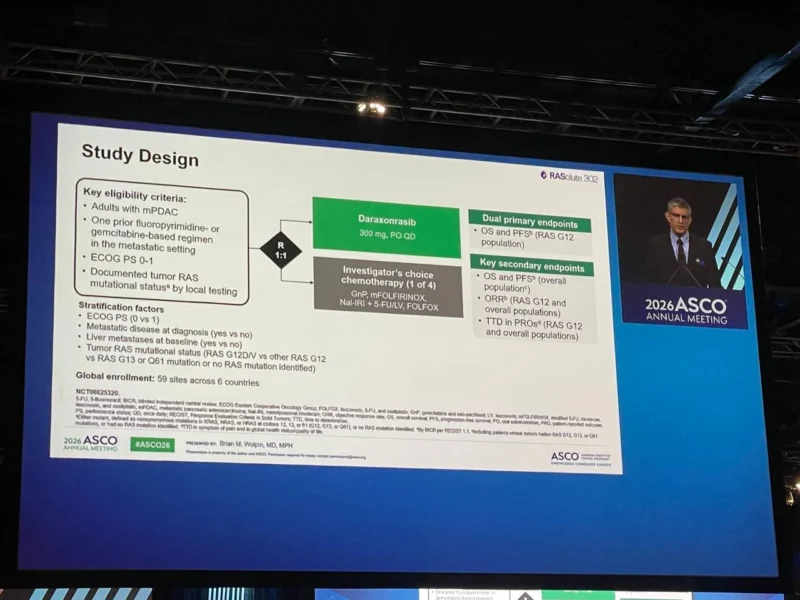
The dual primary endpoints were overall survival and progression-free survival by blinded independent central review in the RAS G12 population. Key secondary endpoints included overall survival and progression-free survival in the overall population, objective response rate in both the RAS G12 and overall populations, and time to deterioration in patient-reported outcomes, including pain and global health status/quality of life.
Patient Population
A total of 500 patients were randomized between October 16, 2024, and November 7, 2025. Of these, 248 patients were assigned to daraxonrasib and 252 to chemotherapy. Treatment was received by 241 patients in the daraxonrasib arm and 214 patients in the chemotherapy arm.
Baseline characteristics were generally balanced between the arms. Median age was 66 years with daraxonrasib and 65 years with chemotherapy. ECOG performance status, region, prior chemotherapy regimen, metastatic disease at diagnosis, prior pancreatectomy, liver metastases at baseline, and tumor RAS mutational status were also balanced.
Most patients had RAS G12 alterations. In the daraxonrasib and chemotherapy arms, RAS G12D/V was reported in 79% and 78% of patients, respectively, while other RAS G12 alterations were present in 13% in both arms. RAS G13, Q61, or no identified RAS mutation accounted for 8% in each treatment group.
At the February 10, 2026 data cutoff, 42% of patients in the daraxonrasib arm remained on treatment compared with 14% in the chemotherapy arm.
Results
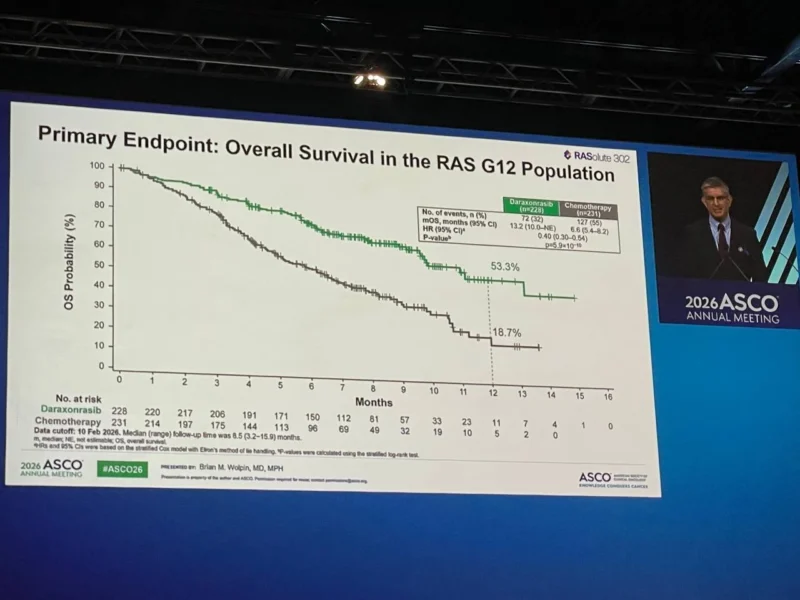
In the RAS G12 population, daraxonrasib significantly improved overall survival compared with chemotherapy. Median overall survival was 13.2 months with daraxonrasib versus 6.6 months with chemotherapy. The hazard ratio was 0.40, with a p-value of 5.9 × 10⁻¹⁰. At 12 months, overall survival was 53.3% with daraxonrasib compared with 18.7% with chemotherapy.
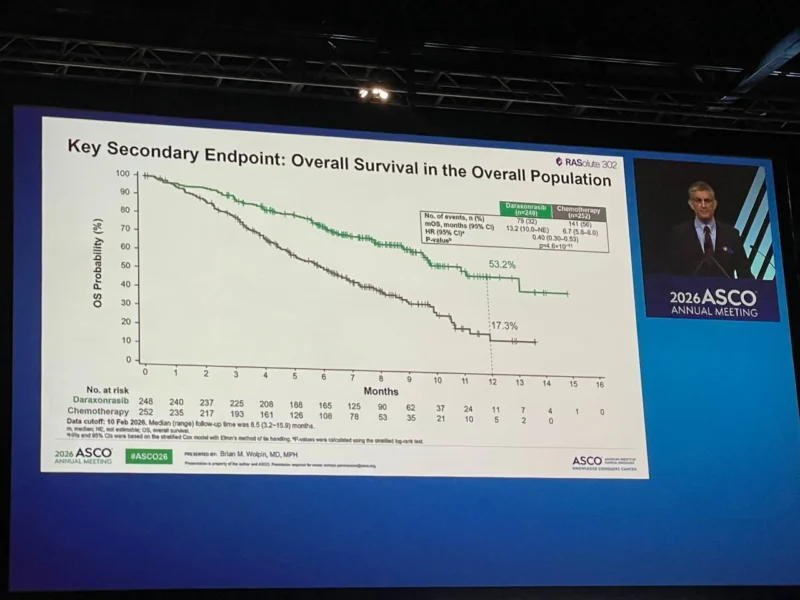
The survival benefit was also seen in the overall population, which included patients with and without an identified tumor RAS mutation. Median overall survival was 13.2 months with daraxonrasib versus 6.7 months with chemotherapy. The hazard ratio was 0.40, with a 95% confidence interval of 0.30–0.53 and a p-value of 4.6 × 10⁻¹¹. At 12 months, overall survival was 53.2% with daraxonrasib and 17.3% with chemotherapy.
The subgroup analysis in the overall population showed a consistent treatment effect favoring daraxonrasib across clinical and molecular subgroups, including patients with and without an identified tumor RAS mutation.
Progression-Free Survival And Response
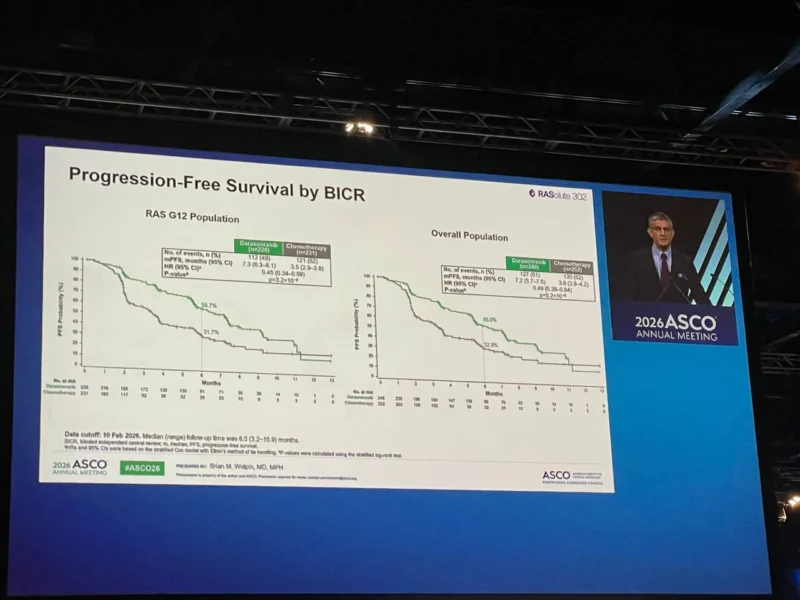
Progression-free survival by blinded independent central review also favored daraxonrasib. In the RAS G12 population, median progression-free survival was 7.3 months with daraxonrasib compared with 3.5 months with chemotherapy. The hazard ratio was 0.45, with a p-value of 3.2 × 10⁻⁹. The 6-month progression-free survival rate was 58.7% with daraxonrasib versus 31.7% with chemotherapy.
In the overall population, median progression-free survival was 7.2 months with daraxonrasib versus 3.6 months with chemotherapy. The hazard ratio was 0.49, with a p-value of 5.2 × 10⁻⁹. The 6-month progression-free survival rate was 56.0% with daraxonrasib compared with 32.9% with chemotherapy.
Confirmed objective response rate by blinded independent central review was higher with daraxonrasib. In the RAS G12 population, ORR was 33.2% with daraxonrasib versus 11.8% with chemotherapy. In the overall population, ORR was 31.6% versus 11.2%, respectively. Both comparisons had p-values below 0.0001.
Safety
Daraxonrasib showed a manageable safety profile, with no unexpected safety findings reported in the presentation. Median time on treatment was 6.2 months with daraxonrasib and 1.5–3.2 months across chemotherapy regimens.
Any treatment-emergent adverse event occurred in 100% of patients receiving daraxonrasib and 97.7% receiving chemotherapy. Treatment-related adverse events occurred in 97.9% and 93.5%, respectively. Grade ≥3 treatment-related adverse events were less frequent with daraxonrasib than chemotherapy, occurring in 43.6% versus 57.5% of patients. Serious treatment-related adverse events occurred in 10.8% versus 18.7%, respectively.
Treatment-related adverse events leading to discontinuation occurred in 1.2% of patients receiving daraxonrasib and 11.2% receiving chemotherapy. In the daraxonrasib arm, discontinuations were attributed to maculo-papular rash in 2 patients and elevated liver function enzymes in 1 patient. In the chemotherapy arm, peripheral neuropathy was the most frequent treatment-related adverse event leading to discontinuation.
The most common treatment-related adverse events with daraxonrasib included rash, diarrhea, stomatitis, nausea, vomiting, fatigue, anemia, decreased appetite, and paronychia. The most common treatment-related adverse events leading to dose reduction with daraxonrasib were rash and stomatitis.
Patient-Reported Outcomes
The presentation also reported that daraxonrasib significantly delayed time to deterioration in pain and global health status/quality of life compared with standard cytotoxic chemotherapy. This supported the overall finding that daraxonrasib improved not only tumor-control endpoints, but also patient-centered outcomes in this previously treated metastatic PDAC population.
Key Takeaway
RASolute 302 met all primary and key secondary endpoints. Daraxonrasib improved overall survival, progression-free survival, objective response rate, and patient-reported outcomes compared with standard cytotoxic chemotherapy in patients with previously treated metastatic pancreatic adenocarcinoma.
The presentation concluded that these results support daraxonrasib as a new standard of care for patients with previously treated metastatic PDAC.