Key takeaways
- Skin reactions are common after radiation therapy, including redness, dryness, irritation, and peeling.
- Healing usually takes 4–6 weeks after treatment ends, although severe reactions may take longer.
- Gentle skin care matters: Use mild cleansers, fragrance-free moisturizers, and loose clothing.
- Avoid irritating products: Fragrances, exfoliants, scratching, and extreme temperatures can worsen skin damage.
- Seek medical advice if the skin develops blisters, open wounds, increasing pain, or signs of infection.
Skin after radiation therapy can become red, dry, itchy, or irritated as healthy skin cells are affected during cancer treatment. These changes, known as radiation dermatitis, are among the most common side effects of radiotherapy and can range from mild discoloration to painful peeling, blistering, or open wounds.
Skin reactions usually develop within the first few weeks of treatment and may continue to worsen temporarily after radiation ends. Although most acute reactions improve within 4–6 weeks, recovery depends on the radiation dose, treatment area, and severity of skin damage.
Understanding what radiation burns look like, how the skin heals, and which symptoms require medical attention can help patients manage discomfort and avoid complications. This article explains the stages of skin changes after radiation therapy, recommended skin care practices, available treatments, and when to contact a doctor.
What Happens to Your Skin After Radiation Therapy?
Skin after radiation therapy may become red, darker, dry, itchy, or irritated due to a reaction known as radiation dermatitis. These changes develop when radiation affects healthy skin cells within the treatment area. The reaction often resembles sunburn, although its severity varies from mild irritation to more significant skin damage.
Not everyone develops the same symptoms. The risk and severity depend on the radiation dose, treatment schedule, body area, and individual skin sensitivity (Bray et al., 2016).
Why Does Radiation Therapy Cause Skin Changes?
Radiation therapy damages cancer cells but can also affect healthy cells in the surrounding skin. Because treatment is usually delivered over multiple sessions, the skin may not have enough time to fully repair itself between treatments.
This can cause inflammation and weaken the skin’s protective barrier, making the treated area more sensitive to touch, friction, and certain skincare products.
Common effects include changes in skin color, dryness, itching, tenderness, and swelling. More pronounced reactions may cause the outer skin layer to peel or break down.
Unlike some other cancer treatment side effects, radiation dermatitis generally develops within the area receiving radiation, rather than affecting the entire body (National Cancer Institute).
When Do Skin Reactions Usually Begin?
Skin changes typically become noticeable 1–2 weeks after starting radiation therapy, although some patients develop symptoms later.
The reaction may gradually become more pronounced as treatment continues and can worsen for approximately 1–2 weeks after the final session.
Most acute reactions improve substantially within 4–6 weeks after treatment ends, although more severe skin damage can take longer to heal (eviQ, 2025).
Which Areas of the Body Are Most Affected?
Radiation dermatitis can occur anywhere the skin receives radiation, including the breast, chest, neck, abdomen, pelvis, and groin.
However, reactions are often more pronounced in areas where moisture accumulates or skin surfaces rub together.
Areas particularly prone to irritation include:
- Under the breasts and around the armpits
- Groin and buttock folds
- Neck folds and perineal areas
- Skin exposed to frequent friction from clothing
These areas may develop more significant irritation because friction and moisture can further damage the skin’s protective barrier.

What Do Radiation Burns Look Like?
Radiation burns can range from mild discoloration and dryness to painful peeling, moist skin breakdown, and, rarely, ulceration. The medical term radiation dermatitis describes these reactions more accurately because they result from radiation-induced tissue damage rather than direct exposure to heat.
Healthcare professionals classify radiation dermatitis according to its severity, with Grade 1 representing mild reactions and Grade 4 indicating serious tissue damage (Bray et al., 2016).
Mild Radiation Burns: Redness, Dryness, and Itching
Mild radiation dermatitis often resembles sunburn. The affected skin may feel warm, slightly swollen, or unusually sensitive.
On lighter skin, the reaction commonly appears pink or red. On darker skin, it may cause brown, purple, gray, or darker patches that are less easily recognized as redness.
Typical signs include:
Redness or darkening of the treated area
Dryness, itching, or mild flaking
Tenderness or increased sensitivity
Slight swelling
These changes generally correspond to Grade 1 radiation dermatitis, which may also include dry peeling.
Moderate Radiation Burns: Peeling and Skin Discoloration
As radiation dermatitis becomes more pronounced, the skin may develop stronger discoloration, swelling, and discomfort.
One common reaction is dry desquamation, in which damaged skin cells shed from the surface, causing visible flaking or peeling. Dry desquamation alone is generally a Grade 1 feature.
More advanced reactions may involve small areas of moist desquamation, particularly in skin folds, where the surface breaks down and releases fluid.
Grade 2 radiation dermatitis is characterized by pronounced redness, moderate swelling, or patchy moist desquamation, usually confined to skin folds or creases (Bray et al., 2016).
Severe Radiation Burns: Blisters, Moist Peeling, and Open Skin
Severe radiation dermatitis occurs when significant damage to the outer skin layer leads to painful, exposed areas.
The affected skin may appear wet, shiny, or raw due to moist desquamation, which develops when the protective epidermal layer breaks down.
Severe reactions may involve extensive peeling, blistering, open wounds, or bleeding. Grade 3 dermatitis generally involves moist desquamation extending beyond skin folds, while Grade 4 may include ulceration, spontaneous bleeding, or tissue necrosis.
These reactions require medical assessment and may need specialized wound care to support healing and prevent complications (Bray et al., 2016).
What Are the Stages of Skin Healing After Radiation Therapy?
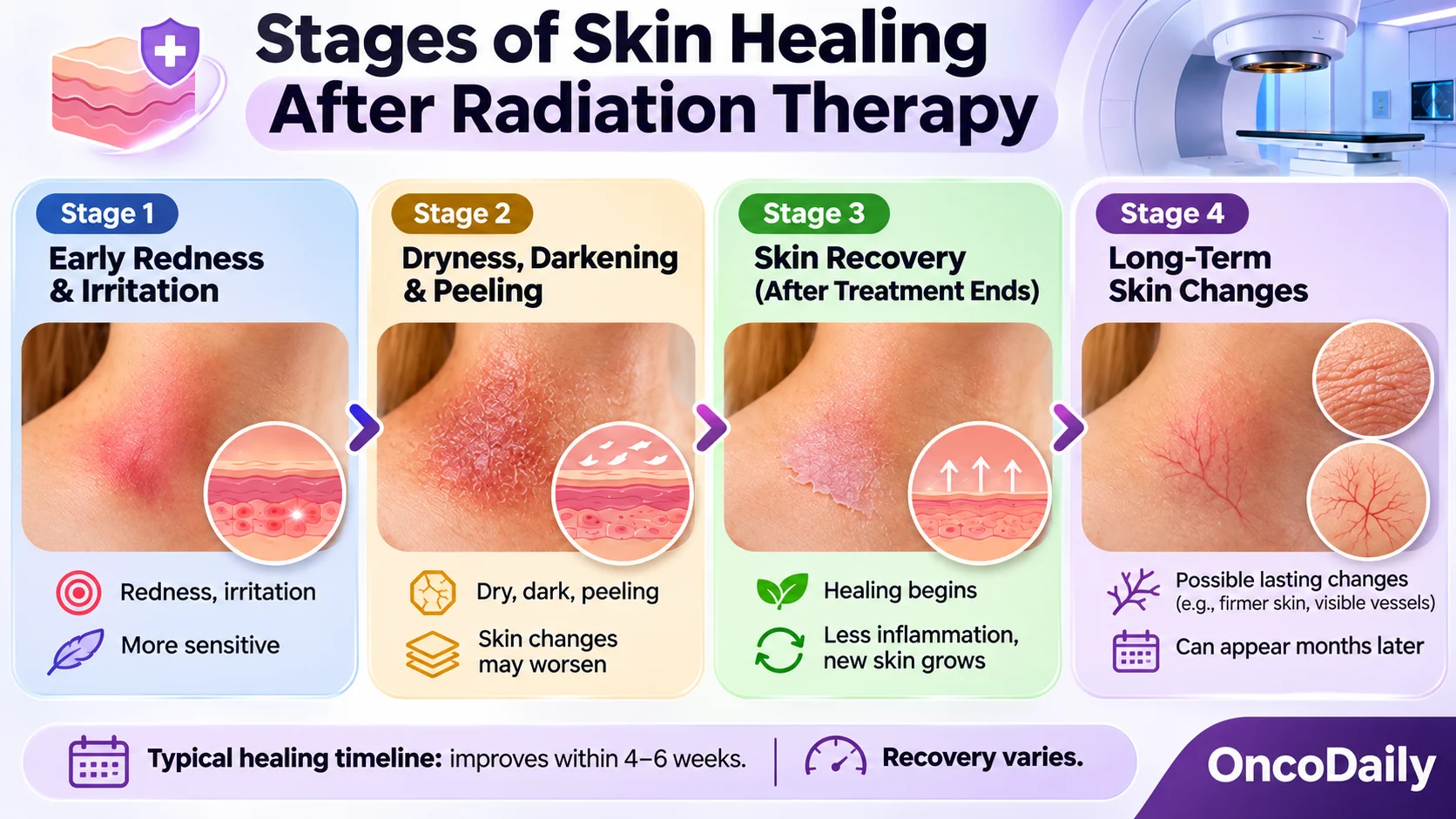
Skin reactions after radiation therapy generally progress from early irritation to more noticeable skin changes, followed by gradual recovery. Although most acute reactions improve within several weeks, healing depends on the severity of skin damage and the treatment received.
The following stages describe a typical pattern of skin changes during and after radiotherapy. They are not an official clinical grading system.
Stage 1: Early Redness and Irritation
During the first weeks of treatment, the skin may become more sensitive as inflammation develops. Early changes are often mild, and the skin usually remains intact.
At this point, gentle skin care can help reduce additional irritation.
Stage 2: Dryness, Darkening, and Peeling
As treatment progresses, damage to the skin’s outer layer may become more noticeable. The skin can develop dryness, pigmentation changes, or peeling as damaged cells are shed.
Not all patients progress to more severe reactions. Some experience only mild changes throughout treatment.
Stage 3: Skin Recovery After Treatment Ends
Skin reactions may temporarily worsen after the final radiation session before the healing process becomes more noticeable.
As inflammation decreases and the epidermis repairs itself, discomfort and peeling gradually improve. Most acute reactions resolve substantially within 4–6 weeks, although recovery can take longer in patients with severe skin damage (eviQ, 2025).
Stage 4: Long-Term Skin Changes
Even after acute reactions have healed, some patients notice persistent changes in skin color, texture, or sensitivity.
Radiation can occasionally cause fibrosis, which makes tissue thicker or firmer, or telangiectasia, which produces small, visible blood vessels near the skin surface.
These late effects may develop months or years after treatment and should be distinguished from the normal healing of acute radiation dermatitis (Bray et al., 2016).
How Should You Care for Skin After Radiation Therapy?
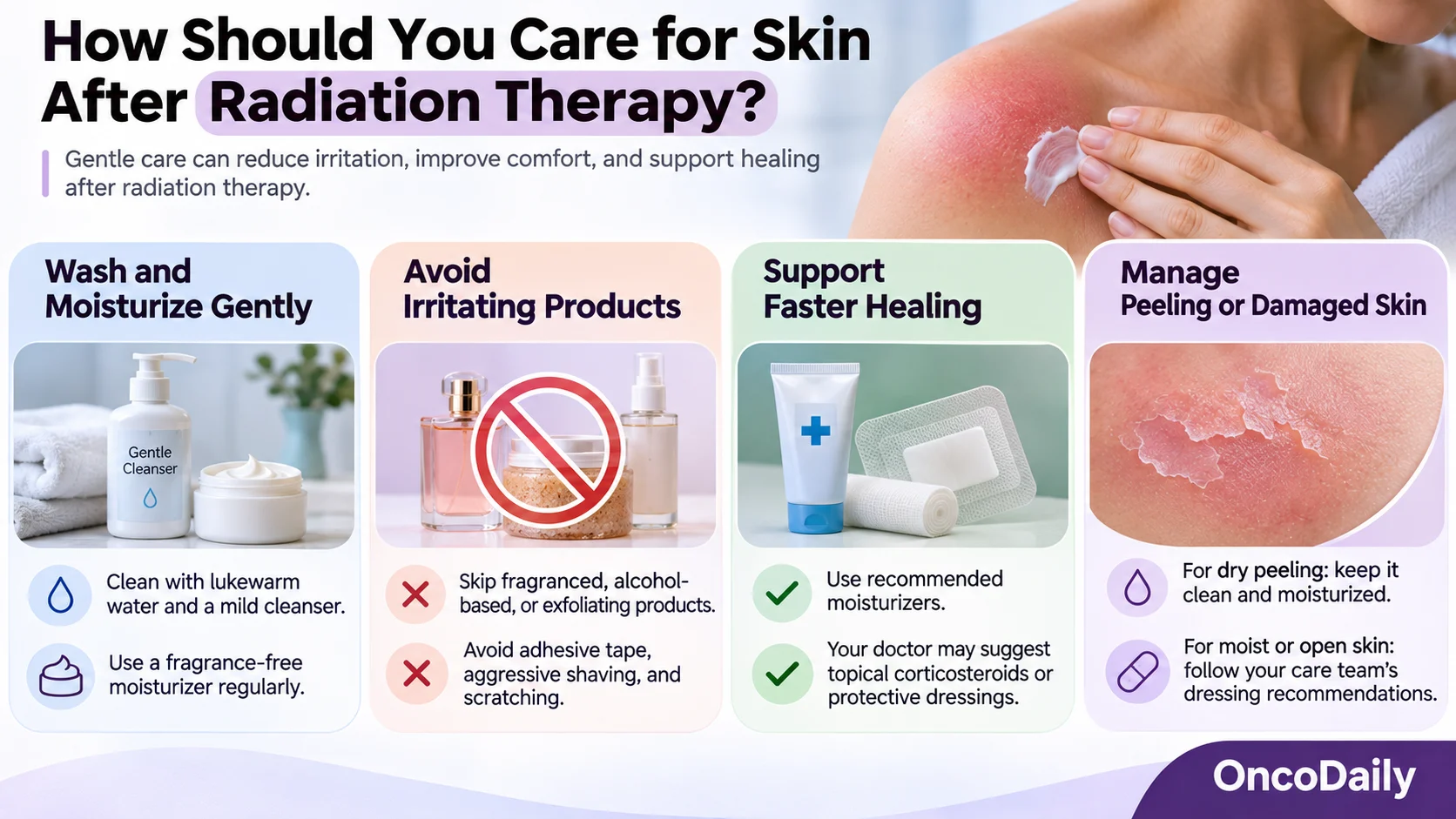
Gentle cleansing, regular moisturizing, and protection from friction can help reduce skin irritation during and after radiation therapy. Although radiation dermatitis cannot always be prevented, appropriate skin care can improve comfort and support the skin’s natural recovery.
Patients with more pronounced reactions may benefit from medical treatments, including topical corticosteroids or specialized dressings, depending on the condition of the skin (Behroozian et al., 2023).
How to Wash and Moisturize Irradiated Skin
The skin within the treatment area should be kept clean and moisturized without excessive rubbing or exposure to irritating products.
Recommended practices include:
- Gentle cleansing: Wash with lukewarm water and a mild, fragrance-free cleanser.
- Moisturizing: Apply a recommended fragrance-free moisturizer regularly, often two to three times daily.
- Careful drying: Pat the skin dry using a soft towel.
- Comfortable clothing: Wear loose, breathable fabrics to minimize friction.
- Sun protection: Cover the treated area and use appropriate sun protection on intact skin.
Moisturizers can generally be used during radiation treatment, but thick layers should not be applied immediately before a session. Patients should follow the instructions provided by their radiation oncology team (eviQ, 2025).
What Products Should You Avoid?
Certain products can irritate sensitive skin or interfere with recovery, particularly when the protective skin barrier is already damaged.
Patients should avoid harsh exfoliating products, fragranced lotions, alcohol-containing skincare preparations, and direct application of heating pads or ice packs.
Adhesive tapes, aggressive shaving, and scratching may also cause additional skin damage.
Natural products are not necessarily safer. Essential oils and homemade remedies should not be applied to irritated or broken skin without medical advice.
What Helps Radiation Burns Heal Faster?
There is no single treatment that immediately reverses radiation-related skin damage. However, several approaches can reduce inflammation, protect the skin, and support recovery.
Treatments that may be recommended include:
- Moisturizing creams: Help maintain hydration and relieve dryness.
- Topical corticosteroids: Mometasone or other prescribed corticosteroids may help prevent or manage inflammation in selected patients with intact skin.
- Silicone-based films or dressings: Can reduce friction and may lower the severity of radiation dermatitis.
- Specialized wound dressings: May protect damaged skin and support healing.
- Pain medication: Can relieve discomfort associated with more severe reactions.
Clinical guidelines support selected topical corticosteroids and silicone-based products, particularly for patients at higher risk of radiation dermatitis. However, evidence remains insufficient to recommend aloe vera, calendula, or honey routinely for preventing radiation-related skin reactions (Behroozian et al., 2023; Wong et al., 2026).
How to Manage Peeling or Damaged Skin
Management depends on whether the skin remains intact or has developed moist peeling.
Mild, dry peeling can usually be managed with gentle cleansing, moisturizing, and avoiding friction. Patients should not pick or remove loose skin.
When the skin becomes wet, raw, or open, the radiation oncology team may recommend saline cleansing and non-adherent dressings to protect the affected area.
Topical corticosteroids should generally not be applied directly to broken skin or areas of moist desquamation unless specifically directed by a healthcare professional.
More severe reactions require closer monitoring because skin breakdown increases the risk of infection.
When Should You Call Your Doctor About Skin After Radiation Therapy?
Patients should contact their radiation oncology team when skin reactions become unusually painful, worsen rapidly, or develop signs of infection. Mild irritation is expected in some patients, but open wounds, significant blistering, and increasing discomfort should be assessed rather than managed with home remedies alone.
Early medical evaluation can help prevent complications and determine whether additional wound care or medication is needed.
What Are the Signs of Infection?
Radiation-damaged skin becomes more vulnerable to infection when its protective barrier breaks down.
Although some redness and tenderness are expected during treatment, symptoms that spread or become progressively worse may indicate infection.
Warning signs include:
- Spreading redness or increasing warmth
- New or worsening swelling and pain
- Pus or foul-smelling discharge
- Fever or chills
- Wounds that become increasingly painful or fail to improve
Patients with suspected infection should contact their healthcare team promptly, particularly if they are receiving chemotherapy or have a weakened immune system (National Cancer Institute).
When Are Blisters, Bleeding, or Pain Concerning?
Blisters, bleeding, and persistent pain may indicate more significant skin damage, especially when the affected area becomes raw or begins releasing fluid.
Small areas of moist desquamation can occur during radiation therapy, but these should still be assessed so that appropriate dressings and wound care can be provided.
Pain that interferes with sleeping, dressing, or daily activities also deserves medical attention, even when visible skin damage appears limited.
Which Symptoms Require Urgent Medical Attention?
Some symptoms suggest infection or serious tissue damage and should not be left until a routine follow-up appointment.
Urgent medical assessment is needed for:
- Fever of 38°C (100.4°F) or higher, particularly during chemotherapy.
- Rapidly spreading redness or swelling accompanied by severe pain.
- Bleeding that does not stop with gentle pressure.
- Deep wounds, ulceration, or blackened skin.
- Confusion, severe weakness, or feeling acutely unwell.
Patients receiving chemotherapy who develop fever should seek immediate medical assessment because infection may be more serious when white blood cell counts are low.
Most radiation-related skin reactions heal without major complications. However, patients should continue monitoring the treated area after radiotherapy ends and report any new, persistent, or worsening changes.
FAQ
How long does skin take to heal after radiation therapy?
Most acute skin reactions improve within 4–6 weeks after treatment ends. Severe radiation burns may take longer to heal, while some discoloration can persist for months.
Do radiation burns get worse after treatment ends?
Yes. Radiation dermatitis can continue to worsen for 1–2 weeks after the final session before the skin begins to recover.
What is the best cream for skin after radiation therapy?
Fragrance-free moisturizers can help relieve dryness and irritation. Prescription corticosteroid creams, such as mometasone, may also be recommended for selected patients.
Can radiation therapy permanently damage your skin?
Yes. Some patients develop long-term changes, including darker pigmentation, skin thickening (fibrosis), or visible small blood vessels (telangiectasia).
When should you worry about radiation burns?
Contact your healthcare team if you develop open wounds, significant blistering, worsening pain, or signs of infection, including fever, pus, or spreading redness.