At what stage is radiotherapy used, and can it cure cancer? Radiotherapy, also known as radiation therapy, is an essential cancer treatment used at all stages, from stage I to stage IV. Depending on the cancer type, tumor location, and extent of disease, radiotherapy may be used to eliminate cancer cells, reduce the risk of recurrence after surgery, or relieve symptoms in advanced cancer. While curative radiotherapy can achieve long-term disease control in selected patients, palliative radiotherapy focuses on improving quality of life. This article explains how radiotherapy is used at different cancer stages, the differences between curative and palliative treatment, whether radiation can cure stage IV cancer, and how many treatment sessions patients may need.
At What Stage of Cancer Is Radiotherapy Used?
Radiotherapy can be used at any stage of cancer, from stage I to stage IV, depending on the cancer type, tumor location, extent of disease, and treatment goals. There is no specific stage at which radiotherapy must begin. It may be used to cure cancer, reduce the risk of recurrence after surgery, control tumor growth, or relieve symptoms associated with advanced disease (American Cancer Society, 2025).
Radiotherapy uses high-energy radiation to damage the DNA of cancer cells, preventing their continued growth and division. Unlike systemic treatments such as chemotherapy, radiotherapy primarily targets a defined area of the body.
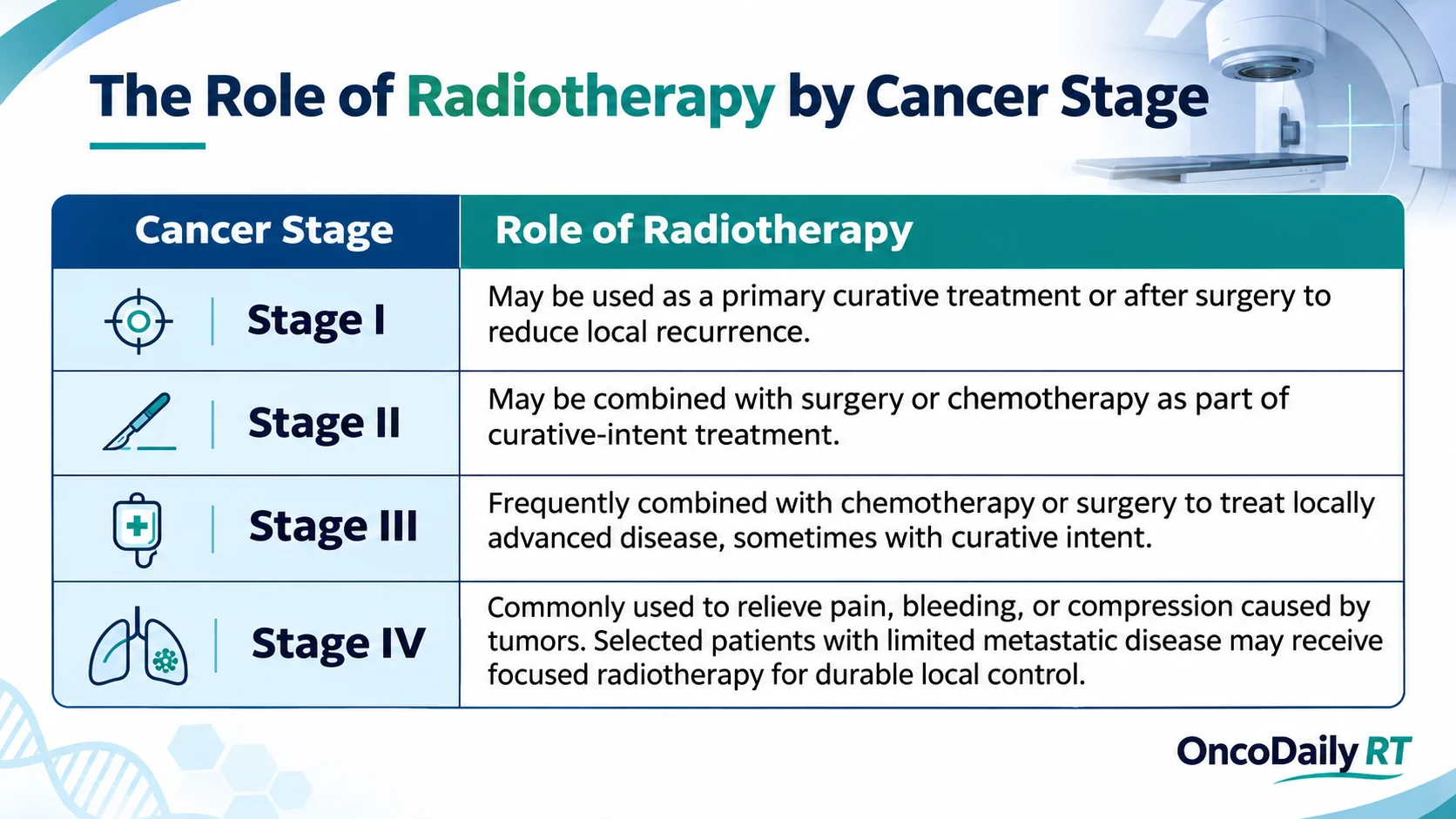
Radiotherapy can also be classified according to its timing and purpose. Neoadjuvant radiotherapy is delivered before surgery, adjuvant radiotherapy follows surgery to reduce recurrence risk, and definitive radiotherapy serves as the primary local treatment. Palliative radiotherapy focuses on relieving symptoms and preventing complications rather than curing widespread disease (NHS).
Importantly, cancer stage alone does not determine whether radiotherapy is appropriate. Treatment decisions also consider tumor biology, proximity to critical organs, available alternatives, and the patient’s overall health (American Cancer Society).

Does Cancer Stage Alone Determine Whether Radiotherapy Is Needed?
Cancer stage alone does not determine whether radiotherapy is necessary. Although staging describes how far cancer has spread, treatment decisions also depend on tumor characteristics, location, lymph node involvement, and the patient’s overall health (American Cancer Society, 2024).
Several factors influence whether radiotherapy is recommended:
- Cancer type and biology: Tumor grade, molecular characteristics, and sensitivity to radiation influence treatment selection.
- Tumor size and location: Proximity to critical organs, such as the heart, lungs, or spinal cord, affects treatment planning.
- Lymph node involvement: Regional lymph node involvement may increase the need for radiotherapy to reduce recurrence risk.
- Surgical options: Radiation may be used instead of surgery or before or after an operation.
- Previous treatments and overall health: Prior radiation exposure, medical conditions, and performance status influence treatment safety (National Cancer Institute; American Cancer Society, 2025).
For example, patients with the same stage of breast cancer may receive different radiation recommendations depending on surgical treatment, lymph node status, and recurrence risk (American Cancer Society, 2026).
Ultimately, radiotherapy decisions are individualized rather than determined by cancer stage alone.

How Is Radiotherapy Used for Different Types of Cancer?
Radiotherapy plays an important role in treating many cancers, either as a primary treatment or in combination with surgery, chemotherapy, and other systemic therapies. Its use varies according to cancer type, stage, tumor location, and recurrence risk (National Cancer Institute, 2025).
The most common applications include:
- Breast cancer: Radiotherapy is commonly given after lumpectomy to reduce local recurrence. It may also be recommended after mastectomy in patients with higher-risk features, including lymph node involvement.
- Lung cancer: Stereotactic body radiotherapy (SBRT) is a curative option for medically inoperable early-stage non-small-cell lung cancer (NSCLC). Locally advanced disease may require chemoradiation.
- Prostate cancer: External-beam radiotherapy and brachytherapy are established curative treatments for localized disease. Radiation may also be combined with androgen deprivation therapy in higher-risk cases.
- Cervical cancer: Radiotherapy combined with cisplatin-based chemotherapy and brachytherapy is a standard curative approach for locally advanced disease.
- Rectal cancer: Radiotherapy or chemoradiation may be used before surgery, often as part of total neoadjuvant therapy, particularly in stage II–III disease.
- Endometrial cancer: Postoperative vaginal brachytherapy or pelvic external-beam radiotherapy may be recommended according to recurrence risk, including histology, grade, and lymphovascular space invasion.
- Head and neck cancers: Radiotherapy may be used as definitive treatment to preserve organ function or combined with surgery and chemotherapy for locally advanced disease.
- Brain tumors: Radiotherapy is used after surgery or as definitive treatment for selected primary brain tumors. Stereotactic radiosurgery (SRS) is also used for selected brain metastases.
- Lymphomas: Radiotherapy may be combined with systemic therapy for selected Hodgkin and non-Hodgkin lymphomas, particularly localized disease.
- Other cancers: Radiation is also used in selected anal, esophageal, skin, and pediatric cancers, depending on disease characteristics and treatment protocols.
These applications illustrate why radiotherapy cannot be recommended based on cancer stage alone. The same stage may require different radiation approaches across cancer types, while some patients may not need radiotherapy at all (National Cancer Institute, 2025; RadiologyInfo.org.).
How Is Radiotherapy Used at Different Stages of Cancer?
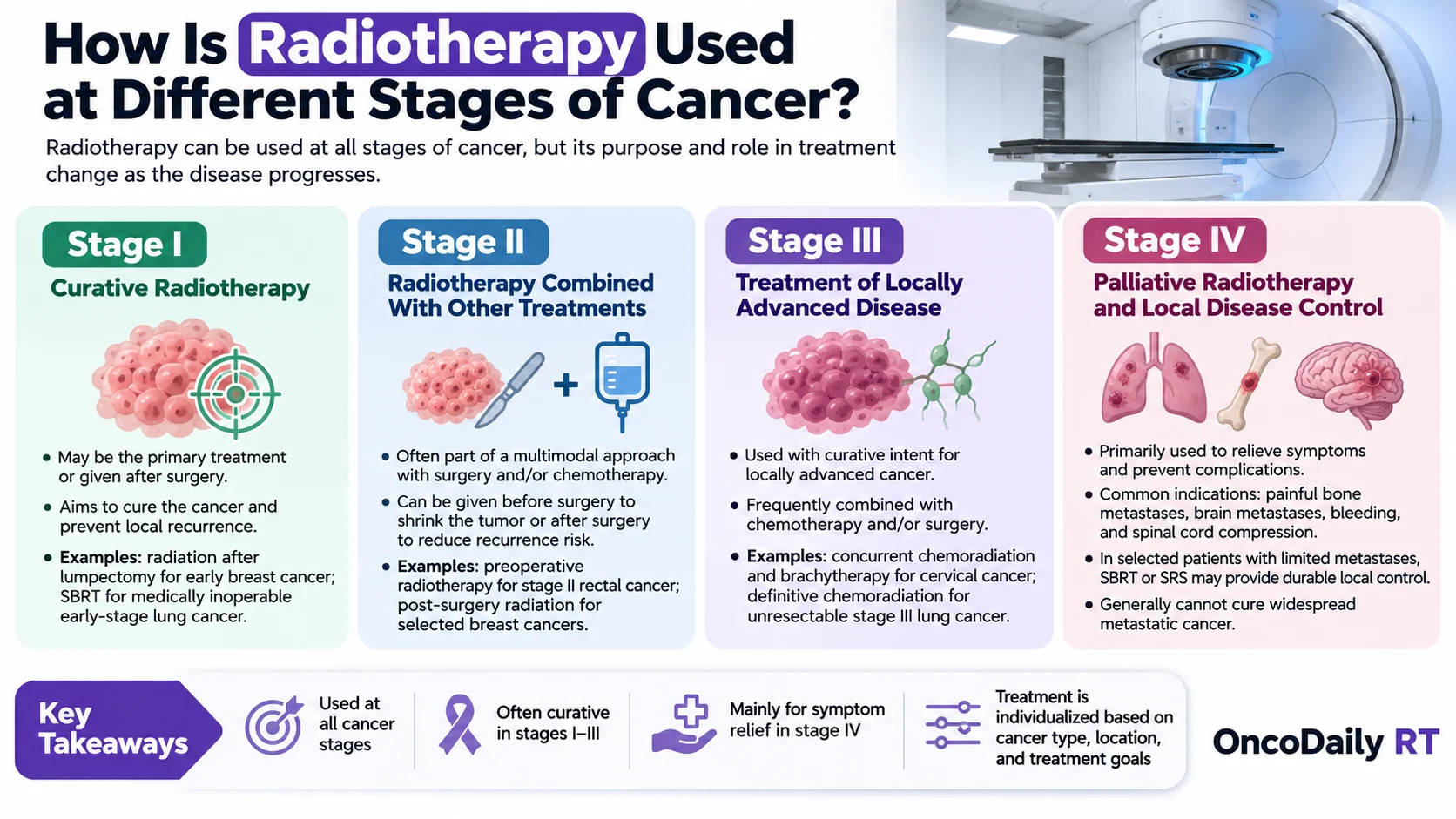
Radiotherapy can be used at all stages of cancer, although its purpose varies depending on disease progression. In stages I–III, radiation is frequently used with curative intent, either alone or in combination with surgery and chemotherapy. In stage IV, treatment primarily focuses on symptom relief and local disease control, although selected patients may benefit from targeted radiation to metastatic lesions (National Cancer Institute, 2026).
Stage I Cancer: Curative Radiotherapy
In stage I cancer, radiotherapy may serve as the primary curative treatment or be administered after surgery to reduce local recurrence. It is particularly useful when surgery is unsuitable or when preserving organ function is important.
For example, radiotherapy commonly follows breast-conserving surgery in early breast cancer, while stereotactic body radiotherapy (SBRT) provides a curative option for patients with medically inoperable early-stage non-small-cell lung cancer (American Cancer Society, 2026).
Stage II Cancer: Radiotherapy Combined With Other Treatments
In stage II cancer, radiotherapy is often incorporated into multimodal treatment, including surgery and chemotherapy. It may be administered before surgery to shrink tumors or afterward to reduce recurrence risk.
For example, selected patients with stage II rectal cancer receive preoperative radiotherapy or chemoradiation, while patients with breast cancer may receive radiation following surgery depending on tumor characteristics and recurrence risk (National Cancer Institute, 2026).
Stage III Cancer: Treatment of Locally Advanced Disease
Stage III cancer generally represents locally advanced disease, often involving regional lymph nodes or surrounding tissues. Radiotherapy remains an important curative treatment option and is frequently combined with chemotherapy or surgery.
For example, locally advanced cervical cancer is commonly treated with concurrent chemoradiation and brachytherapy, while unresectable stage III non-small-cell lung cancer may receive definitive chemoradiation followed by consolidation systemic therapy when appropriate (American Cancer Society, 2025; National Cancer Institute, 2026).
Importantly, stage III cancer does not necessarily indicate incurable disease.
Stage IV Cancer: Palliative Radiotherapy and Local Disease Control
In stage IV cancer, radiotherapy is primarily used to relieve symptoms and prevent complications associated with metastatic disease. Common indications include painful bone metastases, brain metastases, tumor-related bleeding, and spinal cord compression.
In carefully selected patients with a limited number of metastases, techniques such as SBRT or stereotactic radiosurgery (SRS) may provide durable local control. However, radiotherapy alone generally cannot cure widespread metastatic cancer.
The choice of treatment depends on metastatic burden, tumor location, symptoms, and overall treatment goals (National Cancer Institute, 2026; American Cancer Society, 2024).
Can Radiotherapy Cure Stage IV Cancer?
Radiotherapy does not routinely cure stage IV cancer, but it may achieve long-term disease control in carefully selected patients. Its potential depends largely on the number and location of metastases, tumor biology, and response to systemic treatment (Palma et al., 2019).
The distinction between widespread and oligometastatic disease is particularly important:
- Widespread metastatic disease: When cancer has spread to multiple distant sites, radiotherapy is generally used to relieve symptoms such as pain, bleeding, or compression of critical organs.
- Oligometastatic disease: When cancer is limited to a small number of metastatic sites, often one to five lesions, focused radiotherapy may be used to treat all known sites of disease with the aim of achieving durable control and, occasionally, long-term remission.
Modern techniques such as stereotactic body radiotherapy (SBRT) and stereotactic radiosurgery (SRS) deliver highly focused radiation doses to selected metastatic lesions. SBRT is commonly used for tumors outside the brain, while SRS is primarily used for brain metastases. These approaches can provide effective local tumor control while limiting radiation exposure to surrounding healthy tissues (Guckenberger et al., 2020).
However, local tumor control does not necessarily mean cure. Microscopic cancer cells may remain elsewhere in the body, even when all visible metastases have been successfully treated. Therefore, radiotherapy is frequently integrated with systemic treatments such as chemotherapy, targeted therapy, or immunotherapy.
In selected patients with oligometastatic cancer, treating all known disease sites may prolong progression-free survival and, in some settings, overall survival. Nevertheless, cure remains uncertain, and treatment decisions must consider the cancer type, metastatic burden, and overall clinical condition (Palma et al., 2019).
An important distinction is that long-term local control does not guarantee cure, and the benefits of metastasis-directed radiotherapy must be weighed against potential toxicity. The SABR-COMET phase II trial reported promising survival outcomes, but also treatment-related risks, emphasizing the need for careful patient selection (Palma et al., 2019).
What Is the Difference Between Curative and Palliative Radiotherapy?
Curative radiotherapy aims to eliminate cancer and achieve long-term disease control, while palliative radiotherapy focuses on relieving symptoms and improving quality of life. The treatment goal determines the radiation dose, number of sessions, and overall treatment duration (Chaput and Regnier, 2021).
Curative radiotherapy may be used as the primary treatment or combined with surgery and chemotherapy. It includes definitive radiation to treat the tumor, neoadjuvant radiation before surgery, and adjuvant radiation after surgery to reduce recurrence risk.
Palliative radiotherapy is commonly used in advanced cancer to manage painful bone metastases, tumor-related bleeding, brain metastases, or compression of critical structures. Treatment is generally shorter to minimize hospital visits and treatment burden (Spencer et al., 2018).
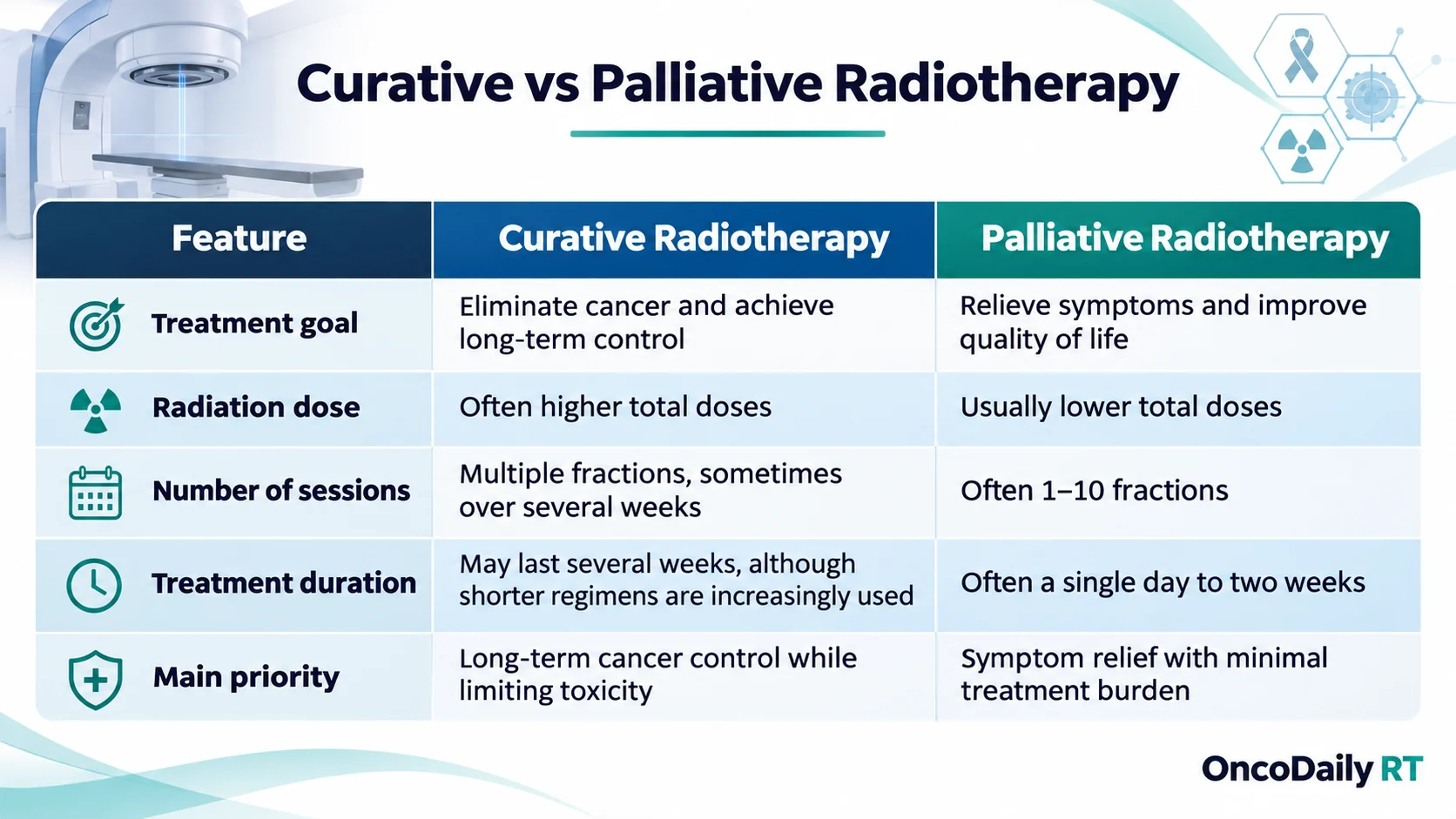
These schedules are not fixed. Modern techniques, including stereotactic body radiotherapy (SBRT), can deliver curative-intent treatment in only a few sessions. The appropriate regimen depends on the cancer type, tumor location, treatment goals, and patient characteristics.
Importantly, palliative radiotherapy can provide meaningful symptom relief even when cancer is not curable, while curative radiotherapy requires careful planning to maximize disease control and minimize long-term complications (Spencer et al., 2018).
How Many Radiotherapy Sessions Are Needed at Each Cancer Stage?
The number of radiotherapy sessions depends on the cancer type, tumor location, treatment goals, and radiation technique rather than cancer stage alone. Some patients receive a single treatment, while others require daily radiation over several weeks (American Cancer Society, 2025).
Radiotherapy is delivered in fractions, meaning the total radiation dose is divided into individual treatment sessions. Different approaches are used depending on the clinical situation.
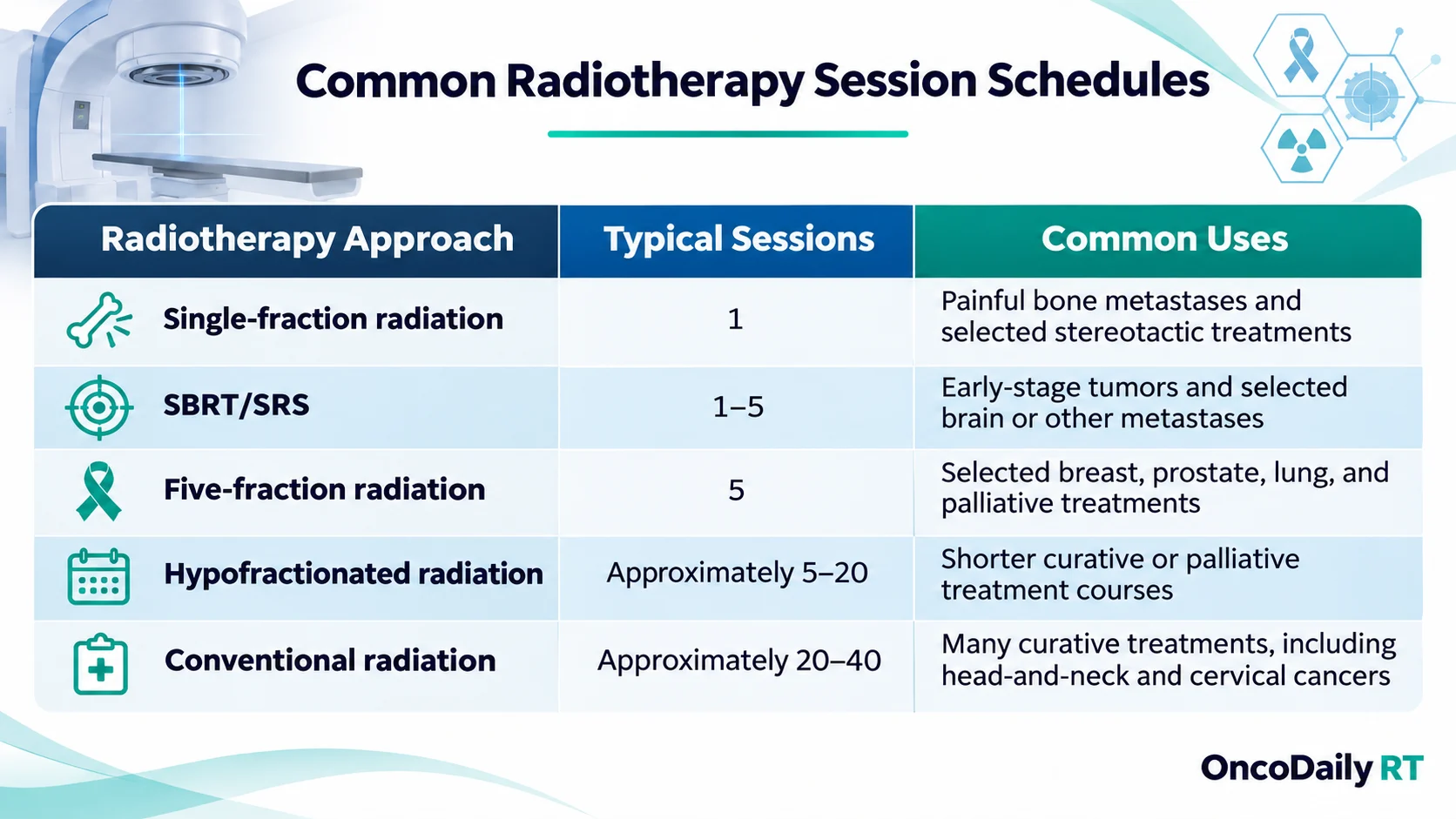
These ranges are illustrative and may overlap because SBRT, SRS, and five-fraction schedules are also forms of hypofractionation.
Stereotactic body radiotherapy (SBRT) delivers highly focused radiation in a limited number of sessions, often one to five. It is commonly used for selected early-stage lung cancers and limited metastatic lesions. Conventional radiotherapy typically involves smaller daily doses, delivered five days per week over several weeks (National Cancer Institute, n.d.).
For example, a patient with stage I lung cancer may receive three to five SBRT sessions, while a patient with stage IV cancer and painful bone metastases may receive a single palliative treatment. In contrast, definitive radiotherapy for locally advanced head-and-neck cancer may require approximately 35 sessions.
Ultimately, more advanced cancer does not necessarily require more radiotherapy sessions. The schedule is individualized to deliver an effective dose while minimizing damage to surrounding healthy tissues (Cancer Council Australia, 2026).
FAQ
At What Stage of Cancer Is Radiotherapy Used?
Radiotherapy can be used at any cancer stage, from stage I to stage IV. In early-stage cancer, it may be used to cure the disease or reduce recurrence after surgery. In advanced cancer, radiation may help control tumor growth, relieve symptoms, and improve quality of life. Its use depends on the cancer type and treatment goals.
Can Stage III Cancer Be Cured With Radiotherapy?
Yes, some stage III cancers can be cured with radiotherapy, particularly when combined with chemotherapy or surgery. For example, definitive chemoradiation is an established curative-intent treatment for locally advanced cervical cancer and unresectable stage III non-small-cell lung cancer. Outcomes depend on tumor characteristics and treatment response.
Is Radiotherapy Effective for Stage IV Cancer?
Yes. Radiotherapy can effectively relieve symptoms caused by metastatic cancer, including bone pain, bleeding, and compression of critical organs. In selected patients with limited metastatic disease, stereotactic body radiotherapy (SBRT) may provide long-term local control. However, radiotherapy alone rarely cures widespread stage IV cancer.
Does Stage I Cancer Always Require Radiotherapy?
No. Not all stage I cancers require radiotherapy. For example, radiation commonly follows lumpectomy in early breast cancer, while selected low-risk patients may safely omit it. Other early-stage cancers may be treated with surgery, radiotherapy, or active surveillance, depending on tumor characteristics and clinical guidelines.
How Many Radiotherapy Sessions Are Needed for Cancer?
The number of sessions varies according to cancer type, tumor location, radiation technique, and treatment goals rather than stage alone. Some patients receive a single treatment, while others require 20–40 sessions. SBRT commonly involves one to five sessions, whereas conventional radiotherapy may extend over several weeks.