Key takeaways
- The gut microbiome may influence both tumor response and radiation-related toxicity, although much of the mechanistic evidence is still preclinical.
- Radiation therapy can alter gut microbial diversity and intestinal barrier function, especially when the abdomen or pelvis is treated.
- Microbial metabolites such as short-chain fatty acids may affect immune signaling, inflammation, and radiosensitivity.
- The microbiome may contribute to radiation-induced diarrhea, enteritis, and other gastrointestinal toxicities, but no validated microbial biomarker is currently used routinely.
- Probiotics, prebiotics, diet, and FMT are being studied, but microbiome-directed treatment is not yet standard in radiation oncology.
The microbiome may influence how cancer responds to radiation therapy by affecting tumor radiosensitivity, immune activation, inflammation, and normal-tissue recovery. Research increasingly suggests that microorganisms living in the gut can shape both treatment response and radiation-related toxicity, although much of the mechanistic evidence still comes from laboratory and animal studies.
The gut microbiome interacts continuously with the immune system, intestinal barrier, metabolism, and inflammatory pathways. These same biological processes also influence how tumors respond to radiation and how healthy tissues recover after treatment. Radiation therapy can, in turn, alter microbial communities, particularly when the abdomen or pelvis is irradiated.
This bidirectional relationship has created growing interest in whether the gut microbiome could eventually help predict radiation response, identify patients at greater risk of toxicity, or provide new therapeutic targets. The biology is promising, but clinical translation remains early, and microbiome-directed treatment is not yet a routine part of radiation oncology.
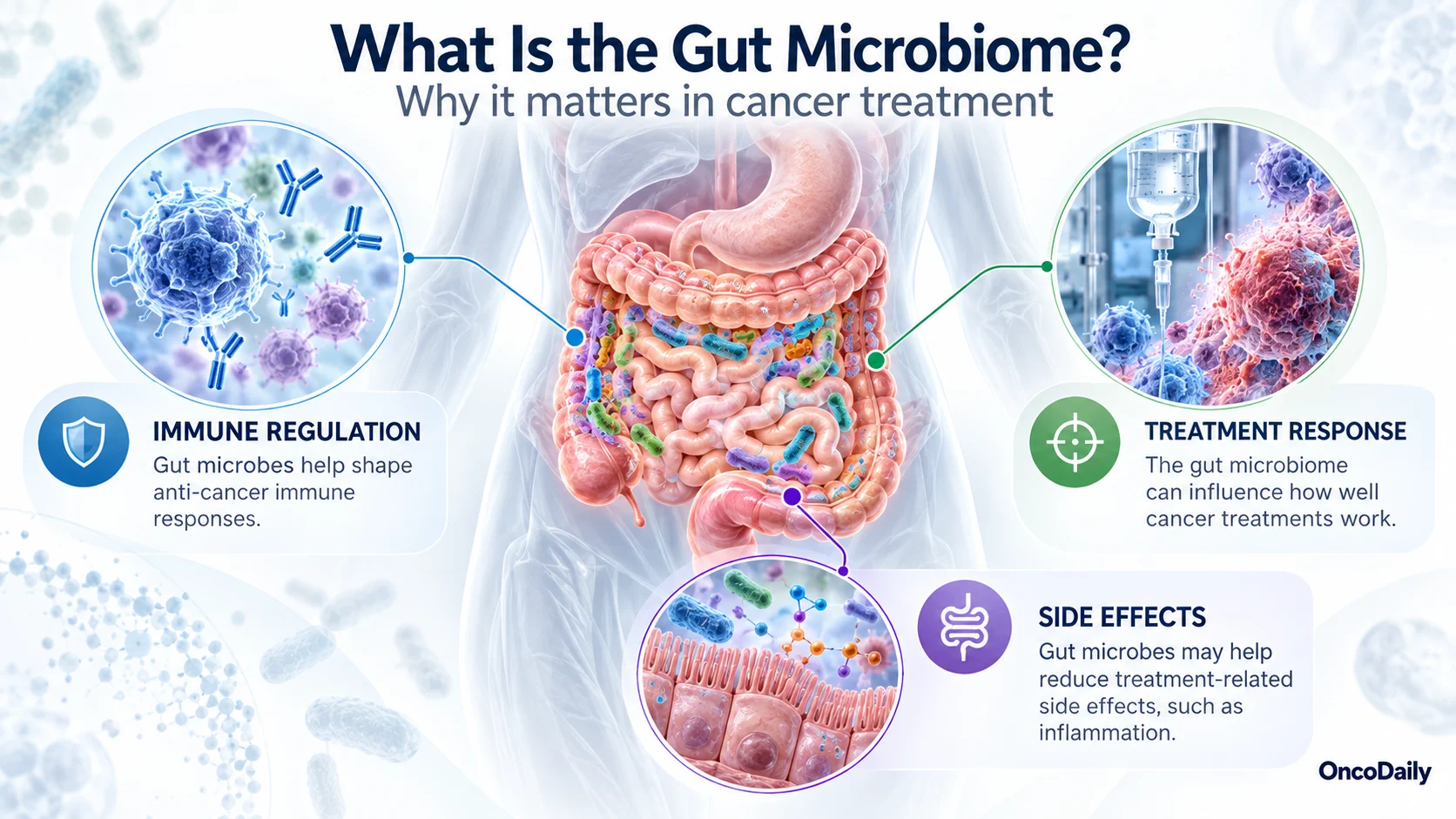
What Is the Gut Microbiome and Why Does It Matter in Cancer Treatment?
The gut microbiota is the community of bacteria, viruses, fungi, archaea, and other microorganisms living within the gastrointestinal tract. The term microbiome is often used more broadly to include these microorganisms together with their collective genes, metabolites, and functional activity.
These microbial communities are involved in nutrient and drug metabolism, maintenance of the intestinal barrier, protection against pathogens, and regulation of innate and adaptive immunity. They also produce biologically active metabolites, including short-chain fatty acids (SCFAs), that can influence inflammation, epithelial function, and immune signaling (Lee et al., 2021).
The clinical relevance of the microbiome in oncology is best established in immunotherapy. Multiple studies have shown associations between gut microbial composition and response to immune checkpoint inhibitors. Taxa including Akkermansia muciniphila, Bifidobacterium species, and members of the Ruminococcaceae family have been associated with treatment response in individual cohorts, although these findings have not produced a universal microbial signature that can reliably predict benefit across cancers or populations (Routy et al., 2018; Gopalakrishnan et al., 2018; Matson et al., 2018).
Microbial effects are not limited to immunotherapy. In colorectal cancer, for example, Fusobacterium nucleatum has been linked to chemotherapy resistance through TLR4/MYD88 signaling, microRNA regulation, and activation of autophagy (Yu et al., 2017).
Radiation oncology is now examining similar questions: whether microbial communities influence tumor radiosensitivity, whether radiation changes the microbiome, and whether those changes contribute to normal-tissue toxicity.
Can the Gut Microbiome Affect How Tumors Respond to Radiation Therapy?
Evidence suggests that the gut microbiome can modify the biological response to radiation, but the strongest mechanistic data remain preclinical. Microorganisms and their metabolites can influence immune activation, inflammation, oxidative stress, DNA-damage responses, and cellular metabolism—all processes that may alter radiosensitivity (Liu et al., 2021; Ma et al., 2025).
Radiotherapy can promote immunogenic tumor-cell death and the release of tumor-associated antigens. These antigens may subsequently be processed by antigen-presenting cells and contribute to activation of tumor-specific CD8+ T-cell responses. Experimental work has demonstrated that altering the intestinal microbiota can modify this radiation-induced antitumor immune response even when the irradiated tumor is located outside the gastrointestinal tract (Uribe-Herranz et al., 2020).
How Could Gut Bacteria Affect Radiosensitivity?
One mechanism involves microbial metabolites. SCFAs, bile-acid derivatives, tryptophan metabolites, and other bacterial products can influence immune cells, epithelial signaling, oxidative stress, autophagy, and DNA-repair pathways. Their effects, however, are highly context dependent and should not be interpreted as uniformly radioprotective or radiosensitizing.
For example, Roseburia intestinalis increased radiation sensitivity in experimental colorectal cancer models through production of butyrate and activation of the OR51E1/RALB pathway, promoting radiation-induced autophagy and tumor-cell death (Dong et al., 2024).
Yet other experimental data illustrate the opposite effect. Uribe-Herranz et al. found that depletion of selected gram-positive gut bacteria enhanced the antitumor activity of radiation through dendritic-cell antigen presentation and CD8+ T-cell responses, while butyrate partly counteracted that effect (Uribe-Herranz et al., 2020). These findings emphasize that describing individual bacteria or metabolites simply as “beneficial” or “harmful” is biologically misleading.
Clinical studies have begun to identify associations between microbial composition and radiotherapy outcomes in gastrointestinal cancers, including rectal, esophageal, liver, and anal cancers. However, cohorts remain relatively small and heterogeneous, and no microbiome signature has yet been validated for routine prediction of radiation response (Bonù et al., 2025).
The microbiome should therefore be viewed as a promising modifier of radiation response rather than an established clinical biomarker. 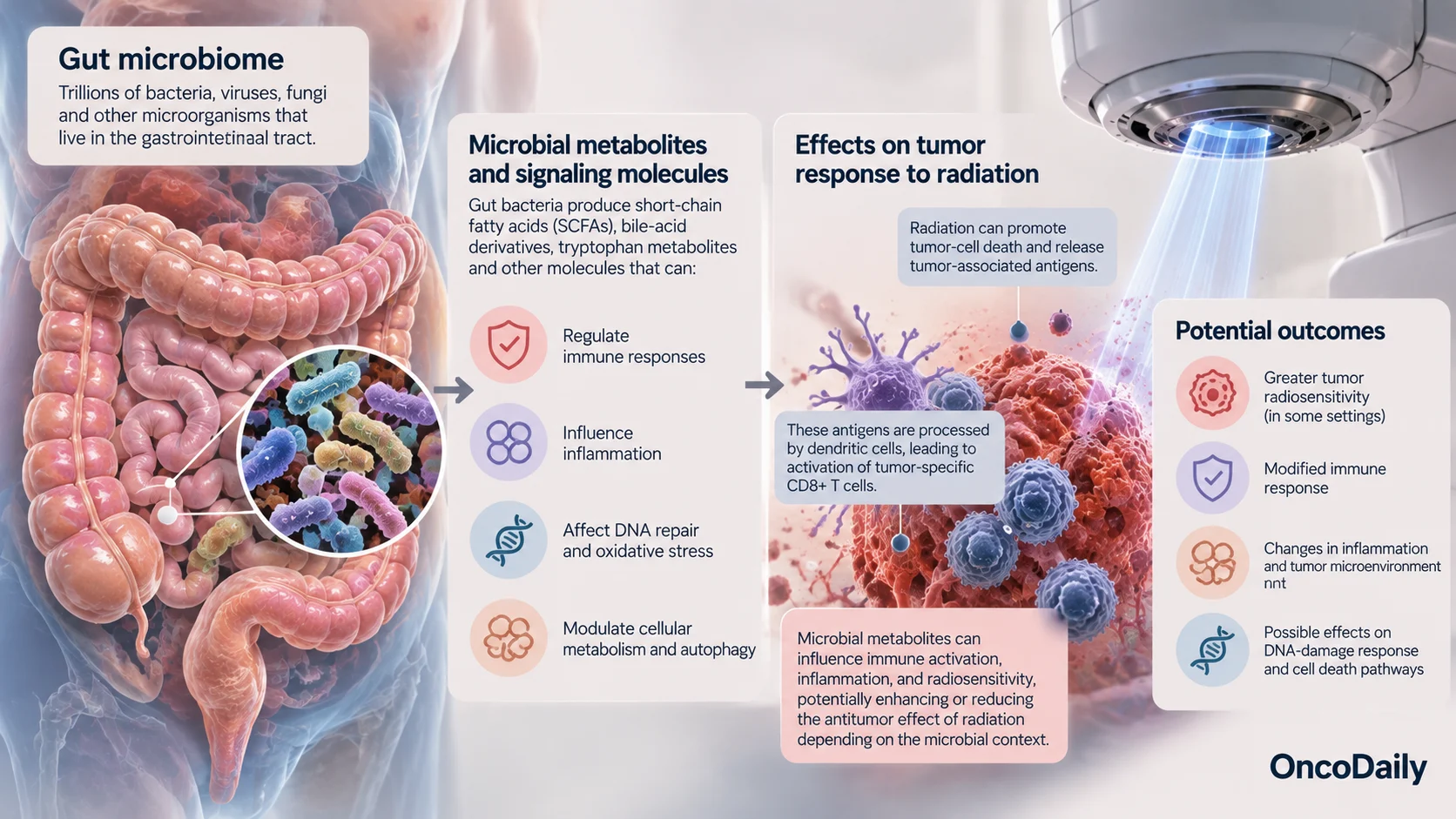
How Does Radiation Therapy Alter the Gut Microbiome?
Radiation therapy can itself change the intestinal microbial environment, particularly when substantial portions of the bowel are exposed during abdominal or pelvic radiotherapy.
Ionizing radiation causes direct and indirect injury to intestinal epithelial cells. Generation of reactive oxygen species, epithelial-cell loss, inflammation, alterations in mucus production, and disruption of tight junctions can weaken the intestinal barrier and change the ecological conditions in which gut microorganisms live (Jian et al., 2021; Li et al., 2025).
Human and preclinical studies have reported changes in microbial diversity and relative abundance following radiation exposure. Reductions in certain commensal and SCFA-producing organisms and increases in potentially pro-inflammatory taxa have been described. However, these patterns vary considerably between studies, and there is no single reproducible microbiome profile that defines radiation-induced dysbiosis.
This variability is not surprising. Microbial composition can also be affected by diet, antibiotics, proton-pump inhibitors, chemotherapy, immunotherapy, age, geography, cancer type, baseline microbiota, radiation dose, and the volume of bowel exposed. These factors make it difficult to attribute every observed microbiome change directly to radiation.
Loss of microbial functions may nevertheless be biologically relevant. SCFAs such as butyrate support intestinal epithelial metabolism, barrier integrity, and immune regulation. A reduction in SCFA-producing capacity could therefore contribute to impaired mucosal recovery and increased inflammatory signaling following irradiation (Tian et al., 2020).
The interaction is likely bidirectional: radiation can disturb the microbiome, while the resulting dysbiosis may influence how intestinal tissues respond to subsequent radiation exposure. This interaction is increasingly being studied as part of the pathogenesis of radiation-induced intestinal injury (Wang et al., 2024; Li et al., 2025).
Can the Microbiome Influence Radiation Therapy Side Effects and Toxicity?
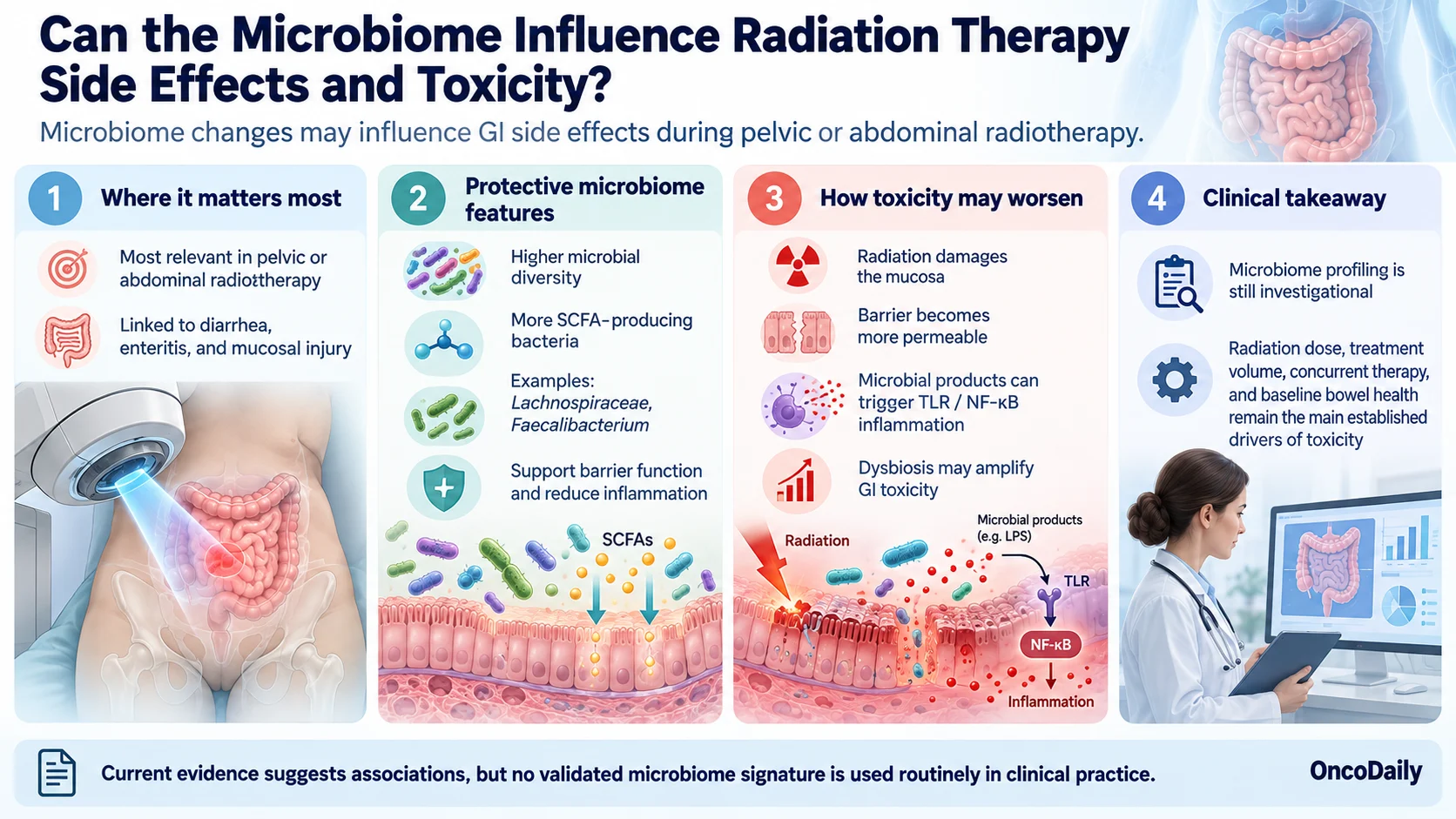
The clearest clinical relevance of the microbiome in radiotherapy may ultimately be its relationship with normal-tissue toxicity, particularly gastrointestinal toxicity after pelvic or abdominal treatment.
Several studies have associated differences in baseline or treatment-related microbial composition with radiation-induced diarrhea, enteritis, and mucosal injury. Lower microbial diversity and reduced abundance of some SCFA-producing organisms have been reported in patients experiencing greater gastrointestinal toxicity, although findings are not uniform across cohorts (Bonù et al., 2025; Li et al., 2025).
SCFA-producing organisms, including members of the Lachnospiraceae family and taxa such as Faecalibacterium prausnitzii, contribute to intestinal homeostasis. Butyrate and other SCFAs provide metabolic support to colonocytes, influence tight-junction integrity, and regulate inflammatory and immune pathways (Tian et al., 2020).
When radiation damages the mucosa, increased intestinal permeability can permit greater exposure to microbial products such as lipopolysaccharide. These products can activate Toll-like receptor and NF-κB signaling, amplifying local inflammatory responses. Dysbiosis may therefore interact with epithelial injury rather than acting as an independent cause of radiation toxicity (Wang et al., 2024).
Microbiome composition is also being studied as a possible biomarker of radiation toxicity. Associations involving Lachnospiraceae, Enterococcaceae, and other bacterial groups have been described, but they have not been sufficiently reproducible to guide clinical treatment decisions.
For now, factors such as radiation dose, treatment volume, concurrent systemic therapy, baseline bowel health, and individual patient characteristics remain much more established determinants of toxicity. Microbiome profiling for routine prediction of radiation side effects remains investigational.
Could Microbiome-Targeted Treatments Improve Radiation Therapy Outcomes?
The possibility of modifying the microbiome during radiation therapy has generated considerable interest. Strategies under investigation include probiotics, prebiotics, synbiotics, dietary interventions, microbial metabolites, and fecal microbiota transplantation (FMT).
At present, human evidence is considerably stronger for reducing treatment-related toxicity than for improving tumor control.
A 2022 meta-analysis included 16 randomized controlled trials involving 2,097 patients receiving radiotherapy, chemotherapy, or chemoradiotherapy. Probiotic supplementation was associated with lower rates of treatment-related diarrhea, particularly in pelvic and abdominal cancers, and lower rates of oral mucositis in head and neck cancer. However, considerable variation existed between studies in probiotic strains, doses, cancer types, and treatment regimens (Lu et al., 2022).
Can Probiotics or FMT Help During Radiation Therapy?
The effect of probiotics appears to depend strongly on the microbial strain and treatment context. In a randomized, double-blind trial of Limosilactobacillus reuteri in patients receiving head and neck radiation, no significant reduction in oral mucositis was seen in the overall study population. In the subgroup receiving radiotherapy without concurrent chemotherapy, however, mean mucositis scores were lower with the probiotic than with placebo. The authors appropriately concluded that larger studies are needed before the finding can be generalized (Goh et al., 2026).
FMT represents a more intensive method of altering the intestinal ecosystem. In experimental models, FMT and defined microbial communities have modified radiation responses, intestinal injury, and antitumor immunity. The Roseburia intestinalis colorectal cancer work, for example, demonstrated that FMT could improve radiotherapy efficacy in mice and identified a specific microbial-metabolic pathway contributing to that effect (Dong et al., 2024).
The human evidence is much less developed. A 2025 systematic review of 45 studies examining FMT across different cancer-treatment settings found that the procedure appeared feasible and generally well tolerated, but no large randomized trials had established an improvement in anticancer efficacy. Much of the clinical experience involved immune checkpoint therapy, treatment-related colitis, or hematopoietic transplantation rather than radiotherapy itself (Wekking et al., 2025).
For this reason, probiotics, prebiotics, FMT, and other microbiome-directed interventions should not currently be considered established radiosensitizing treatments. The field still needs prospective trials that distinguish effects on tumor control from effects on toxicity and that account for microbial strain, baseline microbiome, diet, antibiotics, cancer type, radiation technique, and concurrent systemic therapy.
The microbiome may eventually become part of personalized radiation oncology, but the evidence is not yet mature enough to use microbiome testing or manipulation routinely to determine how radiotherapy should be delivered.
FAQ
Can the gut microbiome affect how well radiation therapy works?
Possibly. Preclinical and early clinical studies suggest that gut microbes can influence immune responses, inflammation, and tumor radiosensitivity, but this is not yet used routinely to guide treatment.
Can radiation therapy change the gut microbiome?
Yes. Radiation, especially to the abdomen or pelvis, can alter microbial diversity and disrupt the intestinal environment.
Can the microbiome affect radiation therapy side effects?
It may. Differences in microbial composition have been associated with gastrointestinal toxicities such as diarrhea and radiation enteritis.
Can probiotics improve radiation therapy outcomes?
Some studies suggest probiotics may reduce treatment-related diarrhea or mucositis in selected settings, but results are inconsistent and they are not standard radiosensitizing treatments.
Is fecal microbiota transplantation used during radiation therapy?
Not routinely. FMT is being studied, but evidence in radiotherapy remains limited and it is considered investigational.