The FIRESTORM study addresses an important clinical question: can postoperative radiation dose escalation improve outcomes for patients with high-risk meningioma? High-risk meningiomas remain one of the most challenging areas in neuro-oncology and radiation oncology. While many meningiomas follow an indolent course, patients with WHO grade 2 or grade 3 disease, recurrent tumors, or residual disease after surgery face a substantial risk of progression despite postoperative radiation therapy.
For years, standard-dose postoperative RT has been widely used in this setting, but long-term disease control remains limited, with many patients eventually developing local progression.
About the Study
FIRESTORM is an international multicenter individual patient-level meta-analysis comparing dose-escalated radiation therapy with standard-dose postoperative radiation therapy in patients with high-risk meningiomas.
The analysis included 248 patients from 7 institutions.
Among them, 59 patients received dose-escalated RT, while 189 received standard-dose postoperative RT.
Dose-escalated RT was defined as treatment with a biologically effective dose of at least 79.2 Gy, corresponding to 66 Gy in 33 fractions or higher. Some patients also received treatment approaches incorporating a carbon-ion boost.
The study population reflected a clinically high-risk group:
Most patients had WHO grade 2 disease.
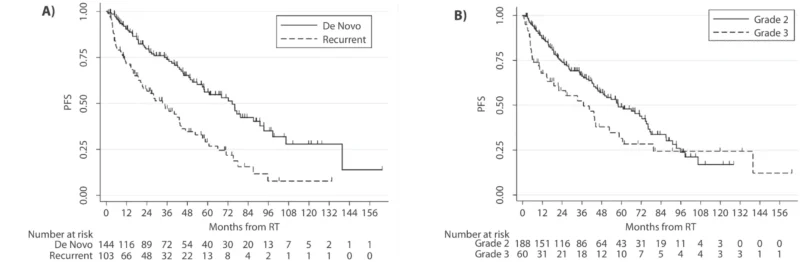
A substantial proportion had recurrent meningioma.
Subtotal resection was common, meaning many patients had residual disease before receiving postoperative radiation.
Why This Matters
High-risk meningiomas are often driven by local failure, and options after recurrence can be limited. Improving local disease control is therefore a major priority.
Standard postoperative RT has been associated with modest progression-free survival rates, often leaving a large proportion of patients at risk of progression within several years.
This study suggests that radiation dose escalation may meaningfully improve disease control in selected high-risk patients.
Key Findings
Dose-escalated RT was associated with significantly improved progression-free survival compared with standard-dose postoperative RT.
At 3 years, progression-free survival was 86.4% with dose-escalated RT compared with 55.6% with standard-dose RT.
At 5 years, progression-free survival was 65.8% with dose-escalated RT compared with 38.8% with standard-dose RT.
This represents an important absolute improvement in disease control over time.
The benefit remained significant after multivariable analysis, with dose-escalated RT associated with superior PFS.
The association also remained significant after inverse probability of treatment weighting, supporting the robustness of the findings despite the retrospective nature of the study.
Subgroup Insights
The largest benefit appeared among patients with Simpson grade 4 to 5 resections, meaning those with subtotal resection or biopsy only.
In this subgroup, dose-escalated RT was associated with improved 5-year PFS compared with standard-dose RT.
This is clinically important because patients with residual disease after surgery are often among those at highest risk for progression.
The study also suggested a possible benefit in patients who underwent gross total resection, although this subgroup was smaller and did not reach statistical significance.
Toxicity and Safety
Dose escalation was associated with a higher rate of any-grade central nervous system radionecrosis.
Any-grade radionecrosis occurred in 33.9% of patients receiving dose-escalated RT compared with 13.2% of those receiving standard-dose RT.
However, severe radionecrosis events were similar between groups.
Grade 3 or higher radionecrosis occurred in 5.1% of patients receiving dose-escalated RT and 3.2% of those receiving standard-dose RT.
This distinction is important: while radiographic or lower-grade radionecrosis was more common with dose escalation, severe events did not appear meaningfully increased in this analysis.
Clinical Interpretation
The FIRESTORM analysis suggests that dose-escalated postoperative RT may offer improved progression-free survival for patients with high-risk meningioma without a clear increase in severe toxicity.
These findings support the idea that dose matters in high-risk meningioma, particularly when residual disease remains after surgery.
At the same time, the study highlights the need for careful patient selection, modern radiation planning, and ongoing attention to treatment-related toxicity.
Advanced imaging, including DOTATATE PET-based planning, and molecular classification may further help define which patients are most likely to benefit from dose escalation.
Looking Ahead
The authors emphasize that prospective randomized trials are needed to confirm these findings.
Future studies should help clarify:
- Which patients benefit most from dose-escalated RT
- How molecular classification can guide postoperative treatment decisions
- Whether advanced imaging can improve target definition and reduce toxicity
- How photon-based and carbon-ion boost approaches compare in high-risk disease
Bottom Line
FIRESTORM provides the largest individual patient-level analysis to date comparing dose-escalated versus standard-dose postoperative RT in high-risk meningioma.
The results suggest that dose-escalated RT may significantly improve progression-free survival, especially in patients with residual disease after surgery.
For clinicians treating high-risk meningioma, these data offer an important benchmark for future clinical trials and a strong rationale for further investigation of postoperative dose escalation