Reconstruction after breast radiotherapy represents a distinct clinical scenario, shaped by well-documented biological changes in irradiated tissue.
Radiotherapy induces fibrosis, microvascular injury, and reduced tissue elasticity, effects that may not be immediately apparent but become clinically relevant when reconstruction is considered later (Delanian & Lefaix, 2004; Yarnold & Brotons, 2010). These changes alter wound healing capacity and long-term tissue behavior.
Large clinical series have consistently demonstrated higher complication rates in irradiated breasts compared to non-irradiated tissue, including capsular contracture, implant loss, fat necrosis, and delayed healing — particularly in implant-based reconstruction (Cordeiro et al., 2015; Jhaveri et al., 2008).
Timing Is Not a Detail — It Is a Determinant
Evidence suggests that delayed reconstruction after radiotherapy is associated with improved outcomes and lower complication rates. Irradiated tissues continue to remodel for months — and sometimes beyond one year — due to ongoing inflammatory and fibrotic processes (Baumann et al., 2011).
Importantly, this waiting period is not a postponement of care but a protective strategy, allowing tissue stabilization before surgical intervention.
Expectations vs. Biological Reality
Patients frequently expect reconstruction to restore the pre-treatment breast. However,
outcome studies clearly show that post-radiotherapy reconstruction is an adaptation
rather than a reversal.
While reconstruction can reliably improve:
- contour and symmetry
- clothing fit
- overall body balance
it cannot consistently guarantee:
- normal tissue texture
- preserved sensation
- identical appearance to the contralateral breast
Patient-reported outcome studies indicate that expectation alignment is one of the strongest predictors of long-term satisfaction — often outweighing the choice of reconstructive technique itself (Pusic et al., 2017).
Technique Selection and Multidisciplinary Planning
Comparative data suggest that autologous reconstruction generally tolerates radiotherapy better than implant-based approaches, although it remains associated with its own risks and morbidity (Barry & Kell, 2011). Importantly, no technique fully neutralizes the effects of radiation.
Current guidelines emphasize the necessity of multidisciplinary planning, involving:
- radiation oncologists
- plastic surgeons
- breast surgeons
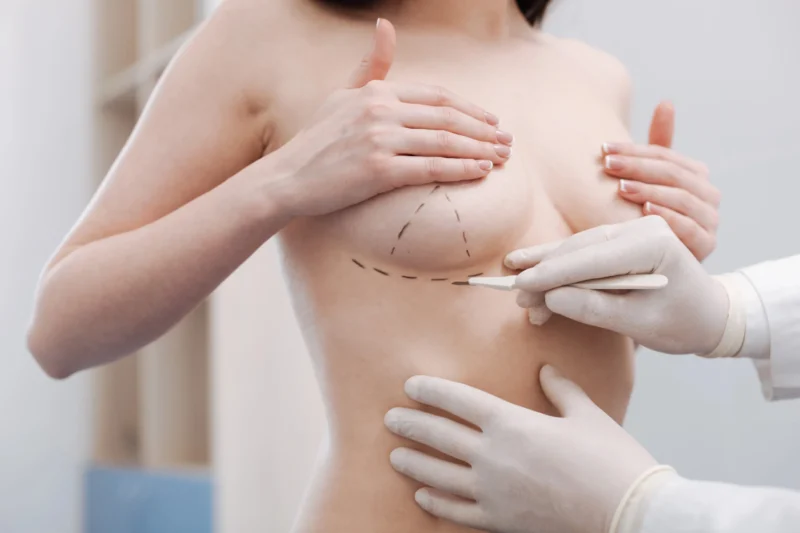
Early collaboration allows oncologic safety to coexist with realistic reconstructive planning and complication mitigation.
The Psychological Dimension
Beyond surgical outcomes, reconstruction carries substantial emotional weight. Qualitative and longitudinal studies highlight its association with identity, control, and body image restoration. When expectations are unmet, disappointment may feel personal rather than procedural. Evidence supports that honest, evidence-based counseling significantly reduces decisional regret and improves long-term psychological well-being — regardless of whether reconstruction is ultimately pursued (Sheehan et al., 2018).
Choosing Not to Reconstruct Is Also Evidence-Based
Observational studies demonstrate that a significant proportion of patients who choose not to undergo reconstruction report stable or improved quality of life over time. For many, avoiding further surgery and potential complications aligns better with personal priorities (Jagsi et al., 2015).
Reconstruction remains an option — not an obligation.
Breast reconstruction after radiotherapy is not about achieving perfection, but about մinformed decision-making grounded in evidence. When patients are guided by data rather than promises, reconstruction becomes a supportive step in survivorship — not a source of additional burden.
Written by Eftychia Tataridou, MD