Key takeaways
- Peripheral IVs are usually best for short or occasional treatments.
- PICC lines and ports provide reliable access for longer treatment courses.
- The choice depends on the medicine, treatment schedule, vein condition, and lifestyle.
- Regular cleaning, flushing, and monitoring help prevent complications.
- Fever, swelling, pain, redness, leaking, or difficulty using the device should be reported promptly.
Ports, PICC lines, and peripheral IVs are the most common types of vascular access used during cancer treatment. Chemotherapy, immunotherapy, intravenous fluids, antibiotics, blood transfusions, and supportive medicines may all be given through a vein. Blood samples may also be taken regularly to monitor treatment and overall health.
Some patients need only a temporary peripheral IV, while others may benefit from a longer-term device, such as a PICC line or an implanted port. These options provide more reliable access when treatment is frequent, prolonged, or difficult to give through smaller veins.
Choosing the right device helps ensure safe and consistent treatment while reducing repeated needle sticks, discomfort, and disruption to daily life.
Why Reliable IV Access Matters
A peripheral IV may work well for a short infusion or occasional treatment, but repeated IV placement can become difficult when veins are small, fragile, or affected by previous therapy.
Some anticancer medicines are also irritants or vesicants. Irritants can cause pain and inflammation if they leak outside the vein, while vesicants can cause more serious tissue damage. For these medicines, reliable vascular access is especially important.
Central venous access devices deliver treatment into a large vein where rapid blood flow helps dilute the medicine quickly. They can also reduce repeated needle sticks and provide more dependable access during longer treatment courses.
The choice of device can affect treatment reliability, comfort, infection and blood clot risk, home-care needs, and everyday activities. For this reason, vascular access is an important part of planning intravenous cancer treatment.
Main Types of Vascular Access
Peripheral IV Lines
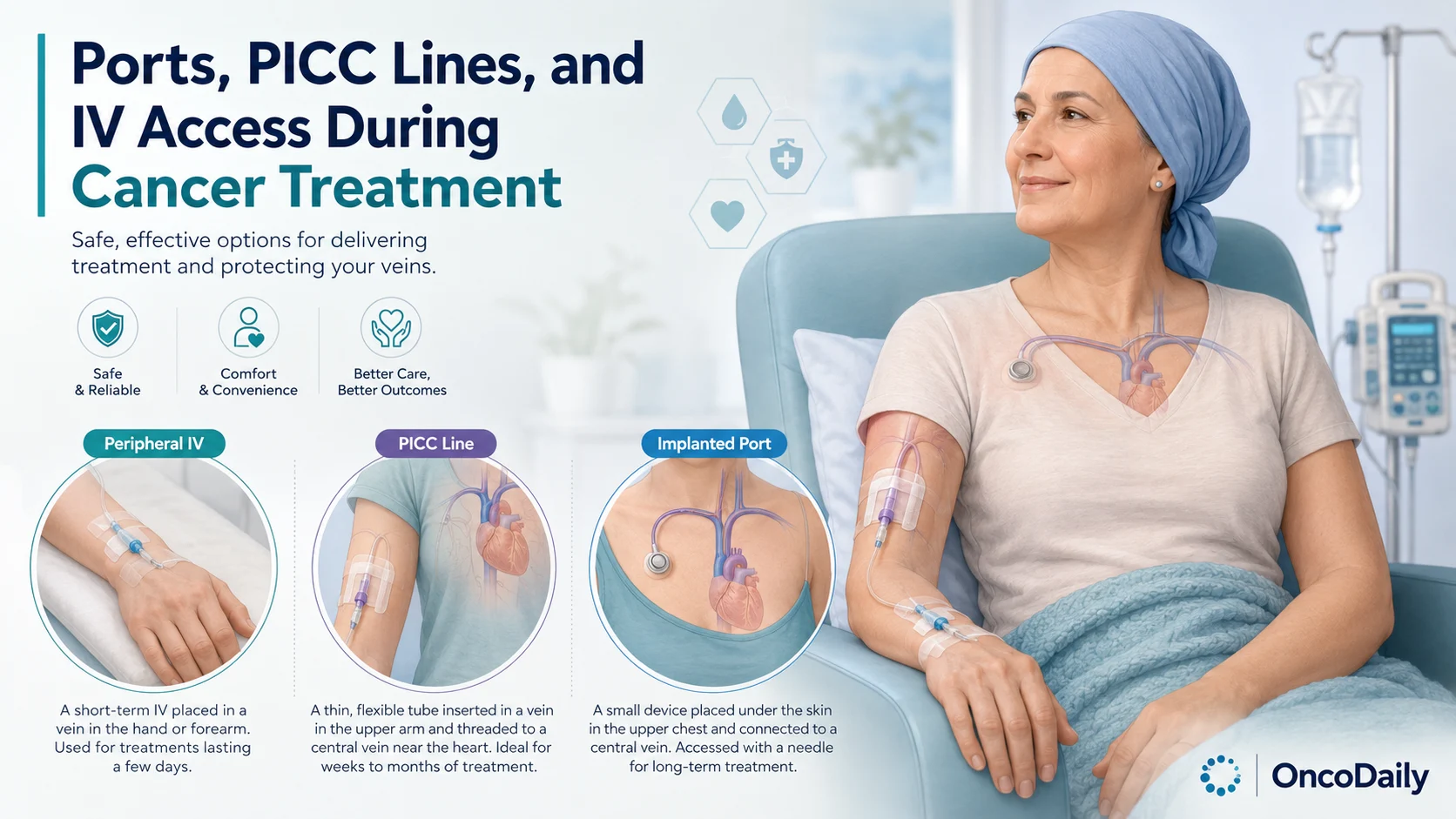
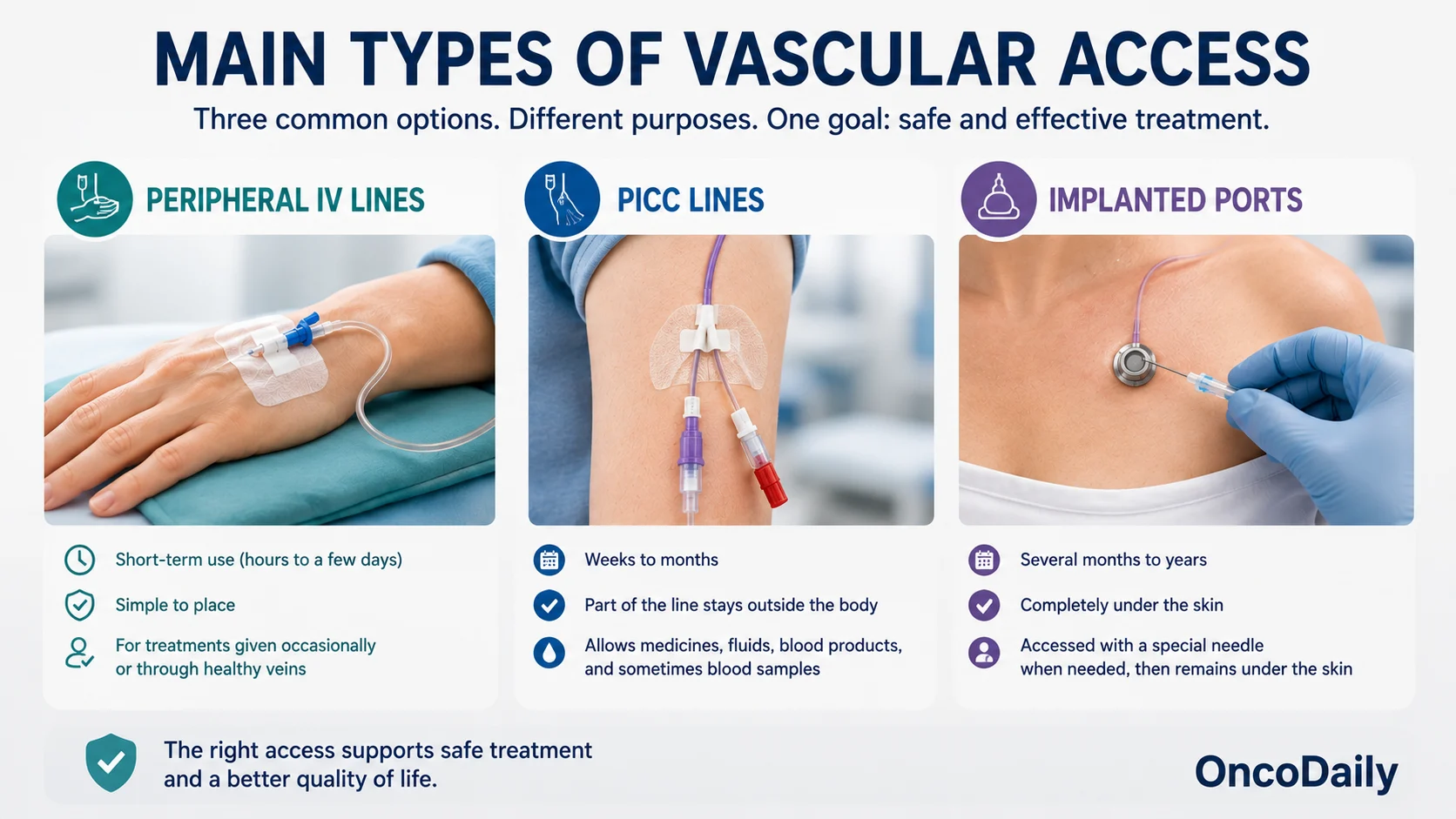
A peripheral IV is a short catheter placed in a vein in the hand or arm, usually for a single treatment or a few days. It is suitable for short or infrequent therapy when the veins are easy to access and the medicine is safe for smaller veins.
It may not be appropriate for frequent infusions, poor vein access, or drugs that can damage tissue if they leak. Patients should immediately report pain, burning, swelling, redness, or leakage around the IV site.
PICC Lines
A PICC line is a long, thin catheter inserted through a vein in the upper arm. It is advanced until the catheter tip reaches a large central vein, usually near the junction of the superior vena cava and the right atrium of the heart.
The tip position is checked before the line is used.
Part of the PICC remains outside the body. This external section allows medicines, fluids, blood products, and sometimes blood samples to be given or taken without inserting a new IV each time.
A PICC line may remain in place for weeks or months when it is functioning well and no complications develop.
Implanted Ports
An implanted port is a small device placed completely beneath the skin, usually in the upper chest. In some cases, it may be placed in the upper arm.
The port contains a small reservoir connected to a catheter that enters a large central vein. During treatment, a special non-coring needle is inserted through the skin into the reservoir.
After treatment, the needle is removed, and the entire device remains under the skin.
Ports are commonly considered when treatment will continue for several months or when repeated but intermittent access is required.
How Ports and PICC Lines Differ
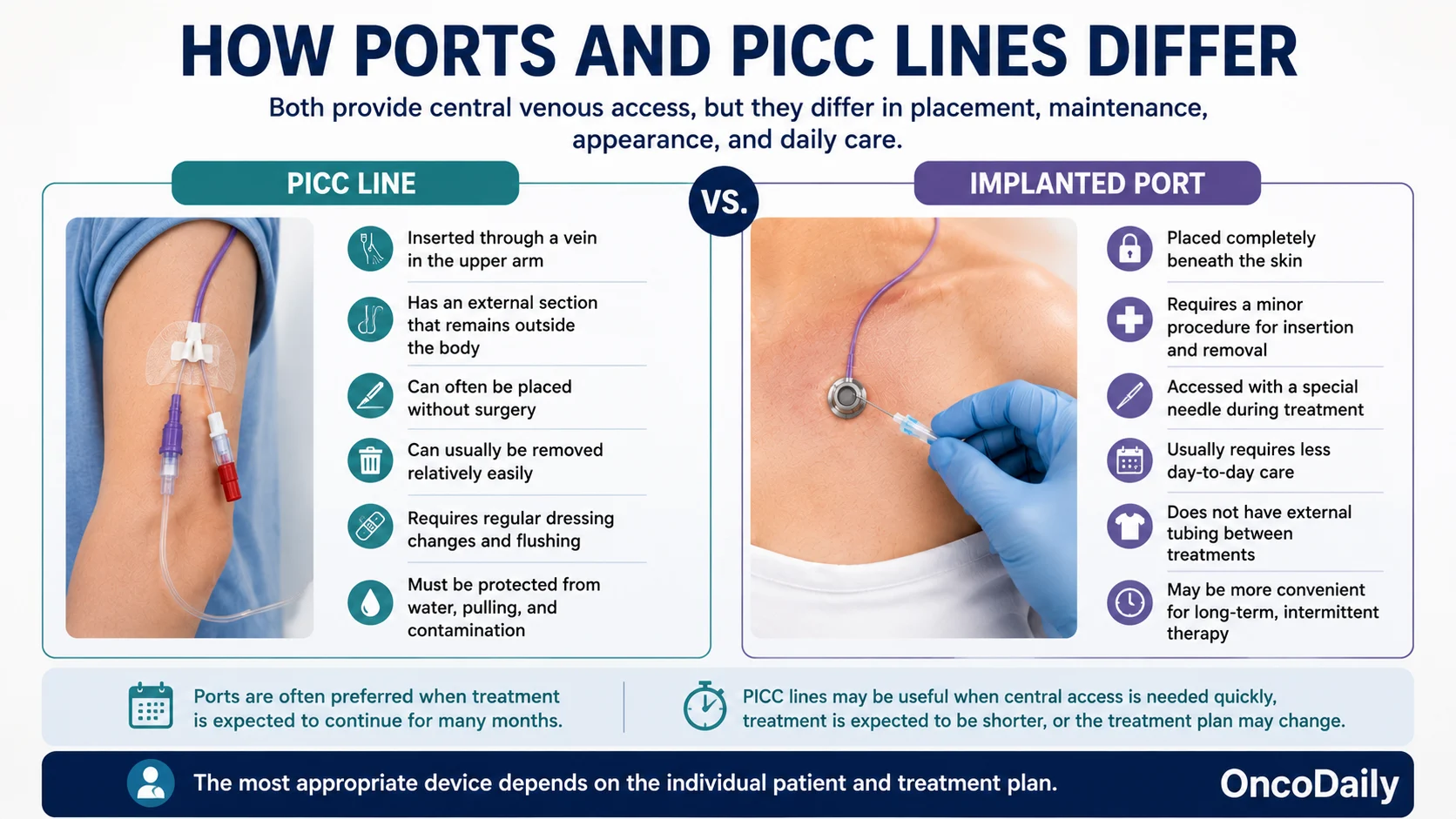
Ports and PICC lines both provide central venous access, allowing medicines to be delivered into a large vein. However, they differ in how they are inserted, how visible they are, and the amount of care they require.
A PICC line is inserted through a vein in the upper arm, with a small section of tubing remaining outside the body. It can often be placed without surgery and is usually easy to remove. Because part of the line remains external, it requires regular flushing and dressing changes and must be protected from water, pulling, and contamination.
An implanted port is placed completely beneath the skin during a minor procedure. It is accessed with a special needle when treatment or blood tests are needed. Between treatments, there is no external tubing, and daily care is usually more limited.
Ports may be more convenient for treatment that continues intermittently over many months. PICC lines may be suitable when central access is needed quickly or for a shorter treatment period. However, the best choice depends on the treatment plan, the patient’s veins, overall health, and personal preferences.
How the Healthcare Team Chooses a Device
There is no single vascular access device that is right for every patient. The healthcare team considers how long treatment will last, how often and for how long medicines will be given, and whether continuous infusions are needed. The type of medicine is also important, especially if it can irritate or damage tissue.
Other factors include the condition of the patient’s veins, previous catheter problems, blood clots, infection risk, kidney disease, and any previous surgery or radiation to the chest or arms. The team also considers whether the device will be used for blood tests, transfusions, hydration, antibiotics, or nutritional support.
Daily life matters as well. Work, exercise, bathing, sleep, and the patient’s ability to care for the device at home can all influence the choice. The final decision should be made together by the patient and the healthcare team.
Benefits and Limitations of PICC Lines
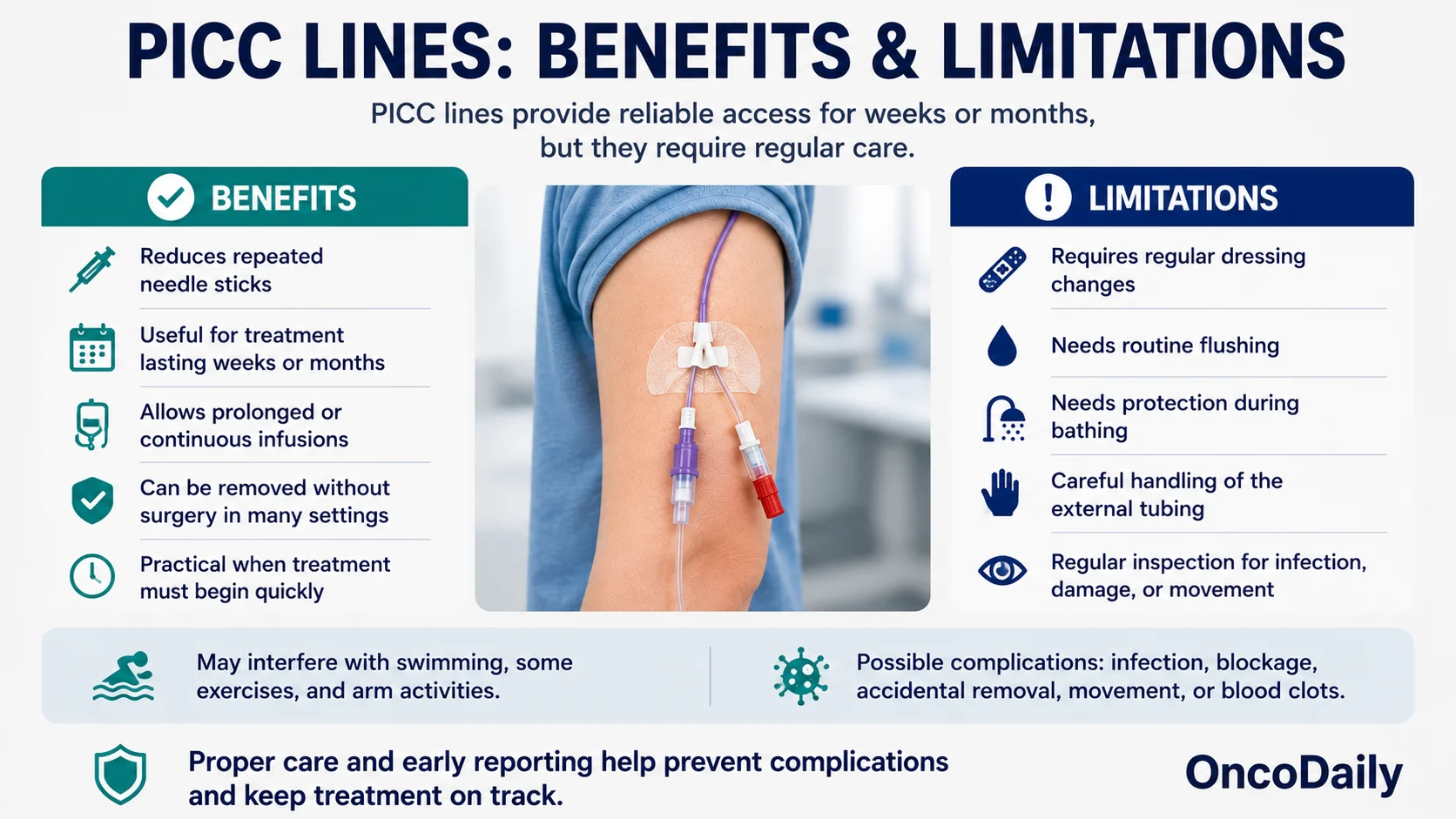
PICC lines provide reliable central access and can reduce repeated needle sticks during treatment lasting several weeks or months. They can often be inserted relatively quickly under local anesthesia, support prolonged or continuous infusions, and can usually be removed without a surgical procedure.
Because part of the catheter remains outside the body, a PICC requires more routine care than an implanted port and may affect some daily activities. Possible complications include infection, blockage, catheter movement, accidental removal, and blood clots.
Benefits and Limitations of Implanted Ports
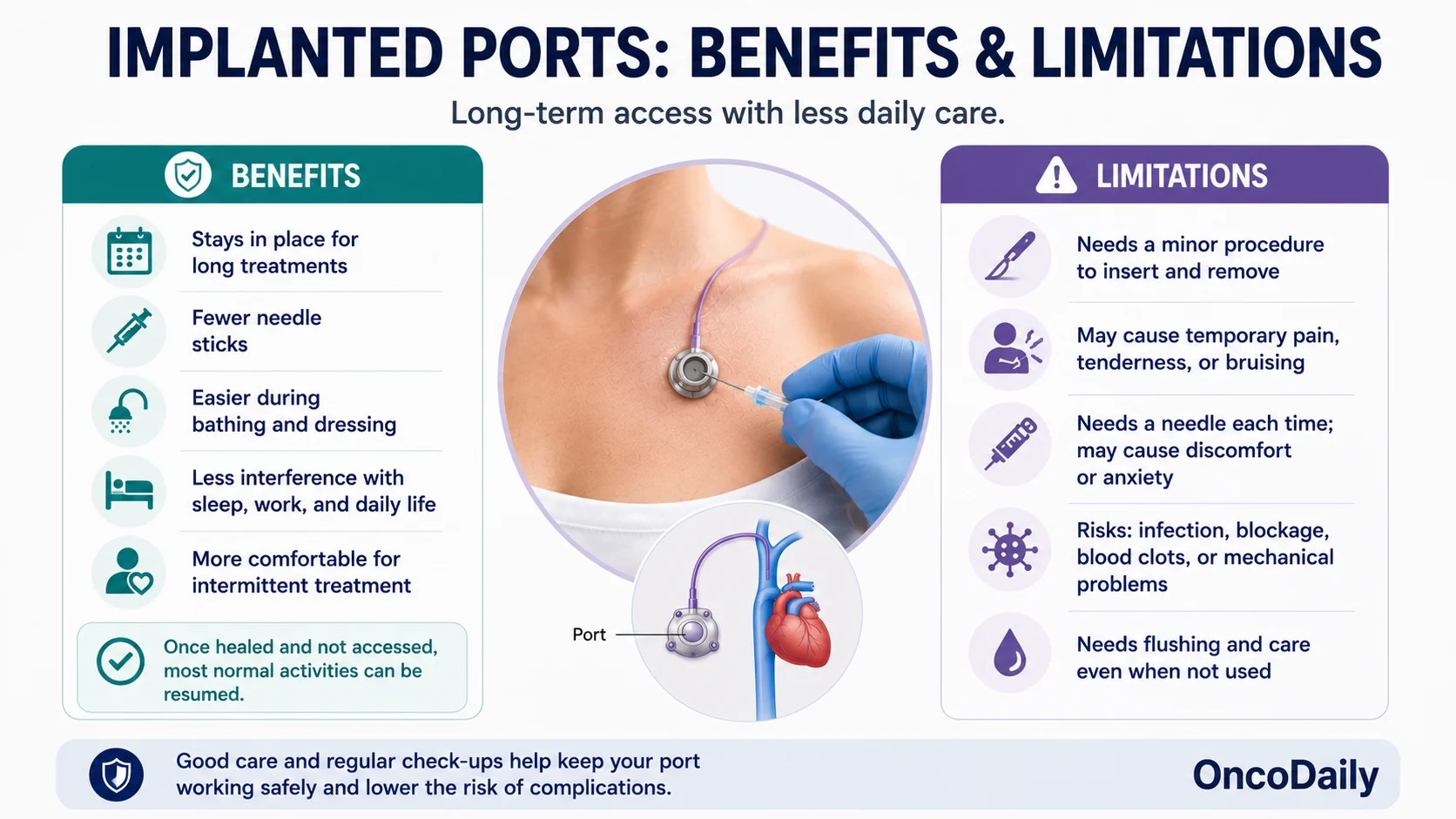
Implanted ports can remain in place throughout long treatment courses and reduce the need for repeated peripheral IV insertions. Because the device is completely beneath the skin, there is no external tubing between treatments, which can make everyday activities easier to manage.
However, placement and removal require minor medical procedures, and the port must be accessed with a needle whenever it is used. Possible complications include infection, blockage, blood clots, and mechanical problems.
Are Ports Safer Than PICC Lines?
Both PICC lines and implanted ports can provide reliable central venous access during cancer treatment. However, research suggests that implanted ports may be associated with fewer overall catheter-related complications than PICC lines, including lower rates of catheter-related thrombosis and some types of device failure. This does not mean that a port is always the better option. PICC lines may still be appropriate when treatment needs to begin quickly, when intravenous therapy is expected to last for a shorter period, or when port placement is not suitable. The choice should therefore be based on the treatment plan, individual risks, and patient preferences (Rieger et al., 2023).
Possible Complications
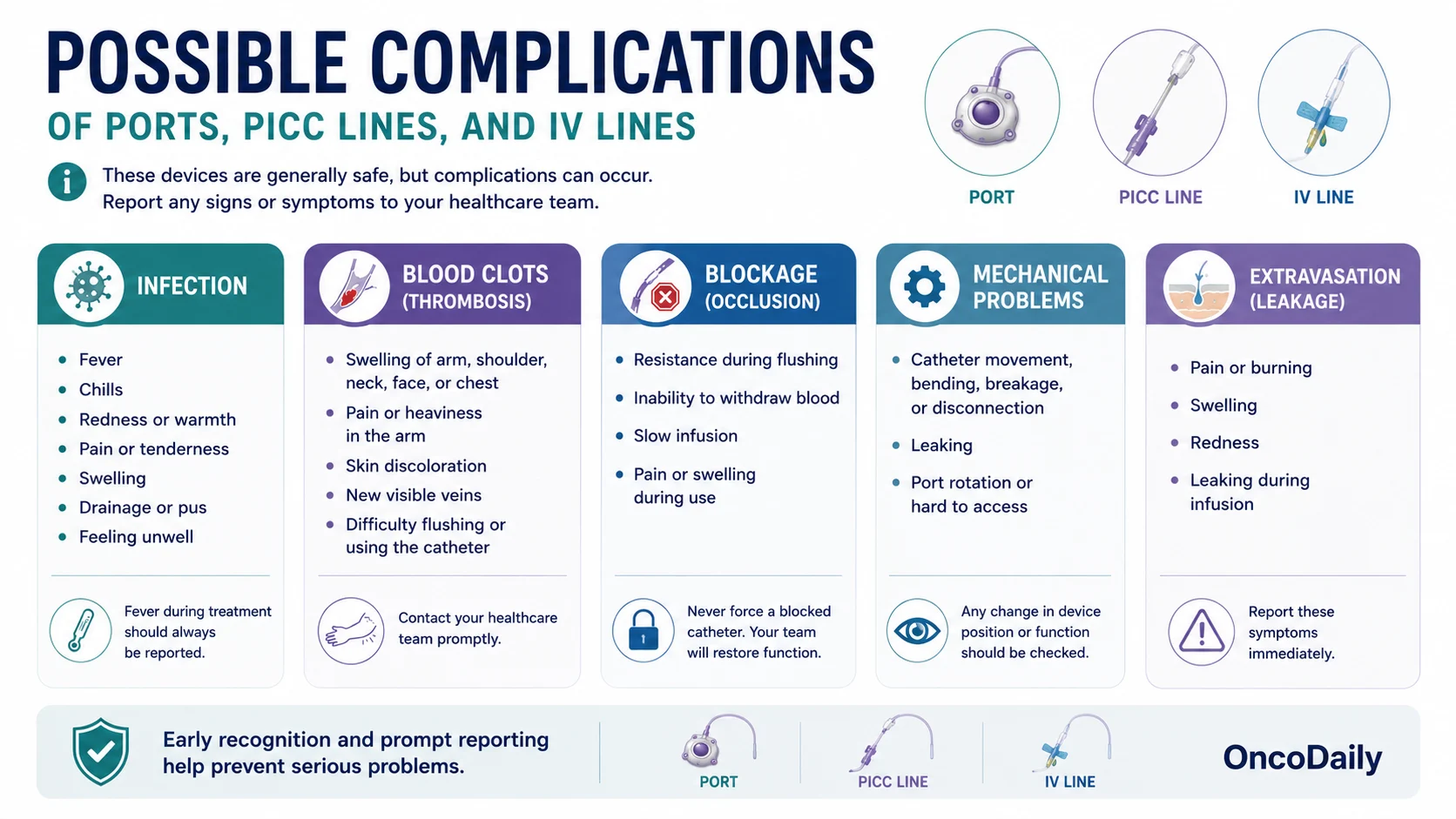
Most vascular access devices function without major problems, but complications can occur. Infection may develop at the catheter entry site, around an implanted port, along the catheter, or in the bloodstream. Warning signs can include fever, chills, redness, warmth, swelling, increasing pain, or drainage around the device. Patients receiving cancer treatment should report fever or other signs of infection promptly, particularly when their immune system is weakened (Schiffer et al., 2013).
Central venous catheters can also be associated with catheter-related thrombosis, or blood clots that form around the catheter. Symptoms can include swelling, pain, heaviness, skin discoloration, or newly visible veins in the arm, shoulder, neck, face, or chest. Difficulty flushing or using the catheter can also indicate a possible problem and should be evaluated by the healthcare team (Schiffer et al., 2013).
A catheter can become partially or completely blocked, making it difficult to flush, draw blood, or administer treatment. Occlusion may result from blood or fibrin buildup, medication deposits, or changes in catheter position. Patients should never attempt to force a blocked catheter, as healthcare professionals may need to use specific treatments or procedures to restore its function (Schiffer et al., 2013).
Mechanical complications can occur if a catheter moves, bends, breaks, leaks, or becomes disconnected. Implanted ports may also become difficult to access or change position under the skin. Any noticeable change in the appearance, position, or function of the device should be assessed before it is used again (Schiffer et al., 2013).
Extravasation occurs when an anticancer medicine leaks from the vascular access device into the surrounding tissue. Although central venous devices reduce the need to use smaller peripheral veins, extravasation can still occur if a catheter becomes displaced or a port needle is not correctly positioned. Pain, burning, swelling, redness, tightness, or leaking during an infusion should be reported immediately so treatment can be stopped and the area assessed (Thomas et al., 2025).
Caring for a PICC Line
A PICC line needs regular care to keep it clean, secure, and working properly. The dressing should be kept clean and dry, changed using sterile technique, and the line should be flushed according to the schedule provided by the healthcare team. Patients should also check the insertion site regularly for redness, swelling, pain, drainage, or other changes.
During bathing, the PICC and dressing should be protected from water, and swimming or submerging the line is generally avoided. Patients should also avoid pulling or putting pressure on the tubing and keep scissors or other sharp objects away from the catheter to prevent accidental damage (O’Grady et al., 2011).
Watch more on OncoDaily TV.
Caring for an Implanted Port
When an implanted port is being used, the needle and dressing should be kept clean, dry, and secure. Once the needle is removed, the port remains completely under the skin, and after the incision has healed, very little daily care is usually needed.
Even when the port is not being used regularly, it may still need periodic flushing to keep it working properly. The exact schedule can vary, so patients should follow the instructions provided by their treatment center. They should also ask when bathing and exercise can be resumed, whether blood tests can be taken through the port, which activities should be avoided after placement, and when the port can be removed (Schiffer et al., 2013).
What Patients Should Report
Patients should contact their oncology team if they notice fever or chills; redness, warmth, swelling, pain, or drainage around the device; swelling of the arm, shoulder, neck, face, or chest; new visible veins; difficulty flushing or using the catheter; or a change in the position or appearance of the device.
Pain, burning, swelling, tightness, or leaking during an infusion should be reported immediately.
Seek urgent medical attention for sudden chest pain, shortness of breath, fainting, or severe dizziness.
A catheter or port that is painful, swollen, leaking, damaged, displaced, or not functioning normally should be evaluated before it is used again. (Thomas et al., 2025)
Living With a PICC Line or Port
Daily life is an important part of choosing a vascular access device. Some patients prefer a PICC because it can often be placed quickly and does not require needle access for every treatment. Others prefer a port because there is no external tubing between treatments.
Before choosing a device, patients may want to discuss how it could affect bathing, exercise, sleep, work, travel, and other regular activities. They should also understand how often the device will need care and how long it is expected to remain in place.
Whenever more than one medically appropriate option is available, practical needs and patient preferences can be included in the decision.
Written by Marine Marachlian, MD
FAQ
What is the difference between a peripheral IV, a PICC line, and a port?
A peripheral IV is a short catheter placed in a vein in the hand or arm and is usually used for short-term treatment. A PICC line is inserted through a vein in the upper arm and extends into a large vein near the heart. A port is a small device placed completely under the skin and connected to a catheter in a central vein.
Which device is best for chemotherapy?
There is no single best option for every patient. The choice depends on the type and duration of treatment, how often infusions are needed, the condition of the veins, the medicines being used, and the patient’s daily activities and preferences.
Does inserting a PICC line or port hurt?
Local anesthesia is usually used during placement. Patients may feel pressure or brief discomfort during the procedure. Mild pain, tenderness, swelling, or bruising can occur afterward but usually improves within a few days.
Can blood tests be taken from a PICC line or port?
In many cases, PICC lines and ports can be used to draw blood, although this depends on the device, hospital policy, and whether it is functioning properly. A peripheral IV is not always suitable for repeated blood collection.
Can I shower with a PICC line or port?
A PICC line must be kept dry and protected with a waterproof covering during bathing. Once a port incision has healed and the port is not accessed, patients can usually shower normally. The healthcare team will provide specific instructions.
Can I exercise while I have a PICC line or port?
Light activity is often possible, but patients should avoid movements that pull, compress, or place repeated strain on the device. Swimming is generally not recommended with a PICC line. Activity restrictions after port placement should be discussed with the healthcare team.
How often do PICC lines and ports need maintenance?
PICC lines require regular dressing changes, flushing, and inspection of the external tubing. Ports also need flushing, including during periods when they are not being used. Maintenance schedules vary, so patients should follow the instructions provided by their treatment center.
What signs of infection should I watch for?
Possible signs include fever, chills, redness, warmth, swelling, increasing pain, tenderness, drainage, or pus around the device. Feeling suddenly unwell can also be a warning sign. Fever during cancer treatment should be reported immediately according to the oncology team’s instructions.
What should I do if the device becomes painful or difficult to use?
Pain, swelling, leaking, resistance during flushing, slow infusion, or difficulty drawing blood should be reported to the healthcare team. The catheter should never be forced or adjusted by the patient.
When is a PICC line or port removed?
The device is usually removed when treatment is completed, it is no longer needed, or a complication develops. A PICC line can often be removed without surgery, while port removal usually requires a short medical procedure.