
Plague in cancer patients is possible, but it is extremely rare. Cancer itself does not cause plague; infection develops only after exposure to Yersinia pestis, a zoonotic bacterium usually transmitted through infected fleas, rodents, or other animals. The concern with plague in cancer patients is that chemotherapy, severe neutropenia, hematologic malignancies, corticosteroids, stem-cell transplantation, splenectomy, or other forms of immunosuppression may reduce the body’s ability to control a serious bacterial infection once exposure has occurred.
However, there is an important limitation: there are not enough published data to determine how much cancer or cancer treatment specifically increases the risk of plague. CDC guidance states that information about plague in immunocompromised populations remains limited, meaning the additional risk for oncology patients cannot currently be quantified with confidence.
According to the World Health Organization (WHO), between 2019 and 2025, 10 countries reported suspected human plague cases, while six reported confirmed cases. During that period, 3,847 suspected cases and 423 deaths were reported to WHO, corresponding to an overall reported case-fatality rate of approximately 11%. Most cases occurred in the Democratic Republic of the Congo and Madagascar.
More recently, concern emerged in Irkutsk, Russia, after a laboratory worker died from severe pneumonia in October 2026 and initial reports raised the possibility of pneumonic plague. However, plague has not been confirmed. Russian authorities told WHO that no recent plague case had been reported in the region and placed about 200 contacts under quarantine or monitoring. WHO said on October 7 that it still lacked enough information to complete a full risk assessment, while the ECDC reported no secondary cases and no evidence of sustained human-to-human transmission.
What Is Plague?
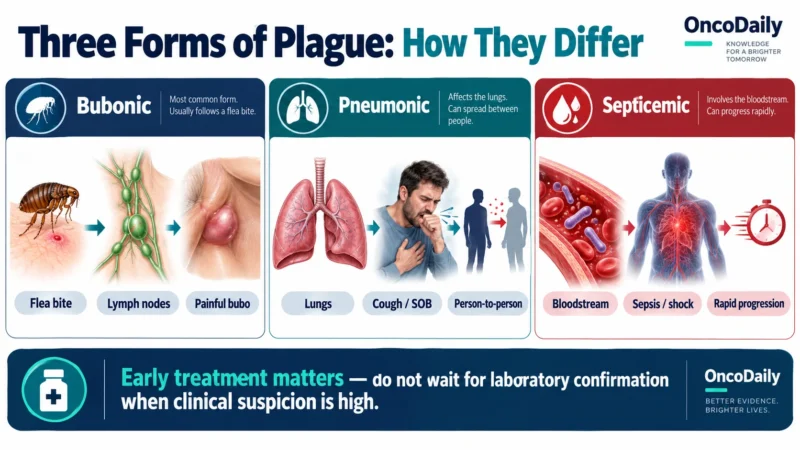
Plague is an infectious disease caused by the bacterium Yersinia pestis. The organism circulates mainly among small mammals and their fleas and can occasionally spread to humans. According to WHO, people usually develop symptoms one to seven days after infection. Humans can become infected through the bite of an infected flea, direct contact with infected animal tissues or body fluids, or inhalation of infectious respiratory particles. There are three major clinical forms: bubonic, pneumonic and septicemic plague.
Bubonic plague is the most common. Pneumonic and septicemic disease are less common but can progress extremely rapidly. WHO estimates that untreated bubonic plague has a case-fatality ratio of approximately 30–60%. Untreated pneumonic and septicemic plague are considered essentially fatal if effective treatment is not started early. Modern antibiotics have dramatically changed those outcomes, making early recognition one of the most important determinants of survival.
How Common Is Plague Today?
Plague has not disappeared, but human disease is uncommon. WHO reported 3,847 suspected cases and 423 deaths worldwide between 2019 and 2025, with most cases coming from the Democratic Republic of the Congo and Madagascar. Historically, the burden was much larger. WHO previously reported 3,248 cases and 584 deaths between 2010 and 2015. In the United States, the disease is particularly rare. The CDC reported in October 2026 that an average of about five human plague cases occur each year in the United States, with annual numbers ranging from 0 to 17 cases in recent decades.
Most U.S. infections occur in the rural West, particularly around northern New Mexico, northern Arizona and southern Colorado, as well as parts of California, Oregon and Nevada. More than 80% of U.S. plague cases are bubonic, according to the CDC. Approximately half of reported U.S. cases have occurred in people aged 12–45. These numbers help put the risk for cancer patients in perspective: even before considering cancer status, plague is an exceptionally uncommon infection in the United States.
Does Cancer Cause Plague?
Cancer cannot spontaneously produce plague. A person must first be exposed to Yersinia pestis. The clinically relevant question is whether cancer or its treatment could make the infection more severe after exposure. Many cancer therapies suppress immune function. Chemotherapy can reduce neutrophils, corticosteroids can impair inflammatory and cellular immune responses, stem-cell transplantation can produce profound and prolonged immunosuppression, and some hematologic malignancies impair normal immune function independently of treatment.
These mechanisms make increased susceptibility to serious bacterial infections biologically plausible. But for plague specifically, the evidence is too limited to quantify the additional risk. A scientifically appropriate statement is: Cancer and some cancer treatments can weaken immune defenses and may increase vulnerability to severe infection, but the magnitude of any cancer-specific increase in plague risk is currently unknown.
Which Cancer Patients Could Be More Vulnerable?
There is no validated plague-risk score specifically for oncology patients. Nevertheless, clinicians would generally be more concerned about severe infection in patients with acute leukemia or other hematologic malignancies, profound or prolonged neutropenia, recent hematopoietic stem-cell transplantation, high-dose corticosteroid therapy, multiple immunosuppressive treatments or impaired splenic function.

Patients with advanced cancer complicated by malnutrition, frailty or major organ dysfunction may also have less physiological reserve to tolerate severe sepsis. This does not mean these patients are likely to develop plague. Exposure to Y. pestis is still required. The concern is that, if infection occurs, the patient’s immune system may be less capable of controlling bacterial proliferation and systemic spread.
What Evidence Exists in Immunocompromised Patients?
Evidence is extremely sparse. The CDC’s 2021 plague-treatment recommendations explicitly state that data on plague in immunocompromised patients are limited. One frequently cited case involved a 44-year-old man who had undergone splenectomy and was receiving vinblastine and daily prednisone for idiopathic thrombocytopenic purpura. He was scratched by a cat infected with Yersinia pestis and subsequently developed bubonic plague. He recovered after treatment with gentamicin and doxycycline.
This example is relevant to immunosuppression but should not be described as a cancer-patient case, because the underlying condition was not cancer. CDC also identified eight other reported plague patients with underlying medical conditions, but the clinical circumstances were heterogeneous and too limited to establish how much underlying disease influenced outcome. That illustrates the central problem: there simply are not enough oncology-specific cases to calculate a meaningful incidence or mortality rate.
How Is Plague Transmitted?
Bubonic plague most commonly develops after the bite of an infected flea. After entering the body, Y. pestis travels through lymphatic vessels to regional lymph nodes, producing the characteristic painful swollen lymph node known as a bubo. Bubonic disease generally does not spread directly from one person to another.
Pneumonic Plague
Pneumonic plague develops when Y. pestis infects the lungs. It can arise through direct inhalation of infectious respiratory material or after bacteria spread to the lungs from another form of plague. Unlike bubonic disease, pneumonic plague can spread between people through respiratory particles during close contact. WHO describes pneumonic plague as particularly contagious and capable of generating outbreaks when transmission is not controlled.
Septicemic Plague
Septicemic plague occurs when Y. pestis spreads through the bloodstream. It can develop independently or as a complication of bubonic plague. The disease may cause severe sepsis, disseminated coagulation abnormalities, tissue necrosis, shock and multiorgan failure.
What Symptoms Should Cancer Patients Recognize?
Plague symptoms depend on the clinical form. Bubonic disease classically causes abrupt fever, chills, severe weakness, headache and a painful enlarged lymph node, usually in the groin, armpit or neck. Pneumonic disease can cause fever, cough, shortness of breath, chest pain and rapidly progressive pneumonia. Bloody or frothy sputum may occur in severe disease. Septicemic plague can cause high fever, profound weakness, abdominal symptoms, hypotension, confusion, bleeding and tissue injury. These symptoms are not unique to plague. That is particularly important in oncology because cancer patients frequently develop fever or constitutional symptoms for other reasons.
Why Diagnosis Can Be Difficult During Cancer Treatment
Symptoms of plague can overlap with several complications of cancer and anticancer treatment. Fever may initially be attributed to neutropenia or another infection. Enlarged lymph nodes can resemble lymphoma or metastatic cancer. Fatigue may be blamed on chemotherapy or anemia. Cough and breathlessness have numerous infectious and noninfectious explanations. This makes the exposure history essential. A recent flea bite, contact with rodents, handling of dead wildlife or exposure to a sick cat can dramatically change the diagnostic picture.
Cats deserve particular attention. The CDC notes that cats are highly susceptible to plague and are a recognized source of human infection. Transmission can occur through bites, scratches, contact with infectious material or, in pneumonic feline disease, respiratory exposure. For an immunocompromised cancer patient, sudden fever or deterioration following a compatible animal or flea exposure should therefore not automatically be attributed to chemotherapy or cancer.
When Should Plague Be Suspected?
According to CDC clinical guidance, plague should be considered in a patient with compatible symptoms and a history of living in or traveling through a plague-endemic region, particularly the western United States, or after relevant animal or flea exposure. High-risk histories include an infected flea bite, close contact with rodents, handling a sick or dead wild animal, a bite or scratch from a sick cat, or close exposure to someone with pneumonic plague. A combination of acute fever, painful lymph-node swelling and a compatible exposure should prompt urgent evaluation. Rapidly progressive pneumonia after an appropriate exposure is even more urgent.
How Is Plague Diagnosed?
Diagnosis relies on clinical suspicion, epidemiological exposure and laboratory testing. Samples may include fluid aspirated from a bubo, blood cultures or sputum in suspected pneumonic disease. PCR and other specialized laboratory techniques may also be used. WHO notes that blood, sputum or material from a bubo can be tested to confirm infection. However, clinicians should not wait for confirmation before beginning treatment when plague is strongly suspected. The CDC explicitly states: Treatment should not be delayed while waiting for diagnostic test results.
Why Early Treatment Matters So Much
Before effective antibiotics were available, plague mortality was extraordinarily high. A CDC systematic review found historical fatality rates of approximately 66–93% across clinical forms before the antibiotic era. Pneumonic plague is particularly time-sensitive. CDC historical evidence shows that patients with pneumonic plague, once considered virtually untreatable, could recover when effective antimicrobial therapy was initiated within approximately 24 hours after symptom onset.
WHO similarly warns that pneumonic and septicemic plague are essentially fatal when left untreated. The dramatic difference between treated and untreated disease explains why clinicians are advised to begin therapy based on strong clinical suspicion rather than wait for laboratory confirmation.
How Is Plague Treated?
Plague requires urgent antimicrobial therapy. The CDC currently lists gentamicin and fluoroquinolones among first-line options in the United States. Other appropriate agents can include doxycycline and additional antimicrobials depending on the patient’s clinical situation. Treatment usually continues for 10–14 days, although it may be extended if fever or other signs of active disease persist. Drug selection depends on disease severity, the clinical form of plague, kidney and liver function, age, pregnancy status, allergies, antimicrobial susceptibility, medication interactions and other medical factors. For a cancer patient, these considerations can become particularly complex because chemotherapy and supportive medications may affect bone marrow, kidney or liver function.
Does Treatment Differ in Cancer Patients?
There is no separate standard plague-antibiotic regimen specifically for cancer patients. CDC guidance indicates that general treatment principles also apply to immunocompromised people, although individual medical factors require additional attention. In an oncology patient, clinicians may need to account for severe neutropenia, thrombocytopenia, renal impairment, liver dysfunction, medication interactions and recent transplantation. Whether ongoing chemotherapy should be delayed depends on the severity of infection and the cancer treatment being given. That decision should involve both the oncology and infectious-disease teams.
What Is the Prognosis?
The most important determinants of outcome are how quickly effective antibiotics are started, the clinical form of plague and the severity of systemic illness. According to WHO, untreated bubonic plague carries a case-fatality ratio of approximately 30–60%, while untreated pneumonic and septicemic forms are effectively fatal. Contemporary worldwide surveillance gives a very different picture because many patients now receive antibiotics.
Between 2019 and 2025, WHO recorded 3,847 suspected plague cases and 423 deaths, corresponding to an overall reported case-fatality rate of approximately 11%. These population-level numbers should not be used to predict the outcome of an individual cancer patient. There is currently no reliable cancer-specific plague survival rate.
Interestingly, CDC data illustrate how underlying health status may matter in other populations. In a literature review of 762 plague patients, 19 were aged 65 or older. Their reported case-fatality rate was 42%, compared with 19% among patients younger than 65, although the older group was very small and the finding cannot be directly extrapolated to cancer patients.
Infection-Control Precautions
Suspected pneumonic plague requires urgent infection-control measures because of the potential for respiratory transmission. Healthcare teams may need to use respiratory droplet precautions, isolate the patient, notify public-health authorities and identify close contacts. People with significant exposure may require post-exposure prophylactic antibiotics.
The urgency is illustrated by a Wyoming pneumonic plague investigation in which 22 close contacts—19 healthcare workers and three personal contacts were identified and given post-exposure prophylaxis; none subsequently developed plague. Bubonic plague, by contrast, generally does not spread directly between people.
Can Cancer Patients Prevent Plague?
Because no routinely used preventive vaccine is available for the general population, prevention primarily means avoiding exposure. People living in or traveling through plague-endemic areas should avoid handling sick or dead rodents and other wild animals, reduce flea exposure and use appropriate flea control for pets. Cats should be kept away from rodents and wildlife where possible. Cancer patients with significant immunosuppression should be particularly cautious about handling sick animals.
The CDC identifies the rural western United States as the principal region for naturally acquired U.S. plague, with important foci in northern New Mexico, northern Arizona and southern Colorado, as well as California, southern Oregon and far western Nevada. The absolute risk remains very low: only about five human cases per year are currently reported on average in the United States.
Is There a Plague Vaccine?
There is currently no plague vaccine routinely recommended for the general public. For most people, public-health prevention focuses on reducing contact with infected rodents and fleas, monitoring animal outbreaks, improving surveillance and rapidly treating human disease. WHO emphasizes surveillance of animal reservoirs and rapid outbreak response as central measures for preventing larger outbreaks.
What Should a Cancer Patient Do After Possible Exposure?
A cancer patient with a potentially significant plague exposure should contact their healthcare team or local public-health authority promptly. Particular concern is warranted after a bite or scratch from a sick cat, contact with dead rodents or wildlife, known flea exposure in an endemic area or close contact with a person suspected of having pneumonic plague. The development of fever, painful lymph-node swelling, cough or difficulty breathing after such an exposure requires urgent medical assessment. Patients should not wait for symptoms to worsen before seeking care.
Plague by the Numbers
According to the latest WHO and CDC data, 3,847 suspected human plague cases and 423 deaths were reported between 2019 and 2025, corresponding to an overall reported case-fatality rate of about 11%. During that period, 10 countries reported suspected cases and six reported confirmed infections. WHO estimates that untreated bubonic plague has a case-fatality rate of approximately 30–60%, while untreated pneumonic and septicemic plague can be essentially fatal without early treatment. In the United States, plague remains extremely rare, with an average of about five human cases reported each year, and more than 80% of U.S. cases are bubonic.
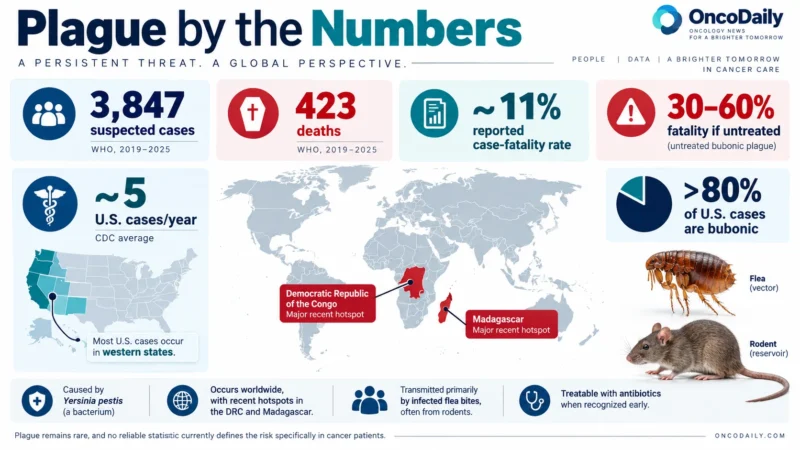
Symptoms generally appear within 1–7 days after infection, and antimicrobial treatment usually lasts around 10–14 days. Importantly, there is currently no reliable estimate of the incidence or mortality of plague specifically among cancer patients.
Russia’s Suspected Plague Case: What We Know
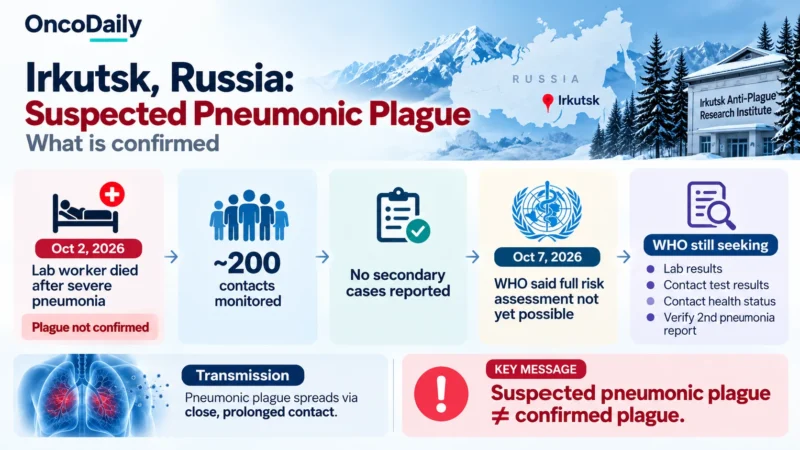
A laboratory worker in Russia’s Irkutsk region died after developing severe pneumonia, prompting concern about possible pneumonic plague. However, no plague case has been officially confirmed, and health authorities have reported no secondary cases among monitored contacts. The WHO says it is still seeking additional information before completing its risk assessment.
What happened in Irkutsk?
On October 2, 2026, a laboratory worker at the Irkutsk Anti-Plague Research Institute was hospitalized with severe pneumonia and later died. Initial media reports suggested that she may have developed pneumonic plague after a possible laboratory exposure to Yersinia pestis, the bacterium that causes plague.who The reports raised concern because the institute works with pathogens and plague surveillance. However, a person’s employment at an anti-plague laboratory does not prove that a laboratory accident occurred or that Y. pestis caused the death.
What Did Russian Authorities Report?
According to information provided to the WHO, Russian authorities said that no recent plague case had been reported in Irkutsk Oblast. They described the death as involving severe pneumonia and said that approximately 200 contacts had been placed under quarantine or medical observation.who
Russian authorities also reported that:
- No plague or other high-threat pathogen had been detected among identified contacts.
- More than 90% of contacts had completed medical monitoring by October 7.
- No evidence of sustained transmission had been identified.
- The sanitary and epidemiologic situation in Irkutsk was considered stable.
- The cause of the worker’s pneumonia remains unclear in the publicly available information.
What Does the WHO Say?
The WHO said it first became aware of media reports about the suspected pneumonic-plague case on October 2. It requested information from Russia under the International Health Regulations, including:
- Laboratory test results from the deceased worker.
- Test results from the monitored contacts.
- The reason public-health measures were initiated.
- The health status of all identified contacts.
- Verification of reports concerning a second employee with pneumonia of undetermined cause.who
On October 7, WHO Director-General Tedros Adhanom Ghebreyesus said the organization did not yet have the full picture and could not complete a full risk assessment. WHO offered technical support on plague and laboratory biosafety and biosecurity.who This is an important distinction: WHO’s request for information does not confirm plague. It indicates that conflicting or incomplete reports required verification.
What Did the ECDC Report?
The European Centre for Disease Prevention and Control said it was monitoring the situation following reports of a laboratory worker who died from pneumonia of unknown origin. Based on the limited information available, the ECDC reported that there were no secondary cases, no evidence of sustained human-to-human transmission, and no indication of further spread. It also noted that no plague cases had been reported in the European Union for decades and that effective antibiotic treatment is available if plague is diagnosed. According to the ECDC, transmission of pneumonic plague generally requires close and prolonged contact with a symptomatic infected person.
You Can Also Read Aflatoxin in Food: The Hidden Cancer-Causing Toxin Linked to Liver Cancer by OncoDaily

Written by Aharon Tsaturyan, MD, Editor at OncoDaily Intelligence Unit
FAQ
Can Chemotherapy Patients Develop Plague?
Yes, but plague is extraordinarily rare. Chemotherapy does not create Yersinia pestis. A patient must still encounter the organism through an infected flea, animal or another recognized route of transmission.
Does Chemotherapy Cause Plague?
Some chemotherapy regimens can weaken immune defenses and may make serious bacterial infection more difficult to control, but they do not cause plague.
Is Plague More Dangerous in Cancer Patients?
It is biologically plausible that severe immunosuppression could worsen infection, particularly in patients with profound neutropenia or after stem-cell transplantation. However, the CDC states that evidence involving immunocompromised patients is limited, and no reliable cancer-specific risk estimate exists.
How Common Is Plague?
According to WHO, 3,847 suspected cases and 423 deaths were reported globally between 2019 and 2025. In the United States, the CDC currently reports an average of only around five cases per year.
Can Plague Spread Between People?
Pneumonic plague can spread through respiratory particles during close exposure.
How Deadly Is Plague?
WHO estimates that untreated bubonic plague has a 30–60% case-fatality ratio. Untreated pneumonic and septicemic disease are essentially fatal. Early antibiotic treatment dramatically improves the chance of survival.
Can Plague Be Treated?
The CDC recommends beginning appropriate antibiotics as soon as plague is suspected and specifically advises clinicians not to wait for laboratory confirmation before treating a highly suspicious case.
Has Plague Been Confirmed in Irkutsk, Russia?
No confirmed plague case has been publicly established. WHO said on October 7, 2026 that Russia had reported no recent plague case in Irkutsk Oblast and that WHO still lacked enough information to complete a full risk assessment.
Is There a Plague Outbreak in Russia?
There is currently no confirmed plague outbreak in Irkutsk. The investigation began after a laboratory worker died from severe pneumonia and initial reports raised concern about possible pneumonic plague. Around 200 contacts were reportedly placed under quarantine or observation, but WHO has continued to seek laboratory and epidemiological information.
Is the Suspected Russian Plague Case a Risk to Europe?
Based on the information currently available, the ECDC has reported no secondary cases and no evidence of sustained human-to-human transmission. It also notes that pneumonic plague generally requires close and prolonged contact with a symptomatic infected person.
Which Countries Have the Highest Risk of Plague?
WHO identifies the Democratic Republic of the Congo, Madagascar and Peru as the three countries where plague is most endemic. Between 2019 and 2025, most human cases reported to WHO occurred in the Democratic Republic of the Congo and Madagascar.
Is Plague a Risk in the United States?
Yes, but the absolute risk is very low. The CDC reports an average of about five human plague cases per year, mainly in the western United States. Most cases occur in northern New Mexico and Arizona, southern Colorado, and parts of California, Oregon and Nevada.
Can Pneumonic Plague Spread From One Country to Another?
In theory, an infected person with symptomatic pneumonic plague could transmit the infection through respiratory particles during close contact. However, international spread is uncommon because transmission generally requires close exposure to a symptomatic patient, and rapid isolation, contact tracing and antibiotic treatment can interrupt transmission.
Should Travelers Avoid Russia or Europe Because of Plague?
Current WHO and ECDC information does not indicate sustained transmission from the suspected Irkutsk event. There is therefore no evidence from these agencies that the incident represents a widespread plague threat to travelers in Russia or Europe. The situation remains under monitoring while additional information is sought.
Where Does Plague Still Occur Today?
Plague persists in natural animal reservoirs in several regions of Africa, Asia and the Americas. WHO notes that animal plague exists on every continent except Oceania, although most human cases since the 1990s have been reported in Africa.