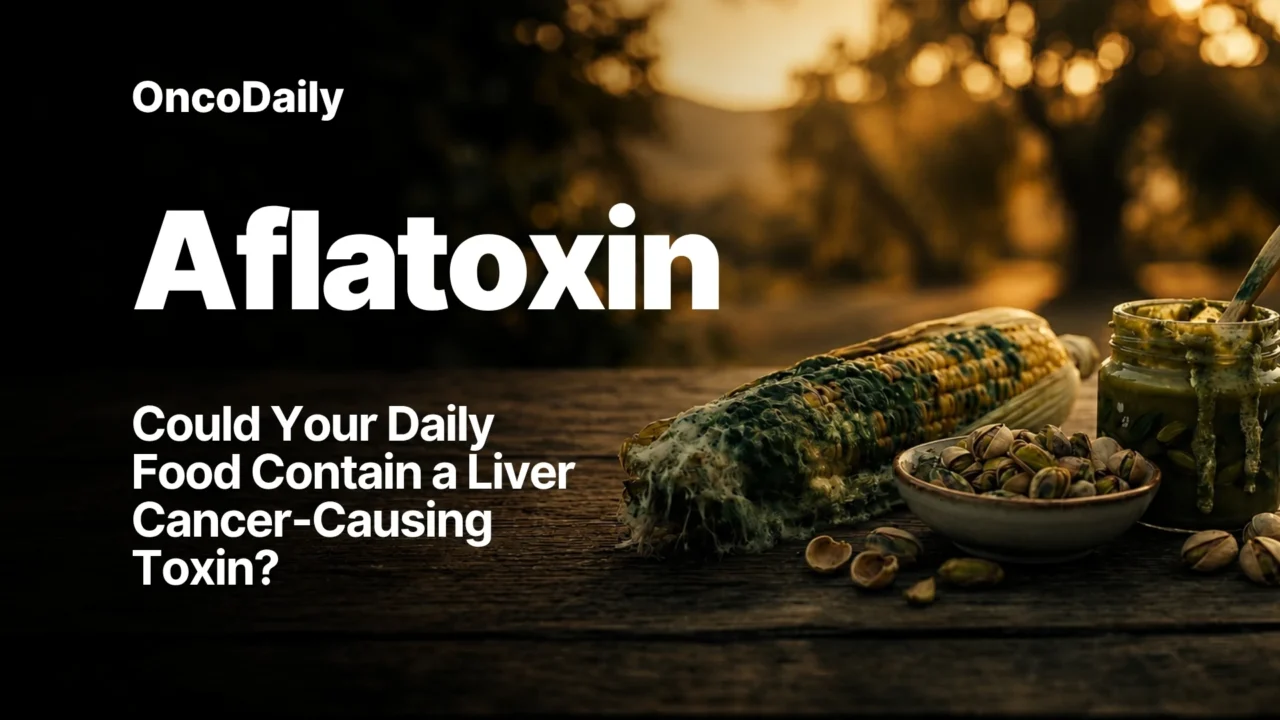
Aflatoxin in food is an important but often underrecognized issue in cancer prevention because it connects food safety, environmental exposure, infectious disease, and liver cancer risk. Aflatoxins are naturally occurring mycotoxins produced mainly by Aspergillus flavus and Aspergillus parasiticus, fungi that can contaminate agricultural crops such as maize, peanuts, cottonseed, and tree nuts, especially in warm and humid conditions. Unlike many cancer risk factors that are linked to individual behavior, aflatoxin exposure often reflects broader food-system conditions, including crop contamination, storage quality, climate, and regulatory monitoring․
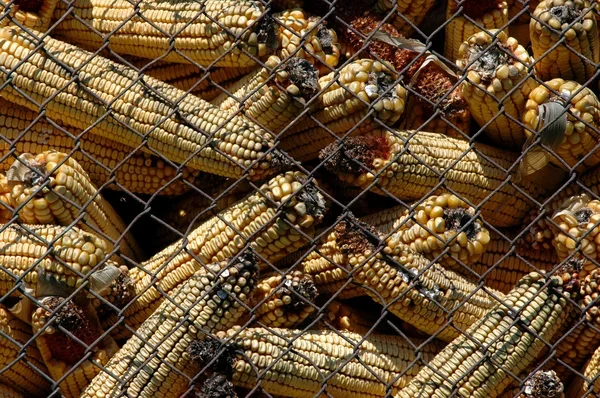
Photo: Depositphotos
The strongest cancer-related evidence concerns aflatoxin B1, a potent liver carcinogen. Chronic dietary exposure to aflatoxin B1 has been linked to hepatocellular carcinoma, the most common type of primary liver cancer. This risk is especially important in populations with chronic hepatitis B virus infection, where aflatoxin and viral liver injury can act together to increase carcinogenic potential. Because both exposures are more common in several low- and middle-income regions, aflatoxin is not only a toxicology issue but also a global cancer prevention challenge.
The estimated burden is substantial. A global quantitative risk assessment reported that among approximately 550,000–600,000 new hepatocellular carcinoma cases worldwide each year, about 25,200–155,000 cases may be attributable to aflatoxin exposure. This corresponds to an estimated 4.6–28.2% of all global hepatocellular carcinoma cases. These data suggest that reducing aflatoxin contamination in staple foods may represent a meaningful, preventable pathway for lowering liver cancer risk, particularly in regions where exposure to contaminated food and chronic hepatitis B overlap.
What Are Aflatoxins?
Aflatoxins are a group of naturally occurring toxic compounds known as mycotoxins. They are produced mainly by certain species of Aspergillus fungi, especially Aspergillus flavus and Aspergillus parasiticus. These fungi can grow on crops such as maize, peanuts, tree nuts, cottonseed, spices, and other stored foods, particularly in warm and humid conditions.
Not all food risks are visible. Aflatoxins do not change the taste, smell, or appearance of food in a reliable way. This is why contamination control depends on proper storage, testing, and regulation not only consumer inspection.
Several types of aflatoxins have been identified, including aflatoxin B1, B2, G1, G2, and M1. Among them, aflatoxin B1 is considered the most toxic and the most strongly associated with cancer risk. After ingestion, aflatoxin B1 is metabolized in the liver into reactive compounds that can damage DNA, which is why chronic exposure has been linked most closely to hepatocellular carcinoma, the most common form of primary liver cancer.
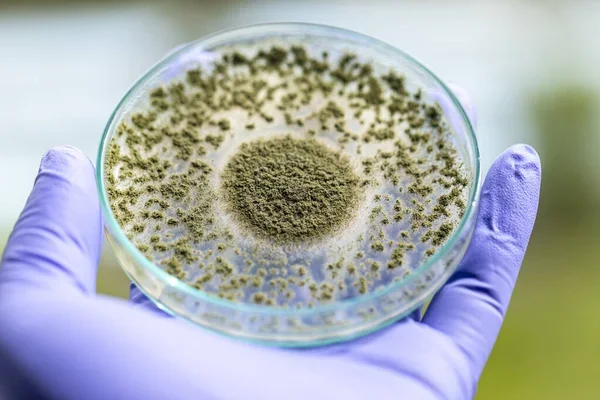
Photo: Depositphotos
Aflatoxins are important in cancer prevention because they are not intentionally added to food; they enter the food chain through fungal contamination. This makes them a food safety issue as well as a public health concern, especially in regions where climate, storage conditions, and food monitoring systems increase the risk of contamination.
Which Foods Are Most Often Contaminated?
Aflatoxin contamination is most commonly associated with crops that are grown, dried, or stored under warm and humid conditions. According to the U.S. Food and Drug Administration, foods that are especially susceptible include peanuts, corn, tree nuts such as Brazil nuts and pistachios, and some small grains, including rice. These foods can become contaminated when Aspergillus fungi grow on crops before harvest or during storage, particularly when moisture control is poor.
The International Agency for Research on Cancer has reported that the most pronounced aflatoxin contamination occurs in maize, peanuts, cottonseed, and tree nuts. Reported contamination levels can vary widely, from less than 0.1 µg/kg to hundreds of µg/kg, depending on the food type, geographic region, climate, agricultural practices, and storage conditions. This wide range is important because aflatoxin exposure is not uniform; it depends heavily on local food systems and regulatory monitoring.
Aflatoxin can also enter the animal food chain. When dairy cows consume feed contaminated with aflatoxin B1, it can be metabolized into aflatoxin M1 and excreted into milk. For this reason, aflatoxin control is not limited to human foods alone but also includes monitoring animal feed and dairy products.
How Aflatoxin Causes Cancer: Mechanism
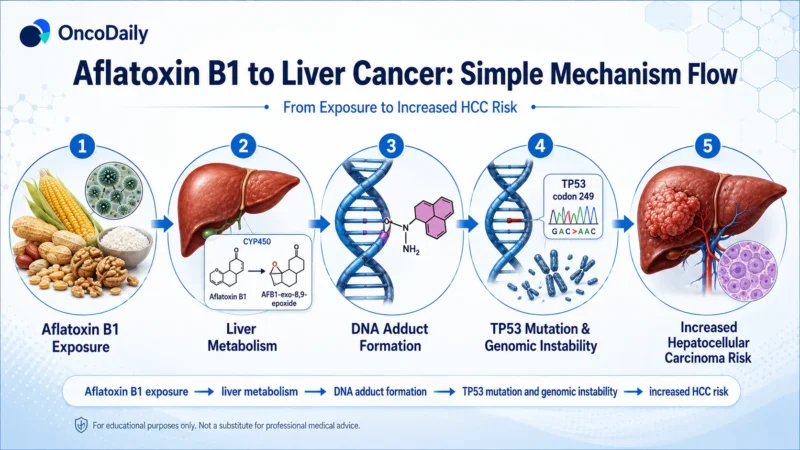
Aflatoxin B1 is considered the most carcinogenic member of the aflatoxin family because of the way it is processed in the liver. After contaminated food is ingested, aflatoxin B1 is absorbed and transported to the liver, where it undergoes metabolism by cytochrome P450 enzymes. During this process, it can be converted into a highly reactive intermediate, commonly known as aflatoxin B1-exo-8,9-epoxide.
This reactive metabolite can bind directly to DNA and form aflatoxin-DNA adducts. If these DNA lesions are not repaired correctly, they can cause permanent mutations during cell division. One of the most studied genetic changes associated with aflatoxin exposure is a mutation in the TP53 tumor-suppressor gene, particularly at codon 249. TP53 normally helps regulate DNA repair, cell-cycle control, and removal of damaged cells. When this protective pathway is disrupted, damaged hepatocytes may survive and accumulate additional genetic alterations.
Over time, repeated aflatoxin exposure can contribute to genomic instability, abnormal liver cell growth, and increased risk of hepatocellular carcinoma. This mechanism is especially important because it provides a biological explanation for the epidemiologic link between chronic aflatoxin exposure and liver cancer.
Human Evidence: Biomarker and Cohort Studies
The link between aflatoxin exposure and liver cancer is not based only on laboratory models. Human biomarker and cohort studies have provided important evidence that chronic aflatoxin exposure is associated with an increased risk of hepatocellular carcinoma.
One of the strongest lines of evidence comes from studies that measured aflatoxin-specific biomarkers, including urinary aflatoxin metabolites and aflatoxin-albumin adducts. These biomarkers help estimate internal exposure, rather than relying only on dietary questionnaires or food contamination data. The International Agency for Research on Cancer classified naturally occurring aflatoxins as Group 1 carcinogens, meaning they are carcinogenic to humans, with support from cohort studies in Shanghai and Taiwan that showed statistically significant increases in hepatocellular carcinoma risk among individuals with biomarker evidence of aflatoxin exposure.
A Taiwan cohort study further demonstrated the importance of this association in people with chronic hepatitis B infection. Among male HBsAg-positive participants, high urinary aflatoxin metabolite levels were associated with a markedly higher risk of hepatocellular carcinoma, with an adjusted odds ratio of 5.5 compared with individuals with lower levels. Detectable aflatoxin-albumin adducts were also associated with increased risk, with an adjusted odds ratio of 2.8, although the confidence interval crossed 1.
These findings are important because they show that aflatoxin exposure can be measured biologically and linked to cancer outcomes in human populations. They also support the concept that aflatoxin-related liver cancer risk is strongest when exposure occurs alongside chronic hepatitis B infection, highlighting the intersection between food safety, viral hepatitis control, and cancer prevention.
The Aflatoxin–Hepatitis B Interaction
The cancer risk linked to aflatoxin exposure becomes much stronger in people with chronic hepatitis B virus infection. This interaction is important because both factors affect the liver, but through different mechanisms. Hepatitis B can cause chronic inflammation, liver cell injury, and ongoing regeneration, while aflatoxin B1 can directly damage DNA after being metabolized in the liver. Together, these processes create a more favorable environment for hepatocellular carcinoma development.
JECFA reported that the carcinogenic potency of aflatoxins is substantially higher in HBsAg-positive individuals than in HBsAg-negative individuals. The estimated potency was 0.3 cancer cases per year per 100,000 people per ng/kg body weight per day in HBsAg-positive individuals, compared with 0.01 in HBsAg-negative individuals. This suggests an approximately 30-fold higher potency among people with chronic hepatitis B infection.
This means that aflatoxin exposure and hepatitis B do not simply add risk independently. Instead, the evidence supports a strong interaction, where chronic viral liver disease can amplify the carcinogenic effect of aflatoxin. From a cancer prevention perspective, this makes hepatitis B vaccination, HBV screening, antiviral treatment when indicated, and aflatoxin control in food systems complementary strategies for reducing liver cancer risk.
How Regulators Assess Aflatoxin Risk
Regulatory agencies assess aflatoxins differently from many other food contaminants because aflatoxins are both genotoxic and carcinogenic. This means they can damage DNA and contribute to cancer development, so many authorities do not define a completely “safe” exposure threshold. Instead, the main regulatory goal is to reduce exposure as much as practically possible.
The Joint FAO/WHO Expert Committee on Food Additives lists the tolerable intake for aflatoxins as “not established” because they are genotoxic carcinogens. Similarly, the European Food Safety Authority states that exposure to aflatoxins from food should be kept as low as possible, since these compounds are known to be genotoxic and carcinogenic.
In practice, this approach means that regulators set maximum permitted levels for aflatoxins in specific foods and monitor high-risk products such as maize, peanuts, tree nuts, spices, and milk. These limits are not meant to suggest that aflatoxin is harmless below a certain level. Rather, they are risk-management tools designed to keep contamination low, protect public health, and reduce long-term liver cancer risk.
Regulatory Limits: What Numbers Are Used?
Regulatory limits for aflatoxins vary by country and food category, but they are designed to keep contamination as low as possible in products that are more likely to carry risk. In the United States, the FDA action level for total aflatoxins is 20 parts per billion (ppb) for foods, including peanuts and peanut products, pistachio nuts, and Brazil nuts. For milk, the FDA action level is much lower: 0.5 ppb for aflatoxin M1, the metabolite that can appear in milk when dairy animals consume feed contaminated with aflatoxin B1.
These numbers are important because aflatoxin contamination is measured at very small concentrations. One ppb is equivalent to one microgram per kilogram, meaning that even tiny amounts are relevant for food safety monitoring. The lower limit for milk reflects the need to protect consumers from aflatoxin exposure through the dairy chain, including children and other groups who may consume milk regularly.
In the European Union, maximum levels are also regulated for aflatoxin B1, B2, G1, G2, and M1. The European Commission also specifies official sampling and analysis methods for mycotoxins, including aflatoxins. This is important because contamination can be unevenly distributed within a food batch, so accurate sampling is essential for reliable detection and enforcement.
Can Cooking Remove Aflatoxin?
Cooking contaminated food does not reliably eliminate aflatoxin. Although some food-processing methods may reduce aflatoxin levels, the reduction is variable and depends on the food type, temperature, moisture, processing method, and initial contamination level. This means that cooking, roasting, boiling, or baking cannot be considered a dependable safety measure once a food product is contaminated.
Photo: Depositphotos
Aflatoxins are relatively heat-stable compounds. Cornell University’s biosafety reference notes that aflatoxins are not destroyed by boiling water, pasteurization, or autoclaving. Other reviews also show that processing can lower mycotoxin concentrations through sorting, cleaning, milling, extrusion, or thermal treatment, but these steps do not guarantee complete removal.
For this reason, prevention is more effective than trying to remove aflatoxin after contamination has occurred. Proper crop drying, safe storage, moisture control, careful sorting, food testing, and regulatory monitoring remain the most important strategies for reducing aflatoxin exposure.
You Can Also Read Does Garlic Prevent or Cure Cancer? Myths, Facts, and Scientific Evidence by OncoDaily
Photo: Depositphotos
Prevention: From Farm to Consumer
Preventing aflatoxin exposure is not only a matter of individual food choices. It is a public health and food-system issue that begins before food reaches the consumer. Because aflatoxins can develop during crop growth, harvesting, drying, storage, transport, and processing, effective prevention requires control measures across the entire food chain.
At the agricultural level, prevention includes reducing fungal growth in the field, harvesting crops at the right time, and minimizing crop damage that can make contamination more likely. After harvest, proper drying is essential because moisture strongly supports the growth of Aspergillus fungi. Safe storage in cool, dry, and well-ventilated conditions can further reduce the risk of aflatoxin formation. Sorting and removing visibly damaged, moldy, or discolored kernels and nuts is also important, as contamination is often concentrated in poor-quality or damaged products.
Food safety systems play a central role in reducing exposure. Regulatory testing, official sampling, and monitoring of high-risk foods such as maize, peanuts, tree nuts, spices, and cereals help prevent heavily contaminated products from reaching consumers. Animal feed also requires monitoring because cows that consume feed contaminated with aflatoxin B1 can produce milk containing aflatoxin M1. This makes aflatoxin control relevant not only for plant-based foods but also for dairy safety.
For consumers, the most evidence-based advice is to buy nuts, grains, spices, and cereals from regulated and reliable sources; avoid foods that are visibly moldy, shriveled, damaged, or unusually discolored; and store dry foods in cool, dry conditions. Long storage in humid environments should be avoided, especially for products such as peanuts, corn, rice, spices, and tree nuts. While these steps cannot eliminate aflatoxin risk completely, they can reduce avoidable exposure and support broader prevention efforts.
Written by Aharon Tsaturyan, MD, Editor at OncoDaily Intelligence Unit
FAQ
What Is Aflatoxin In Food?
Aflatoxin in food refers to toxic compounds produced by Aspergillus fungi that can contaminate crops such as peanuts, corn, tree nuts, rice, spices, and grains, especially in warm and humid conditions.
Can Aflatoxin Cause Cancer?
Yes. Long-term exposure to aflatoxin B1 is strongly linked to liver cancer, especially hepatocellular carcinoma. The risk is higher in people with chronic hepatitis B infection.
Which Foods Are Most Likely To Contain Aflatoxin?
Foods most often linked to aflatoxin contamination include peanuts, corn, pistachios, Brazil nuts, cottonseed, rice, spices, cereals, and other stored grains. Milk can also contain aflatoxin M1 if cows consume contaminated feed.
Does Cooking Destroy Aflatoxin?
No, normal cooking does not reliably destroy aflatoxin. Aflatoxins are heat-stable, so boiling, roasting, baking, or pasteurization may reduce some contamination but cannot guarantee complete removal.
How Does Aflatoxin Cause Liver Cancer?
Aflatoxin B1 is metabolized in the liver into reactive compounds that can bind DNA and form DNA adducts. This damage can lead to TP53 mutations, genomic instability, and increased hepatocellular carcinoma risk.
How Can You Reduce Aflatoxin Exposure?
People can reduce exposure by buying nuts, grains, spices, and cereals from reliable sources, avoiding visibly moldy or damaged foods, storing dry foods in cool and dry conditions, and avoiding long storage in humid environments.
Is Aflatoxin More Dangerous With Hepatitis B?
Yes. Aflatoxin exposure and chronic hepatitis B infection can interact strongly in the liver, increasing the risk of hepatocellular carcinoma more than either factor alone.