Lung cancer remains one of the clearest examples of both progress and failure in global cancer control.
It is a disease where prevention works. Tobacco control has changed mortality curves in many countries. Treatment has also advanced dramatically, with targeted therapies, immunotherapy, molecular testing, and better multidisciplinary care reshaping outcomes for selected patients.
But the global burden remains enormous.
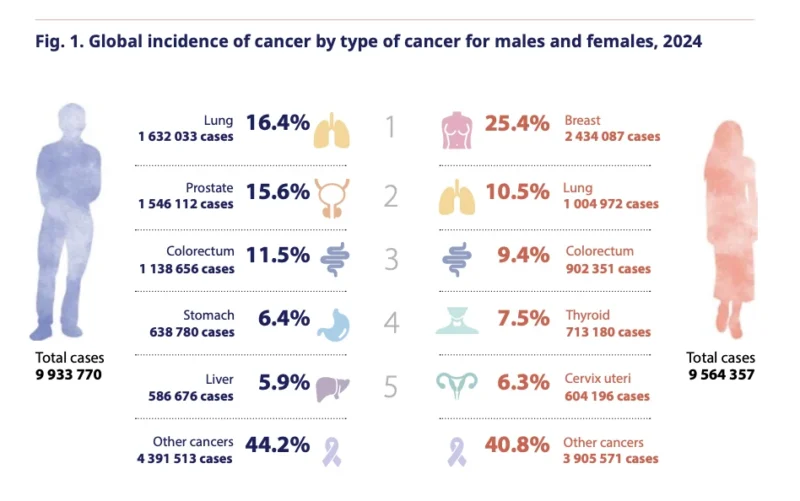
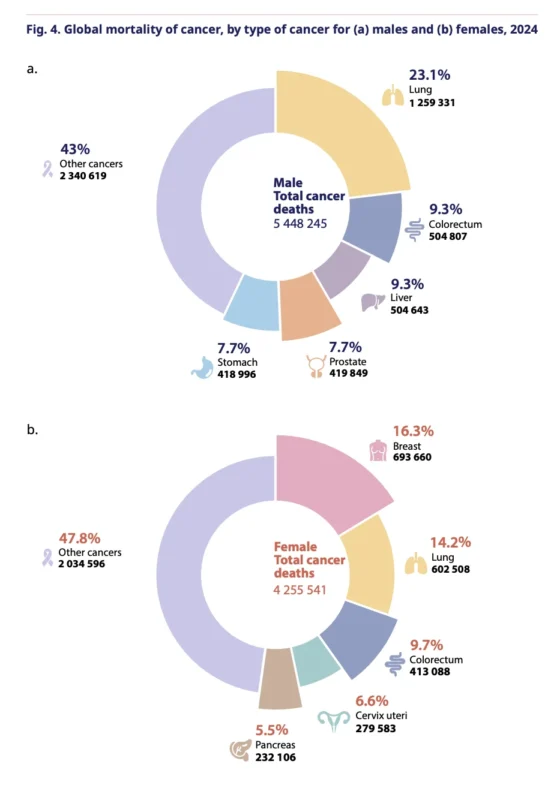
According to the WHO ‘s Global status report on cancer 2026: The Future We Choose Together, lung cancer was the most commonly diagnosed cancer among men in 2024, with 1.6 million new cases. Among women, it was the second most commonly diagnosed cancer, with 1.0 million new cases.
It was also the leading cause of cancer death among men, causing 1.26 million deaths, and the second leading cause of cancer death among women, causing 602,508 deaths.
Together, these figures show the scale of the challenge: lung cancer remains a dominant global cause of cancer mortality, even in an era of major therapeutic innovation.
The WHO report’s message is not that treatment innovation is unimportant.
It is that innovation alone will not close the lung cancer gap.
Lung Cancer Is Still a Global Mortality Emergency
Lung cancer occupies a unique place in oncology.
It is common. It is lethal. It is deeply linked to modifiable risk factors. And it exposes the difference between countries that have invested in prevention, early detection, diagnosis, and treatment access and those that have not.
The report notes that cancer caused an estimated 9.7 million deaths globally in 2024. Lung cancer accounted for the largest number of male cancer deaths and one of the largest numbers of female cancer deaths.
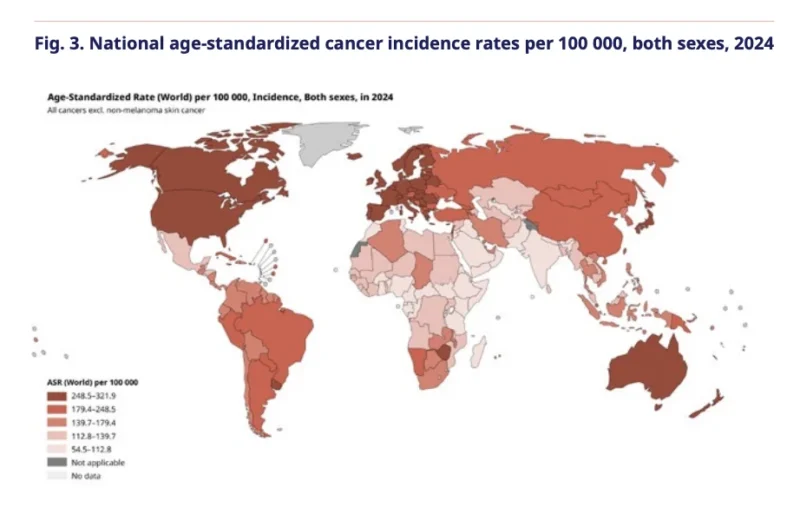
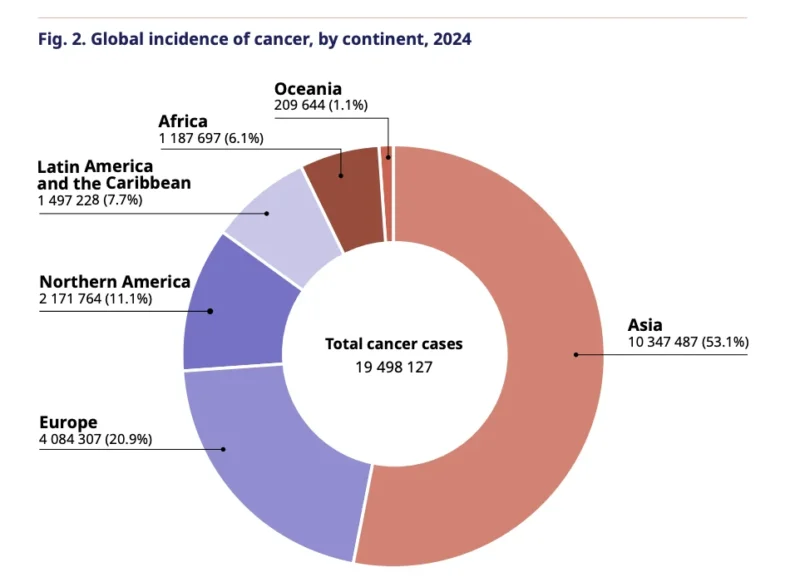
This burden is not distributed evenly.
Countries with stronger tobacco control, earlier diagnosis, better imaging access, molecular testing, radiotherapy, surgery, systemic therapy, and palliative care have more tools to reduce lung cancer mortality. Countries with weaker health systems often face later diagnosis, limited treatment access, and higher avoidable mortality.
In that sense, lung cancer is not only a tumor type.
It is a measure of health-system performance.
Tobacco Control Remains the Largest Lung Cancer Intervention
The WHO report is clear: tobacco use remains the primary risk factor driving cancer incidence and mortality.
In 2024, approximately 1.2 billion people aged 15 years and older were tobacco users worldwide. This represented a global prevalence of 19.5%, including 32.5% of men and 6.6% of women.
Tobacco use accounted for 15% of all new cancer cases worldwide in 2022, including nearly 1.8 million lung cancer cases.
That number matters because it reframes lung cancer prevention as one of the highest-impact actions in cancer control.
The report also shows what success can look like. Since 2000, the absolute number of tobacco users has declined by 177 million despite population growth. By 2025, the relative reduction in tobacco use since 2010 reached approximately 27%, falling just short of the WHO NCD target of 30%.
This progress is meaningful.
But it is incomplete.
Men continue to have much higher tobacco-use prevalence than women, and novel nicotine and tobacco products are creating new regulatory challenges.
The U.S. Example Shows the Scale of Prevention
One of the most striking figures in the WHO report concerns cancer deaths averted in the United States between 1975 and 2020.
For lung cancer, an estimated 3.5 million deaths were averted.
The report attributes 98% of that modeled benefit to tobacco control, compared with 2% to chemotherapy or targeted therapy.
This does not diminish the importance of treatment.
For an individual patient with advanced lung cancer, molecular testing, targeted therapy, immunotherapy, radiotherapy, surgery, and supportive care can be life-changing.
But at the population level, the largest gains in lung cancer mortality have come from prevention.
That is the central tension in lung cancer today: the science of treatment is moving fast, but the greatest preventable burden still begins before diagnosis.
Air Pollution Is an Expanding Lung Cancer Concern
The WHO report also highlights air pollution as a major carcinogenic exposure.
Air pollution accounted for 2.4% of all new cancers globally and 4.1% in East Asia. Fine particulate matter, especially PM2.5, can penetrate deeply into the lungs, contributing to chronic inflammation, oxidative stress, DNA damage, and increased lung cancer risk.
The report also links climate change to cancer risk through worsening air pollution, wildfire smoke, heatwaves, and ozone formation.
This is important for lung cancer because prevention is often discussed only through smoking. That is too narrow.
Tobacco remains the dominant risk factor, but lung cancer prevention also requires clean air policy, occupational protection, environmental regulation, and climate-health planning.
For people who have never smoked, especially in regions with high air pollution exposure, these issues are central to cancer prevention.
Early Detection Remains Unevenly Implemented
Early detection can change outcomes in lung cancer, but implementation remains limited globally.
The WHO report notes that colorectal and lung cancer screening have the lowest level of global implementation among major cancer screening programmes.
This is not surprising.
Lung cancer screening requires more than a scan. It requires risk-based eligibility, quality-assured low-dose CT imaging, structured reporting, nodule management protocols, multidisciplinary follow-up, smoking cessation integration, and the ability to diagnose and treat early-stage disease.
Without that system, screening can create harm, anxiety, overdiagnosis, unnecessary procedures, and unequal access.
But when implemented well, early detection can shift diagnosis toward earlier stages, where surgery, stereotactic radiotherapy, and curative-intent multimodality therapy become possible.
The global challenge is not simply whether lung cancer screening works.
It is whether health systems can deliver it safely, equitably, and at scale.
Treatment Innovation Has Changed the Story, But Not for Everyone
Lung cancer care has changed profoundly over the past decade.
For non-small cell lung cancer, molecular testing now identifies actionable alterations that can guide targeted therapy. Immunotherapy has transformed treatment across metastatic and locally advanced disease. In selected patients, survival is longer than would have been expected in earlier treatment eras.
But these advances depend on access.
A patient cannot benefit from EGFR, ALK, ROS1, BRAF, MET, RET, NTRK, KRAS G12C, HER2, or other biomarker-directed strategies if molecular testing is unavailable, unaffordable, or delayed.
A patient cannot benefit from immunotherapy if pathology, PD-L1 testing, reimbursement, toxicity management, and treatment continuity are missing.
A patient with early-stage lung cancer cannot benefit from curative surgery or stereotactic radiotherapy if the cancer is diagnosed late or treatment facilities are inaccessible.
This is why the WHO report frames cancer care as a continuum rather than a single intervention.
In lung cancer, every delay matters.
Lung Cancer Control Needs a Full Pathway
The report’s broader framework calls for three shifts in global cancer control: better capabilities, better protections, and better value.
For lung cancer, those shifts are highly practical.
Better capabilities mean stronger tobacco control, clean air policy, risk-based early detection where appropriate, pathology access, imaging capacity, molecular testing, radiotherapy, surgery, systemic therapy, palliative care, and cancer registries.
Better protections mean reducing out-of-pocket costs, protecting families from catastrophic health expenditure, and ensuring patients can complete diagnosis and treatment without financial collapse.
Better value means investing in interventions that produce meaningful survival, function, quality-of-life, and population-health gains.
In lung cancer, value cannot be measured only by the newest drug.
It must also include the cigarette not smoked, the exposure reduced, the early-stage cancer detected, the biomarker test completed, and the patient who reaches treatment on time.
The Bottom Line
The WHO Global status report on cancer 2026 shows lung cancer as one of the defining tests of global cancer control.
It remains one of the most common cancers worldwide and one of the leading causes of cancer death.
Yet it is also a cancer where prevention has already saved millions of lives.
The next phase of progress will require more than therapeutic innovation. It will require stronger tobacco control, clean air policy, equitable early detection, timely diagnosis, access to molecular testing, affordable treatment, radiotherapy and surgery capacity, palliative care, and financial protection.
Lung cancer control is not only about treating disease once it appears.
It is about building systems that prevent risk, detect cancer earlier, and deliver effective care to every patient who needs it.
References
- World Health Organization. Global status report on cancer 2026: The Future We Choose Together. Geneva: World Health Organization; 2026.
- International Agency for Research on Cancer. GLOBOCAN 2024: Global Cancer Observatory. Lyon: IARC; 2024.
- World Health Organization. WHO Global Report on Trends in Prevalence of Tobacco Use 2000–2024 and Projections 2025–2030. Geneva: World Health Organization; 2025.
- World Health Organization. WHO Framework Convention on Tobacco Control. Geneva: World Health Organization.
- World Health Organization. WHO Global Air Quality Guidelines: Particulate Matter, Ozone, Nitrogen Dioxide, Sulfur Dioxide and Carbon Monoxide. Geneva: World Health Organization; 2021.