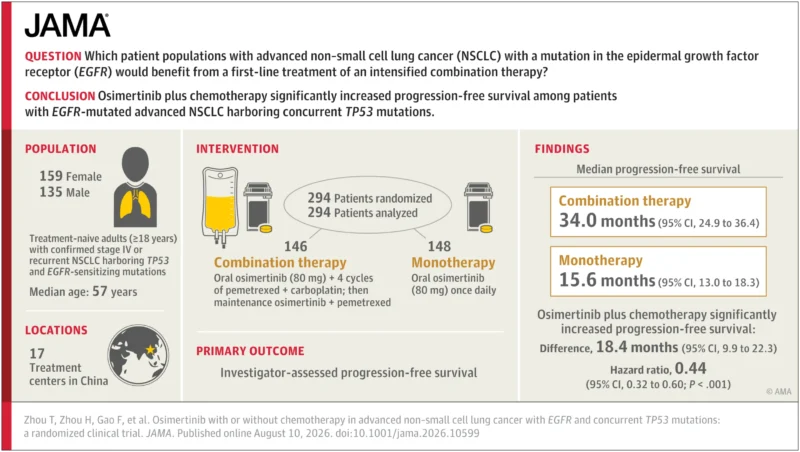
Concurrent TP53 mutations may identify a high-risk subgroup of patients with EGFR-mutated advanced non–small cell lung cancer who derive substantial benefit from intensified first-line therapy, according to a randomized phase III trial published in JAMA on August 10, 2026.
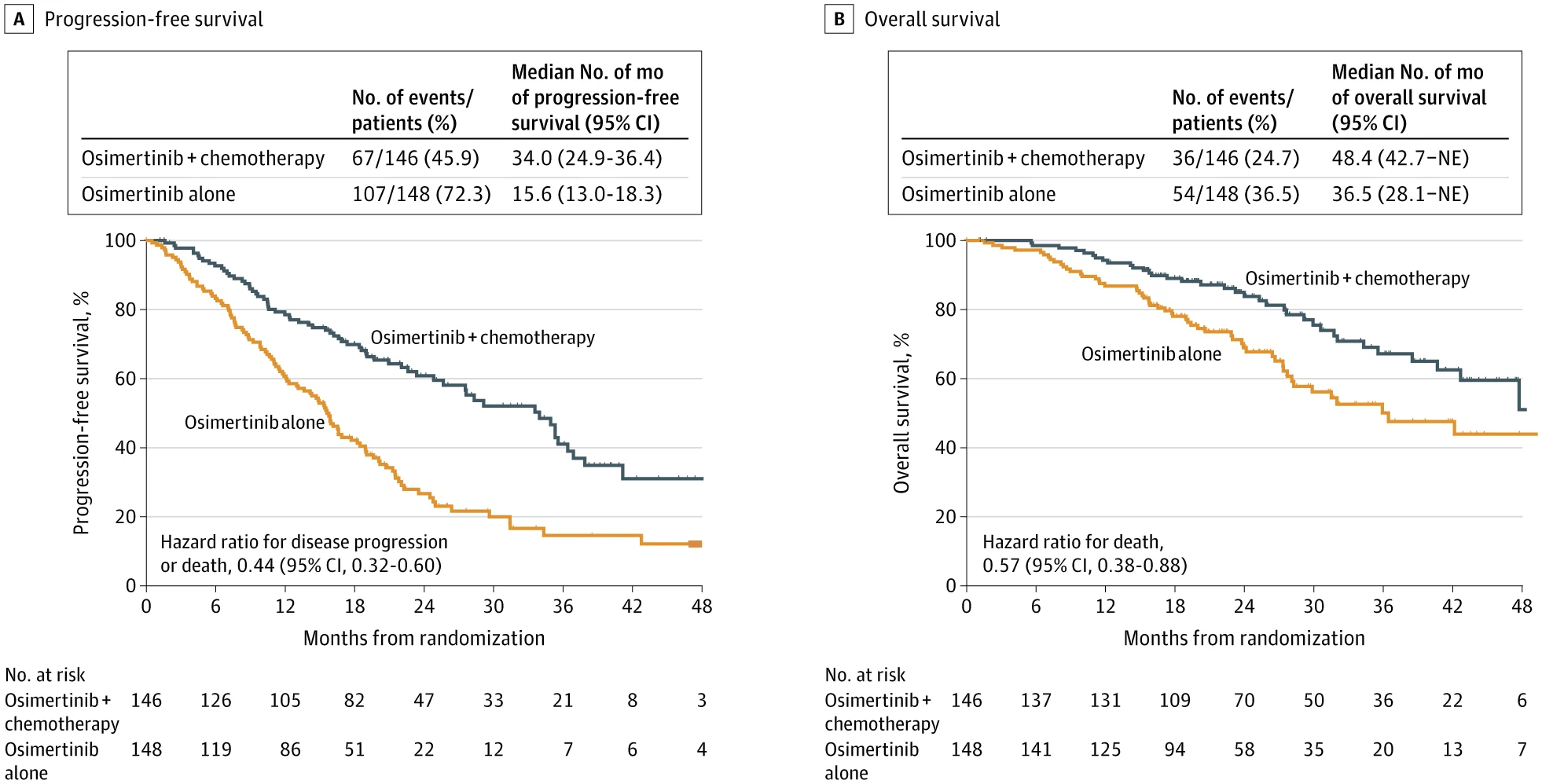
Among 294 patients with treatment-naive advanced nonsquamous NSCLC harboring both an EGFR-sensitizing mutation and a TP53 mutation, first-line osimertinib plus pemetrexed-carboplatin more than doubled median progression-free survival compared with osimertinib alone:
- 34.0 months versus 15.6 months
The hazard ratio for progression or death was 0.44, corresponding to a 56% relative reduction in risk with combination therapy (Zhou et al., 2026).
The efficacy gain came with substantially greater toxicity. Grade 3 or higher treatment-related adverse events occurred in 62.4% of patients receiving combination therapy compared with 14.9% receiving osimertinib alone.
The findings bring a new dimension to the ongoing debate over whether all patients with EGFR-mutated advanced NSCLC need first-line treatment intensification. Instead of treating EGFR-mutated disease as one risk group, the study prospectively selected patients with concurrent TP53 mutations, a molecular subgroup already associated with poorer outcomes from EGFR-TKI monotherapy.
Why Does TP53 Matter in EGFR-Mutated NSCLC?
Osimertinib is an established first-line treatment for advanced NSCLC harboring sensitizing EGFR mutations, particularly EGFR exon 19 deletions and L858R mutations.
However, EGFR-mutated tumors are molecularly heterogeneous. Co-occurring genomic alterations can influence how long a tumor remains dependent on EGFR signaling and how rapidly resistance develops.
TP53 is the most frequent concurrent alteration in EGFR-mutated advanced NSCLC and is found in approximately half of patients, according to evidence discussed by Zhou and colleagues (Blakely et al., 2017; Zhou et al., 2026).
TP53 dysfunction has been associated with genomic instability, lineage plasticity and impaired apoptosis. Previous studies have also associated concurrent TP53 mutations with shorter outcomes during EGFR-TKI treatment (Vokes et al., 2022; Ibusuki et al., 2024).
The clinical question is therefore not simply whether TP53 predicts poorer prognosis.
It is whether TP53 can identify patients who benefit sufficiently from treatment intensification to justify its additional toxicity.
That was the central question addressed prospectively by this trial.
How Was the Phase III Trial Designed?
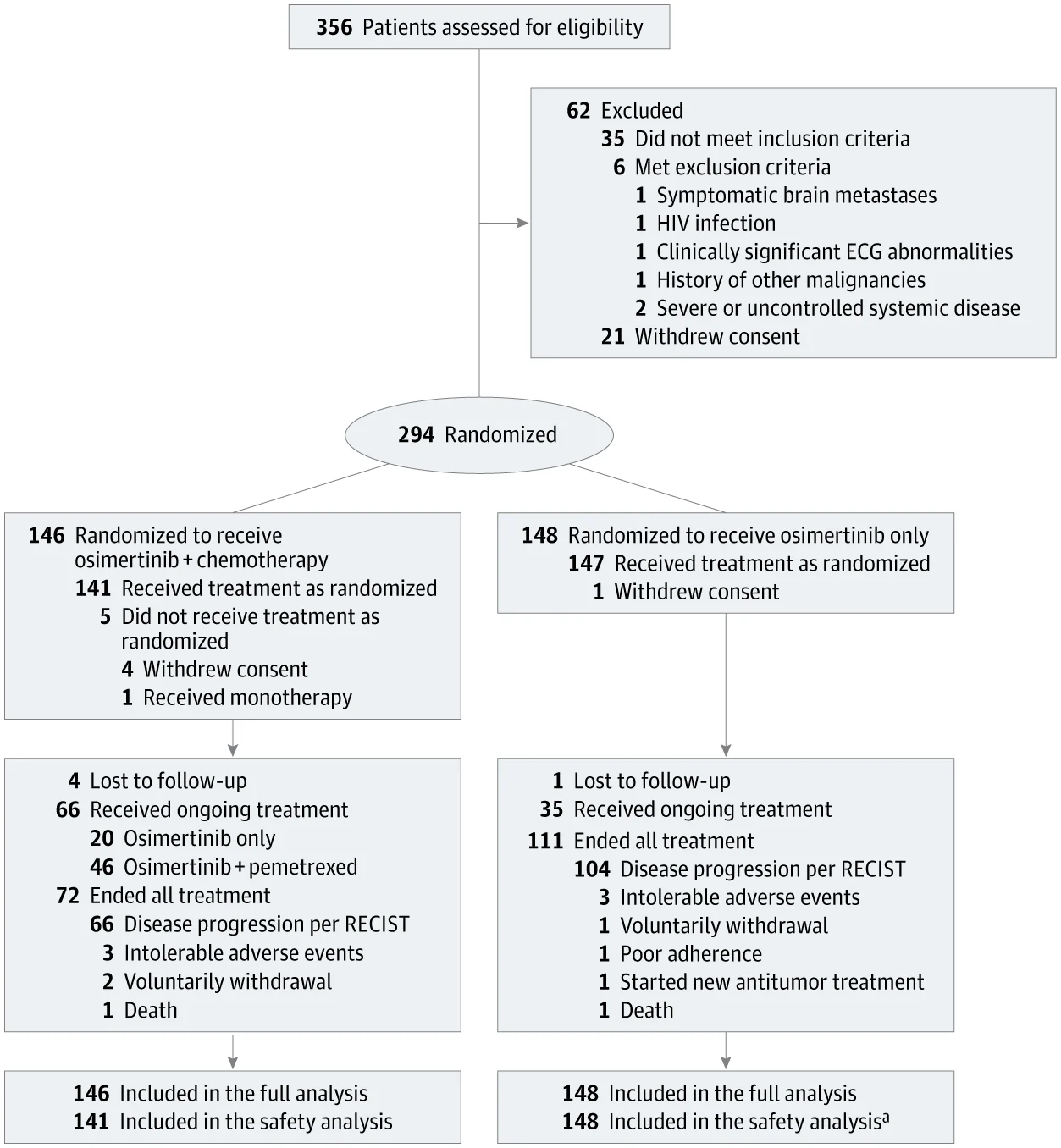
The multicenter, randomized, open-label phase III study was conducted across 17 centers in China.
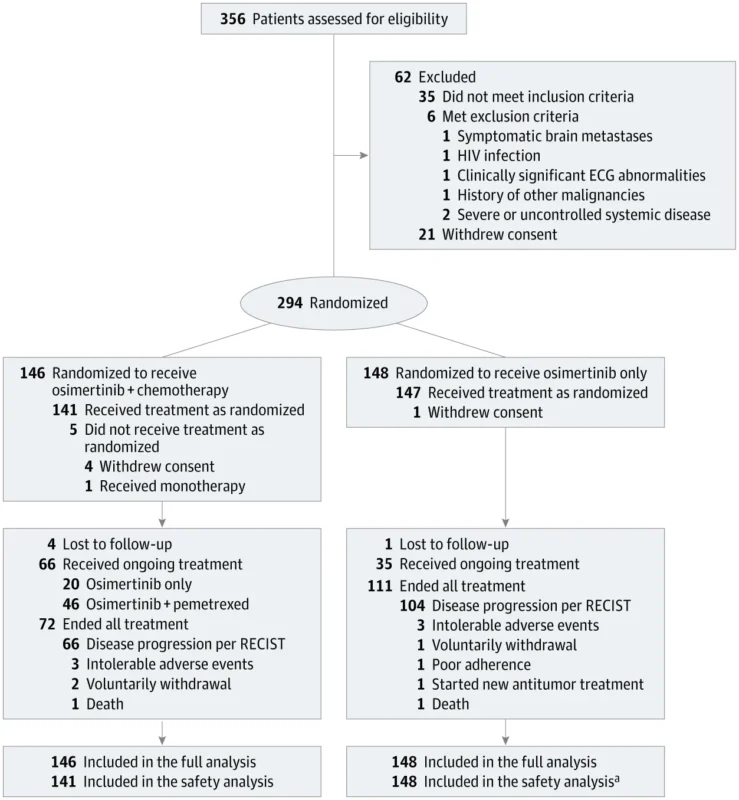
Between March 25, 2021, and July 11, 2024, investigators enrolled 294 patients with stage IV or recurrent nonsquamous NSCLC harboring concurrent:
- EGFR exon 19 deletion or L858R mutation
- TP53 mutation
Patients had received no previous systemic therapy for advanced disease and had an ECOG performance status of 0 or 1. Patients with asymptomatic, stable brain metastases were eligible.
Participants were randomized 1:1 to either osimertinib plus chemotherapy or osimertinib monotherapy (Zhou et al., 2026).
The combination group included 146 patients, while 148 received osimertinib alone.
Nearly half of the study population had brain metastases at baseline: 49.3% in the combination group and 48.0% in the monotherapy group.
EGFR exon 19 deletion was present in approximately 55% of patients, while the remaining patients had L858R mutations.
What Treatment Did Patients Receive?
Patients assigned to combination treatment received osimertinib 80 mg once daily plus pemetrexed at 500 mg/m² and carboplatin at an area under the concentration-time curve of 5 mg/mL/min every three weeks for four cycles.
After induction, patients continued maintenance osimertinib plus pemetrexed.
Patients in the control group received continuous osimertinib at 80 mg once daily.
Among patients receiving the combination, 84.4% completed all four planned cycles of carboplatin-pemetrexed.
The median number of pemetrexed cycles was notably high at 17 cycles, reflecting prolonged maintenance exposure in many patients.
The primary endpoint was investigator-assessed progression-free survival according to RECIST 1.1. Secondary endpoints included overall survival, objective response, duration of response, disease control, safety and quality of life (Zhou et al., 2026).
How Much Did Combination Therapy Improve PFS?
At the November 11, 2025 data cutoff, 174 patients had experienced disease progression or death.
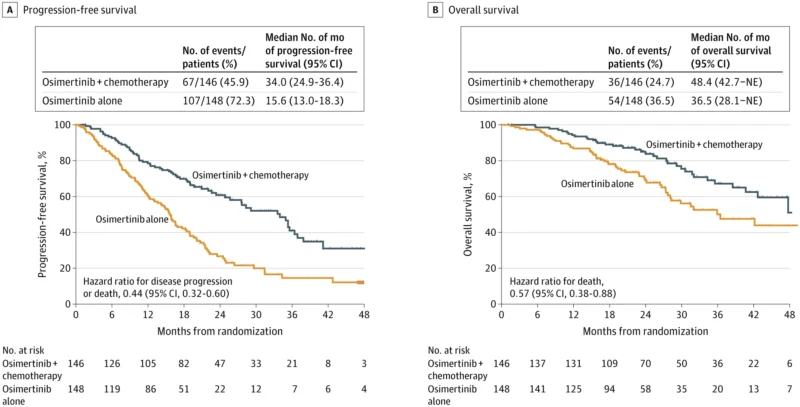
Median progression-free survival was:
- 34.0 months with osimertinib plus chemotherapy
versus - 15.6 months with osimertinib alone.
The absolute difference was 18.4 months.
The hazard ratio for progression or death was:
- HR 0.44; 95% CI, 0.32–0.60; P<0.001
At 12 months, 78.5% of patients receiving combination therapy remained progression free compared with 60.7% receiving osimertinib alone.
At 18 months, the rates were 69.9% versus 42.2%.
By 24 months, 60.8% of patients receiving combination therapy remained progression free compared with only 26.7% receiving monotherapy (Zhou et al., 2026).
The Kaplan–Meier curves separated early and remained separated throughout follow-up.
Did Patients With Brain Metastases Benefit?
Yes.
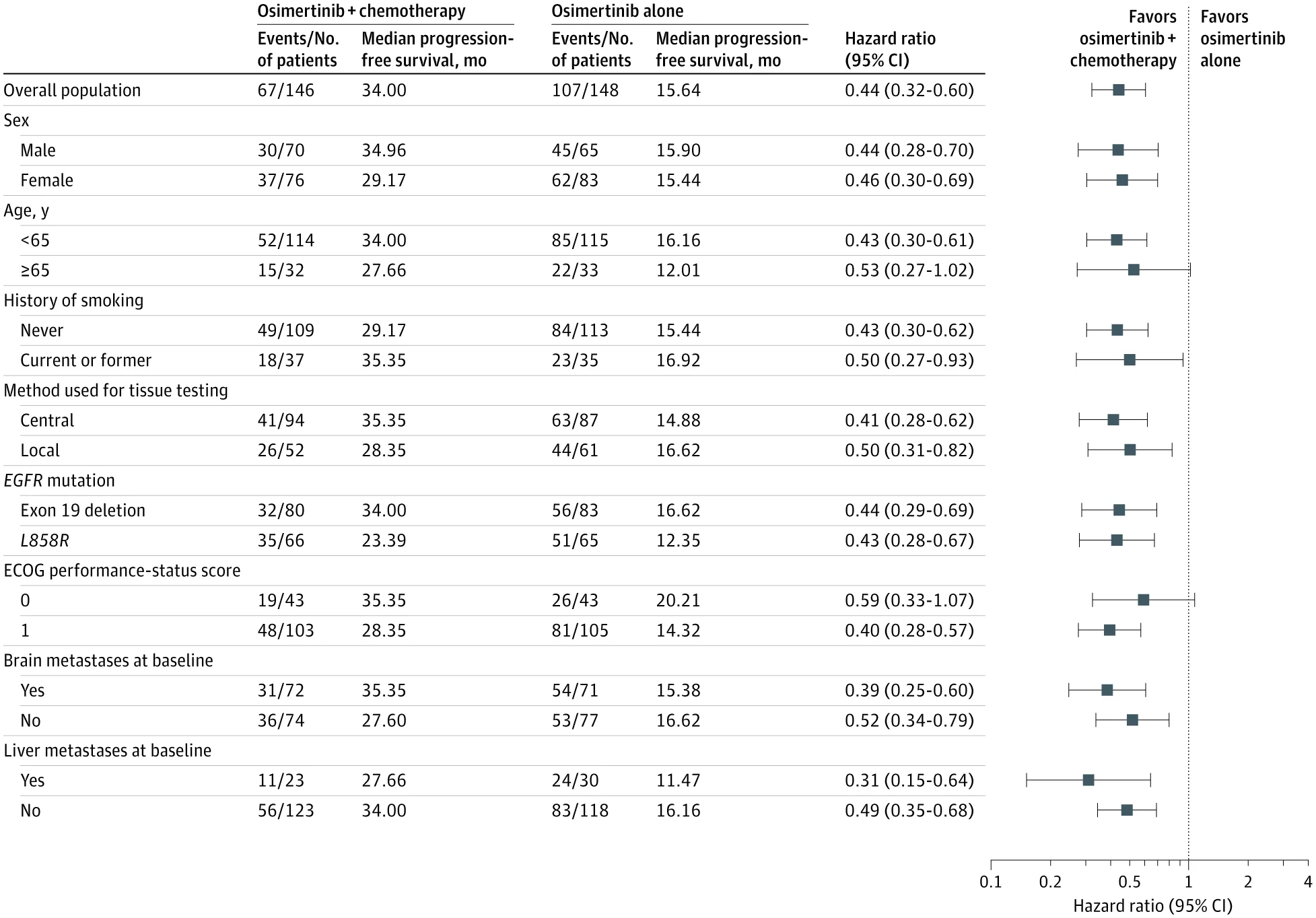
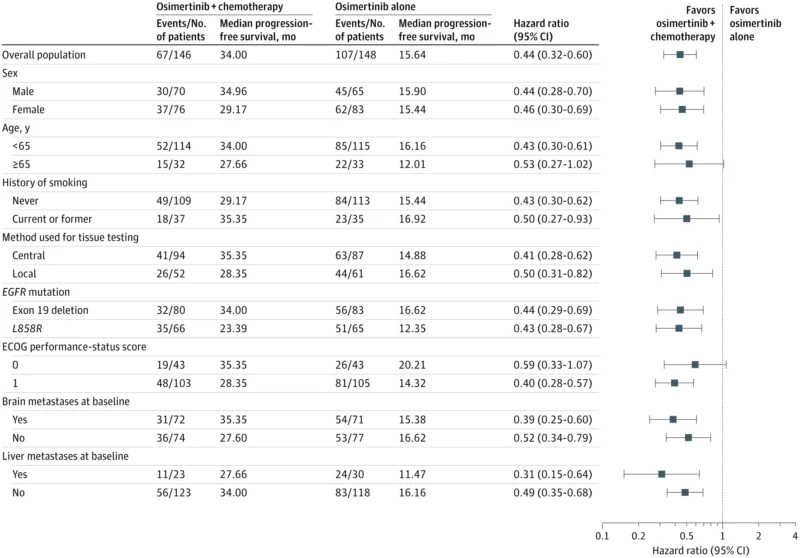
The progression-free survival advantage with osimertinib plus chemotherapy was reported consistently across the prespecified subgroups.
Importantly, this included patients with brain metastases at baseline, who represented almost half of the study population.
The advantage was also observed across both major EGFR mutation groups, including patients with L858R mutations, another population associated with less favorable outcomes in some EGFR-TKI studies.
The trial was not designed to independently establish treatment effects within each subgroup, so these findings should be interpreted as evidence of consistency rather than definitive subgroup-specific superiority.
Nevertheless, the absence of an obvious attenuation of benefit in patients with brain metastases is clinically notable given their high representation in the trial (Zhou et al., 2026).
What Happened to Objective Response?
Combination therapy also increased the objective response rate.
The objective response rate was:
- 82.9% with osimertinib plus chemotherapy
compared with:
- 71.6% with osimertinib monotherapy
More striking was the difference in response durability.
Median duration of response was:
- 32.7 months versus 15.3 months respectively.
Disease-control rates were closer between groups, at 91.8% versus 84.5%.
This suggests that one of the major effects of chemotherapy intensification was not simply producing more initial tumor shrinkage, but maintaining disease control substantially longer in this molecularly high-risk population (Zhou et al., 2026).
Did Overall Survival Improve?
The overall survival findings are promising but not yet definitive.
At the interim analysis, only 90 of the 294 patients had died, corresponding to 30.6% overall survival maturity.
Median overall survival was:
- 48.4 months with osimertinib plus chemotherapy
versus:
- 36.5 months with osimertinib alone.
The hazard ratio for death was:
- HR 0.57; 95% CI, 0.38–0.88; nominal P=0.01
However, the study protocol did not formally adjust the interim overall survival analysis for multiplicity. The authors therefore appropriately characterize these data as immature and emphasize the need for continued follow-up before a definitive overall survival conclusion can be made (Zhou et al., 2026).
This distinction is important. The PFS benefit is statistically established; the OS signal remains encouraging but immature.
How Does This Compare With FLAURA2?
FLAURA2 established the broader principle that adding platinum-pemetrexed chemotherapy to osimertinib can improve outcomes in previously untreated EGFR-mutated advanced NSCLC.
In FLAURA2, osimertinib plus chemotherapy reduced the risk of progression or death compared with osimertinib alone, with a reported hazard ratio of 0.62. Subsequent survival analysis also demonstrated an overall survival advantage, with an HR of 0.77 (Planchard et al., 2023; Jänne et al., 2026).
The new trial asks a more specific question.
Rather than giving combination therapy to an unselected EGFR-mutated population, it prospectively selected patients with concurrent TP53 mutations.
In this selected population, the PFS HR of 0.44 represents a particularly large treatment effect.
The authors also note that median PFS in the combination group remained comparable with FLAURA2 despite deliberately enrolling a poorer-risk TP53-mutated population. One possible contributor was longer pemetrexed exposure: patients in the present study received a median of 17 cycles compared with 12 cycles reported in the referenced FLAURA2 analysis.
Cross-trial comparisons, however, cannot determine whether TP53 itself accounts for the difference in treatment effect.
What Does MARIPOSA Tell Us About TP53?
The TP53 selection strategy is also supported by an important observation from the phase III MARIPOSA program.
MARIPOSA demonstrated improved outcomes with first-line amivantamab plus lazertinib compared with osimertinib in previously untreated EGFR-mutated advanced NSCLC.
In a secondary biomarker analysis, however, patients with wild-type TP53 did not demonstrate a statistically significant PFS benefit with amivantamab plus lazertinib compared with osimertinib alone:
- HR 0.75; 95% CI, 0.52–1.07; P=0.11
The authors of the current JAMA study use this observation to support the broader hypothesis that treatment intensification does not necessarily provide the same benefit across every molecular-risk group (Felip et al., 2024; Zhou et al., 2026).
This does not establish that TP53-wild-type patients should universally receive osimertinib monotherapy. Different combination regimens have different mechanisms, efficacy profiles and toxicities.
It does, however, strengthen the rationale for moving beyond an EGFR-only definition of treatment risk.
What Was the Price of the PFS Improvement?
The increased efficacy came with a substantial increase in toxicity.
Grade 3 or higher treatment-related adverse events occurred in:
- 62.4% with osimertinib plus chemotherapy
versus:
- 14.9% with osimertinib monotherapy.
The difference was driven primarily by hematologic toxicity.
Grade 3 or higher neutrophil-count decrease occurred in 38.3% versus 4.1%.
Grade 3 or higher leukopenia occurred in 24.1% versus 0%, while grade 3 or higher platelet-count decrease occurred in 23.4% versus 0%.
Grade 3 or higher anemia occurred in 9.2% versus 0.7% (Zhou et al., 2026).
Serious treatment-related adverse events occurred in 10.6% versus 1.4%.
One patient receiving combination therapy died from severe treatment-related thrombocytopenia that led to pulmonary hemorrhage.
These results explain why identifying patients most likely to derive meaningful benefit from treatment intensification is clinically important.
How Often Did Toxicity Change Treatment?
Treatment modifications were considerably more frequent with the combination.
Treatment-related adverse events led to interruption of any study therapy in 41.1% of patients receiving osimertinib plus chemotherapy compared with 8.8% receiving osimertinib alone.
Dose reductions occurred in 19.9% versus 0%.
Treatment discontinuation due to treatment-related toxicity occurred in:
- 26.2% versus 1.4%.
Pemetrexed contributed substantially to the treatment burden. Among pemetrexed discontinuations, 37.9% were attributed to adverse events.
The toxicity profile therefore reinforces the central premise of the trial: chemotherapy intensification has a meaningful cost, making molecular selection particularly relevant.
Did Adding Chemotherapy Increase ILD?
Interestingly, interstitial lung disease or pneumonitis was not more frequent with chemotherapy intensification.
ILD or pneumonitis occurred in:
- 5.0% with osimertinib plus chemotherapy
and:
- 6.8% with osimertinib alone.
Cardiac failure was reported in 2.1% and 0.7%, respectively.
No new safety signal was identified by the investigators (Zhou et al., 2026).
The principal additional toxicity from combination treatment was therefore hematologic and chemotherapy related rather than a major increase in osimertinib-associated pulmonary toxicity.
What Happened to Quality of Life?
Quality-of-life findings add another layer to the benefit-risk discussion.
Time to deterioration in global health status favored osimertinib monotherapy, with patients receiving combination treatment experiencing a more rapid deterioration during the induction chemotherapy phase.
After this early separation, the curves generally ran in parallel.
For major lung-cancer-related symptoms, including dyspnea, cough and chest pain, time to deterioration was similar between groups.
Appetite loss was worse with combination therapy, with an estimated between-group difference of 7.6 points.
Patients receiving combination treatment also experienced less improvement in fatigue.
These data are clinically important because a large PFS gain does not erase treatment burden. Instead, they support the authors’ argument that the combination is most compelling when used in patients whose molecular risk makes the added burden more likely to be justified (Zhou et al., 2026).
Could TP53 Become a First-Line Treatment-Selection Biomarker?
This is the most important implication of the study.
Until now, TP53 has largely functioned as a prognostic biomarker in EGFR-mutated NSCLC. Patients with TP53 co-mutations generally have poorer outcomes and faster resistance than patients whose tumors retain wild-type TP53.
The new trial moves TP53 closer to a possible treatment-stratification biomarker.
Patients were prospectively selected because of their concurrent TP53 mutation, and the combination produced a large PFS improvement.
That is more compelling than retrospective subgroup analyses alone.
However, an important distinction remains: the trial did not randomize TP53-mutated and TP53-wild-type patients within the same study.
Therefore, it does not formally establish that TP53 mutation is predictive of a uniquely greater relative benefit from osimertinib plus chemotherapy compared with TP53 wild-type disease.
It establishes that the combination is highly active in a prospectively selected TP53-mutated high-risk population.
Confirming TP53 as a predictive biomarker rather than primarily a prognostic marker will require further comparative evidence.
Could This Change the “Combination for Everyone” Debate?
Possibly.
The debate around first-line EGFR-mutated advanced NSCLC has increasingly shifted from whether combination therapy works to who needs combination therapy.
FLAURA2 showed that osimertinib plus chemotherapy can improve survival compared with osimertinib alone. MARIPOSA established another intensified approach with amivantamab plus lazertinib.
But combination treatment brings additional toxicity, cost and treatment complexity.
The current study offers a biologically rational middle ground: rather than intensifying treatment universally, identify patients with molecular features associated with particularly aggressive disease and prioritize intensification in that group.
TP53 is especially attractive because it is common, appearing in approximately half of EGFR-mutated NSCLC, and can be identified through routine genomic profiling.
Whether this strategy ultimately becomes part of standard first-line treatment algorithms will depend on external validation, longer survival follow-up and how the results are integrated with other available first-line regimens.
What Are the Main Limitations?
Several limitations are important before translating the findings broadly.
First, overall survival remains immature at only 30.6% maturity. The HR of 0.57 is encouraging but cannot yet be considered definitive.
Second, the trial was conducted entirely in China, and the authors note that confirmation in other populations is warranted.
Third, the study was open label. Although imaging assessments were performed at predetermined intervals using RECIST 1.1, investigator-assessed PFS can still potentially be influenced by the absence of blinding.
Fourth, analyses of additional concurrent genomic alterations and acquired resistance mechanisms were not included in the present publication. These exploratory biomarker analyses remain ongoing.
Finally, the study only enrolled patients with TP53 mutations. It therefore cannot directly determine the magnitude of incremental chemotherapy benefit in TP53-wild-type patients using the same prospective design (Zhou et al., 2026).
The Bottom Line
The randomized phase III trial provides strong prospective evidence that patients with advanced EGFR-mutated NSCLC and concurrent TP53 mutations can derive substantial disease-control benefit from first-line osimertinib plus chemotherapy.
Median PFS increased from:
- 15.6 months to 34.0 months
with an HR of:
- 0.44
Objective response increased from 71.6% to 82.9%, while median duration of response more than doubled from 15.3 to 32.7 months.
An encouraging interim overall survival signal was also observed, 48.4 versus 36.5 months; HR 0.57, but the analysis remains immature and requires additional follow-up.
The benefit came with considerably greater toxicity. Grade 3 or higher treatment-related adverse events increased from 14.9% to 62.4%, and more than one-quarter of patients receiving combination therapy discontinued a study treatment because of treatment-related toxicity.
The study therefore supports a broader shift in EGFR-mutated NSCLC: first-line treatment selection may increasingly depend not only on the primary EGFR driver, but also on the genomic context surrounding it.
TP53 could become one of the most clinically relevant markers in that next layer of molecular risk stratification.
References
- Zhou T, Zhou H, Gao F, et al. Osimertinib With or Without Chemotherapy in Advanced Non–Small Cell Lung Cancer With EGFR and Concurrent TP53 Mutations: A Randomized Clinical Trial. JAMA. Published online August 10, 2026. doi:10.1001/jama.2026.10599.
- Planchard D, Jänne PA, Cheng Y, et al. Osimertinib with or without chemotherapy in EGFR-mutated advanced NSCLC. New England Journal of Medicine. 2023;389:1935–1948.
- Jänne PA, Planchard D, Kobayashi K, et al. Survival with osimertinib plus chemotherapy in EGFR-mutated advanced NSCLC. New England Journal of Medicine. 2026;394:27–38.
- Cho BC, Lu S, Felip E, et al. Amivantamab plus lazertinib in previously untreated EGFR-mutated advanced NSCLC. New England Journal of Medicine. 2024;391:1486–1498.
- Felip E, Cho BC, Gutiérrez V, et al. Amivantamab plus lazertinib versus osimertinib in first-line EGFR-mutant advanced non-small-cell lung cancer with biomarkers of high-risk disease: a secondary analysis from MARIPOSA. Annals of Oncology. 2024;35:805–816.
- Vokes NI, Chambers E, Nguyen T, et al. Concurrent TP53 mutations facilitate resistance evolution in EGFR-mutant lung adenocarcinoma. Journal of Thoracic Oncology. 2022;17:779–792.
- Ibusuki R, Iwama E, Shimauchi A, et al. TP53 gain-of-function mutations promote osimertinib resistance via TNF-α-NF-κB signaling in EGFR-mutated lung cancer. npj Precision Oncology. 2024;8:60.