Targeted therapies have transformed outcomes in molecularly defined non-small cell lung cancer, but resistance remains almost inevitable. As newer generations of tyrosine kinase inhibitors increasingly suppress resistance occurring directly at the original oncogenic driver, tumors may escape through alternative signaling pathways.
A large translational study published in Annals of Oncology in 2026 identifies RAS pathway alterations as a recurrent off-target resistance mechanism across several oncogene-driven lung cancers, including EGFR-, ALK-, MET-, ROS1- and RET-driven disease.
Francesco Facchinetti and colleagues analyzed molecular profiles obtained at progression from a total of 590 patients treated with targeted therapies. RAS alterations were identified in 11.2% of patients progressing after first-line osimertinib, with similar signals emerging after ALK inhibitors and in MET-, ROS1- and RET-driven NSCLC.
The study went further than describing resistance. Using patient-derived models harboring acquired KRAS mutations, the investigators showed that combining continued EGFR inhibition with emerging selective or pan-RAS inhibitors could restore pathway suppression and produce marked antitumor activity in preclinical models (Facchinetti et al., 2026).
The findings introduce an important possibility for precision oncology: an acquired RAS alteration at progression may not simply explain why a targeted therapy stopped working. In selected patients, it could potentially define what to target next.
Targeted Therapy Resistance Is Becoming Increasingly Off-Target
Resistance in oncogene-driven NSCLC can broadly arise through two pathways.
On-target resistance alters the original oncogenic driver itself, allowing the tumor to escape inhibition while remaining dependent on the same signaling pathway. In EGFR-mutant NSCLC, for example, secondary EGFR C797S is a recognized mechanism of resistance to osimertinib.
Off-target resistance takes a different route. Instead of modifying EGFR itself, the tumor activates another pathway capable of restoring downstream proliferative signaling.
MET amplification is one of the best-established examples after osimertinib. Other resistance mechanisms include alterations involving BRAF, RET, ALK, FGFR3, PIK3CA and several additional pathways (Chmielecki et al., 2023; Yu et al., 2026).
As increasingly potent targeted therapies suppress common on-target mechanisms, however, the biology of resistance may shift.
Facchinetti and colleagues focused on RAS alterations, particularly because a new generation of allele-selective and pan-RAS inhibitors is beginning to make previously difficult RAS alterations pharmacologically accessible.
Tissue and Liquid Biopsy Capture Different Parts of Resistance
The EGFR-mutant cohort provides an important diagnostic message before the RAS findings are even considered.
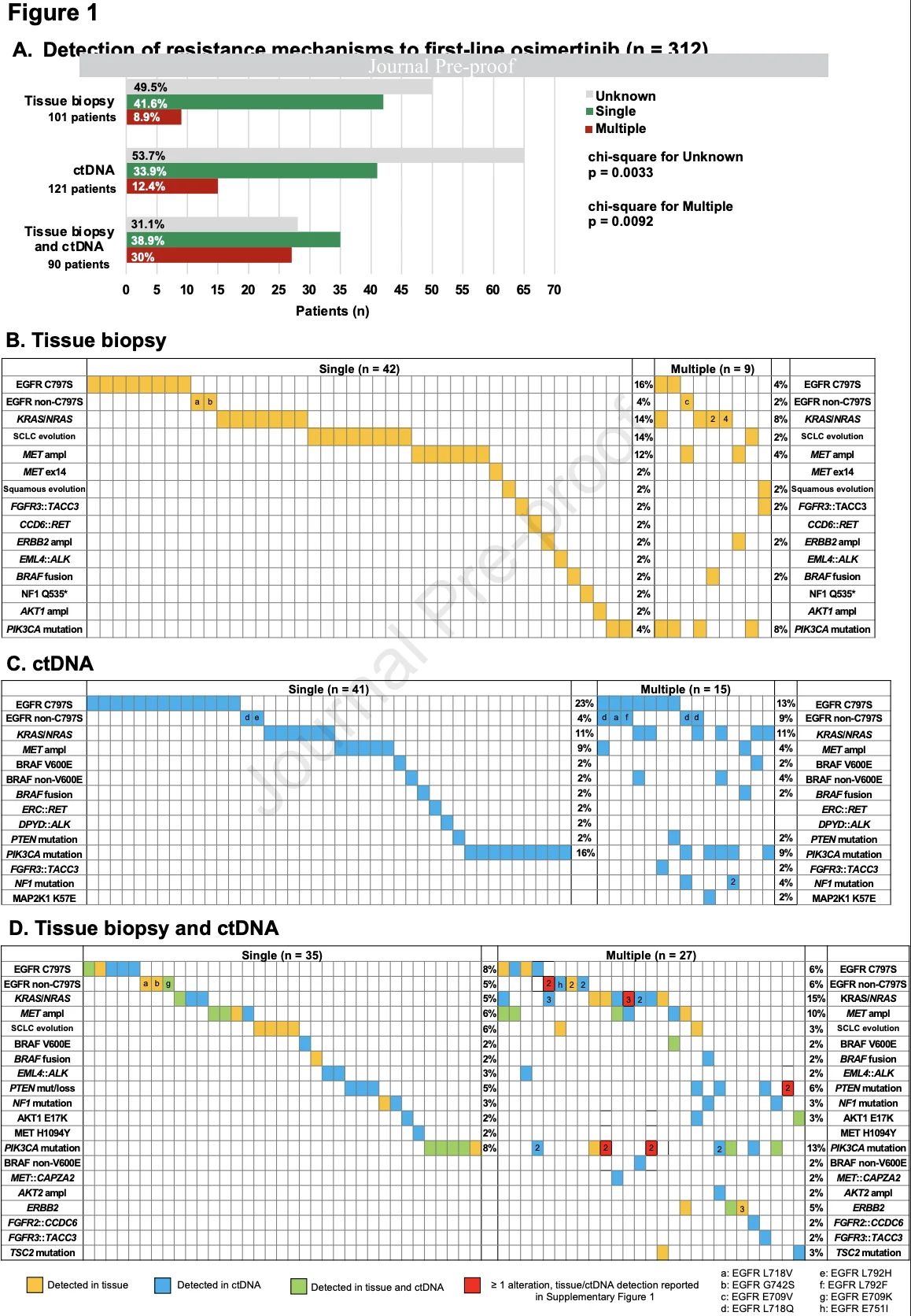
The investigators analyzed 312 patients who progressed on first-line osimertinib monotherapy.
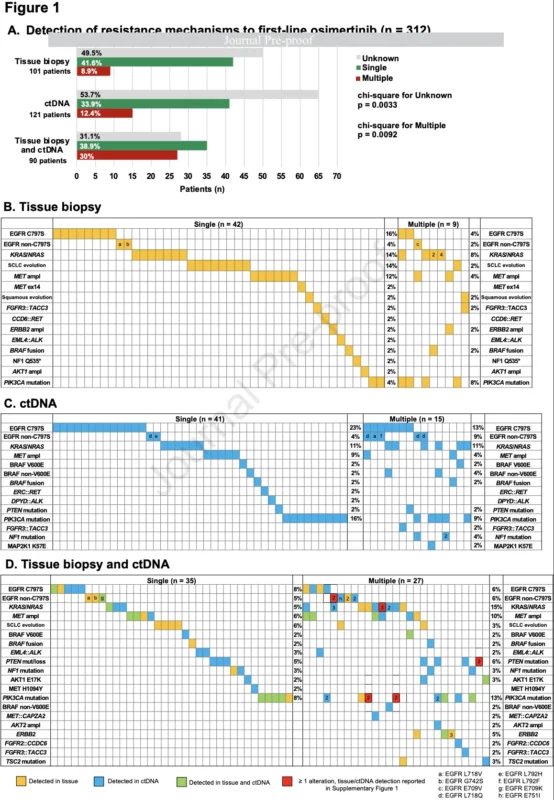
Resistance was evaluated using tissue biopsy alone in 101 patients, circulating tumor DNA alone in 121, and both tissue and liquid biopsy in 90.
When either modality was used alone, a molecular or phenotypic resistance mechanism remained unidentified in approximately half of patients. As shown in Figure 1 of the paper, resistance remained unknown in 49.5% with tissue biopsy alone and 53.7% with ctDNA alone, compared with 31.1% when both tissue and plasma were evaluated.
The ability to detect multiple simultaneous mechanisms also increased substantially.
Multiple candidate resistance alterations were found in 8.9% with tissue alone, 12.4% with ctDNA alone and 30% when both were available.
This reflects the biological heterogeneity of acquired resistance.
A tissue biopsy provides detailed information from one lesion and can identify histologic transformation and copy-number alterations more reliably. ctDNA, by contrast, can potentially capture molecular clones shed from several metastatic sites at the same time.
Neither completely replaces the other.
Among patients with both assessments and an identifiable resistance mechanism, direct concordance between tissue and liquid biopsy was limited. In many cases, one assay identified information not captured by the other (Facchinetti et al., 2026).
The study therefore supports complementary tissue and plasma profiling at progression whenever clinically feasible.
RAS Alterations Were Found in 11.2% After First-Line Osimertinib
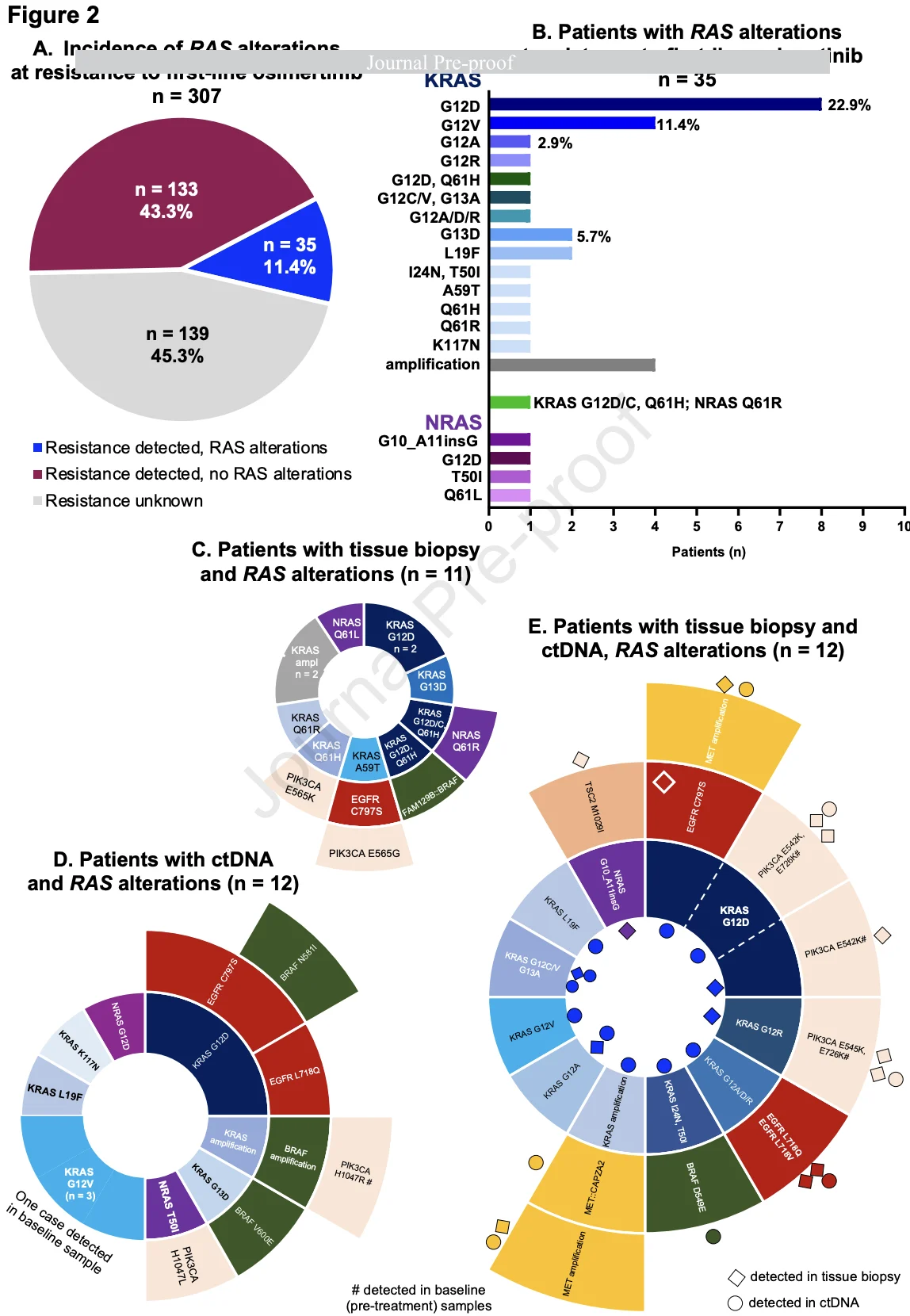
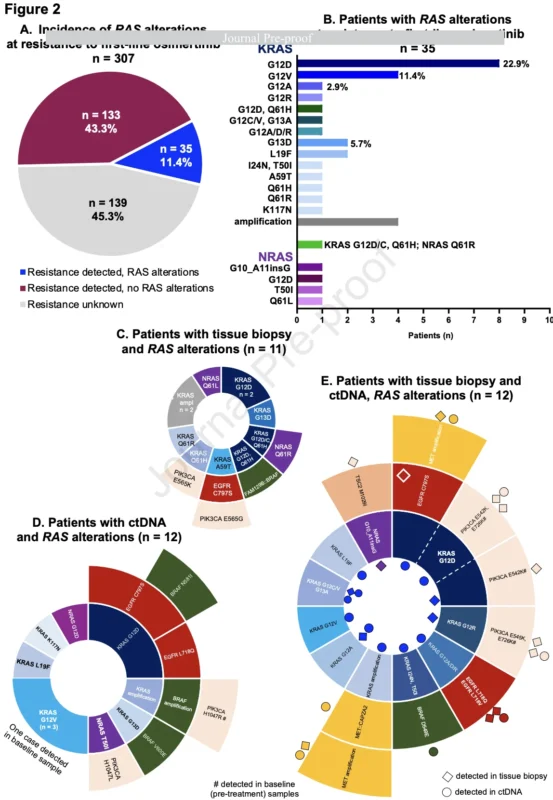
Among the 312 patients progressing on first-line osimertinib, 35 patients, or 11.2%, had RAS alterations detected at resistance.
Importantly, all 35 had experienced acquired rather than primary resistance to osimertinib.
KRAS alterations accounted for most events, although the molecular spectrum differed from conventional de novo KRAS-mutant NSCLC.
The most notable signal was enrichment for KRAS G12D, which was identified in 10 patients across the cohort. KRAS G12V was also observed, together with KRAS G12A, G12R, G13D, Q61 alterations, KRAS amplification and several less common variants.
NRAS mutations were detected in four patients.
In contrast, KRAS G12C was notably uncommon and did not emerge as a frequent isolated mechanism of osimertinib resistance (Facchinetti et al., 2026).
This distribution may partly reflect patient characteristics. Most patients developing RAS-mediated resistance were never or light smokers, a population in which KRAS G12D is proportionally more common than smoking-associated KRAS G12C disease (Riely et al., 2008; Ricciuti et al., 2022).
RAS Resistance Was Frequently Polyclonal
RAS alterations did not always occur alone.
Among the 35 patients with RAS alterations after osimertinib, 17, or 49%, also had another candidate resistance mechanism.
Secondary EGFR mutations occurred in six cases, while BRAF alterations were seen in five. PIK3CA alterations were also detected in several patients, although some PIK3CA mutations were already present before osimertinib and therefore could not necessarily be considered acquired resistance drivers.
Some individual patients developed more than one RAS alteration.
This reinforces an increasingly important principle in resistance biology: progression after targeted therapy may represent polyclonal evolution rather than a single molecular event.
A detectable KRAS mutation may therefore be clinically relevant without necessarily being the only process sustaining resistance.
Variant allele frequency, baseline mutation status, coexisting resistance alterations and the relative abundance of the original driver must all be considered before assuming that a RAS alteration is therapeutically dominant (Facchinetti et al., 2026).
The Pattern Extends Beyond EGFR-Mutant NSCLC
The study next examined whether RAS-mediated escape was specific to osimertinib or represented a broader resistance mechanism across oncogene-driven lung cancer.
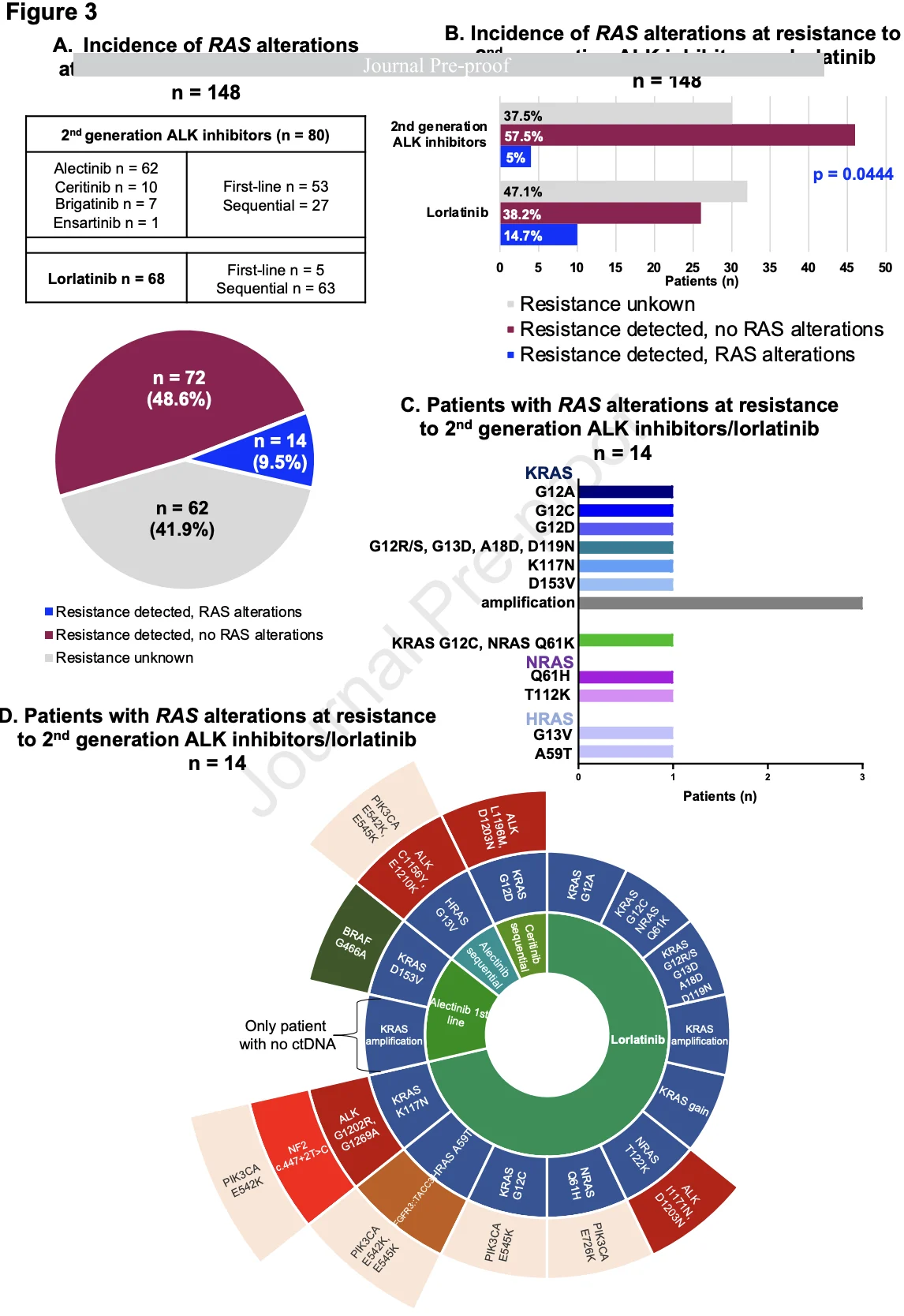
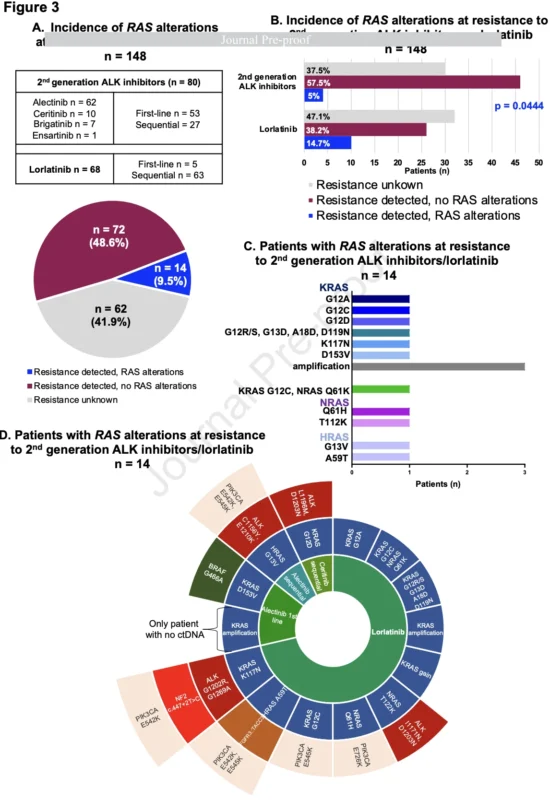
Among 148 patients with ALK-positive NSCLC progressing after second-generation ALK inhibitors or lorlatinib, RAS alterations were identified in 14 patients, or 9.5%.
An important difference emerged according to the ALK inhibitor received.
RAS alterations were detected in:
- 5% after second-generation ALK inhibitors
compared with
- 14.7% after lorlatinib
- with P = 0.0444 (Facchinetti et al., 2026).
Figure 3 of the study illustrates this difference and shows the broad spectrum of KRAS, NRAS and HRAS alterations detected at ALK inhibitor resistance.
However, the finding should not be interpreted as evidence that lorlatinib specifically causes RAS resistance.
Most patients evaluated after lorlatinib had previously received earlier-generation ALK inhibitors. The greater frequency of RAS alterations could therefore reflect longer molecular evolution under sequential targeted therapy.
The observation nevertheless becomes particularly interesting as lorlatinib moves earlier in ALK-positive NSCLC.
More potent ALK inhibition may reduce the frequency of secondary ALK resistance mutations, potentially creating greater selective pressure for tumors to escape through off-target pathways such as RAS-MAPK signaling.
MET-, ROS1- and RET-Driven Tumors Also Developed RAS Alterations
The same phenomenon appeared across additional molecular drivers.
Acquired RAS alterations were found at progression in:
- 7 of 44 patients with MET-driven NSCLC — 16%
- 4 of 43 patients with ROS1-driven NSCLC — 9%
and
- 3 of 43 patients with RET-driven NSCLC — 7%.
Among these 14 patients, RAS alterations represented the only candidate resistance mechanism identified in seven.
In the remainder, they frequently occurred together with on-target mutations affecting the corresponding driver kinase (Facchinetti et al., 2026).
The relatively small numbers within each molecular subgroup prevent identification of a dominant RAS variant.
Nevertheless, the recurrence of RAS alterations across five different oncogenic drivers suggests that RAS activation may function as a convergent escape pathway from highly effective targeted therapies.
Why Would RAS Activation Cause Resistance?
EGFR, ALK, MET, ROS1 and RET ultimately feed into several intracellular signaling networks, including the RAS–RAF–MEK–ERK pathway.
A targeted inhibitor may effectively suppress the initiating oncogene, but an acquired activating RAS alteration can potentially restore downstream signaling independently of that blockade.
This creates a biological bypass.
The original driver may still be inhibited pharmacologically, but the cancer no longer depends exclusively on that driver for downstream pathway activation.
This mechanism also explains why simply continuing the original inhibitor may no longer be sufficient.
At the same time, inhibiting RAS alone may not fully suppress every tumor clone because some cells may remain dependent on the original oncogenic driver.
That provided the rationale for testing dual inhibition of EGFR and RAS.
Zoldonrasib Restored Sensitivity in KRAS G12D-Mediated Resistance
The investigators established a patient-derived model known as DFCI-773 from a liver biopsy obtained when a patient with EGFR exon 19 deletion-positive NSCLC progressed on first-line osimertinib.
The resistant tumor retained the original EGFR exon 19 deletion but had acquired KRAS G12D.
The researchers tested osimertinib together with zoldonrasib, also known as RMC-9805, a selective KRAS G12D inhibitor.
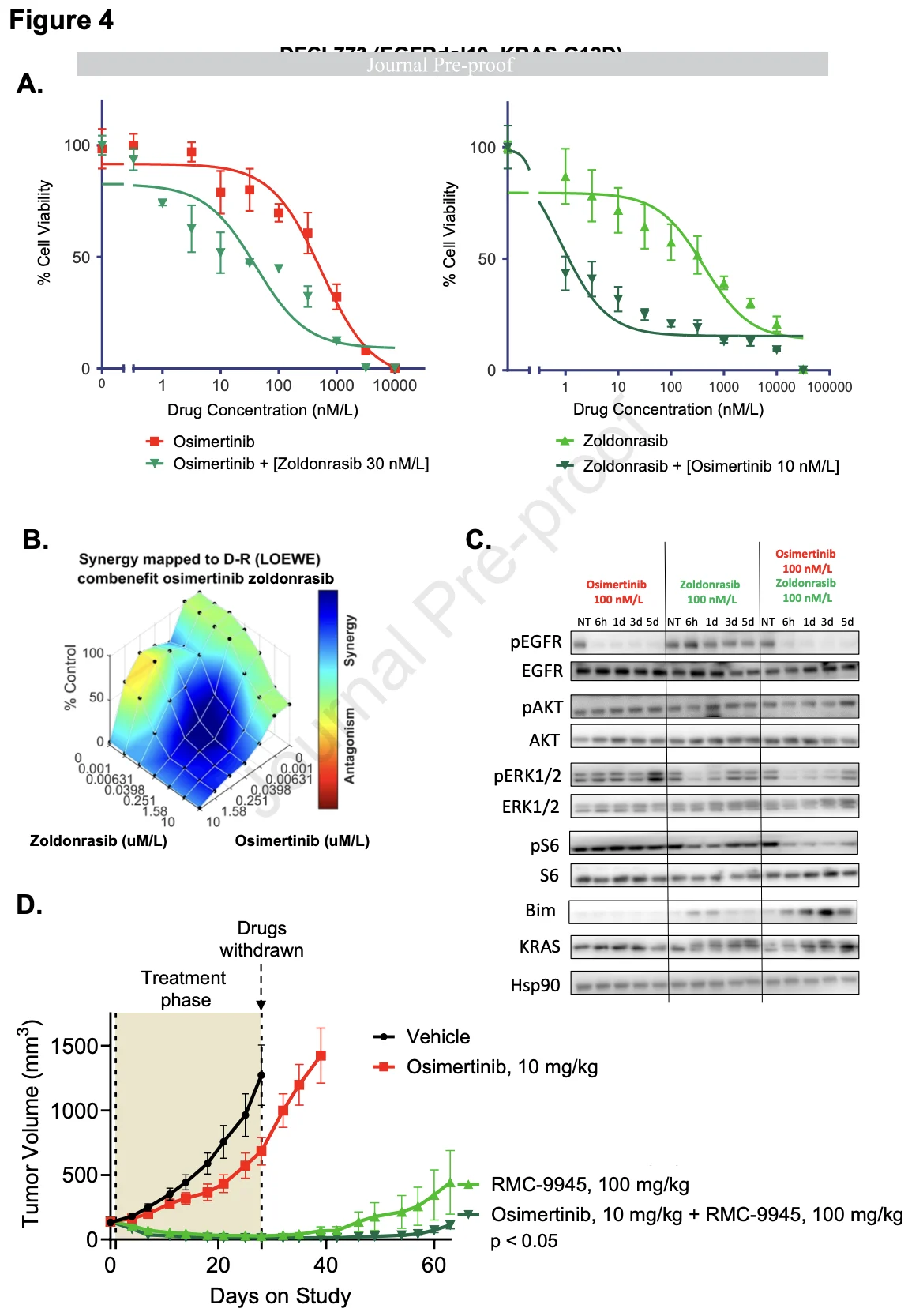
Neither drug alone produced strong inhibition of cell viability at the concentrations required in the resistant cell model.
When combined, however, a pronounced synergistic effect emerged.
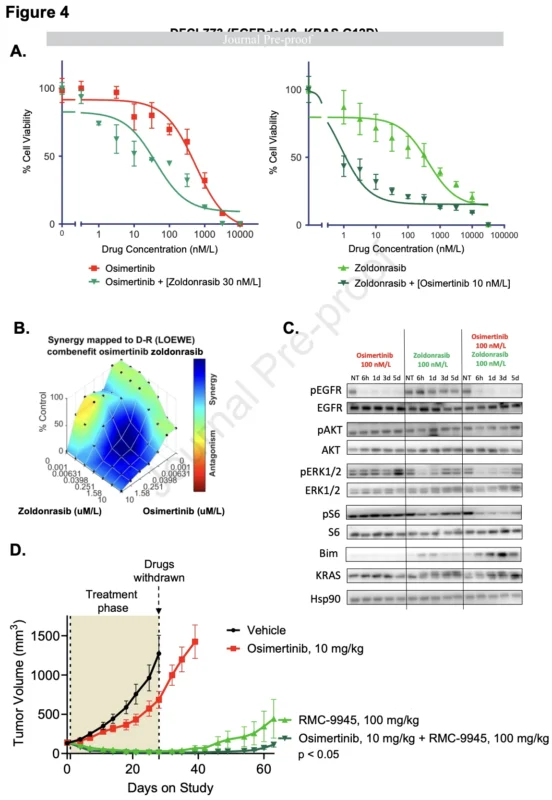
Osimertinib effectively inhibited EGFR phosphorylation but did not adequately suppress downstream ERK, AKT or S6 signaling. Zoldonrasib alone produced only partial and transient downstream inhibition.
The combination generated more sustained suppression of ERK1/2 and S6 phosphorylation and induced stronger expression of the pro-apoptotic protein Bim (Facchinetti et al., 2026).
Figure 4 of the study visually demonstrates this synergy across the cell-viability assays, signaling experiments and patient-derived xenograft model.
The Combination Produced Deep Responses in the Patient-Derived Xenograft
The same biological hypothesis was evaluated in vivo.
In the DFCI-773 xenograft model, osimertinib alone did not prevent tumor growth.
A preclinical KRAS G12D inhibitor related to zoldonrasib, RMC-9945, induced substantial tumor regression.
The combination of osimertinib and RMC-9945 produced complete responses during treatment.
Perhaps more importantly, after treatment was discontinued, tumors previously exposed to combined EGFR and KRAS G12D inhibition demonstrated significantly delayed regrowth compared with KRAS inhibition alone (Facchinetti et al., 2026).
That pattern supports the biological rationale for maintaining inhibition of the original oncogenic driver while simultaneously targeting the acquired resistance pathway.
It remains preclinical evidence and cannot establish clinical efficacy or tolerability.
Pan-RAS Inhibition Could Address a Broader Resistance Spectrum
A mutation-specific KRAS inhibitor is useful only when the corresponding RAS allele is targetable.
The resistance landscape identified in this study was much broader.
The investigators therefore also evaluated daraxonrasib, or RMC-6236, a pan-RAS inhibitor capable of targeting multiple RAS-driven states.
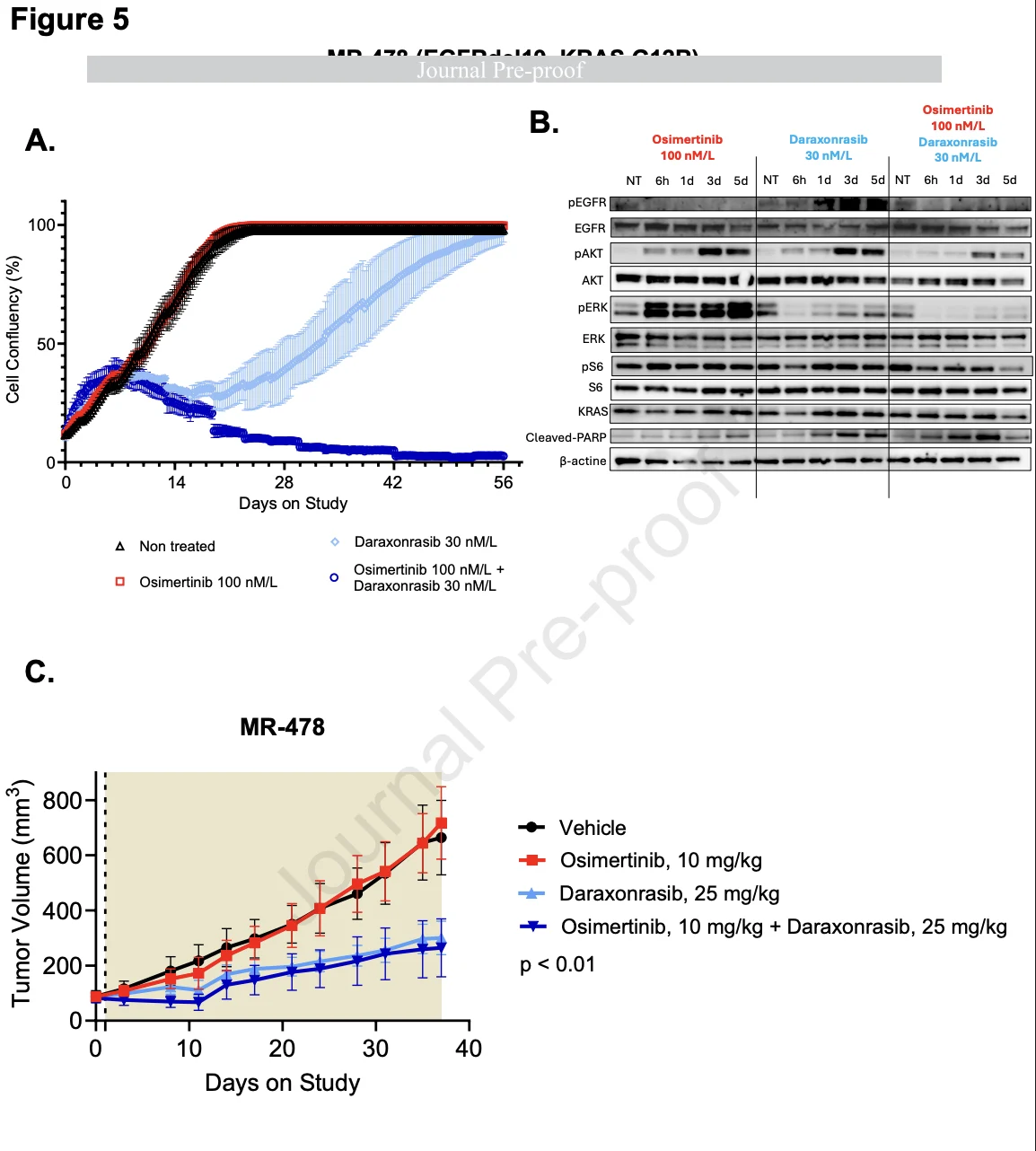
In DFCI-773, osimertinib plus daraxonrasib again showed strong synergy.
A second patient-derived model, MR-478, was then used to investigate a different form of RAS-mediated resistance.
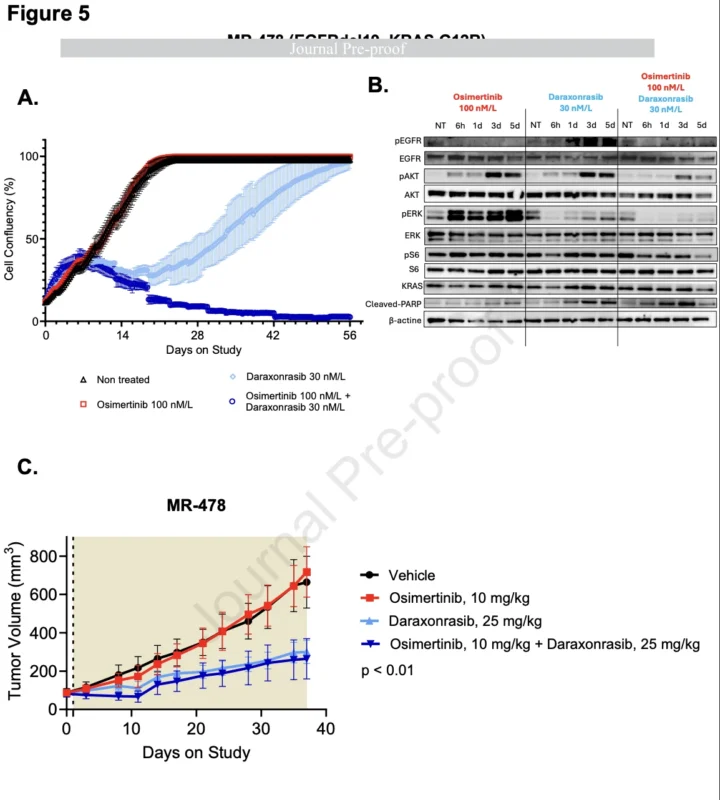
MR-478 retained an EGFR exon 19 deletion and had acquired KRAS G12R, together with PIK3CA E545K, at osimertinib progression.
In cell culture, neither osimertinib nor daraxonrasib alone completely controlled proliferation, whereas their combination produced profound suppression.
The signaling experiments shown in Figure 5 similarly demonstrate stronger inhibition of downstream pathways when EGFR and RAS were targeted together.
In the MR-478 xenograft model, daraxonrasib itself had substantial activity, and adding osimertinib produced less obvious incremental tumor-volume reduction during the treatment period.
The authors therefore appropriately avoid claiming universal superiority of combination therapy across every model.
Instead, the combined biological data suggest that continued inhibition of the original driver together with RAS targeting may provide a rational strategy, particularly where multiple tumor populations or parallel signaling pathways remain active.
KRAS G12D May Become Particularly Relevant
The enrichment of KRAS G12D at osimertinib resistance is clinically notable because KRAS G12D has historically been much harder to target than KRAS G12C.
That landscape is changing.
The study used zoldonrasib specifically because selective KRAS G12D inhibitors have now entered clinical development.
Early clinical data cited by the investigators have already demonstrated antitumor activity of zoldonrasib in previously treated KRAS G12D-mutant NSCLC (Riess et al., 2026).
Daraxonrasib is also being clinically evaluated across RAS-mutant tumors and has shown activity in several RAS-driven cancers (Punekar et al., 2025; Wolpin et al., 2026).
The implication of the current study is different from treating a tumor whose original oncogenic driver is KRAS.
Here, RAS becomes the acquired escape pathway after another targeted therapy.
This may create a new therapeutic setting for RAS inhibitors: not only treating RAS-driven cancers from diagnosis, but potentially reversing acquired RAS-mediated resistance to other oncogene-targeted therapies.
RAS Alterations Must Be Interpreted Carefully in ctDNA
Not every RAS alteration detected in plasma necessarily originates from the tumor.
KRAS and NRAS mutations can occasionally arise from clonal hematopoiesis of indeterminate potential, or CHIP, creating potential false-positive plasma results.
The investigators therefore examined whether detected RAS alterations were already present before treatment.
In most evaluable cases, they were absent at baseline, supporting their emergence during tumor evolution.
However, one patient had KRAS G12V detected in pretreatment ctDNA but not in tumor tissue. The patient subsequently experienced a prolonged response to osimertinib, and the KRAS G12V variant allele frequency actually declined at progression.
The authors considered CHIP a plausible explanation in this case.
This illustrates why a RAS alteration identified in ctDNA should not automatically trigger a RAS-directed treatment strategy.
Its biological relevance should be assessed according to baseline status, variant allele frequency, tumor fraction, tissue confirmation when possible and the presence of competing resistance mechanisms (Facchinetti et al., 2026).
Resistance Testing May Need to Become Broader, Not Narrower
The study also raises a practical diagnostic question.
If increasingly effective targeted therapies generate increasingly heterogeneous resistance, testing only for the most familiar resistance alteration may become insufficient.
After first-line osimertinib, for example, progression can involve secondary EGFR mutations, MET amplification, oncogenic fusions, RAS pathway activation, histologic transformation and combinations of several mechanisms.
The paired-biopsy findings illustrate this complexity.
In patients with both tissue and liquid profiling, multiple candidate resistance mechanisms were identified in approximately 30%.
Tissue remains particularly important when small-cell or squamous transformation is suspected. In this cohort, small-cell transformation was detected in 8% of patients undergoing tissue biopsy at osimertinib progression, while squamous transformation occurred in approximately 1% (Facchinetti et al., 2026).
ctDNA cannot adequately diagnose these phenotypic transformations.
Conversely, plasma testing can identify molecular heterogeneity distributed across different metastatic lesions that may be missed by a single-site biopsy.
Resistance profiling may therefore increasingly require integrated molecular and pathological reassessment, rather than a single-test approach.
How Does This Fit With the Changing First-Line EGFR Landscape?
The treatment landscape for advanced EGFR-mutant NSCLC is no longer limited to osimertinib monotherapy.
First-line strategies now include osimertinib combined with platinum-pemetrexed chemotherapy and amivantamab plus lazertinib (Planchard et al., 2023; Cho et al., 2024).
These more intensive strategies change selective pressure on tumors but do not eliminate acquired resistance.
The authors note that RAS-mediated resistance continues to appear in datasets evaluating newer treatment approaches.
This means future treatment after progression may increasingly depend not only on what first-line therapy was used, but on which resistance clone emerged under that therapy.
A patient whose disease acquires MET amplification may require a different strategy from one developing EGFR C797S, small-cell transformation or KRAS G12D.
The concept moves subsequent-line treatment away from a universal post-progression regimen and toward mechanism-directed salvage therapy.
RAS-Mediated Resistance May Become More Important as Targeted Therapies Improve
One of the study’s broader implications concerns the evolution of precision oncology itself.
Earlier generations of targeted therapies frequently failed because the original target acquired mutations that prevented drug binding.
Newer inhibitors are increasingly designed to overcome those alterations or prevent them from developing.
As on-target resistance becomes harder for the tumor to achieve, selective pressure may shift toward off-target signaling pathways.
The ALK results illustrate this possibility.
RAS alterations occurred more frequently after lorlatinib than after second-generation ALK inhibitors. Although treatment sequencing complicates interpretation, the result is consistent with the hypothesis that highly potent inhibition of ALK may increasingly force tumors to find alternative signaling routes.
The same principle could potentially apply across other oncogene-driven malignancies.
The paper notes that RAS-mediated resistance has also been described in FGFR-driven cancers and RET-driven medullary thyroid carcinoma (Facchinetti et al., 2024; Hadoux et al., 2023).
RAS may therefore represent one of several convergent escape pathways produced by increasingly effective precision therapies.
Clinical Translation Remains the Major Unanswered Question
The study establishes biological plausibility but does not demonstrate that EGFR-RAS combinations improve outcomes in patients with acquired resistance.
The therapeutic experiments were performed in only two patient-derived resistance models.
The clinical cohort itself was retrospective and used multiple molecular platforms across several institutions.
Baseline molecular profiling was not uniformly available, which means an acquired origin could not be conclusively demonstrated for every alteration.
Some detected RAS clones also had relatively low variant allele frequencies, raising uncertainty about whether they were dominant enough to drive clinically meaningful resistance.
Most importantly, the efficacy and toxicity of combining RAS inhibitors with the original targeted therapy remain to be established prospectively.
The central clinical hypothesis generated by this work therefore requires biomarker-selected trials in patients with confirmed RAS-mediated resistance.
The Bottom Line
The Annals of Oncology study by Facchinetti and colleagues identifies RAS activation as a recurring molecular escape route across oncogene-driven lung cancer.
Among 312 patients progressing on first-line osimertinib, 35, or 11.2%, had RAS alterations, with enrichment for KRAS G12D.
RAS alterations were also observed in 9.5% of ALK-positive NSCLC overall, including 14.7% following lorlatinib versus 5% following second-generation ALK inhibitors.
They were detected in 16% of MET-driven, 9% of ROS1-driven and 7% of RET-driven NSCLC after targeted therapy.
The study also demonstrates why resistance profiling increasingly requires both tissue and plasma. When both were available after osimertinib progression, unknown resistance decreased and detection of multiple simultaneous mechanisms increased substantially.
Most importantly, the investigators transformed the molecular observation into a therapeutic hypothesis.
In patient-derived EGFR-mutant models with acquired KRAS G12D or KRAS G12R, selective KRAS G12D inhibition with zoldonrasib-related compounds and pan-RAS inhibition with daraxonrasib-related strategies restored strong antitumor activity, particularly when combined with continued EGFR inhibition in several experimental settings.
These results do not yet establish a new clinical treatment strategy.
They do, however, suggest that RAS-mediated resistance may be moving from an explanatory biomarker toward a potentially actionable form of acquired resistance.
As targeted therapies become more potent, the next phase of precision oncology may increasingly depend on understanding not only the original oncogenic driver, but the new dependency created when the tumor escapes it.
References
- Facchinetti F, Friboulet L, Liao L, et al. Therapeutic targeting of RAS-mediated resistance in oncogene-driven lung cancer. Annals of Oncology. 2026. doi:10.1016/j.annonc.2026.08.004.
- Yu HA, Tang KH, Markovets AA, et al. Genomic profiling of epidermal growth factor receptor mutation-positive non-small cell lung cancer post-progression on first-line osimertinib: Phase II ORCHARD study. Clinical Cancer Research. 2026.
- Piotrowska Z, Ahn MJ, Voon PJ, et al. ELIOS: a multicenter molecular profiling study of patients with EGFR-mutant advanced non-small cell lung cancer treated with first-line osimertinib. Cancer Discovery. 2026.
- Chmielecki J, Gray JE, Cheng Y, et al. Candidate mechanisms of acquired resistance to first-line osimertinib in EGFR-mutated advanced non-small cell lung cancer. Nature Communications. 2023;14:1070.
- Planchard D, Jänne PA, Cheng Y, et al. Osimertinib with or without chemotherapy in EGFR-mutated advanced NSCLC. New England Journal of Medicine. 2023;389:1935-1948.
- Cho BC, Lu S, Felip E, et al. Amivantamab plus lazertinib in previously untreated EGFR-mutated advanced NSCLC. New England Journal of Medicine. 2024;391:1486-1498.
- Ricciuti B, Alessi JV, Elkrief A, et al. Dissecting the clinicopathologic, genomic, and immunophenotypic correlates of KRAS G12D-mutated non-small-cell lung cancer. Annals of Oncology. 2022;33:1029-1040.
- Riess J, Haura E, Yaeger R, et al. Preliminary safety and clinical activity of zoldonrasib (RMC-9805) in previously treated KRAS G12D non-small cell lung cancer. Presented at AACR Annual Meeting 2026.
- Punekar SR, Hong DS, Luo J, et al. Safety and clinical activity of daraxonrasib (RMC-6236) in RAS-mutant non-small cell lung cancer. Journal of Thoracic Oncology. 2025;20:S10-S11.
- Wolpin BM, Park W, Garrido-Laguna I, et al. Daraxonrasib in previously treated advanced RAS-mutated pancreatic cancer. New England Journal of Medicine. 2026;394:1790-1802.