
A new study published in Cell suggests that lung cancer prevention may one day move beyond smoking history, CT eligibility, and broad population risk estimates toward a more molecularly guided approach.
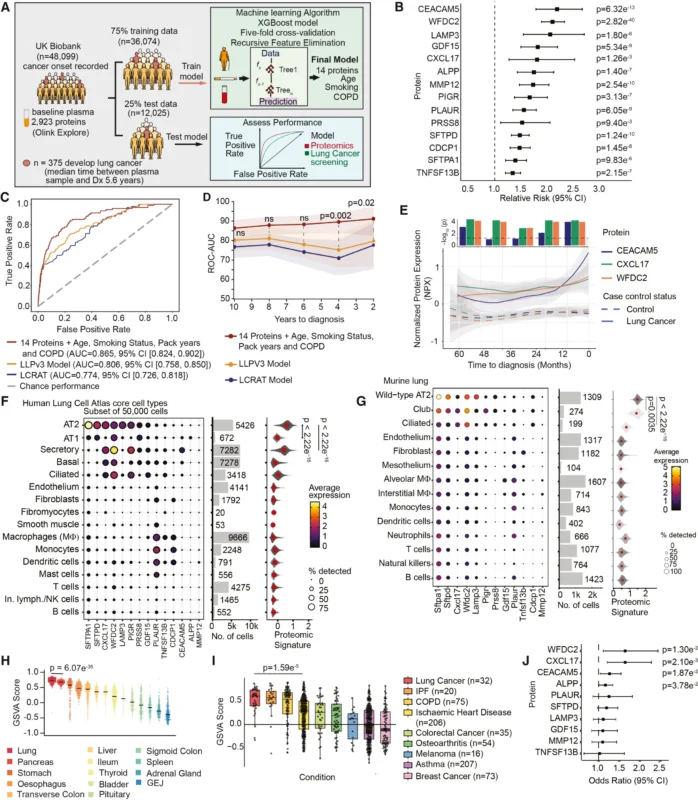
In the study, Pandya and colleagues identified a 14-protein plasma signature that predicted future lung cancer risk more than 5 years before diagnosis. The signature was developed using machine learning, validated across multiple external cohorts, linked to environmental exposures such as smoking and particulate matter, and explored as a potential tool to identify individuals who may benefit from anti–IL-1β-based lung cancer prevention.
The findings do not mean that a blood test is ready for routine clinical lung cancer prevention. However, they provide an important scientific framework: lung cancer risk may be detectable in the blood before cancer becomes clinically visible, and these circulating signals may reflect a tumor-promoting inflammatory lung environment rather than established malignancy.
Crown Copyright © 2026 Published by Elsevier Inc.
Why This Study Matters
Lung cancer screening with low-dose CT has improved early detection, but current screening programs largely rely on age and smoking history. These criteria are useful, but imperfect. Many individuals who develop lung cancer, including light smokers and never-smokers, may not meet standard screening eligibility. At the same time, the overall lung cancer incidence within broad high-risk populations remains low, making prevention trials difficult to design efficiently.
The CANTOS trial previously showed that inhibition of interleukin-1β with canakinumab was associated with reduced lung cancer incidence, but the high number needed to treat limited its use in unselected populations. Pandya and colleagues approached this challenge from a different angle: instead of asking whether anti-inflammatory prevention could work for everyone, they asked whether circulating molecular signals could identify those most likely to benefit.
This is the central concept of the paper: molecular cancer prevention requires molecular risk selection.
A 14-Protein Signature Detected Years Before Diagnosis
The authors used population-scale proteomic data from the UK Biobank, analyzing 2,923 plasma proteins from baseline blood samples and linking them to future lung cancer diagnoses. The machine learning framework included 48,099 individuals, among whom 375 later developed lung cancer. The median time between plasma sampling and lung cancer diagnosis was 5.6 years.
From this analysis, the investigators identified a final model combining 14 plasma proteins with clinical characteristics: age, smoking status, pack-years, and history of COPD. The 14 proteins included signals related to inflammation, epithelial secretion or shedding, extracellular matrix remodeling, and pulmonary surfactant biology. These included proteins such as CXCL17, GDF15, WFDC2, CEACAM5, LAMP3, SFTPD, SFTPA1, PLAUR, MMP12, CDCP1, PIGR, PRSS8, ALPP, and TNFSF13B.
The model performed better than established lung cancer screening risk models in the held-out UK Biobank test set. The combined 14-protein and clinical model achieved an AUC of 0.865, compared with 0.806 for the Liverpool Lung Project version 3 model and 0.774 for the LCRAT model. The greatest improvement was seen in the period 2–4 years before diagnosis, suggesting that the signature may capture biologic changes occurring before clinical detection.
Crown Copyright © 2026 Published by Elsevier Inc.
Validation Across Multiple Cohorts
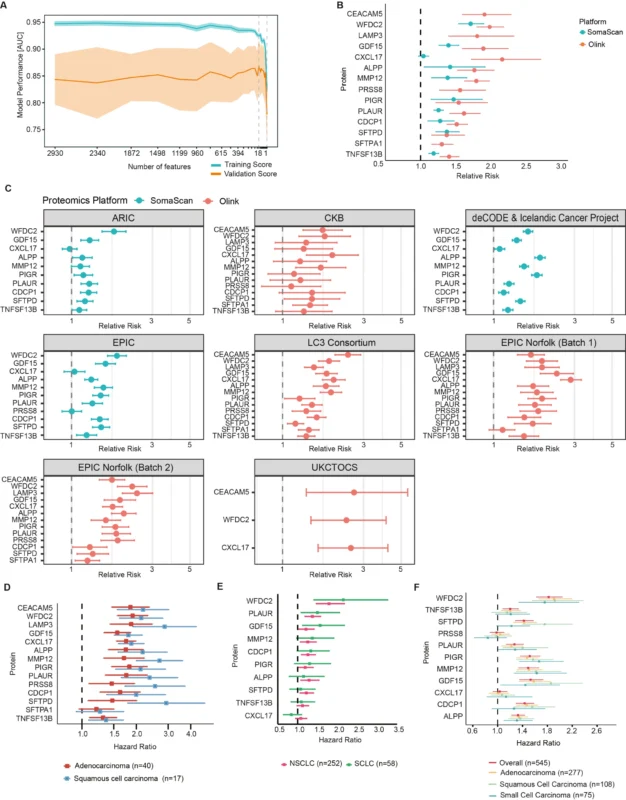
A key strength of the study is that the signal was not limited to one dataset. The 14 proteins were evaluated across eight external datasets, including cohorts from the UK, United States, Iceland, China, and multinational populations. Across these validation datasets, all 14 proteins were positively associated with future lung cancer incidence.
The authors also explored the signature in the TALENT study, a predominantly never-smoker lung cancer screening cohort from Taiwan. This was important because lung cancer in never-smokers is a growing clinical and public health concern, especially in East Asian populations. In TALENT, several proteins and the overall signature were associated with future lung cancer diagnosis, suggesting potential relevance beyond heavy-smoking populations.
The Signature May Reflect A Tumor-Promoting Lung Environment
One of the most interesting aspects of the study is that the signature did not appear to simply represent proteins shed by an established tumor. Instead, the data suggest it reflects a perturbed lung microenvironment that may promote tumor initiation.
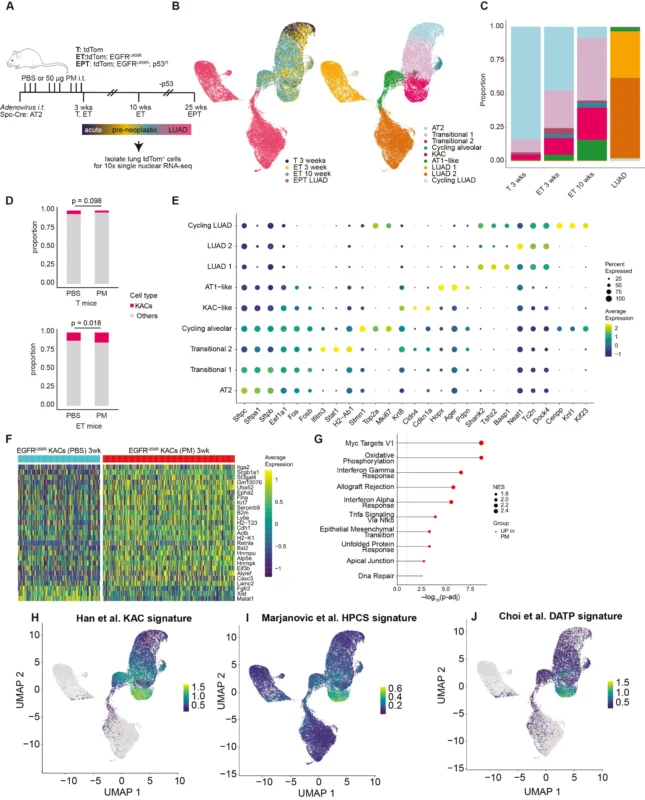
The authors found that the signature was enriched in lung-associated cell types, particularly alveolar type 2 cells, secretory epithelial cells, myeloid cells, and fibroblasts. In mouse models of EGFR-driven lung adenocarcinoma, diverse epithelial lineages could give rise to lung adenocarcinoma, but they converged on a keratin 8+/claudin 4+ alveolar transitional state, referred to as a KAC state.
This transitional state is important because it may represent a biologic bottleneck between lung injury, epithelial repair, and malignant transformation. In other words, the study suggests that lung cancer risk may emerge not only from the presence of driver mutations, but also from the inflammatory and regenerative context in which mutant cells exist.
Crown Copyright © 2026 Published by Elsevier Inc.
Air Pollution, Smoking, EGFR Mutation, And IL-1β
The study also connects the plasma signature to environmental and inflammatory tumor-promoting factors. The signature was elevated in current smokers, and in the UK Biobank all 14 proteins were associated with ever-smoking compared with never-smoking. In TRACERx, the signature was higher in current smokers compared with former or never-smokers.
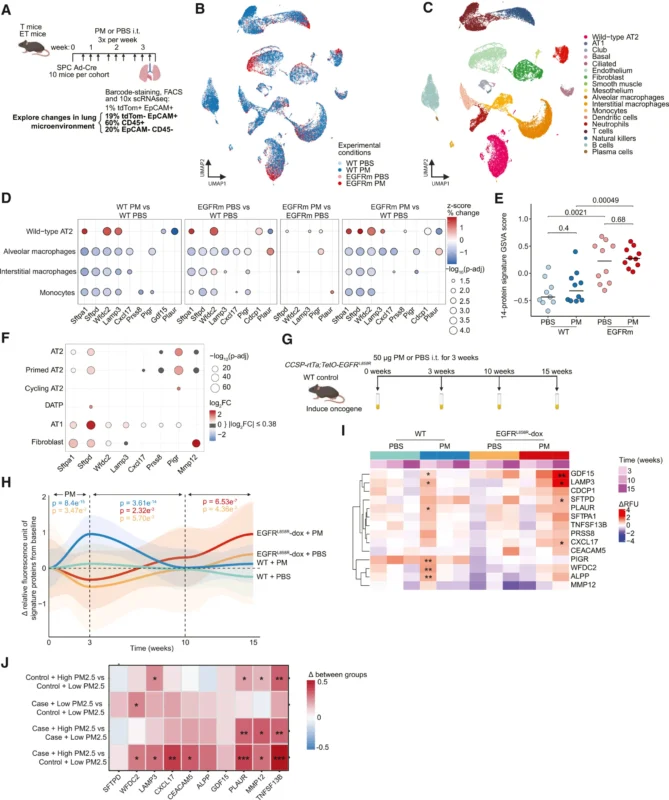
Particulate matter exposure also appeared to influence the signature. In a controlled diesel exhaust exposure study, acute exposure increased several myeloid- and fibroblast-associated proteins. In TALENT, the combined signature was highest in individuals exposed to elevated particulate matter who later developed lung cancer.
Mechanistically, the authors showed that particulate matter, oncogenic EGFR, and IL-1β could elevate components of the signature. IL-1β exposure induced epithelial-associated components of the signature in lung organoid systems, while IL-1β blockade restrained particulate matter-driven KAC expansion and early tumorigenesis in preclinical models.
This supports a model in which environmental exposures and oncogenic mutations converge through inflammatory pathways to create a lung environment favorable to tumor initiation.
CANTOS: Moving Toward Biomarker-Guided Prevention
The most clinically provocative part of the study comes from the retrospective analysis of the CANTOS proteomic sub-cohort.
CANTOS was a randomized, double-blind, placebo-controlled phase 3 trial of canakinumab, an anti–IL-1β antibody, originally conducted in patients with prior myocardial infarction and elevated inflammatory markers. Earlier analyses had suggested that canakinumab reduced lung cancer incidence, but the challenge was identifying who should receive such preventive therapy.
In the current analysis, the authors evaluated serum proteomic data from 4,651 CANTOS participants. Higher levels of the 14-protein signature were significantly associated with higher lung cancer incidence after adjustment for age, smoking status, and BMI. Participants with a higher baseline signature had a lung cancer incidence of 2.67%, compared with 0.73% among those with a lower baseline signature.
The prevention signal was strongest in the high-signature group. Canakinumab reduced cumulative lung cancer incidence from 3.88% with placebo to 2.06% with canakinumab in the high-signature group, while no meaningful reduction was observed in the low-signature group. This translated into a reduction in the number needed to treat from 1,516 in the low-signature group to 55 in the high-signature group.
This does not establish canakinumab as a routine lung cancer prevention therapy. The analysis was retrospective and hypothesis-generating. But it shows how a circulating proteomic signature could potentially enrich prevention studies for individuals most likely to benefit.
Crown Copyright © 2026 Published by Elsevier Inc.
Clinical Meaning
This study is important because it shifts the discussion from detecting early cancer to detecting a pre-cancer-promoting state.
Most liquid biopsy approaches in oncology focus on tumor-derived signals, such as circulating tumor DNA. Those tests typically require the presence of enough tumor material to detect. By contrast, this plasma proteomic signature may reflect the inflammatory and epithelial changes that precede clinically detectable disease.
That distinction matters. If validated prospectively, such signatures could help identify individuals for intensified surveillance, prevention trials, or targeted anti-inflammatory strategies before cancer becomes established.
The work also helps explain why anti–IL-1β therapy may reduce lung cancer incidence but fail in established NSCLC. Once cancer is clinically apparent, the biology may have moved beyond an IL-1β-dependent prevention window. The intervention may need to occur earlier, when inflammatory tumor promotion is still shaping the premalignant niche.
Key Takeaway
Pandya and colleagues identified a 14-protein plasma signature that predicted lung cancer risk more than 5 years before diagnosis, improved risk prediction when combined with clinical variables, and was validated across multiple cohorts.
The signature appears to reflect a lung-specific inflammatory, tumor-promoting state influenced by smoking, particulate matter, oncogenic EGFR signaling, and IL-1β. In a retrospective CANTOS analysis, it also identified individuals who appeared to derive greater lung cancer prevention benefit from anti–IL-1β therapy.
The findings support a future in which lung cancer prevention may become more molecularly precise: not only identifying who is at risk, but also identifying which biologic pathway may be targetable before cancer is clinically visible.