Relapsed extensive-stage small cell lung cancer remains one of the most difficult settings in thoracic oncology. Although many patients initially respond to platinum-based chemotherapy and immunotherapy, disease progression commonly occurs within months, and later-line treatment options often provide limited and short-lived benefit.
A phase Ib study published in the Journal of Clinical Oncology has now reported encouraging activity with izalontamab brengitecan, also known as iza-bren or BL-B01D1, in patients with previously treated extensive-stage small cell lung cancer.
Across the full study cohort, iza-bren produced an objective response rate of 48.1%. The most notable signal emerged among patients who received the drug as second-line treatment, where the response rate reached 72.7%, median progression-free survival was 6.2 months, and median overall survival was 15.0 months.
These results require confirmation in a randomized trial, but they position dual EGFR-HER3 targeting as a new investigational strategy in relapsed SCLC (Zhao et al., 2026).
A Bispecific ADC Built Around Two Unconventional SCLC Targets
Most antibody-drug conjugate development in SCLC has focused on targets more closely associated with neuroendocrine lineage biology, including DLL3 and B7-H3. Iza-bren follows a different approach by simultaneously targeting epidermal growth factor receptor and human epidermal growth factor receptor 3.
Neither EGFR nor HER3 is considered a classical therapeutic target in SCLC. However, EGFR protein expression has been reported in a subset of tumors, while HER3 has been implicated in cell survival, lineage plasticity, treatment tolerance, and resistance.
Iza-bren combines a bispecific immunoglobulin G1 antibody backbone with Ed-04, a topoisomerase I inhibitor payload. The payload is attached through a cleavable linker, and the drug has a reported drug-to-antibody ratio of eight.
By engaging both EGFR and HER3, iza-bren is designed to promote internalization and intracellular release of its cytotoxic payload, including in tumors where individual receptor density may be modest. This dual-targeting structure may also help address the intratumoral heterogeneity that characterizes relapsed SCLC (Zhao et al., 2026).
The Phase Ib ES-SCLC Expansion Cohort
The findings come from the SCLC dose-expansion cohort of BL-B01D1-101, an open-label, multicenter phase I study registered as NCT05194982.
Eligible patients had histologically or cytologically confirmed SCLC, measurable disease, an Eastern Cooperative Oncology Group performance status of 0 or 1, and progression after previous systemic treatment. Patients with active brain metastases were excluded.
Participants received iza-bren at 2.5 mg/kg intravenously on days 1 and 8 of each three-week cycle. Objective response rate and safety were the primary endpoints. Secondary endpoints included disease control rate, duration of response, progression-free survival, and overall survival.
No formal hypothesis testing was planned for the expansion cohort. The study was designed to generate a preliminary estimate of antitumor activity and further characterize the drug’s safety profile.
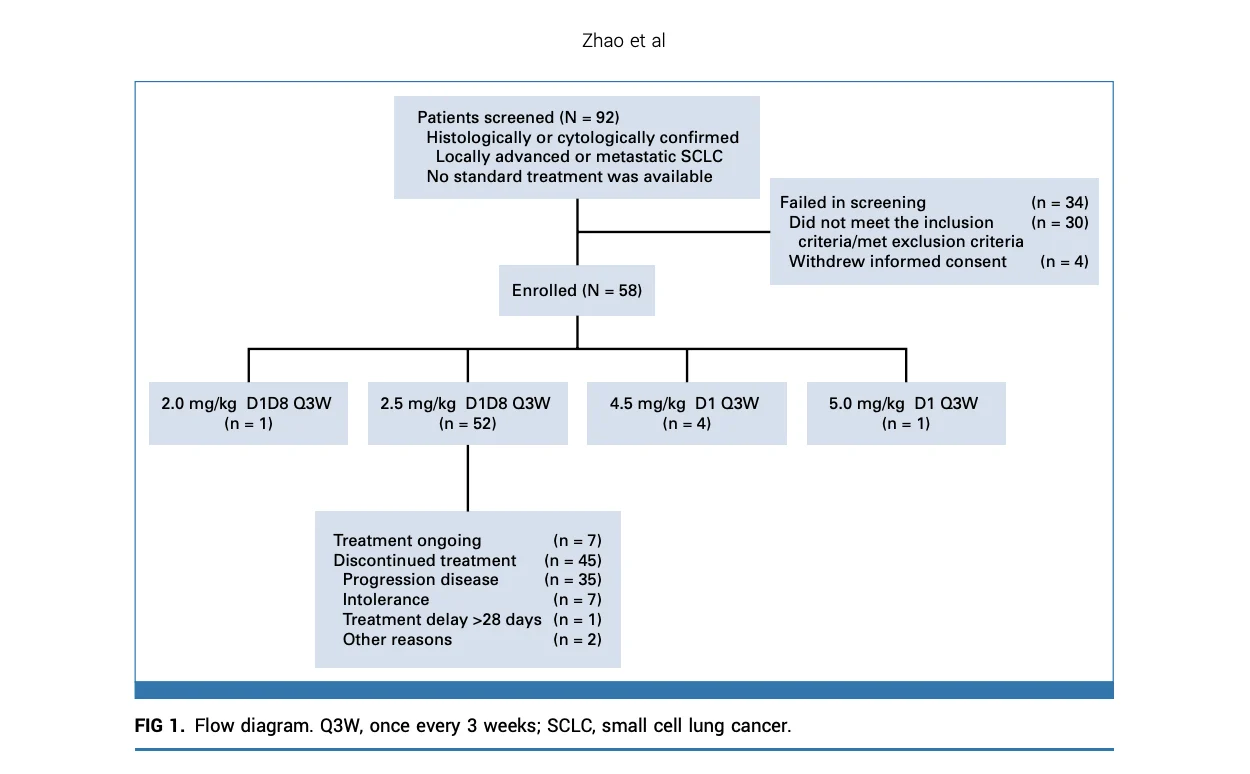
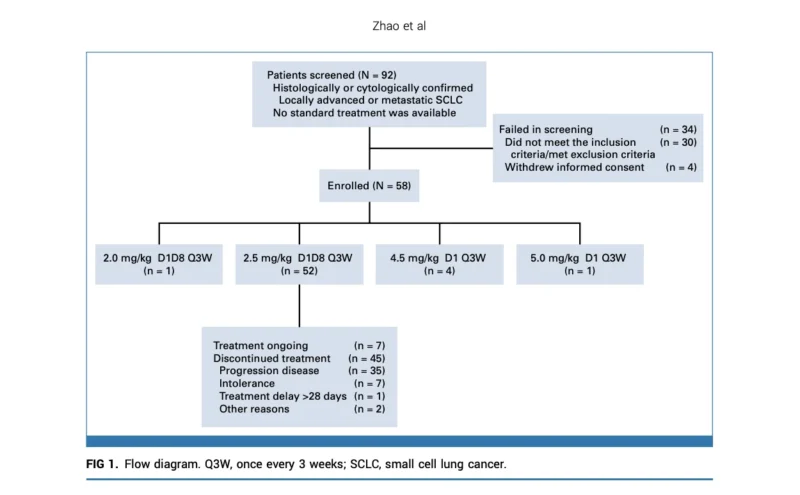
As of the December 5, 2024, data cutoff, 52 patients had received the selected dose. The median age was 60.5 years, and 80.8% of participants were men. Nearly all had an ECOG performance status of 1.
All patients had previously received platinum-based chemotherapy, while 84.6% had received anti–PD-1 or anti–PD-L1 immunotherapy. Seventeen patients, representing 32.6% of the cohort, had brain metastases at screening, although active brain metastases were not permitted.
The study included a clinically heterogeneous relapsed population. Twenty-two patients received iza-bren after one previous treatment line, while 30 had received at least two previous lines. Nineteen patients had previously been treated with irinotecan (Zhao et al., 2026).
Responses Across the Overall Cohort
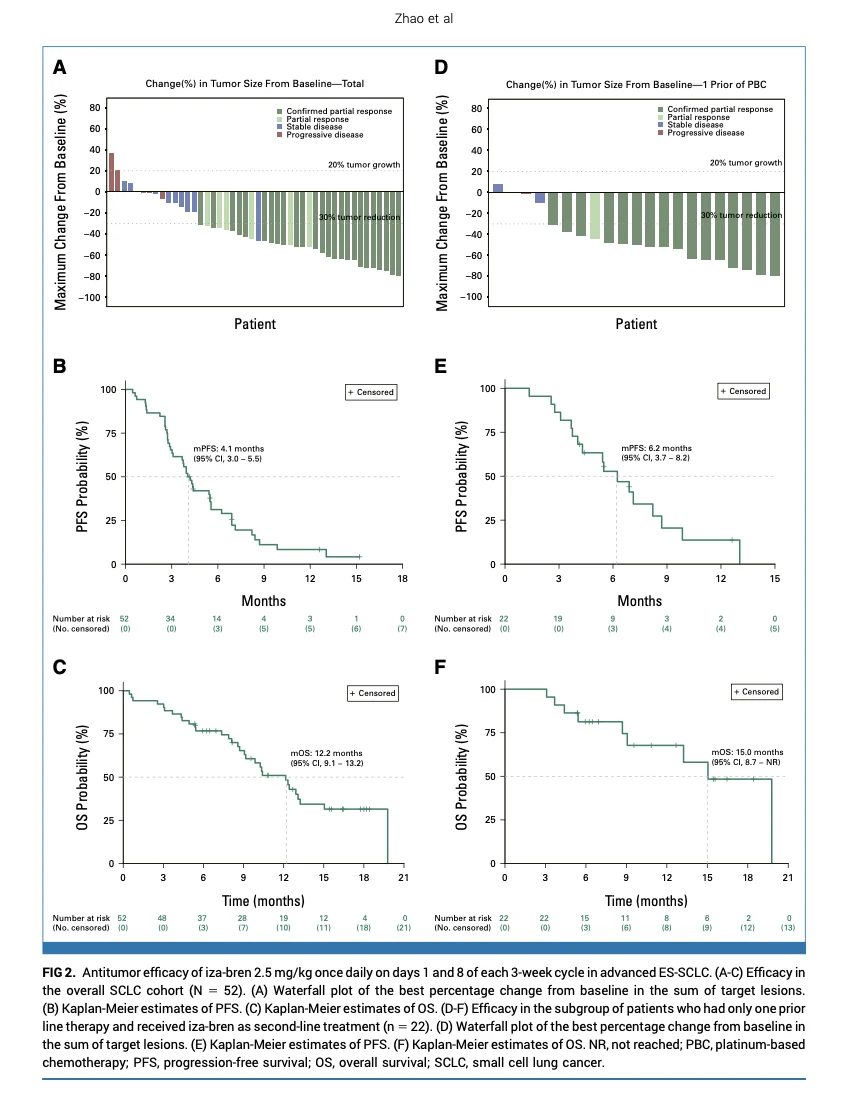
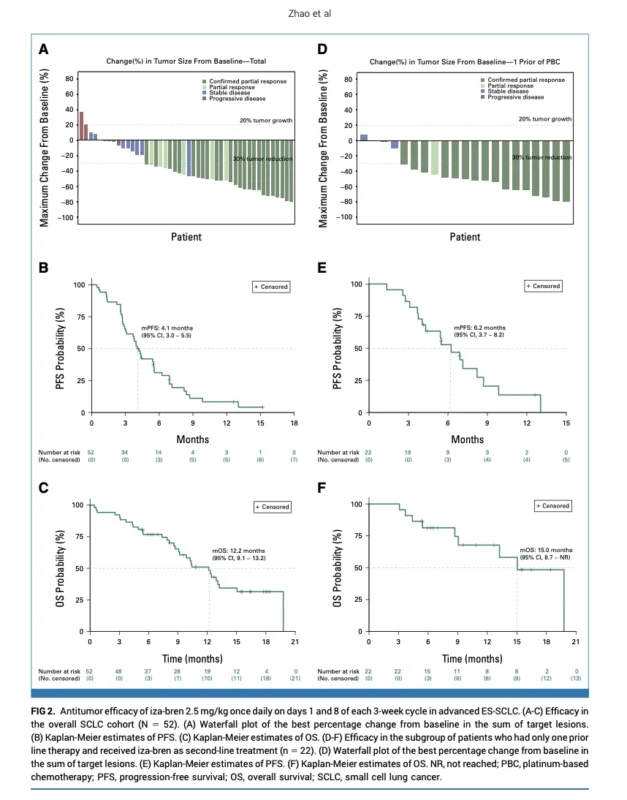
Among all 52 patients, 25 achieved a partial response, producing an objective response rate of 48.1% with a 95% confidence interval of 34.0% to 62.4%.
An additional 17 patients achieved stable disease, resulting in a disease control rate of 80.8%. Six patients did not undergo a post-baseline tumor assessment and were counted as nonresponders in the intention-to-treat analysis.
Median duration of response was 4.9 months. Median progression-free survival was 4.1 months, while median overall survival was 12.2 months.
The waterfall plot presented in Figure 2 of the publication showed substantial tumor shrinkage in many evaluable patients. However, the durability data indicate that responses were often limited in duration, an important consideration when interpreting the high response rate.
The study therefore demonstrates clear antitumor activity, but the clinical value of iza-bren will ultimately depend on whether randomized testing confirms improvements in disease control and survival.
The Strongest Signal Emerged in the Second-Line Setting
The most compelling results were reported among the 22 patients who received iza-bren after only one previous treatment line.
In this subgroup, 16 patients achieved a partial response, corresponding to an objective response rate of 72.7%. The disease control rate was 90.9%.
Median progression-free survival reached 6.2 months, and median overall survival was 15.0 months. Median duration of response remained 4.9 months.
All 22 patients had previously received platinum-based chemotherapy, and 20 had also received a PD-1 or PD-L1 inhibitor during that treatment line.
By comparison, patients who had received two or more previous treatment lines had an objective response rate of 30.0%, median progression-free survival of 3.0 months, and median overall survival of 10.3 months.
This difference suggests that iza-bren may be more active when introduced earlier after frontline therapy. However, this was not a randomized comparison, and patients receiving treatment in later lines may have had more resistant disease, greater cumulative toxicity, or other adverse clinical characteristics.
The second-line result should therefore be viewed as a strong signal for further study rather than evidence that iza-bren is already superior to established options (Zhao et al., 2026).
Activity After Previous Irinotecan
Iza-bren carries a topoisomerase I inhibitor payload, raising the question of whether previous exposure to another topoisomerase I inhibitor could reduce its activity.
Among 19 patients previously treated with irinotecan, the objective response rate was 31.6%, and the disease control rate was 68.4%. Median duration of response was 5.7 months, median progression-free survival was 2.9 months, and median overall survival was 10.3 months.
These findings suggest that iza-bren may retain activity after irinotecan exposure. However, the irinotecan-treated subgroup had received more previous therapy overall, making it difficult to separate payload cross-resistance from the broader effect of later-line treatment.
The platinum-sensitive subgroup also showed activity. Among 13 patients with a treatment-free interval longer than six months after frontline platinum therapy, the response rate was 69.2%, with a disease control rate of 84.6%.
Hematologic Toxicity Was the Main Safety Challenge
Every patient in the safety population experienced at least one treatment-related adverse event. Grade 3 or higher treatment-related adverse events occurred in 75.0% of patients, indicating that toxicity management will be an important part of further development.
The most frequent treatment-related events were predominantly hematologic:
- Anemia occurred in 84.6%, thrombocytopenia in 75.0%, leukopenia in 73.1%, and neutropenia in 71.2% of patients.
- Stomatitis was reported in 36.5%, while nausea, vomiting, diarrhea, electrolyte abnormalities, fatigue, and reduced appetite were also observed.
Treatment-related serious adverse events occurred in 50.0% of patients. Dose delays were required in 63.5%, dose reductions in 46.2%, and treatment discontinuation in 13.5%.
Two patients experienced treatment-related grade 5 events, representing 3.8% of the cohort. One death was attributed to respiratory failure and the other to gastrointestinal infection. Two additional sudden deaths of unknown cause were considered unrelated to the study treatment by the investigators.
No treatment-related interstitial lung disease was reported by the data cutoff. This is notable for an ADC carrying a topoisomerase I inhibitor payload, although the cohort remains too small to define the true incidence of uncommon pulmonary events.
The safety profile was considered manageable by the investigators through supportive care, treatment delays, and dose modification. Nevertheless, the high rate of severe hematologic toxicity means that tolerability will need close evaluation in the randomized phase III setting (Zhao et al., 2026).
Could HER3 Help Select Patients?
The study also explored whether EGFR or HER3 expression was associated with response. Tumor samples were available from only 26 patients, and 23 were evaluable for the response analysis.
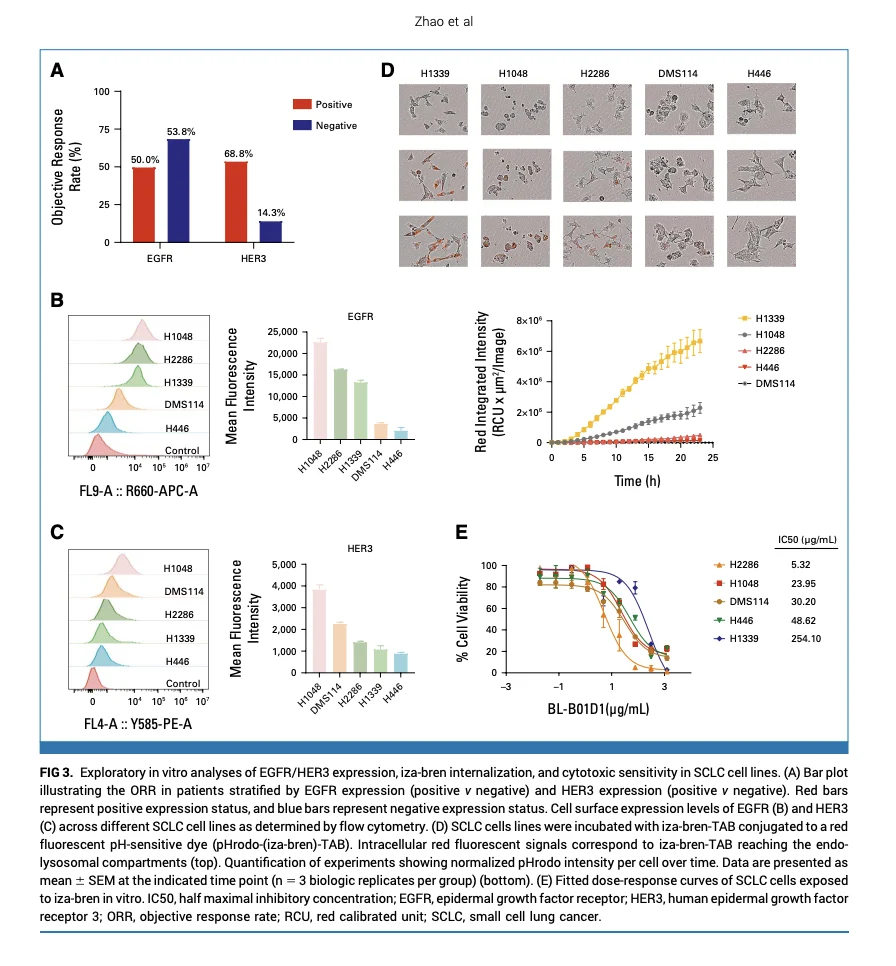
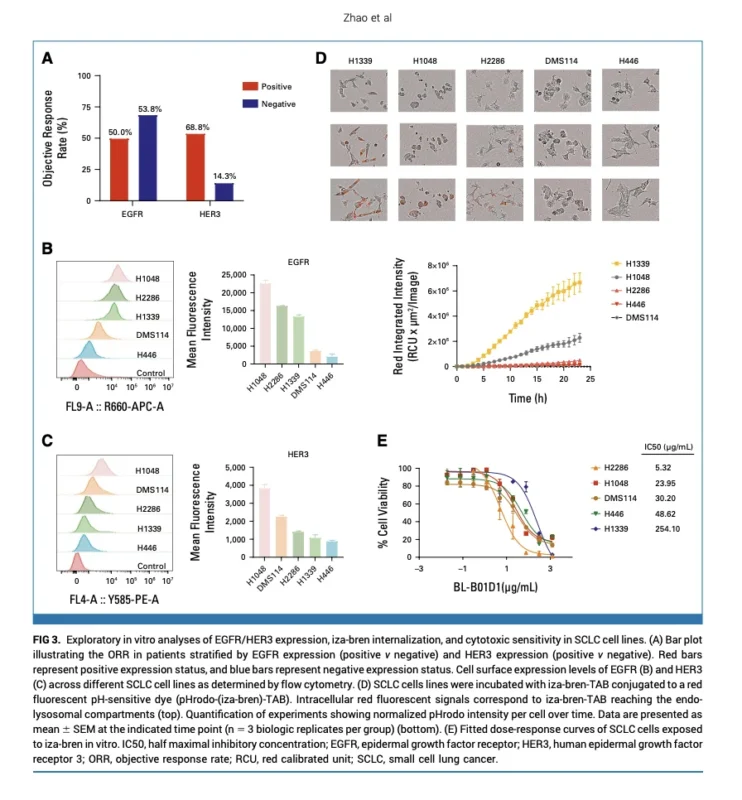
EGFR expression did not appear to separate responders from nonresponders. The objective response rate was 50.0% among EGFR-positive tumors and 53.8% among EGFR-negative tumors.
HER3 expression showed a different pattern. Patients with HER3-positive tumors had an objective response rate of 68.8%, compared with 14.3% among patients with HER3-negative tumors.
The laboratory findings provided further context. Higher EGFR expression appeared to support ADC internalization in some SCLC cell lines, but greater internalization did not consistently translate into stronger cytotoxic activity. Sensitivity appeared more closely aligned with HER3 abundance in the limited cell-line panel.
These observations suggest that EGFR may contribute to drug entry while HER3 could be more closely associated with payload sensitivity. However, the authors stressed that the mechanism remains uncertain.
The biomarker cohort was small, tissue collection was not uniform, and the analysis was exploratory. HER3 expression cannot yet be considered a validated predictive biomarker for iza-bren, but it provides an important direction for future prospective research (Zhao et al., 2026).
An Important Signal, but Not Yet Comparative Evidence
The findings are limited by the phase Ib design. The study was single-arm, included only 52 patients at the selected dose, and was not designed for formal statistical comparisons.
The particularly high response rate observed in the second-line subgroup was based on 22 patients. Subgroup analyses involving platinum sensitivity, previous irinotecan, and HER3 expression involved even smaller numbers.
The study also excluded patients with active brain metastases, limiting conclusions about intracranial efficacy in a disease where central nervous system progression is common.
Most importantly, the trial cannot determine whether iza-bren improves outcomes compared with current second-line treatments. Response rates and survival estimates from separate studies should not be directly compared because patient characteristics, follow-up, prior treatment, eligibility criteria, and response assessment may differ.
Phase III Testing Will Define the Next Step
A randomized phase III trial, NCT06500026, is evaluating iza-bren against topotecan in previously treated SCLC.
This study will be critical for determining whether the high response rate observed in the phase Ib program translates into a meaningful progression-free or overall survival advantage. It will also provide a larger safety dataset and may help clarify whether HER3 expression can identify patients most likely to benefit.
The Bottom Line
Izalontamab brengitecan demonstrated encouraging antitumor activity in previously treated extensive-stage SCLC, with an objective response rate of 48.1%, median progression-free survival of 4.1 months, and median overall survival of 12.2 months.
The strongest signal was observed in the second-line setting, where the response rate reached 72.7%, median progression-free survival was 6.2 months, and median overall survival was 15.0 months.
Hematologic toxicity was frequent and often severe, leading to substantial use of dose delays and reductions. Exploratory findings also suggested that HER3 expression may enrich for response, but this requires prospective validation.
Iza-bren remains investigational. The ongoing randomized phase III trial will determine whether dual EGFR-HER3 targeting can become a clinically meaningful addition to the rapidly evolving treatment landscape of relapsed SCLC.
Reference
- Zhao Y, Zhao H, Wang Q, Yang K, Li Y, Fu Z, et al. Izalontamab brengitecan (iza-bren), a first-in-class EGFR-HER3 bispecific antibody-drug conjugate in extensive-stage small cell lung cancer: Results from a phase Ib study. Journal of Clinical Oncology. Published July 24, 2026. doi:10.1200/JCO-26-00243.