
The HARMONi-6 trial was presented by Shun Lu, from from Shanghai Chest Hospital, Shanghai, Jiao Tong University, School of Medicine, Shanghai, Shanghai, China during Plenary Session at ASCO 2026, presenting the first planned overall survival (OS) analysis of ivonescimab plus chemotherapy in patients with previously untreated advanced squamous non-small cell lung cancer (sq-NSCLC). Ivonescimab is a first-in-class bispecific antibody that simultaneously targets PD-1 and VEGF, and the study asked a deceptively simple question: when added to standard chemotherapy, could this dual-targeted drug help patients live longer than an established PD-1 inhibitor, tislelizumab, delivered in the same way?
The trial was designed to test whether ivonescimab plus chemotherapy, compared with tislelizumab plus chemotherapy, could improve survival in the first-line treatment of advanced squamous lung cancer — a setting where checkpoint inhibitors plus chemotherapy have become standard, but where head-to-head superiority over an active immunotherapy control had not previously been shown.
Background
Squamous NSCLC remains a difficult-to-treat disease with limited targeted options and a heavy reliance on chemotherapy and immunotherapy combinations. In the prespecified interim analysis of progression-free survival (PFS) from HARMONi-6, ivonescimab plus chemotherapy had already significantly improved PFS compared with tislelizumab plus chemotherapy in previously untreated patients with advanced sq-NSCLC.
That earlier signal raised the central question of any first-line lung cancer regimen: would the progression benefit translate into longer survival? The analysis presented at ASCO 2026 reports the results of the prespecified OS endpoint, the outcome that matters most to patients and the one against which new standards of care are ultimately judged.
Study Design
HARMONi-6 randomly assigned patients with previously untreated stage III–IV squamous NSCLC in a 1:1 ratio to receive either ivonescimab 20 mg/kg every three weeks (Q3W) or tislelizumab 200 mg Q3W, each combined with paclitaxel 175 mg/m² and carboplatin AUC 5 for four cycles. After the chemotherapy phase, patients continued on maintenance ivonescimab or tislelizumab monotherapy.
Randomization was stratified by disease stage (IIIB/IIIC versus IV) and PD-L1 tumor proportion score (TPS; ≥1% versus <1%). The primary endpoint was PFS assessed by an independent radiographic review committee per RECIST v1.1. OS was a key secondary endpoint, hierarchically tested using a closed sequential testing procedure: PFS was tested first at a one-sided alpha of 0.025, and OS was tested at the same alpha only after statistical significance for PFS had been established. This analysis represented the first planned OS analysis, with an efficacy boundary of one-sided P=0.0049.
A total of 532 patients were randomly assigned, with 266 in each arm.
Overall Survival Results
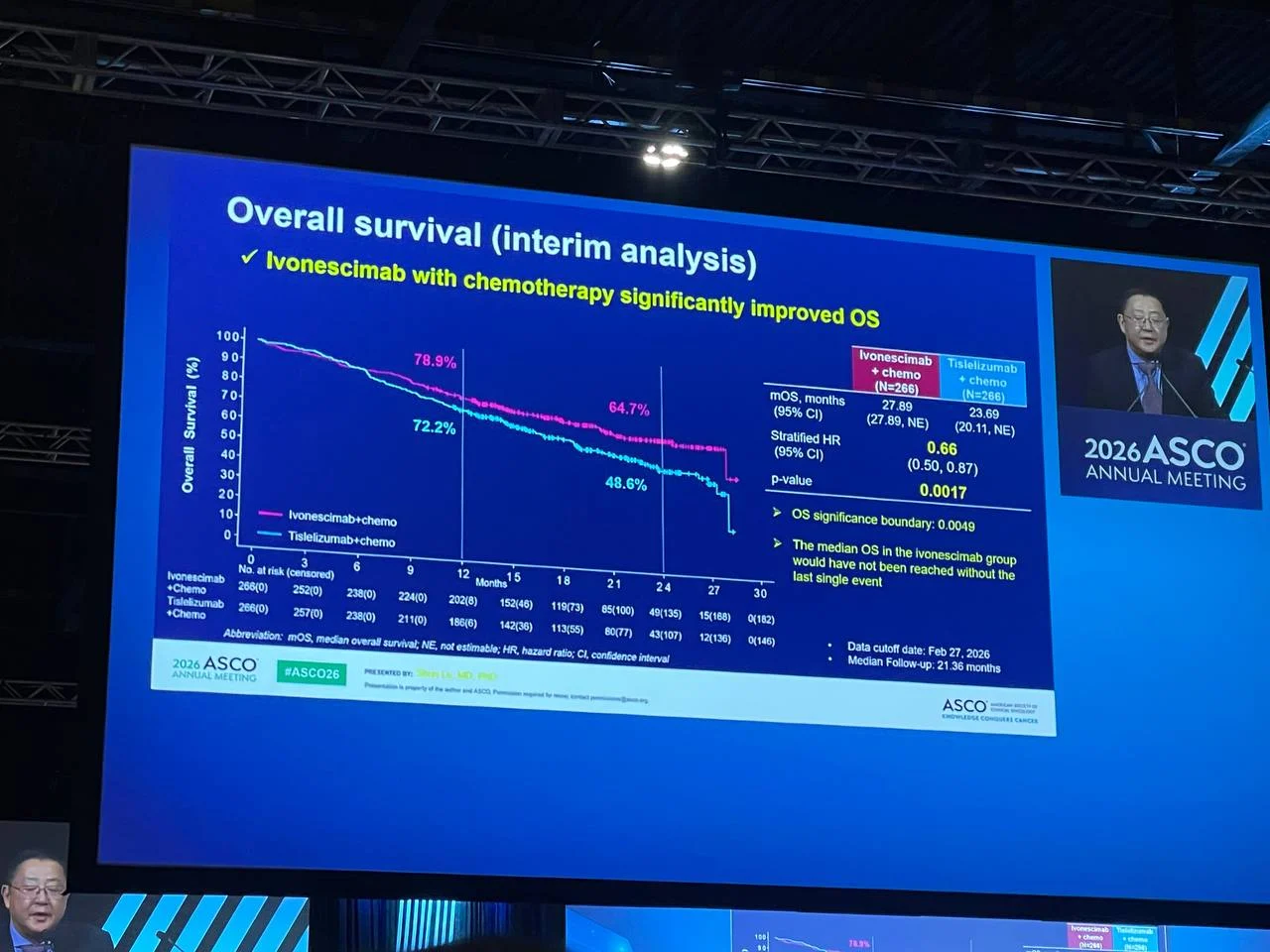
At the data cutoff of February 27, 2026, with a median follow-up of 21.4 months, ivonescimab plus chemotherapy significantly improved OS compared with tislelizumab plus chemotherapy. Median OS was 27.9 months (95% CI, 27.89 to not evaluable [NE]) with ivonescimab plus chemotherapy versus 23.7 months (95% CI, 20.11 to NE) with tislelizumab plus chemotherapy.
This corresponded to a hazard ratio of 0.66 (95% CI, 0.50 to 0.87; one-sided P=0.0017), a 34% reduction in the risk of death that met the prespecified efficacy boundary (P<0.0049) for statistical significance.
Subgroup Analyses
The OS benefit was consistent across prespecified subgroups, including across PD-L1 expression levels:
- PD-L1 TPS <1%: median OS not evaluable with ivonescimab plus chemotherapy versus 18.6 months with tislelizumab plus chemotherapy (HR, 0.64; 95% CI, 0.43 to 0.96).
- PD-L1 TPS ≥1%: median OS not evaluable versus 27.3 months (HR, 0.68; 95% CI, 0.46 to 0.99).
The consistent benefit in the PD-L1–low population is of particular interest, as these patients have historically derived less benefit from single-agent checkpoint inhibition.
Safety
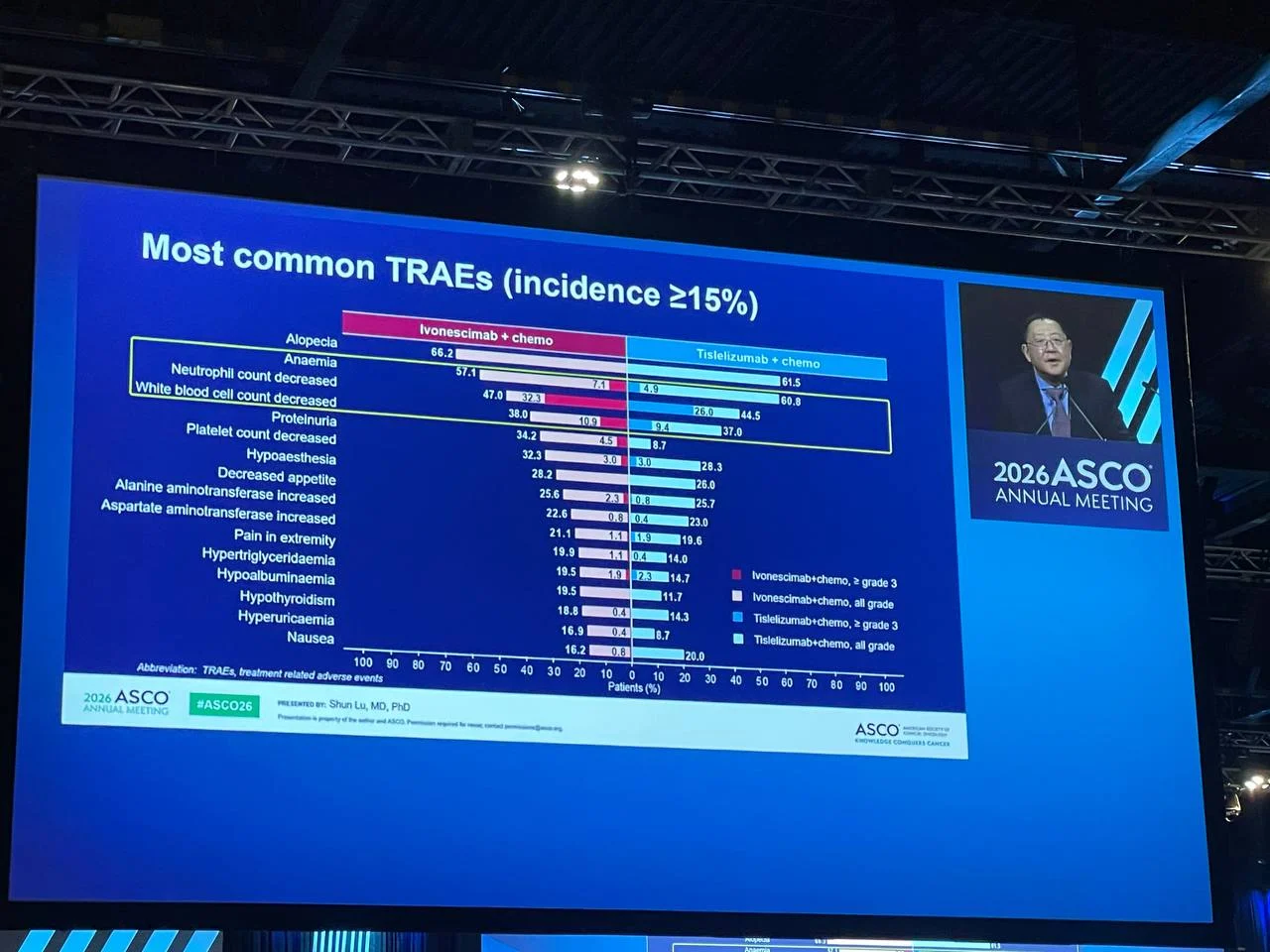
The safety profile of ivonescimab plus chemotherapy was manageable and consistent with prior reports, with no new safety signals observed.
Key Takeaway of HARMONi-6 Trial at ASCO Plenary 2026
In previously untreated advanced squamous NSCLC, HARMONi-6 demonstrated that ivonescimab plus chemotherapy produced a statistically significant and clinically meaningful improvement in overall survival compared with tislelizumab plus chemotherapy. Notably, ivonescimab plus chemotherapy is the first regimen to show clinical superiority over an active PD-1 inhibitor control arm in the first-line setting.
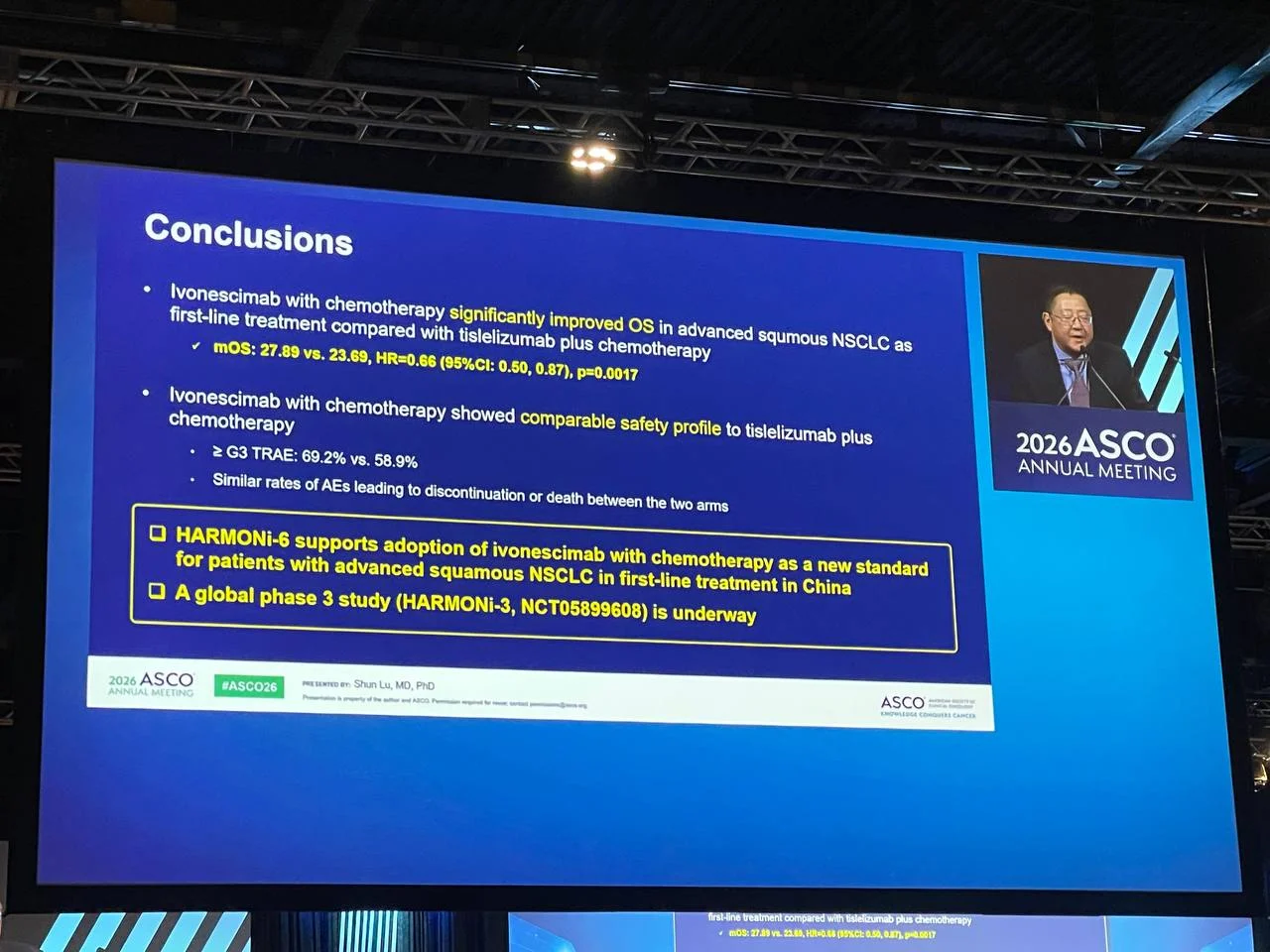
The dual-targeted approach of ivonescimab, combining PD-1 and VEGF blockade in a single molecule, delivered improved survival outcomes with a favorable risk–benefit profile. These results position ivonescimab plus chemotherapy as a compelling new standard of care in the management of advanced squamous NSCLC.
Clinical trial identification: NCT05840016. Funding: Akeso Biopharma, Inc., Zhongshan, China.
Full Presentation at ASCO 2026