
First-line treatment for EGFR-mutated advanced non-small cell lung cancer has moved beyond EGFR tyrosine kinase inhibitor monotherapy. The phase III FLAURA2 trial established osimertinib plus platinum-pemetrexed as an intensified first-line strategy, with previously reported improvements in progression-free and overall survival compared with osimertinib alone. The efficacy benefit, however, comes with greater treatment-related toxicity, making the long-term tolerability of the regimen increasingly important when choosing among first-line options.
A new analysis published in Lung Cancer by David Planchard and colleagues provides the most detailed longitudinal assessment to date of how toxicity evolves during FLAURA2 treatment. Rather than summarizing adverse events across the entire treatment course, the investigators separated safety according to the therapy patients were actually receiving: platinum–pemetrexed plus osimertinib during induction, pemetrexed plus osimertinib during maintenance, and osimertinib alone after chemotherapy discontinuation (Planchard et al., 2026).
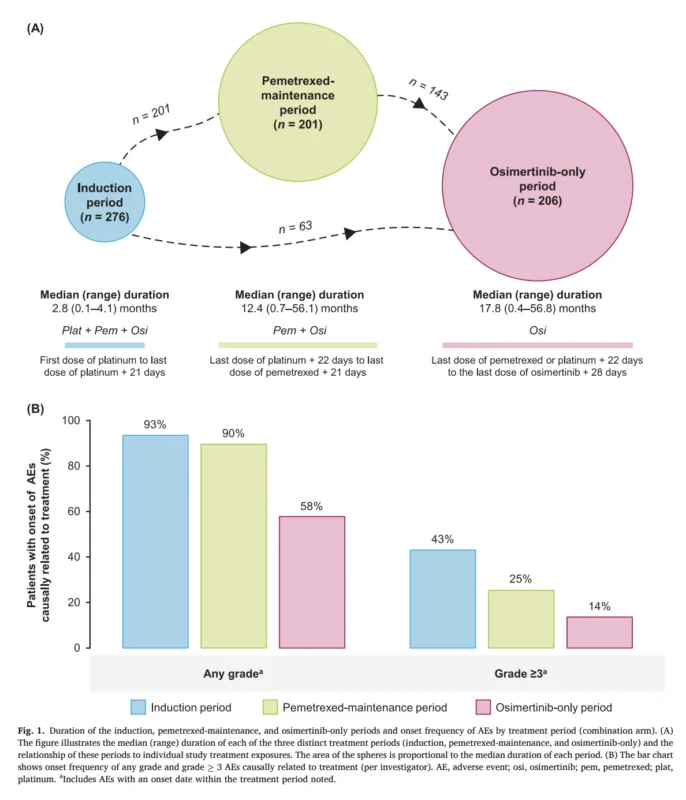
The central finding is clinically practical: the greatest toxicity burden occurred early during platinum-based induction and progressively declined as treatment intensity decreased. Grade ≥3 treatment-related adverse-event onset fell from 43% during induction to 25% during pemetrexed maintenance and 14% once patients were receiving osimertinib alone (Planchard et al., 2026).
For clinicians and patients considering first-line intensification, the study provides a more useful perspective than a single cumulative toxicity percentage. FLAURA2 toxicity is not static; its pattern changes substantially over time.
FLAURA2 Changed the First-Line EGFR-Mutant Treatment Landscape
FLAURA2 enrolled patients with previously untreated advanced NSCLC harboring an EGFR exon 19 deletion or L858R mutation and WHO performance status 0 or 1.
A total of 557 patients were randomized to receive either osimertinib plus platinum–pemetrexed or osimertinib monotherapy. In the combination arm, patients received osimertinib 80 mg daily together with cisplatin or carboplatin and pemetrexed every three weeks for four cycles, followed by maintenance osimertinib plus pemetrexed until progression or unacceptable toxicity (Planchard et al., 2026).
The study had previously demonstrated that adding chemotherapy to osimertinib improved survival compared with osimertinib alone, establishing combination therapy as an important option in contemporary first-line management of EGFR-mutated advanced NSCLC (Jänne et al., 2026).
The remaining question is not whether the combination has greater efficacy. It is how the additional toxicity behaves during what can become several years of treatment.
Safety Was Examined According to What Patients Were Actually Receiving
Conventional safety analyses frequently report the highest-grade adverse event experienced at any point during treatment. Although useful for regulatory reporting, this approach can obscure how toxicity changes when a regimen itself changes over time. Planchard and colleagues therefore performed a post-hoc analysis based on individual patient exposure and divided the combination arm into three mutually exclusive periods.
The induction period included platinum, pemetrexed, and osimertinib. The pemetrexed-maintenance period included pemetrexed and osimertinib. The osimertinib-only period began after chemotherapy had been discontinued and patients continued osimertinib alone (Planchard et al., 2026).
This structure is one of the strengths of the analysis because it mirrors how clinicians and patients actually experience FLAURA2 treatment. The median duration of these periods was:
- 2.8 months for induction
- 12.4 months for pemetrexed maintenance
- 17.8 months for osimertinib alone
The figure on page 4 of the publication illustrates this treatment journey particularly clearly, showing a short intensive induction phase followed by substantially longer maintenance and osimertinib-only periods.
High-Grade Toxicity Was Concentrated During Induction
The most clinically relevant observation was the progressive reduction in newly occurring treatment-related adverse events. Any-grade treatment-related adverse events occurred in:
- 93% during induction
- 90% during pemetrexed maintenance
- 58% during osimertinib-only treatment
For grade ≥3 treatment-related events, the corresponding rates were:
- 43%
- 25%
- 14%, respectively
This pattern is important when discussing treatment intensification with patients. The toxicity burden associated with FLAURA2 is greatest during the first approximately three months, when all three agents are administered. The probability of developing a new high-grade treatment-related adverse event subsequently decreases as platinum is discontinued and eventually declines further when pemetrexed is stopped.
This does not eliminate the additional toxicity associated with the intensified strategy, but it provides a more accurate description of its temporal distribution.
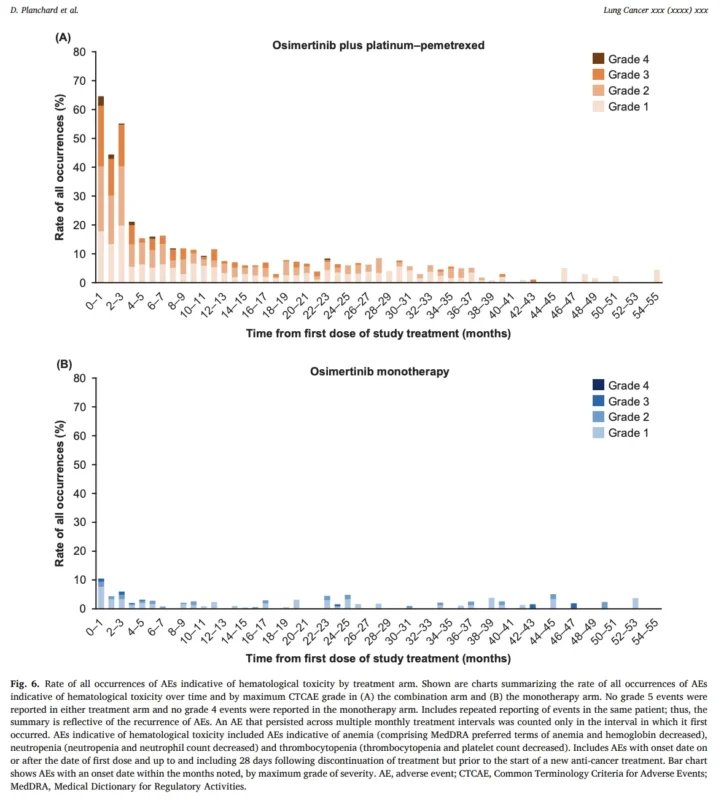
Hematologic Toxicity Was the Main Early Burden
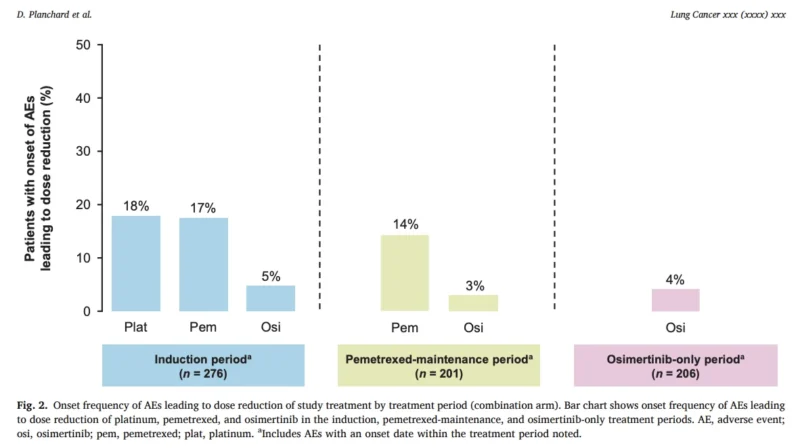
As expected, hematologic adverse events were most prominent during the platinum-containing induction phase. New anemia occurred in:
- 38% during induction
- 25% during pemetrexed maintenance
- 11% during osimertinib alone
For neutropenia, the rates were:
- 35%, 28%, and 13%
For thrombocytopenia:
- 29%, 15%, and 9%
Grade 3 anemia occurred in 16% during induction but declined to 6% during pemetrexed maintenance and 3% during the osimertinib-only period. Similarly, grade 3-4 neutropenia and thrombocytopenia were concentrated early in treatment.
The authors note that grade 4 hematologic events were uncommon and no grade 5 hematologic events occurred. More than three-quarters of patients in the combination arm completed all four planned platinum cycles, suggesting that these events were generally manageable with dose modification and supportive care (Planchard et al., 2026).
Gastrointestinal Toxicity Also Declined Substantially After Induction
The same temporal pattern was observed for gastrointestinal adverse events. Nausea was reported in 37% during induction, falling to 15% during pemetrexed maintenance and 6% during osimertinib-only treatment. Diarrhea declined from 32% to 25% to 13%. Stomatitis decreased from 21% to 6% to 5%. Decreased appetite fell from 24% to 10% to 6%, while vomiting decreased from 20% to 14% to 5% .
Most of these events were grade 1 or 2. These findings are consistent with the expected contribution of platinum chemotherapy and pemetrexed to nausea, appetite loss, and other gastrointestinal symptoms and support counselling patients that some of the most burdensome symptoms may improve after completion of induction.
Skin Toxicity Followed a Similar Pattern
Rash was another common adverse event during the early treatment period. New rash occurred in:
- 41% during induction
- 22% during pemetrexed maintenance
- 9% during osimertinib-only therapy
Most episodes were grade 1 or 2, with grade 3 rash occurring in 2% during induction and 1% during maintenance (Planchard et al., 2026). Dry skin and pruritus were generally infrequent and mostly low grade. Paronychia behaved somewhat differently, occurring in 10% during induction, 17% during pemetrexed maintenance, and 12% during the osimertinib-only phase. This pattern is consistent with a toxicity more closely associated with prolonged EGFR inhibition rather than the short platinum-containing component.
The detailed safety profiles therefore help distinguish chemotherapy-driven early toxicity from adverse effects associated with continued EGFR inhibition.
Renal Toxicity Became More Relevant During Pemetrexed Maintenance
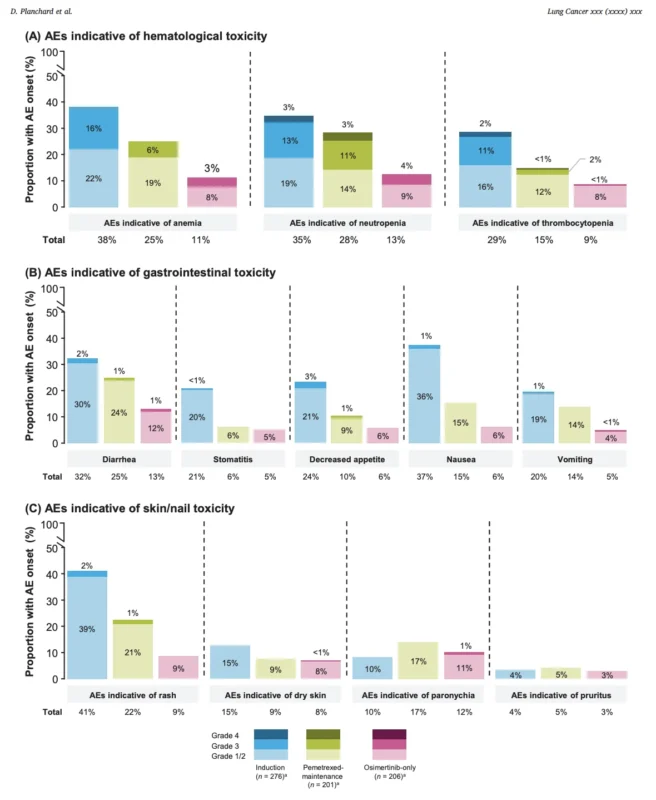
Not every adverse event was most frequent during induction. Renal toxicity showed a different temporal pattern. Adverse events indicative of renal toxicity occurred in:
- 7% during induction
- 19% during pemetrexed maintenance
- 10% during the osimertinib-only period
The authors attribute the higher maintenance incidence primarily to cumulative pemetrexed exposure and the longer opportunity for renal impairment to develop.
The long-term analysis showed that the cumulative incidence of renal events in the combination arm reached approximately 20% by 17–18 months and plateaued near 22% by around 28–29 months. Importantly, almost all renal adverse events were grade 1 or 2; only one grade 3 event occurred, during the first month of treatment, and no grade 4 or 5 renal events were reported (Planchard et al., 2026).
This finding has direct clinical implications. The period requiring the greatest hematologic monitoring is early induction, whereas renal function deserves particular attention during prolonged pemetrexed maintenance.
Long-Term Pemetrexed Was Feasible for Many Patients
The median pemetrexed-maintenance period exceeded one year at 12.4 months, with some patients remaining on pemetrexed for considerably longer (Planchard et al., 2026). The authors note that this represents unusually prolonged exposure compared with historical first-line pemetrexed maintenance studies.
Despite cumulative renal toxicity and persistent hematologic events, long-term pemetrexed administration was feasible for many patients. Renal toxicity was predominantly mild to moderate, and relatively few patients discontinued pemetrexed specifically because of renal adverse events (Planchard et al., 2026). However, the study also demonstrates that maintenance chemotherapy is not a negligible component of FLAURA2 treatment.
Pemetrexed discontinuation because of adverse events occurred in 33% during the maintenance period, with neutropenia, anemia, increased creatinine, and fatigue among the most common reasons (Planchard et al., 2026). This becomes relevant when comparing FLAURA2 with other first-line EGFR-directed strategies that have different toxicity patterns and treatment burdens.
Osimertinib Tolerability Was Preserved After Chemotherapy
A clinically reassuring finding was that prior exposure to platinum-pemetrexed did not appear to compromise subsequent long-term osimertinib tolerability. Patients spent a median of 17.8 months in the osimertinib-only period, and the adverse-event profile during this phase resembled the established safety profile of osimertinib monotherapy.
Rates of new grade ≥3 treatment-related adverse events had fallen to 14%, and adverse events leading to osimertinib discontinuation remained relatively uncommon throughout all treatment periods (Planchard et al., 2026).
Osimertinib discontinuation because of adverse events occurred in:
- 4% during induction
- 3% during pemetrexed maintenance
- 8% during the osimertinib-only period
These findings support the conclusion that upfront chemotherapy does not create a persistent toxicity penalty that subsequently prevents prolonged osimertinib treatment in most patients.
ILD and Cardiac Events Remained Important but Relatively Uncommon
Adverse events of special interest associated with osimertinib were also evaluated. ILD or pneumonitis occurred in fewer than 1% of patients during induction, 1% during pemetrexed maintenance, and 2% during the osimertinib-only period. Most were grade 1 or 2. One grade 5 event occurred during the osimertinib-only period.
Cardiac adverse events occurred in 2%, 6%, and 10% across the three periods, respectively, although the longer duration of the later treatment periods needs to be considered when interpreting these percentages. The findings do not suggest a new synergistic cardiac or pulmonary toxicity signal from combining osimertinib with chemotherapy.
Hematologic Toxicity Accumulated Early and Then Plateaued
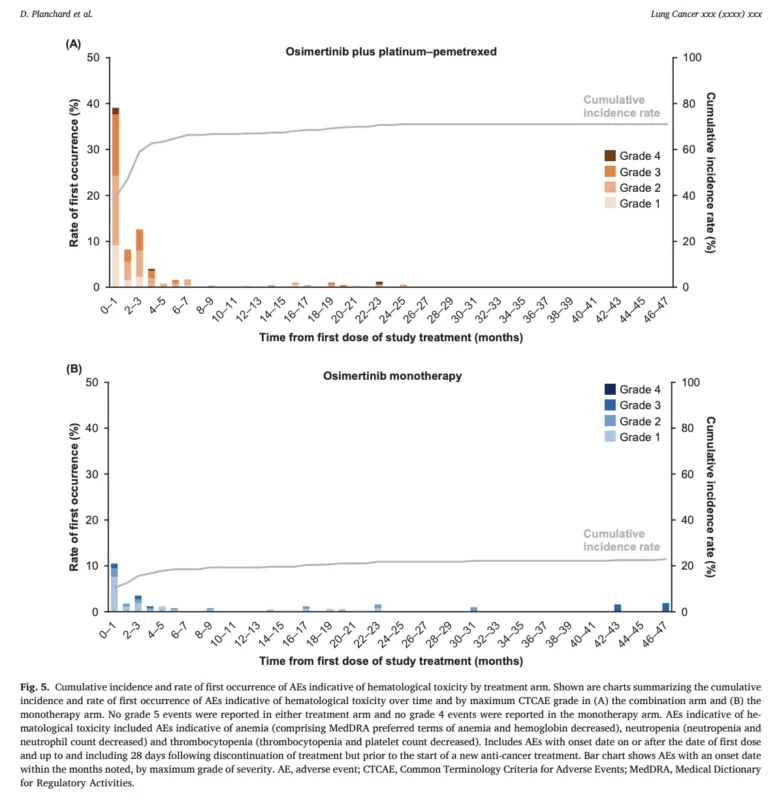
One of the most informative analyses examined cumulative toxicity over time rather than only within treatment phases. In the combination arm, the cumulative incidence of hematologic toxicity increased rapidly during the first three to four months, reaching 63%, corresponding closely to the platinum-containing induction period.
It then rose only modestly, reaching approximately 71% by 22–23 months (Planchard et al., 2026). More importantly, the monthly incidence of new grade ≥3 hematologic toxicity declined sharply after the early treatment period. Grade ≥3 event rates were 24%, 14%, and 15% during the first three monthly intervals but remained below 5% in every interval from months 4–5 onward.
This provides perhaps the clearest evidence that the higher cumulative toxicity associated with FLAURA2 should not be interpreted as a constant high-grade toxicity burden throughout treatment.
Dose Modification Appears Central to Maintaining Long-Term Therapy
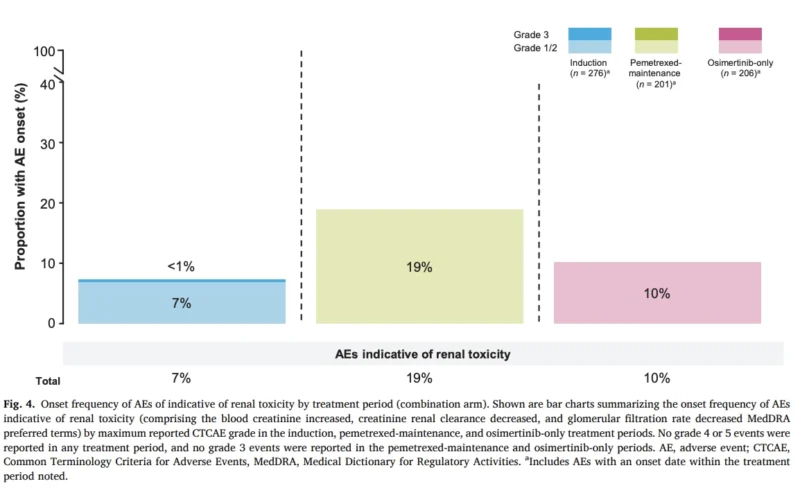
The analysis also illustrates the importance of active toxicity management. Adverse events led to dose reductions of platinum in 18% of patients during induction and pemetrexed in 17% during induction and 14% during maintenance. Osimertinib dose reduction remained relatively uncommon, occurring in 5%, 3%, and 4% across the three respective treatment periods.
Pemetrexed interruptions were more frequent, affecting 25% during induction and 41% during maintenance. Rather than indicating failure of the regimen, these adjustments were part of the strategy that allowed many patients to remain on long-term treatment.
The investigators argue that appropriate dose modification and supportive care may have facilitated continued treatment and enabled patients to remain exposed to the regimen long enough to derive its previously demonstrated survival benefit.
Quality of Life Adds Important Context
Toxicity frequency alone does not describe the full patient experience. Previously reported patient-reported outcomes from FLAURA2 found that, despite the higher adverse-event burden with combination therapy, there was no clinically meaningful deterioration in global health-related quality of life or major disease-related symptoms compared with osimertinib monotherapy.
Nausea, vomiting, fatigue, and appetite loss were more pronounced during induction, but most tended to improve during maintenance. The current study did not collect additional long-term PRO data beyond the earlier FLAURA2 analysis, which limits conclusions about patient-reported tolerability over the entire extended treatment period.
Nevertheless, the available data reinforce the temporal safety pattern observed clinically: the initial months are the most intensive, while later treatment is generally less burdensome.
The Findings Matter Because First-Line EGFR Therapy Is Becoming More Complex
The treatment landscape for common EGFR-mutated metastatic NSCLC has changed substantially. Osimertinib monotherapy is no longer the only first-line strategy capable of delivering prolonged disease control. Combination approaches including osimertinib plus platinum–pemetrexed and amivantamab plus lazertinib have demonstrated survival improvements over osimertinib alone.
This creates a different clinical question. Rather than simply asking which regimen has the longest PFS or OS, treatment selection increasingly requires consideration of efficacy, CNS control, treatment intensity, intravenous therapy requirements, duration of chemotherapy exposure, specific toxicity profiles, comorbidities, patient preferences, and willingness to accept early treatment burden in exchange for greater disease control.
The long-term FLAURA2 safety analysis therefore provides information directly relevant to shared decision-making.
The Key Message for Patient Counselling
The study offers a useful way to explain FLAURA2 to patients. The combination is not equally toxic throughout treatment. The first approximately three months represent the most intensive phase, with platinum, pemetrexed, and osimertinib administered together and the highest rates of hematologic, gastrointestinal, and skin toxicity.
After platinum is completed, severe new toxicities decline substantially, although prolonged pemetrexed requires continued monitoring, particularly for hematologic and renal effects. For patients who subsequently transition to osimertinib alone, the safety profile becomes increasingly similar to that expected with osimertinib monotherapy.
This temporal framing may be more clinically informative than quoting an overall grade ≥3 adverse-event rate for the entire study.
Important Limitations
The analysis was exploratory and post hoc, and all safety analyses were descriptive rather than formally hypothesis tested (Planchard et al., 2026).
An equivalent period-based analysis could not be performed for the osimertinib monotherapy arm because those patients received the same drug continuously throughout treatment. Direct cross-arm comparisons were therefore limited to selected cumulative and time-dependent analyses.
There is also an element of survivor selection across the treatment periods. Patients who discontinued treatment because of progression or toxicity could not contribute to later periods, potentially making later safety appear more favorable. The authors note, however, that discontinuation rates during the earlier periods were relatively low.
Finally, some toxicities, particularly gastrointestinal and dermatologic adverse events, are inherently more subjective than laboratory-defined hematologic or renal events. These limitations should temper interpretation of the exact percentages but do not undermine the clear temporal pattern observed across treatment.
The Bottom Line
The long-term FLAURA2 safety analysis changes how the toxicity of osimertinib plus platinum–pemetrexed should be understood. The combination carries a higher treatment burden than osimertinib alone, but that burden is front-loaded rather than constant. During the three sequential treatment periods, treatment-related grade ≥3 adverse-event onset decreased from:
- 43% during platinum–pemetrexed + osimertinib induction
to
- 25% during pemetrexed + osimertinib maintenance
and
- 14% during osimertinib alone
Hematologic, gastrointestinal, and skin toxicities were most frequent during induction. Renal toxicity became more relevant during prolonged pemetrexed maintenance but remained predominantly grade 1–2. Osimertinib discontinuation remained uncommon, and patients who transitioned to osimertinib-only therapy demonstrated a safety profile consistent with the established experience with the drug.
For a regimen that has already demonstrated a survival advantage, these findings provide an important clinical perspective: first-line intensification requires greater toxicity management upfront, but the high-grade adverse-event burden generally declines substantially with continued treatment.
The practical question for contemporary EGFR-mutated NSCLC is therefore not simply whether combination therapy is more toxic. It is whether an individual patient is willing and medically able to accept a defined period of greater early toxicity in exchange for the potential survival benefit associated with treatment intensification.
References
- Planchard, D., (2026). Long-term safety of first-line osimertinib plus platinum–pemetrexed in EGFR-mutated advanced NSCLC: FLAURA2. Lung Cancer. Advance online publication. https://doi.org/10.1016/j.lungcan.2026.109588.