
Antibody-drug conjugates, or ADCs, are rapidly expanding the treatment landscape for non-small cell lung cancer. By pairing an antibody directed at a tumor-associated target with a potent cytotoxic payload, ADCs aim to deliver chemotherapy more selectively to cancer cells.
However, treatment-related toxicities remain a major challenge. As more ADCs enter early-phase and later-stage clinical development in NSCLC, a new study suggests that biological sex may be an important factor in how patients tolerate these therapies.
A retrospective cohort study published in ESMO Open found that women with advanced NSCLC treated with developmental ADCs experienced more clinically relevant treatment-related adverse events than men. Women were also more likely to require dose reductions during treatment.
The findings are hypothesis-generating, but they highlight a broader need for sex-disaggregated safety reporting in ADC trials.
What Did the Study Examine?
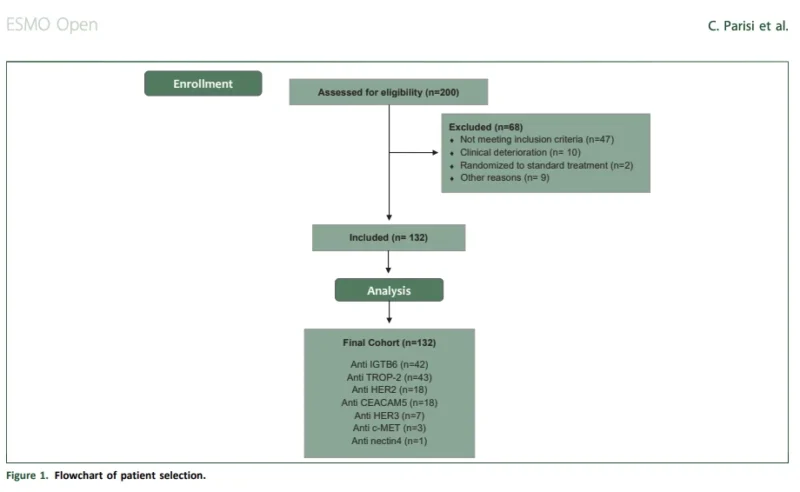
Investigators at Gustave Roussy in France reviewed outcomes for patients with advanced NSCLC who received developmental ADCs through phase I and II clinical trials between 2018 and 2023.
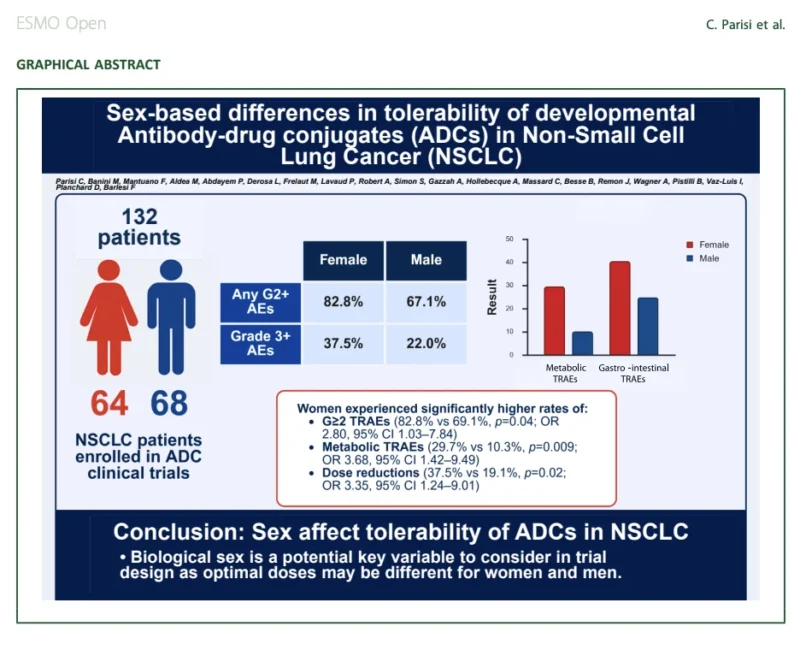
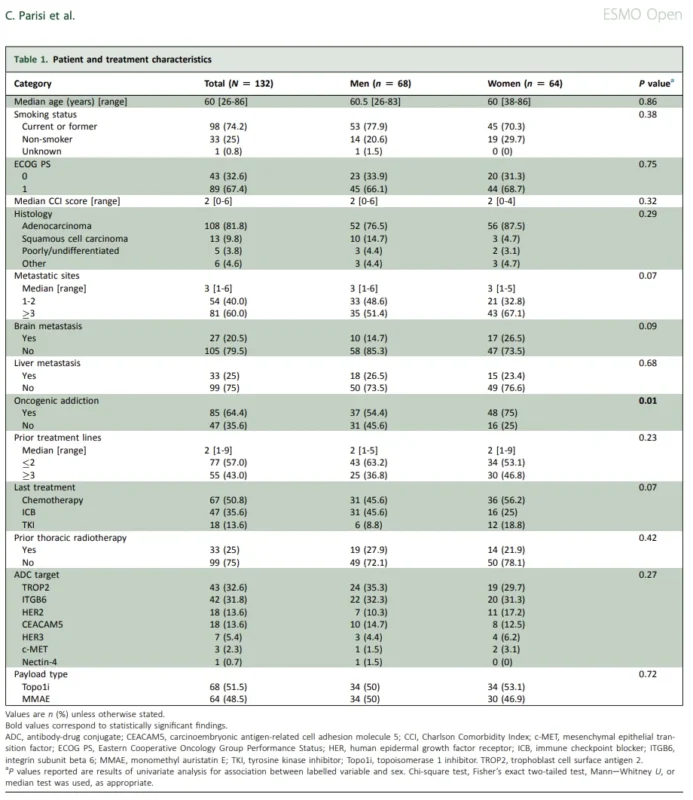
The analysis included 132 patients, including 64 women and 68 men. All participants had stage IV NSCLC and had received at least one cycle of ADC monotherapy.
The cohort was heavily pretreated, with a median of two prior systemic therapy lines. Most patients had lung adenocarcinoma, and the study included ADCs targeting multiple antigens, including TROP2, ITGB6, HER2, CEACAM5, HER3, c-MET, and Nectin-4.
The payloads were broadly divided between topoisomerase I inhibitor-based ADCs and monomethyl auristatin E-based ADCs.
The primary endpoint was the incidence of clinically relevant treatment-related adverse events, defined as grade 2 or higher events according to Common Terminology Criteria for Adverse Events version 5.0.
Women Had More Grade 2 or Higher Toxicities
Overall, 76% of patients experienced at least one grade 2 or higher treatment-related adverse event. Grade 3 or higher toxicities occurred in 29% of the cohort.
Women experienced grade 2 or higher treatment-related adverse events more frequently than men:
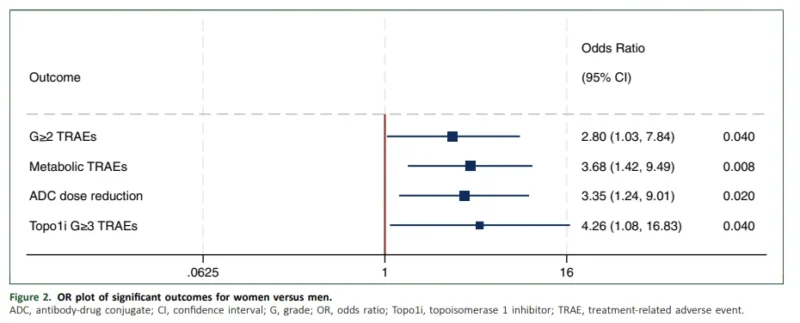
82.8% in women versus 69.1% in men.
After adjustment for potential confounding factors, women had nearly three times the odds of experiencing a clinically relevant toxicity compared with men, with an adjusted odds ratio of 2.8.
Women also experienced a higher median number of treatment-related adverse events per patient. The median was two events in women compared with one event in men.
There was also a numerical increase in grade 3 or higher toxicities among women, occurring in 37.5% of women compared with 22.0% of men. This difference did not reach conventional statistical significance in the adjusted analysis, but it supports the overall pattern of higher treatment burden among women.
Metabolic Toxicities Were More Frequent in Women
The most notable difference involved metabolic toxicities.
These events included anorexia, weight loss, and electrolyte or lipid imbalances. Metabolic treatment-related adverse events occurred in:
29.7% of women versus 10.3% of men.
Women had an adjusted odds ratio of 3.68 for metabolic toxicities compared with men.
This finding is clinically important because metabolic adverse events may be underrecognized despite their potential impact on nutritional status, physical function, quality of life, and treatment adherence.
The study also found a trend toward more gastrointestinal toxicities in women, including nausea, vomiting, diarrhea, and related adverse events. Gastrointestinal treatment-related events occurred in 40.6% of women and 25.0% of men, although this difference did not meet the study’s threshold for statistical significance.
Dose Reductions Were More Common Among Women
Women were more likely to need ADC dose reductions during treatment.
Dose reductions occurred in 37.5% of women compared with 19.1% of men. After adjustment, women had more than three times the odds of dose reduction, with an odds ratio of 3.35.
Importantly, the study did not identify significant differences between women and men in treatment discontinuation because of toxicity, treatment-related hospitalization rates, progression-free survival, or overall survival.
This suggests that the higher toxicity burden did not clearly translate into worse survival outcomes in this cohort. However, it may still influence treatment experience, treatment intensity, supportive care needs, and quality of life.
A Signal With Topoisomerase I Inhibitor ADCs
In an exploratory analysis according to payload type, women treated with topoisomerase I inhibitor-based ADCs appeared to have a higher incidence of grade 3 or higher treatment-related adverse events.
Severe toxicities occurred in 55.9% of women receiving Topo1 inhibitor ADCs compared with 26.5% of men.
The adjusted odds ratio was 4.26. Women receiving these ADCs also showed a trend toward more fatigue and metabolic toxicities.
These findings should be interpreted with caution. The subgroup analyses were small, and the study included several different ADC targets, linker designs, and payloads. Therefore, it remains unclear whether the observed toxicity pattern is specific to topoisomerase I inhibitor payloads or reflects broader sex-related differences in ADC pharmacology and tolerability.
Why Might Toxicity Differ by Sex?
The study was not designed to identify biological mechanisms. However, the authors point to several possible contributors.
Sex-related differences in body composition, liver enzyme activity, renal clearance, hormonal status, immune function, and inflammatory responses could affect the distribution and metabolism of ADCs and their cytotoxic payloads.
Women may also experience different pharmacokinetic exposure to anticancer therapies. These factors could influence both the amount of drug delivered and the risk of off-target toxicity.
Understanding these differences will require prospective studies incorporating pharmacokinetic, pharmacogenomic, hormonal, and body-composition data.
What Does This Mean for ADC Development?
The results do not suggest that women should avoid ADC treatment. Instead, they reinforce the importance of recognizing that treatment tolerability may not be identical across all patients.
For clinicians, earlier attention to nutritional status, weight changes, electrolyte abnormalities, gastrointestinal symptoms, and fatigue may be particularly valuable for women receiving investigational ADCs.
For trial designers, the findings support routine sex-disaggregated safety analyses. This could help identify whether dosing, monitoring schedules, supportive care interventions, or eligibility criteria need refinement as ADCs move from early development into broader clinical practice.
The study also highlights a wider problem in oncology research. Sex-specific toxicity reporting remains limited in many clinical trials, even though treatment-related adverse events can meaningfully affect treatment exposure and patient quality of life.
Study Limitations
This was a single-center, retrospective analysis with a relatively small sample size. It included several ADCs with different targets and payloads, which limits conclusions about individual drugs or ADC classes.
The study also lacked detailed drug-exposure data, so it could not fully evaluate whether pharmacokinetic differences contributed to the observed toxicity patterns.
The findings should therefore be considered hypothesis-generating. Larger prospective datasets are needed to confirm whether sex-based toxicity differences exist across specific ADCs used in NSCLC.
The Bottom Line
Women with advanced NSCLC treated with developmental ADCs experienced more grade 2 or higher treatment-related adverse events, more metabolic toxicities, and more frequent dose reductions than men in this study.
As ADCs continue to move forward in lung cancer, biological sex may need to become a more visible part of toxicity reporting, patient monitoring, and trial design.