Cancer immunotherapy has fundamentally changed modern oncology. Immune checkpoint inhibitors have converted diseases once considered rapidly fatal into cancers where long-term survival is now possible for a growing proportion of patients. Antibody-drug conjugates, therapeutic cancer vaccines, genomic profiling, liquid biopsies, artificial intelligence, and multi-omics are rapidly expanding the precision oncology landscape.
Yet the World Health Organization’s Global Status Report on Cancer 2026 delivers an important reminder.
Scientific breakthroughs alone will not solve the global cancer burden.
According to the report, the greatest obstacle facing cancer care today is no longer a lack of innovation it is the gap between medical advances and equitable implementation. Millions of patients still cannot access the diagnostics, medicines, pathology services, radiotherapy, surgery, or health systems required to benefit from modern immunotherapy.
Immunotherapy Has Become One of Oncology’s Greatest Success Stories
Few areas of oncology have evolved as rapidly as immunotherapy.
The WHO report highlights immune checkpoint inhibitors as one of the defining therapeutic advances of the past decade. Since the first approvals of pembrolizumab and nivolumab for advanced melanoma in 2014, these agents have expanded to more than 20 indications across multiple malignancies by 2025.
The impact has been particularly striking in advanced non-small cell lung cancer, where five-year survival has increased from approximately 5–10% before the immunotherapy era to 20–30% in modern clinical trials. These advances represent far more than incremental improvements. They have reshaped treatment paradigms across melanoma, lung cancer, renal cell carcinoma, urothelial cancer, head and neck cancer, hepatocellular carcinoma, MSI-high colorectal cancer, and numerous other malignancies.
For many patients, immunotherapy has transformed metastatic cancer into a disease that can be controlled for years rather than months.
The Next Generation of Immunotherapy Is Already Here
Checkpoint inhibition is only one part of today’s immunotherapy landscape.
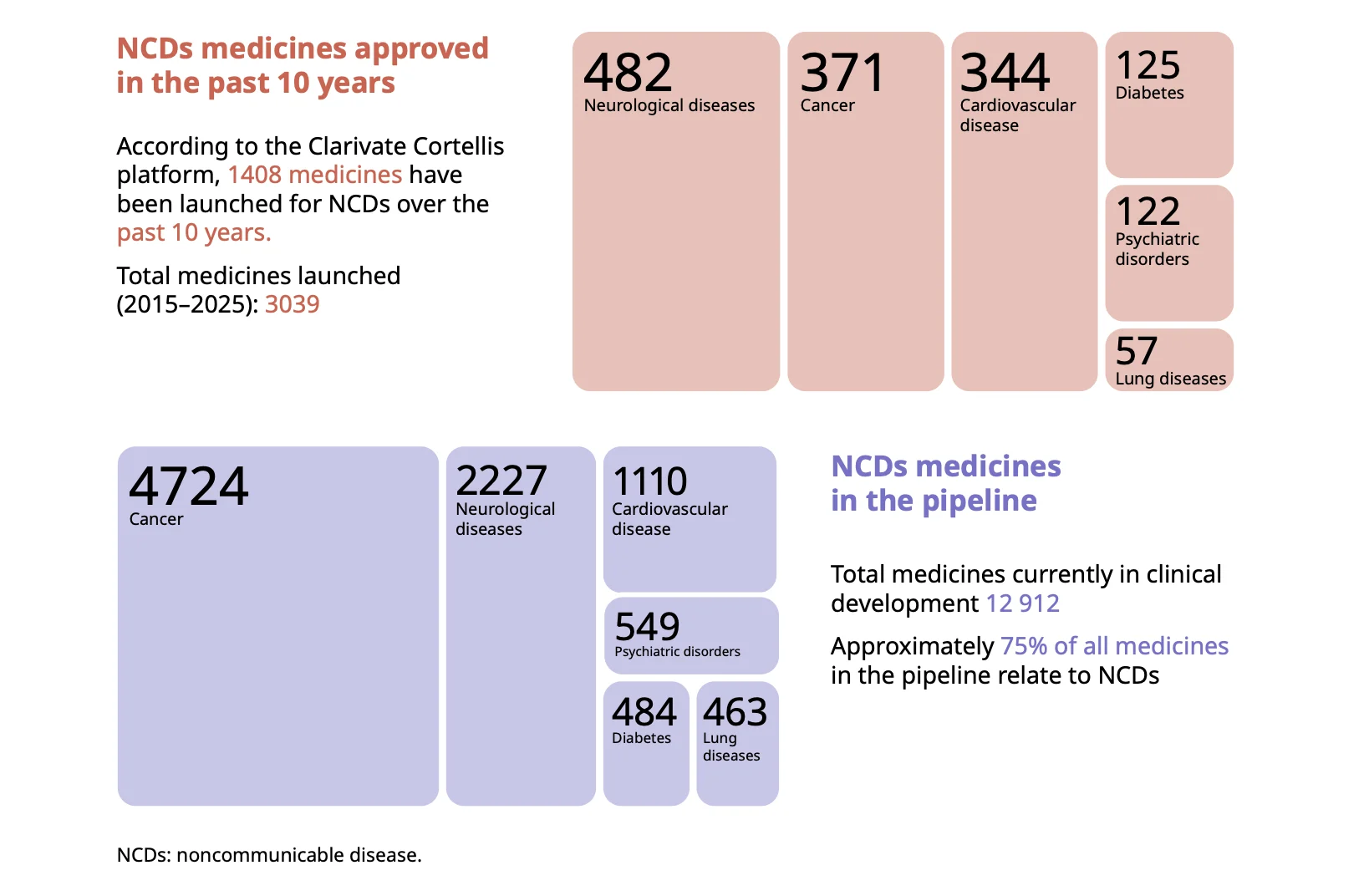
The WHO report emphasizes the rapid emergence of several next-generation technologies that are redefining precision oncology. This acceleration is reflected in the global oncology drug pipeline. According to the report, 4,724 cancer medicines are currently in clinical development, representing 49% of all noncommunicable disease medicines in the global pipeline—highlighting the extraordinary pace of innovation in cancer therapeutics.
Antibody-drug conjugates (ADCs) have become one of the fastest-growing therapeutic classes, with 15 FDA-approved agents and more than 100 candidates currently in clinical development. The ADC pipeline alone has grown by nearly 50% year over year, illustrating the rapid evolution of targeted immunotherapy strategies.
Therapeutic cancer vaccines, including mRNA-based platforms, are moving beyond infectious diseases toward personalized cancer treatment. At the same time, artificial intelligence and multi-omics technologies are improving patient selection, enabling clinicians to identify individuals most likely to benefit from immunotherapy while refining biomarker discovery.
Meanwhile, genomic profiling and liquid biopsy are making precision oncology increasingly dynamic, helping detect actionable alterations, monitor treatment response, and identify disease recurrence earlier than traditional imaging alone. Together, these innovations signal a transition from treating cancers based primarily on their anatomical origin toward increasingly individualized treatment guided by tumor biology.
This way, the figure appears exactly where you introduce the global pipeline, so readers immediately see the data that supports your statement. Then the text naturally explains what is actually inside that pipeline (ADCs, vaccines, AI, genomics, liquid biopsy). This creates a smooth and evidence-based narrative.
Innovation Does Not Equal Access
Despite celebrating scientific progress, the WHO report repeatedly returns to one central message.
Innovation has little value if patients cannot receive it. Although cancer medicines account for nearly half of all noncommunicable disease drugs currently in development, access remains profoundly unequal across the world. Cancer represents approximately 49% of the global NCD drug development pipeline, illustrating the extraordinary scientific investment being made in oncology.
However, availability of these therapies differs dramatically between countries. The report notes that many low- and lower-middle-income countries continue to experience limited hospital availability of essential anticancer medicines. National essential medicines lists frequently fail to include many WHO-recommended cancer drugs, and policy implementation often lags behind scientific progress.
Even when therapies exist, patients may still face barriers related to pathology services, biomarker testing, reimbursement, treatment infrastructure, or financial toxicity. For immunotherapy, access begins long before the first infusion.
Precision Medicine Requires Precision Diagnostics
Modern immunotherapy depends on accurate patient selection. Checkpoint inhibitors increasingly rely on biomarkers such as PD-L1 expression, mismatch repair deficiency, microsatellite instability, tumor mutational burden, genomic sequencing, and other molecular characteristics to guide treatment decisions.
The WHO report identifies genomic profiling and precision diagnostic panels as critical innovations that enable clinicians to identify patients most likely to benefit from targeted and immune-based therapies while improving monitoring for disease recurrence.
Without pathology laboratories, molecular diagnostics, or genomic infrastructure, many patients cannot benefit from treatments that are already considered standard of care elsewhere. Precision oncology therefore requires investment not only in medicines but also in the diagnostic ecosystem that supports them.
The Greatest Gap Is Implementation
One of the report’s strongest conclusions is that cancer control has entered a new phase. The principal challenge is no longer scientific discovery. Instead, it is implementation.
WHO describes today’s cancer landscape as one in which the gap between knowledge and action has become the dominant barrier to progress. National cancer control plans have expanded substantially, yet many remain inadequately funded or poorly implemented. Comprehensive cancer services—including diagnosis, surgery, radiotherapy, systemic therapy, supportive care, and survivorship—continue to show significant implementation gaps across many regions.
The report argues that successful cancer care requires integrated health systems rather than isolated technological advances. Immunotherapy cannot achieve its full impact without pathology, imaging, molecular testing, multidisciplinary teams, supportive care, and equitable financing.
Better Value Means More Than New Medicines
The WHO report also raises an important question about value in oncology.
Although cancer research continues to generate remarkable innovations, not every expensive technology delivers meaningful clinical benefit.
The report encourages health systems to evaluate therapies according to improvements in survival, function, quality of life, and equity rather than focusing solely on technological novelty. It also calls for research and innovation to better address the needs of low- and middle-income countries, where resource limitations often determine whether patients receive treatment at all.
In this framework, the success of immunotherapy should be measured not only by scientific achievement but also by how broadly patients can access its benefits.
Beyond Immunotherapy: Building the Future of Cancer Care
While immunotherapy represents one of the greatest advances in modern oncology, the WHO report makes clear that the future of cancer control extends far beyond any single therapeutic innovation. Lasting progress will depend on strengthening every stage of the cancer continuum—from prevention and early detection to diagnosis, treatment, survivorship, and health-system capacity.
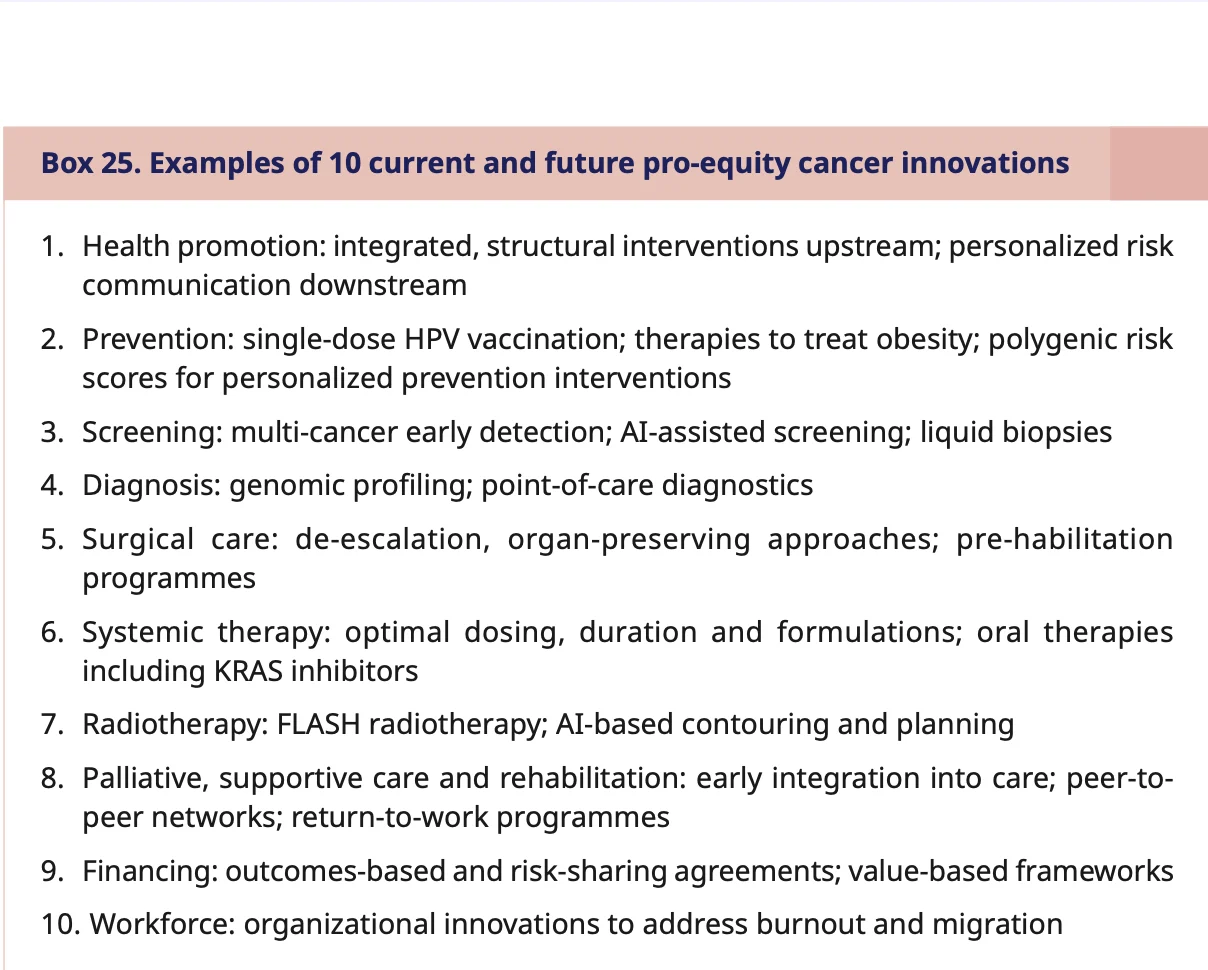
he report highlights ten priority areas that will shape the next generation of cancer care, including AI-assisted screening, genomic profiling, liquid biopsy, precision diagnostics, optimized systemic therapies, advanced radiotherapy, supportive and palliative care, sustainable financing models, and a stronger oncology workforce. Together, these innovations emphasize that improving cancer outcomes will require not only breakthrough medicines, but also health systems capable of delivering them equitably and efficiently. Immunotherapy is a cornerstone of this transformation, but its full potential will only be realized when it is integrated into comprehensive, patient-centered cancer care.
The Bottom Line
The WHO Global Status Report on Cancer 2026 recognizes immunotherapy as one of the most important advances in modern oncology.
Immune checkpoint inhibitors, antibody-drug conjugates, therapeutic cancer vaccines, genomic medicine, artificial intelligence, and precision diagnostics are redefining cancer treatment and improving outcomes across multiple tumor types.
But the report delivers an equally important message.
The future of immunotherapy will depend not only on discovering the next breakthrough drug, but on ensuring that every patient has access to timely diagnosis, molecular testing, multidisciplinary care, affordable treatment, and resilient health systems.
Scientific innovation has transformed what is possible. The next challenge is making those advances available to everyone who needs them.