The integration of radiotherapy and immunotherapy has become one of the most actively investigated strategies in modern thoracic oncology. Radiotherapy can stimulate antitumor immunity through enhanced antigen release, increased immune-cell recruitment, and modulation of the tumor microenvironment. At the same time, immune checkpoint inhibitors have fundamentally transformed outcomes for patients with advanced non–small cell lung cancer (NSCLC).
Despite the growing use of combined immunoradiotherapy (iRT), several practical questions remain unanswered. Should radiotherapy and immunotherapy be delivered concurrently or sequentially? Is there a role for continuing immunotherapy after radiotherapy in patients with refractory disease? And does chemotherapy still provide meaningful benefit when combined with modern iRT approaches?
To address these questions, Han Zhou and colleagues conducted the OCEANUS study, a large territory-wide real-world analysis published in JAMA Oncology in 2026. Using data from Hong Kong’s Hospital Authority system, the investigators evaluated outcomes in patients with advanced and refractory NSCLC treated with combinations of radiotherapy and immune checkpoint inhibitors.
Study Design
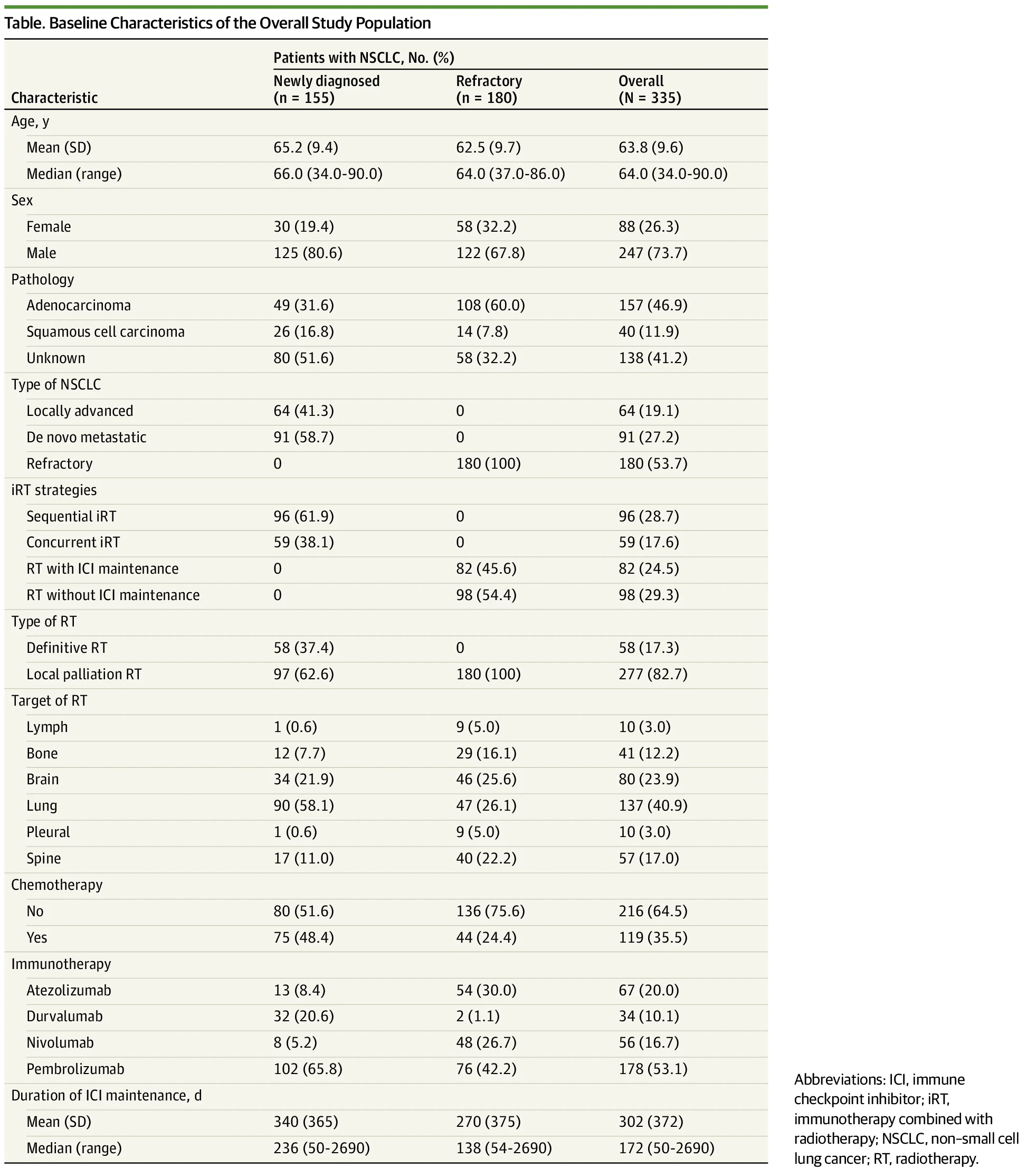
The analysis included 335 patients with NSCLC who received both immunotherapy and radiotherapy. Among them, 155 patients had newly diagnosed advanced disease, while 180 patients were treated in the refractory setting after progression on prior therapies.
The primary objective was to compare overall survival between sequential and concurrent immunoradiotherapy in newly diagnosed advanced NSCLC. Investigators also evaluated whether restarting immunotherapy after radiotherapy could improve outcomes in refractory disease and explored the contribution of chemotherapy within different treatment strategies.
Sequential Versus Concurrent Immunoradiotherapy
One of the most important findings of the study was the apparent advantage of sequential treatment over concurrent administration.
The rationale for sequential therapy is supported by observations from the PACIFIC trial, where patients received durvalumab after completion of chemoradiotherapy. In contrast, several studies evaluating concurrent immunotherapy during radiotherapy have produced less convincing results.
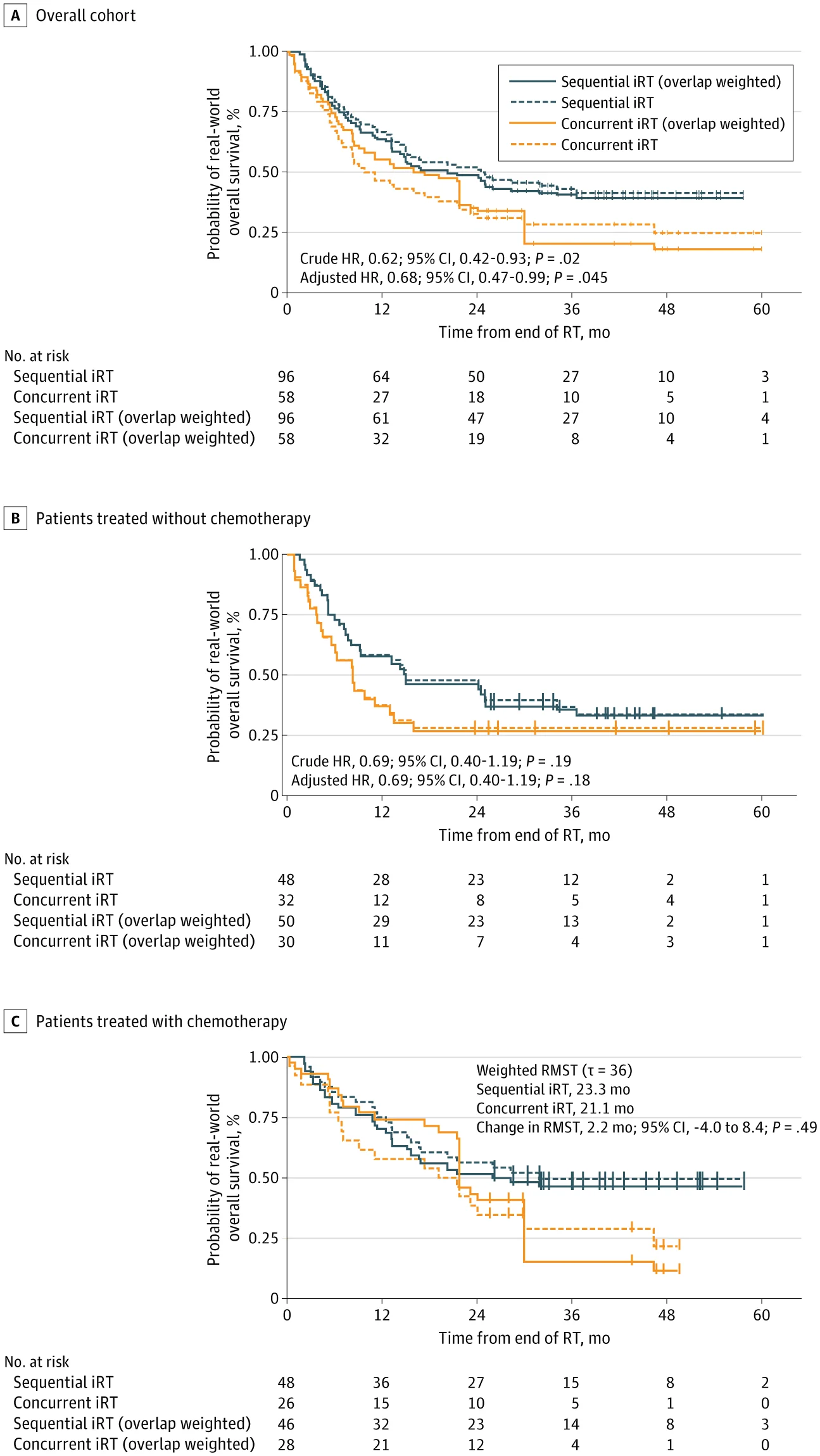
In OCEANUS, patients treated with sequential immunoradiotherapy experienced significantly longer survival compared with those receiving concurrent treatment.
Key Results
- Median overall survival: 20.3 months with sequential iRT versus 16.0 months with concurrent iRT
- Hazard ratio for death: 0.68
- Three-year overall survival: 40.7% versus 20.3%
These findings suggest that allowing radiotherapy to complete before initiating immune checkpoint inhibition may create a more favorable environment for immune activation and long-term disease control.
Greater Benefit With Definitive Radiotherapy
Interestingly, the survival advantage associated with sequential treatment appeared most pronounced among patients receiving definitive-dose radiotherapy.
Definitive radiotherapy is generally used in patients with unresectable locally advanced disease and delivers substantially higher radiation doses than palliative treatment. Such regimens can produce profound effects on both tumor burden and immune-cell populations.
In this subgroup, sequential treatment was associated with a marked improvement in survival.
Key Results
Definitive radiotherapy subgroup: HR 0.49
Locally advanced disease subgroup: HR 0.57
By contrast, no statistically significant benefit was observed among patients receiving palliative radiotherapy or among those presenting with de novo metastatic disease. Although interaction testing was not significant, these observations raise the possibility that treatment intent and radiation dose may influence the optimal timing of immunotherapy.
 Radiotherapy Followed by Immunotherapy Maintenance in Refractory Disease
The investigators also explored a clinically challenging population: patients whose disease had progressed after prior therapies.
Radiotherapy is frequently used in this setting for symptom control, treatment of oligoprogressive lesions, or management of resistant disease sites. Whether immunotherapy should be resumed after radiotherapy remains uncertain.
In OCEANUS, patients who restarted immune checkpoint inhibition following radiotherapy demonstrated numerically longer survival than those who did not receive maintenance immunotherapy.
Key Results
- Median overall survival: 11.2 months with ICI maintenance versus 6.7 months without maintenance
- Hazard ratio: 0.72
- Three-year overall survival: 28.0% versus 18.6%
Although these differences did not reach statistical significance, the magnitude of improvement suggests that selected patients may derive benefit from continued immune stimulation after local radiation therapy.
The Continuing Role of Chemotherapy
As immunotherapy becomes increasingly dominant in NSCLC management, the value of chemotherapy within combined treatment strategies continues to be debated.
The OCEANUS analysis demonstrated that chemotherapy remained associated with improved outcomes in newly diagnosed advanced disease. However, its benefit appeared highly dependent on clinical context.
Among newly diagnosed patients receiving immunoradiotherapy, chemotherapy was associated with longer survival. The advantage was particularly evident in patients treated with concurrent immunoradiotherapy.
Key Results
- Restricted mean survival time gain with chemotherapy: 4.7 months
- Concurrent iRT subgroup: RMST gain of 6.7 months
In contrast, chemotherapy failed to improve survival in refractory disease, regardless of whether immunotherapy maintenance was administered. These findings suggest that chemotherapy may retain an important role during initial treatment but becomes less valuable once patients develop treatment-resistant disease.
Biological Explanations for the Findings
Several biological mechanisms may explain why sequential treatment appeared superior.
Radiotherapy can initially induce lymphocyte depletion, particularly when large radiation fields and definitive doses are used. Delivering immunotherapy after completion of radiotherapy may allow partial immune recovery while simultaneously taking advantage of increased tumor antigen presentation generated by radiation-induced cell death.
By contrast, concurrent treatment may expose activated immune cells to radiation-related toxicity during the most vulnerable period of immune activation.
The findings are also consistent with recent randomized studies. While the PACIFIC trial established sequential immunotherapy as a standard approach after chemoradiotherapy, more recent concurrent strategies such as PACIFIC-2 and CheckMate 73L have not demonstrated clear survival advantages. OCEANUS provides additional real-world evidence supporting the sequential approach.
Clinical Implications
The study offers important practical lessons for clinicians treating advanced NSCLC.
- First, sequential immunoradiotherapy appears to be associated with better outcomes than concurrent treatment, particularly when definitive radiotherapy is administered.
- Second, continuation of immunotherapy after radiotherapy in refractory disease may provide benefit for selected patients, although prospective validation is still required.
- Third, chemotherapy continues to play an important role in newly diagnosed advanced disease but may contribute little in later treatment settings.
Most importantly, the results emphasize that the optimal integration of radiotherapy and immunotherapy is highly context dependent. Disease stage, treatment intent, radiation dose, prior therapies, and patient fitness all appear to influence outcomes.
Conclusion
The OCEANUS study provides some of the strongest real-world evidence to date regarding the optimal integration of radiotherapy and immunotherapy in advanced NSCLC. Sequential immunoradiotherapy was associated with superior survival compared with concurrent treatment, particularly among patients receiving definitive radiotherapy. In refractory disease, immunotherapy maintenance after radiotherapy demonstrated a promising, though not statistically significant, survival signal.
Although the retrospective nature of the study prevents definitive treatment recommendations, these findings support the growing concept that treatment sequencing matters. As prospective trials continue to investigate immunoradiotherapy combinations, OCEANUS offers valuable insight into how radiotherapy, immunotherapy, and chemotherapy may be most effectively combined to improve outcomes for patients with advanced NSCLC.
Read Full Article Here