The phase III HBI-8000-303 trial met its primary endpoint, demonstrating a statistically significant improvement in progression-free survival (PFS) with the oral histone deacetylase (HDAC) inhibitor HBI-8000 plus nivolumab compared with placebo plus nivolumab in patients with advanced melanoma who were naïve to PD-(L)1 inhibitors.
At a median follow-up of 37 months, median PFS was 11.7 months versus 7.4 months. The combination also produced a numerically higher objective response rate (ORR), alongside increased treatment-related toxicity and discontinuations.
Nikhil I. Khushalani presented the findings at ESMO 2026.
Background
HDAC inhibition is being investigated as a strategy to modify the tumor immune microenvironment and enhance responses to immune checkpoint blockade.
In an earlier phase Ib/II study, HBI-8000 plus nivolumab achieved an ORR of 66% in patients with anti-PD-(L)1–naïve advanced melanoma. HBI-8000-303 evaluated the combination in a randomized, placebo-controlled phase III setting.
Methods and Study Design
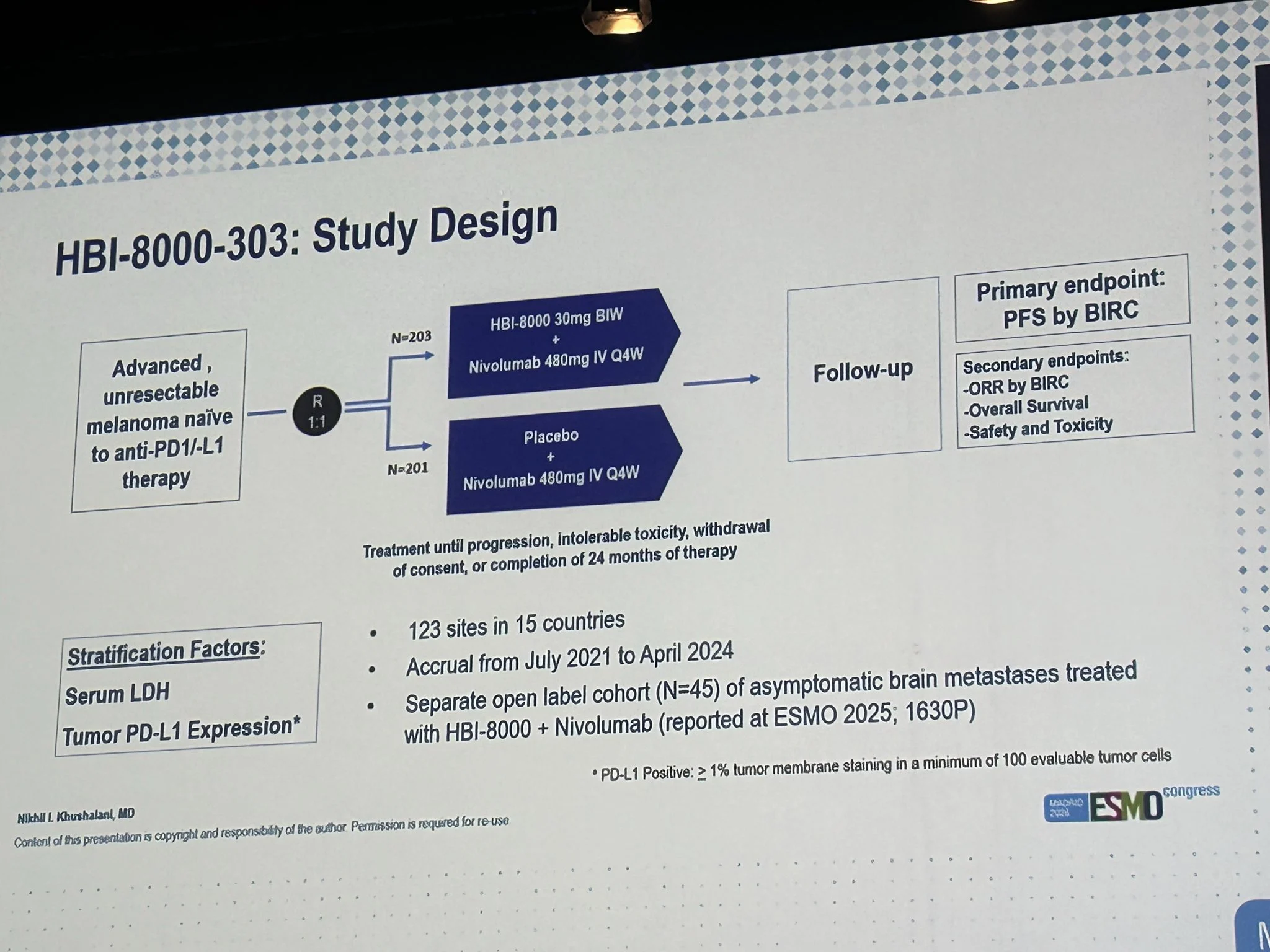
HBI-8000-303 was a global, randomized, double-blind, placebo-controlled trial conducted at 123 sites in 15 countries.
Eligible patients had unresectable or metastatic non-uveal melanoma, measurable disease, ECOG performance status 0–1, and adequate organ function. The reported population was naïve to PD-(L)1 inhibitors.
Between July 2021 and April 2024, 404 patients were randomized 1:1 to:
- HBI-8000 plus nivolumab (n = 203): Oral HBI-8000 30 mg twice weekly plus nivolumab 480 mg intravenously every four weeks.
- Placebo plus nivolumab (n = 201): Oral placebo twice weekly plus nivolumab at the same dose and schedule.
Randomization was stratified by tumor PD-L1 expression and serum lactate dehydrogenase (LDH).
Treatment continued until disease progression, intolerable toxicity, withdrawal of consent, or completion of 24 months of therapy.
The primary endpoint was PFS assessed by a blinded independent review committee (BIRC). Secondary endpoints included BIRC-assessed ORR, overall survival (OS), and safety.
A separate open-label cohort of 45 patients with asymptomatic brain metastases was reported previously and was not part of this randomized comparison.
Results
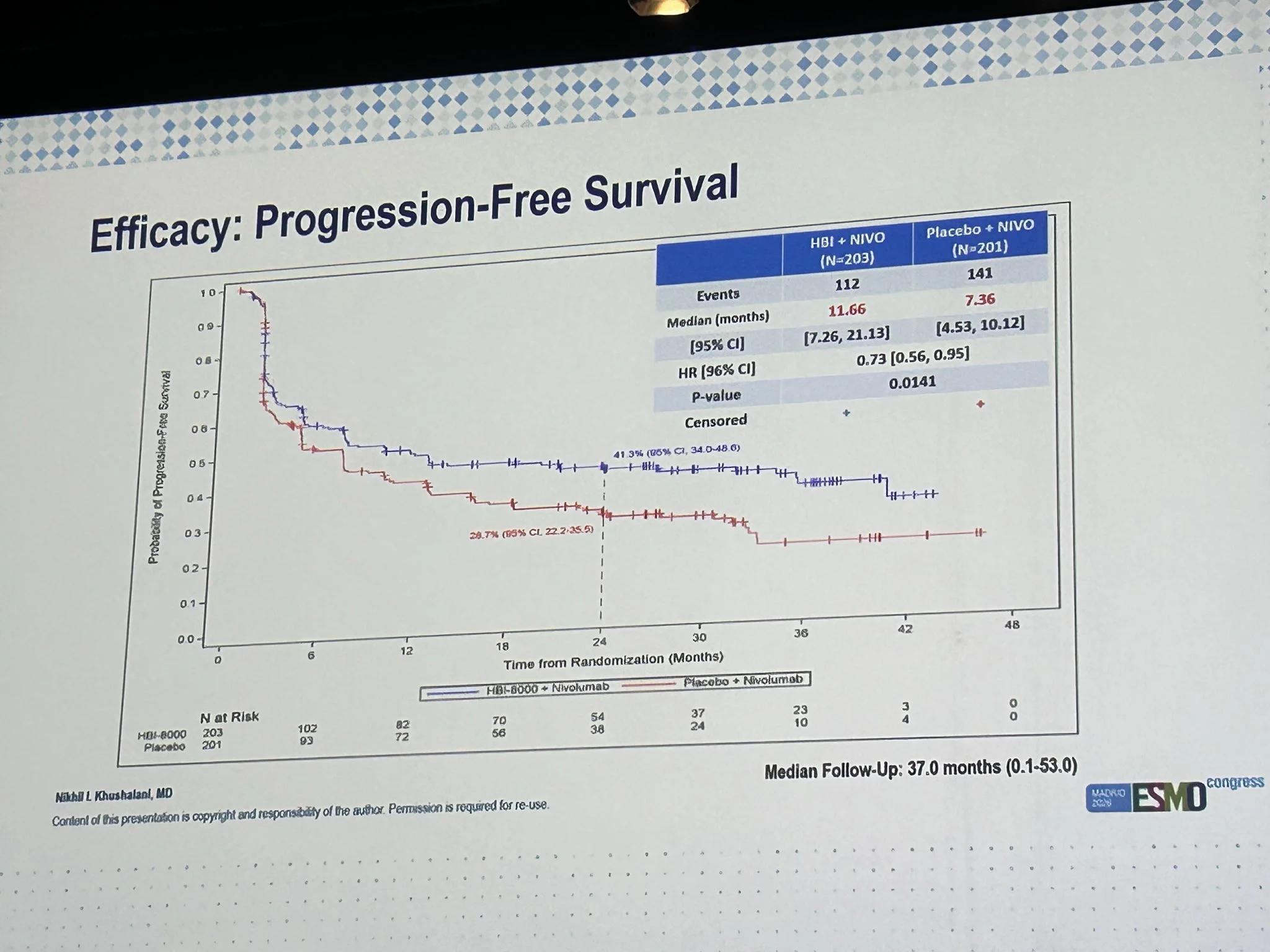
At a median follow-up of 37 months, baseline characteristics were reported as well balanced. Elevated LDH was present in 33.7% of patients.
- Progression-free survival: Median PFS was 11.7 months (95% CI 7.3–21.1) with HBI-8000 plus nivolumab versus 7.4 months (95% CI 4.5–10.1) with placebo plus nivolumab. The HR was 0.73 (96% CI 0.56–0.95; P = 0.0141), corresponding to a 27% reduction in the hazard of progression or death.
- Objective response: Confirmed ORR was 41.4% (95% CI 34.5–48.5) versus 32.3% (95% CI 25.9–39.3), respectively. This represents a numerical difference of 9.1 percentage points. A statistical comparison for ORR was not reported in the supplied abstract.
- Treatment-related adverse events: Adverse events described as “grade >3” in the supplied abstract occurred in 55% of patients receiving HBI-8000 plus nivolumab versus 18% receiving placebo plus nivolumab.
- Treatment discontinuation: Treatment-related adverse events of any grade led to discontinuation in 14% versus 5% of patients, respectively.
- Common toxicities: Diarrhea, nausea, fatigue, thrombocytopenia, asthenia, and neutropenia each occurred in more than 20% of patients receiving HBI-8000 plus nivolumab.
- Overall survival: OS results were not reported in the supplied abstract.
Interpretation
HBI-8000-303 demonstrated a statistically significant PFS improvement when HBI-8000 was added to nivolumab. ORR was numerically higher with the combination, although the supplied abstract did not report a statistical comparison for this endpoint.
The efficacy findings must be considered alongside the higher frequency of treatment-related toxicity and discontinuations. OS results are needed to assess whether the PFS improvement translates into longer survival.
The randomized comparison evaluated HBI-8000 plus nivolumab against nivolumab plus placebo. It does not establish superiority over dual checkpoint inhibition or other treatment strategies.
Conclusion
HBI-8000-303 met its primary endpoint, demonstrating improved PFS with HBI-8000 plus nivolumab compared with placebo plus nivolumab in anti-PD-(L)1–naïve advanced melanoma.
The benefit was accompanied by increased treatment-related toxicity and discontinuations. OS findings and further assessment of the benefit–risk balance will help define the combination’s clinical role.
STARBOARD Trial: Rethinking First-Line Therapy in BRAF-Mutant Melanoma