Messenger RNA (mRNA) vaccines have transformed modern medicine, demonstrating remarkable success against infectious diseases and emerging as one of the most promising platforms for personalized cancer immunotherapy. Conventional mRNA therapeutics rely on a highly engineered structure that includes a 5′ cap, untranslated regions (UTRs), start and stop codons, and a poly(A) tail to ensure stability and efficient translation.
A new study published in Nature Biomedical Engineering challenges this long-standing paradigm. Researchers report that extremely short, chemically synthesized RNA molecules lacking both a 5′ cap and a poly(A) tail can still be efficiently translated in immune cells, inducing potent antigen-specific CD8+ T-cell responses. The investigators introduce this new platform, termed ChemRNA, which could substantially simplify the manufacturing of individualized cancer vaccines while expanding our understanding of RNA biology.
What Is ChemRNA?
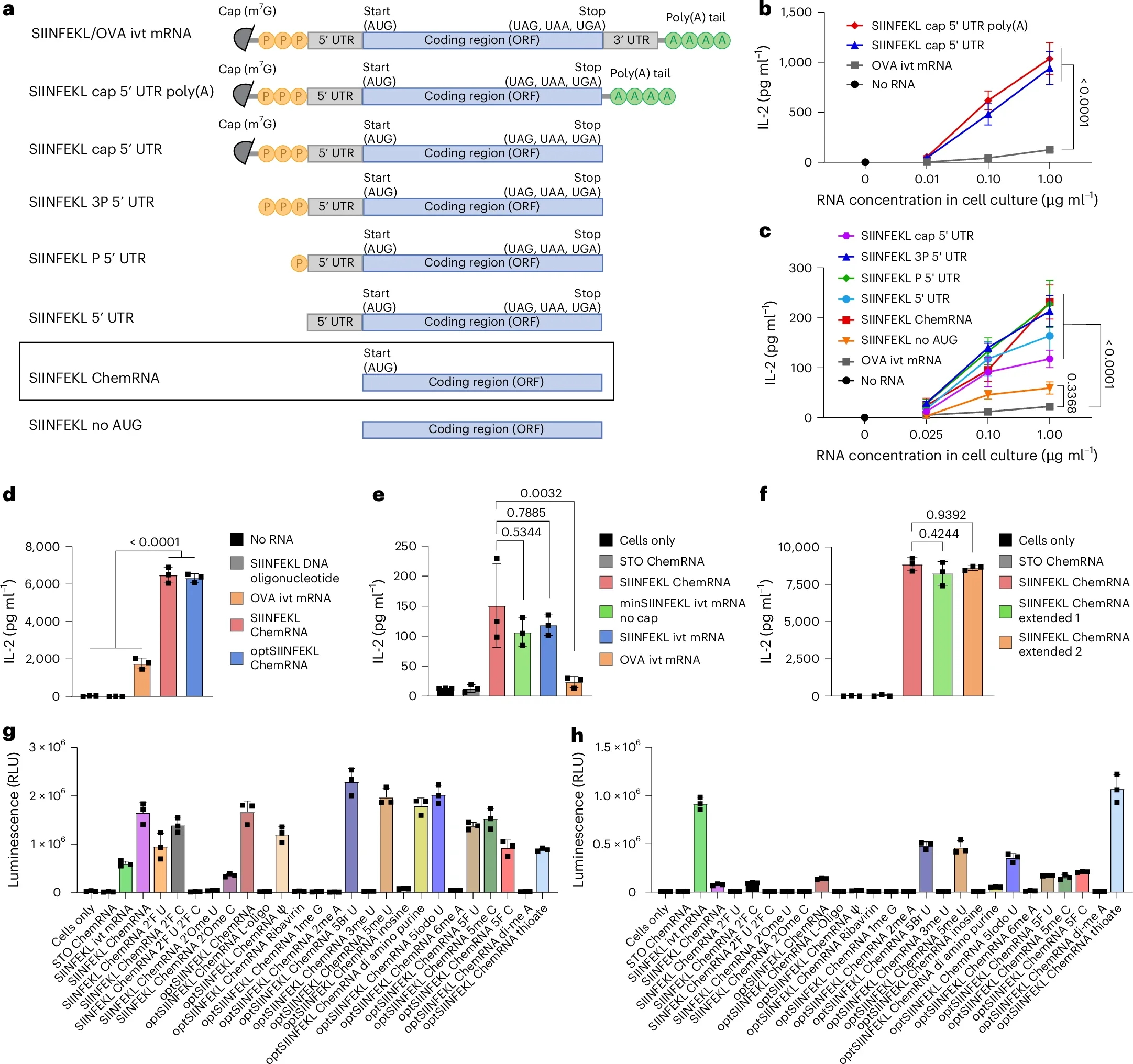
ChemRNA consists of short chemically synthesized RNA oligonucleotides encoding only the antigenic peptide sequence, without the structural elements traditionally considered essential for mRNA translation.
Unlike conventional in vitro-transcribed (IVT) mRNA, ChemRNA:
- requires no DNA template,
- contains no 5′ cap,
- contains no poly(A) tail,
- lacks untranslated regions,
- can be produced entirely through chemical synthesis.
The simplified manufacturing process could dramatically accelerate production of personalized neoantigen vaccines while reducing complexity and cost.
Challenging the Central Dogma of mRNA Translation
The most surprising finding was that these minimal RNA molecules remained highly functional despite lacking canonical translational elements.
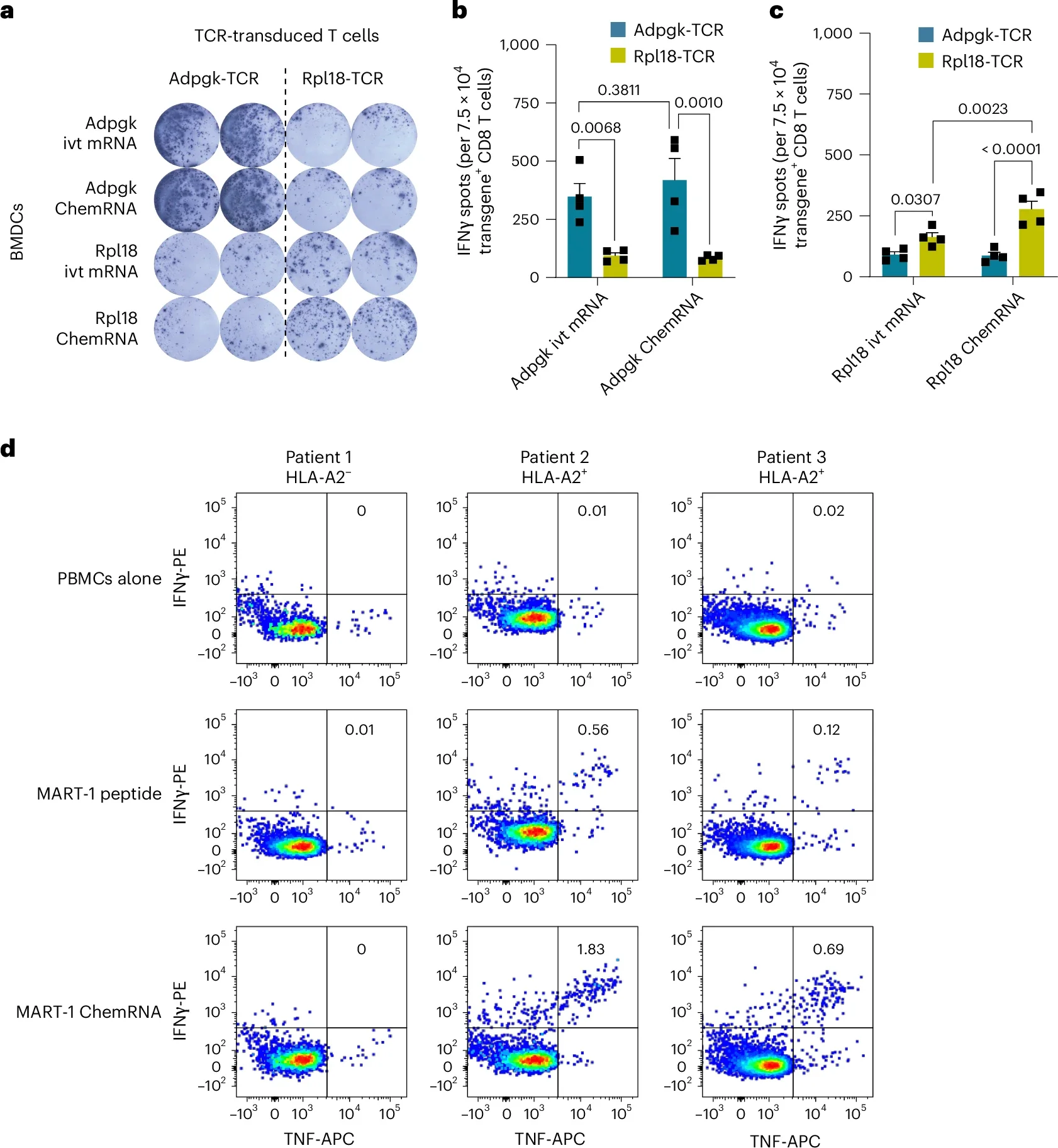
Across multiple in vitro experiments, ChemRNA efficiently generated peptide antigens that were presented on MHC class I molecules, leading to robust activation of antigen-specific CD8+ T cells. In several immune-cell assays, ChemRNA performed comparably to—or even better than—conventional IVT mRNA despite its dramatically simplified structure.
Efficient Activation of Antigen-Specific T Cells
The investigators evaluated ChemRNA encoding multiple viral and tumor-derived epitopes.
ChemRNA successfully stimulated:
- influenza-specific CD8+ T cells,
- cytomegalovirus-specific T cells,
- melanoma-associated MART-1-specific T cells,
- neoantigen-specific T cells targeting murine colorectal cancer mutations.
Importantly, antigen presentation occurred through the conventional MHC class I processing pathway, confirming that peptides generated from ChemRNA undergo normal intracellular antigen processing despite the unconventional RNA structure.
In Vivo Antitumor Activity
The platform was subsequently evaluated in mouse vaccination models.
Following intravenous administration using RNA lipoplexes, ChemRNA induced both innate and adaptive immune responses, including type I interferon production and expansion of antigen-specific CD8+ T cells.
Vaccination with ChemRNA delayed tumor growth, prolonged survival, and generated antitumor immunity comparable to conventional IVT mRNA in several experimental models. Although responses against certain neoantigens were somewhat weaker than optimized IVT mRNA, ChemRNA still produced meaningful tumor control and durable T-cell responses.
Potential Advantages for Personalized Cancer Vaccines
One of the greatest challenges in individualized cancer vaccination is manufacturing patient-specific mRNA rapidly enough to match clinical timelines.
Conventional IVT mRNA production requires multiple sequential enzymatic steps, including DNA template generation, in vitro transcription, capping, polyadenylation, and purification.
ChemRNA eliminates many of these steps by relying entirely on solid-phase chemical RNA synthesis, allowing rapid production of numerous short patient-specific RNA sequences in parallel.
This approach may be particularly attractive for personalized neoantigen vaccines, where each patient requires a unique combination of tumor-specific antigens.
Biological Implications
Beyond vaccine development, the study raises fundamental questions about RNA biology.
The findings suggest that short uncapped RNAs, previously considered non-coding or defective, may actually be translated into peptides capable of being presented by MHC class I molecules. This expands the potential repertoire of antigens recognized by the immune system and supports the concept that immune cells may possess specialized mechanisms for translating unconventional RNA species.
Limitations
Despite its promise, several challenges remain before clinical translation.
Longer ChemRNA constructs required for patient-specific neoantigens will need exceptionally high manufacturing purity to avoid unintended peptide generation. The mechanisms enabling translation of these unconventional RNA molecules also remain incompletely understood and require further investigation before clinical application.
Why This Study Matters
This work challenges one of the fundamental assumptions of mRNA biology—that efficient translation requires a capped and polyadenylated transcript. By demonstrating that chemically synthesized minimal RNAs can elicit potent antigen-specific CD8+ T-cell responses and generate meaningful antitumor immunity, the study introduces a potentially transformative platform for personalized cancer vaccination.
If validated clinically, ChemRNA could simplify manufacturing, accelerate the development of individualized neoantigen vaccines, and broaden the range of RNA molecules that can be exploited for immunotherapy, opening a new chapter in RNA-based cancer treatment.
Read All Article Here