CAR T-cell therapy is an advanced cancer treatment that uses a patient’s own immune cells, genetically modified to recognize and attack cancer cells. It has become an important treatment option for certain blood cancers, including lymphoma, leukemia, and multiple myeloma.
However, recovery after CAR T-cell therapy is different from recovery after conventional chemotherapy. Although the infusion itself usually takes a relatively short time, patients need close medical monitoring because the treatment can cause significant immune and neurological side effects.
The first 30 days are generally the most closely monitored period, but complete recovery can take several months.Some patients regain their strength and return to everyday activities within weeks, while others experience prolonged fatigue, low blood counts, or weakened immunity.
The recovery timeline depends on several factors, including the type of cancer, the CAR T-cell product used, previous treatments, overall health, and whether complications develop.
Understanding what happens during each stage can help patients and caregivers prepare for treatment, recognize warning signs, and plan a safer return to daily life.
What Is the Typical CAR T-Cell Therapy Recovery Time?
Most patients need at least several weeks to recover from the immediate effects of CAR T-cell therapy. However, recovery is not the same for everyone, and feeling physically better does not necessarily mean the immune system has fully recovered.
The first month is particularly important because potentially serious complications, including cytokine release syndrome (CRS) and immune effector cell-associated neurotoxicity syndrome (ICANS), may develop.
After this early period, patients often begin regaining energy and gradually returning to normal activities. Nevertheless, some continue to experience fatigue, infections, or low blood counts for several months.
Recovery generally involves three overlapping stages:
- Early recovery (first 30 days): Close monitoring for CRS, neurological complications, infections, and changes in blood counts.
- Intermediate recovery (months 1–3): Gradual improvement in physical strength, with continued monitoring of immunity, blood counts, and cancer response.
- Long-term recovery (after three months): Ongoing immune recovery, management of persistent symptoms, and monitoring for cancer recurrence or late complications.
Patients who develop severe complications or have undergone multiple previous cancer treatments may require longer recovery.
Research also suggests that quality of life can improve considerably during the months following successful CAR T-cell therapy, although some patients continue to experience physical or emotional difficulties (Chakraborty et al., 2019).
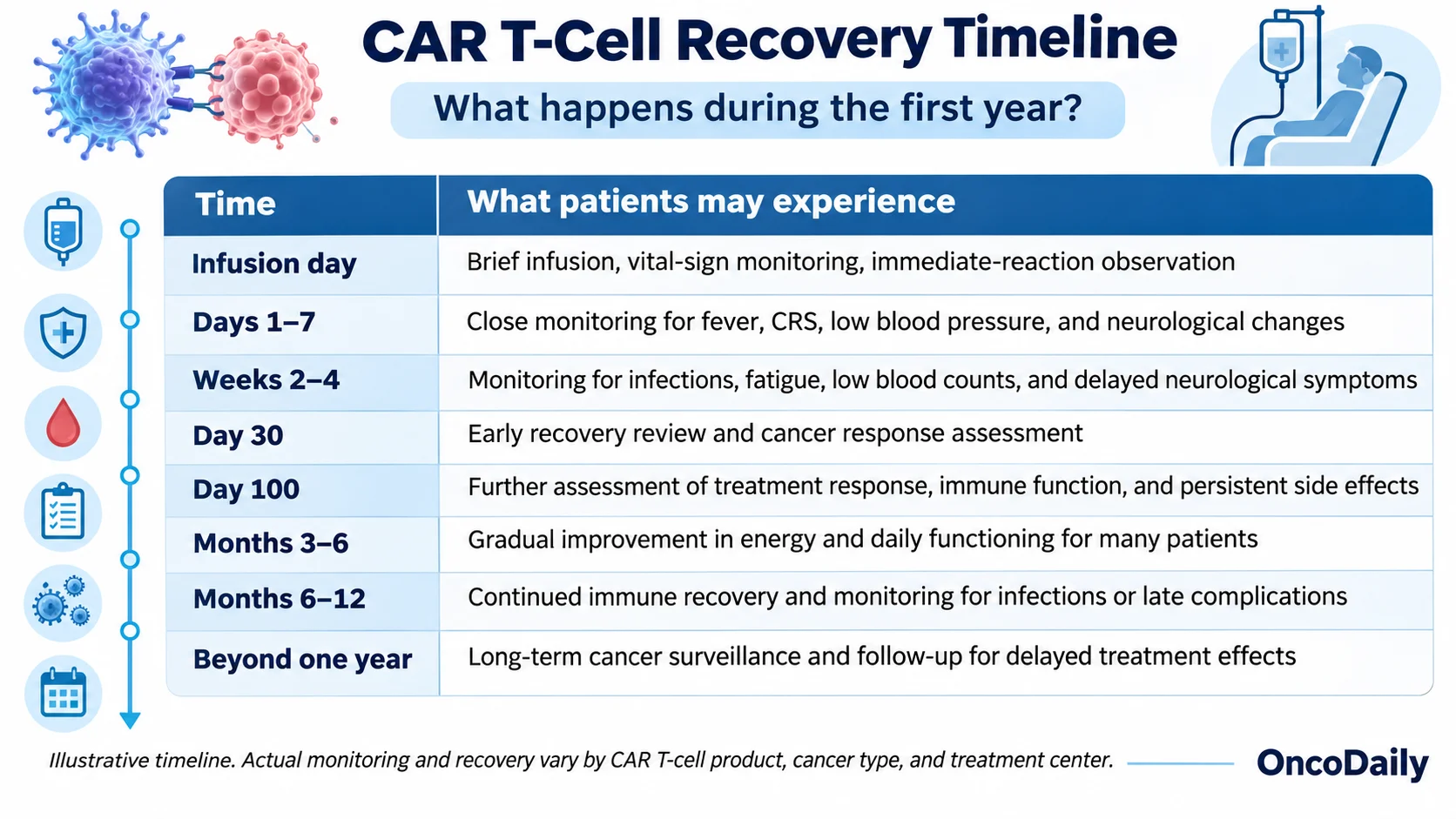
CAR T-Cell Recovery Timeline: What Happens During the First Year?
Recovery after CAR T-cell therapy is gradual, with the first 30 days requiring the closest monitoring. Although the infusion itself is brief, patients may experience side effects that affect their strength, immune function, and daily activities. Recovery varies depending on overall health, treatment response, and possible complications.
Infusion Day and the First Week
CAR T cells are administered through an intravenous infusion, usually lasting less than an hour. During the first week, doctors closely monitor patients for cytokine release syndrome (CRS), which can cause fever, fatigue, and low blood pressure. Neurological symptoms, including confusion or speech difficulties, may also occur. Some patients remain hospitalized, while others receive outpatient monitoring.
Weeks 2–4: Early Recovery
Fatigue, reduced appetite, and low blood counts are common during this period. Although the risk of early complications generally decreases, infections and delayed neurological symptoms remain possible. Regular medical visits and caregiver support are important, with an initial cancer response assessment often performed around day 30.
Days 30–100: Regaining Strength
Many patients gradually regain energy and become more active. However, weakened immunity, anemia, and fatigue may persist. Blood tests and imaging or other disease-specific examinations help doctors evaluate recovery and treatment response.
Months 3–6: Returning to Daily Life
Physical strength and quality of life often improve during these months. Patients may gradually return to work, exercise, and social activities, although some continue to need support for infections or low blood counts. Follow-up visits may become less frequent as their condition stabilizes.
Months 6–12 and Beyond: Long-Term Recovery
After six months, care increasingly focuses on immune recovery, cancer surveillance, and managing persistent symptoms. While many patients return to their usual routines, others experience prolonged fatigue or immune suppression. Regular follow-up remains important even after the first year.
Overall, many patients experience significant improvement within three to six months, but complete recovery may take longer, depending on individual circumstances (Hayden et al., 2022; Chakraborty et al., 2019).
How Long Is the Hospital Stay After CAR T-Cell Therapy?
Hospitalization after CAR T-cell therapy depends on the treatment center, the CAR T-cell product, and whether complications develop.
Some patients remain hospitalized for approximately one to two weeks, while others receive their infusion as outpatients and return for frequent monitoring.
Patients who develop severe CRS, neurological complications, or infections may need longer hospital stays. Occasionally, intensive care is necessary to support breathing, blood pressure, or other organ functions.
Before discharge, doctors generally assess whether the patient is medically stable, whether any acute complications are controlled, and whether safe follow-up arrangements are available.
Inpatient vs. Outpatient Recovery
Inpatient care allows healthcare professionals to monitor patients continuously, which can be particularly important for those at increased risk of complications.
Outpatient treatment may be appropriate for selected patients who are clinically stable and have reliable access to their treatment center.
However, outpatient treatment does not necessarily mean a faster recovery. Patients may still require daily assessments during the earliest period and hospital admission if complications develop.
Staying Near the Treatment Center
Patients are usually required to remain near their CAR T-cell treatment center during early recovery.
In June 2025, the US Food and Drug Administration updated the labeling of certain approved CAR T-cell therapies, including recommendations for patients to remain near a healthcare facility for at least two weeks after infusion. Some treatment centers continue to recommend a longer period, often around four weeks, depending on the product and clinical circumstances.
Patients who live far from the hospital may need temporary accommodation.
Why Is Caregiver Support Important?
A caregiver plays an important role during early recovery because some complications can affect a patient’s ability to recognize symptoms or communicate clearly.
Caregivers may help monitor temperature, identify confusion or speech changes, organize medications, arrange transportation, and contact the treatment team when necessary.
The required duration of caregiver support varies. Some centers recommend continuous supervision during the initial weeks, with additional assistance depending on the patient’s recovery.
What Side Effects Can Affect CAR T-Cell Recovery?
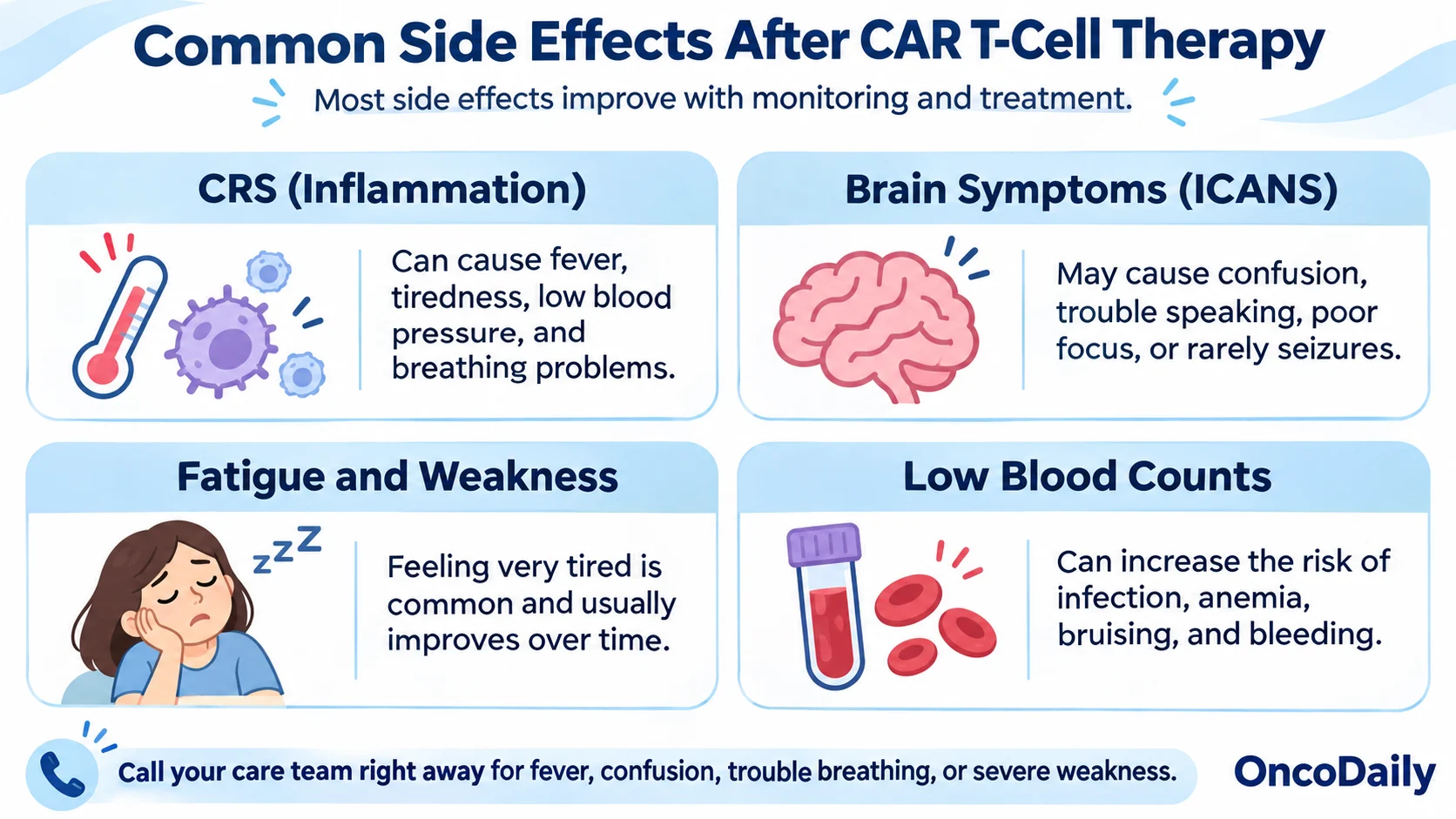
Although CAR T-cell therapy can produce long-lasting responses in certain cancers, recovery may be complicated by inflammatory reactions, neurological symptoms, infections, and changes in blood counts.
The severity of these effects varies considerably. Some patients experience only mild symptoms, while others need intensive medical treatment.
Cytokine Release Syndrome (CRS)
CRS occurs when activated immune cells release inflammatory signaling molecules called cytokines.
It commonly develops during the early period after infusion, although the onset depends on the CAR T-cell product.
Symptoms can range from fever and fatigue to low blood pressure and breathing difficulties.
Treatment depends on severity. Some patients require supportive care, while others receive tocilizumab, a medication that blocks the interleukin-6 receptor, and sometimes corticosteroids.
Most episodes resolve with appropriate treatment, but severe CRS can prolong hospitalization and physical recovery.
Neurological Side Effects (ICANS)
ICANS is a neurological complication associated with CAR T-cell therapy.
Patients may experience difficulty concentrating, confusion, speech problems, changes in handwriting, or impaired coordination. Severe cases can involve seizures or reduced consciousness.
Neurological symptoms often occur during the first few weeks, sometimes after CRS has developed or resolved.
Corticosteroids are an important treatment for significant ICANS. Tocilizumab is used primarily for CRS and does not reliably treat isolated ICANS.
Most patients with ICANS improve, but some experience prolonged cognitive or neurological difficulties requiring further assessment and rehabilitation (Santomasso et al., 2021).
Fatigue and Physical Weakness
Fatigue is one of the most common concerns during recovery.
Patients may feel exhausted after activities that were previously easy, such as walking, climbing stairs, or preparing meals.
Several factors can contribute, including anemia, inflammation, poor sleep, reduced physical activity, nutritional problems, and previous cancer treatments.
For many patients, energy improves gradually over weeks or months. Persistent or worsening fatigue should be evaluated rather than automatically attributed to CAR T-cell therapy.
How Quickly Do Blood Counts Recover?
CAR T-cell therapy is usually preceded by lymphodepleting chemotherapy, which temporarily reduces certain immune cells and helps prepare the body for the infused CAR T cells.
This treatment, together with other factors, can contribute to reduced blood counts.
- Neutropenia: Low neutrophil levels increase susceptibility to infections.
- Anemia: Low red blood cell levels may cause fatigue, weakness, and breathlessness.
- Thrombocytopenia: Low platelet levels increase the risk of bruising and bleeding.
Blood counts may begin recovering during the first several weeks. However, some patients develop prolonged or recurrent cytopenias lasting months.
Depending on severity, treatment may include blood transfusions, growth factors, infection prevention, or further bone marrow evaluation (Hayden et al., 2022).
How Long Does the Immune System Take to Recover After CAR T-Cell Therapy?
Immune recovery is often slower than physical recovery.
Even when patients feel well enough to resume daily activities, their immune systems may remain weakened for several months or longer.
This occurs partly because CAR T-cell therapy affects specific immune cell populations. Previous chemotherapy, the underlying cancer, and medications used to manage complications can also contribute.
B-Cell Aplasia and Low Immunoglobulin Levels
Some CAR T-cell therapies target CD19, a protein found on certain cancer cells and normal B cells.
As a result, normal B cells may also be depleted. This is called B-cell aplasia.
B cells help produce antibodies that protect the body against infections. When their numbers remain low, patients may develop reduced immunoglobulin levels, particularly immunoglobulin G (IgG).
Patients receiving BCMA-directed CAR T-cell therapy for multiple myeloma can also experience substantial impairment of antibody production because the treatment affects plasma cells.
In selected patients, especially those with low immunoglobulin levels and recurrent or serious infections, doctors may recommend intravenous immunoglobulin (IVIG) replacement.
Immune recovery may take many months, and some patients require longer-term support (Hill and Seo, 2020; Tabbara et al., 2024).
How Can Patients Reduce Infection Risk?
Infection prevention is important throughout recovery, particularly when white blood cell counts or immunoglobulin levels remain low.
Patients are generally advised to maintain good hand hygiene, avoid close contact with sick individuals, follow appropriate food-safety practices, and take prescribed preventive medications.
Masks may be helpful in crowded indoor environments or during periods of significant immune suppression.
If a central venous catheter remains in place, proper catheter care is also essential.
Patients should follow their treatment team’s instructions about fever. A temperature of 38°C (100.4°F) or higher generally requires immediate contact with the CAR T-cell team, even if the patient otherwise feels well.
When Can Patients Receive Vaccines?
CAR T-cell therapy may reduce protection from previous vaccinations, making revaccination an important part of long-term care.
The appropriate schedule depends on immune recovery, the vaccine, previous treatments, and national recommendations.
Certain non-live vaccines may be recommended within the first several months, while other vaccinations may be delayed until the immune system is more likely to respond.
Live vaccines generally require a longer waiting period and should not be administered until the treatment team confirms that immune recovery is sufficient.
Patients should not restart vaccinations without discussing an individualized schedule with their oncology team (Hayden et al., 2022).
When Can You Return to Normal Activities After CAR T-Cell Therapy?
Returning to normal life is an important part of recovery, but there is no single timeline that applies to every patient.
Some individuals regain independence relatively quickly, while others need several months before they can comfortably return to work, travel, or exercise.
The safest approach is to increase activity gradually, taking into account fatigue, blood counts, neurological recovery, and infection risk.
When Can You Return to Work or School?
Many patients need several weeks to a few months away from work or school.
The appropriate timing depends on the physical and mental demands of daily activities.
For example, someone with a desk-based job may be able to return sooner than someone whose work involves heavy lifting, prolonged standing, or frequent exposure to large groups of people.
Patients experiencing persistent fatigue, impaired concentration, or immune suppression may benefit from reduced working hours or remote arrangements.
A gradual return, with appropriate workplace accommodations, is often more manageable than immediately resuming a full schedule.
When Is It Safe to Drive or Travel?
Driving restrictions are particularly important because CAR T-cell therapy can cause neurological complications that affect attention, coordination, and reaction time.
Updated FDA labeling for certain CAR T-cell products recommends avoiding driving for at least two weeks after infusion. Other products and treatment centers may require longer restrictions, including eight weeks, particularly when neurological complications have occurred.
Patients should follow their specific product instructions and obtain clearance from their CAR T-cell team before driving.
Long-distance travel and air travel should also be discussed with the treatment team, especially during the early recovery period.
Patients should carry their CAR T-cell treatment identification card and emergency contact information when traveling.
Physical Activity and Rehabilitation
Gentle physical activity can help patients rebuild strength and reduce the effects of prolonged inactivity.
Short walks are often a reasonable starting point, followed by gradual increases in duration and intensity as tolerated.
Some patients benefit from physical therapy, particularly after prolonged hospitalization, severe weakness, or neurological complications.
Activities involving heavy lifting or increased injury risk may need to be avoided when platelet counts are low or a central line remains in place.
Appetite, Nutrition, and Weight Recovery
Reduced appetite, nausea, taste changes, and gastrointestinal symptoms can make eating difficult during recovery.
Patients may find smaller, more frequent meals easier to tolerate than large meals.
Adequate protein, calories, and hydration support muscle recovery and general health. Patients with persistent weight loss, diarrhea, or poor appetite may benefit from an oncology dietitian.
Food-safety precautions remain important while the immune system is weakened.
Mental Health and Quality of Life
Recovery is not only physical.
Some patients experience anxiety, low mood, fear of recurrence, or difficulty adjusting to life after intensive cancer treatment.
Caregivers may also experience emotional stress, financial concerns, and exhaustion.
Counseling, support groups, social workers, and rehabilitation services can help patients and families manage these challenges.
Studies suggest that quality of life often improves during the first three to six months following CAR T-cell therapy, particularly among patients who achieve a favorable cancer response. However, persistent symptoms and emotional difficulties remain important concerns for some survivors (Chakraborty et al., 2019).
What Follow-Up Care Is Needed After CAR T-Cell Therapy?
Regular follow-up is essential after CAR T-cell therapy to monitor treatment response, immune recovery, and possible complications. Patients may need daily or weekly visits during the first month, followed by less frequent appointments as their condition improves. Important assessments are often scheduled around day 30, day 100, six months, and one year (Hayden et al., 2022).
What Tests Are Used During Follow-Up?
Doctors regularly check blood counts, kidney and liver function, and immune-system activity. Depending on the cancer type, patients may also undergo PET/CT scans, bone marrow examinations, or disease-specific blood tests. These assessments help identify complications and determine how well the treatment is working.
Does Recovery Differ by Cancer Type?
Recovery varies between lymphoma, leukemia, and multiple myeloma. CD19-directed therapies can cause prolonged B-cell depletion, while BCMA-directed treatments may significantly reduce antibody levels and increase infection risk. Previous treatments, overall health, and the specific CAR T-cell product also influence recovery (Hill and Seo, 2020).
Which Symptoms Require Urgent Medical Care?
Patients should seek immediate medical attention if they develop:
Fever of 38°C (100.4°F) or higher.
Confusion, speech difficulties, or seizures.
Breathing problems, chest pain, or fainting.
Unusual bleeding or severe weakness.
Persistent vomiting, severe diarrhea, or difficulty walking.
These symptoms may indicate serious complications, even after the initial recovery period.
How Long Does Long-Term Follow-Up Continue?
Long-term monitoring remains important even when patients achieve remission. Doctors continue checking for cancer recurrence, immune suppression, and delayed complications, including secondary cancers.
Safety follow-up generally extends for 15 years after CAR T-cell therapy, helping identify rare late effects and support long-term health (FDA, 2024; Hayden et al., 2022).
FAQ
How Long Does It Take to Recover From CAR T-Cell Therapy?
Most patients need several weeks to recover from the initial treatment. Many feel significantly better within three to six months, although full recovery may take longer.
How Long Do You Stay in the Hospital After CAR T-Cell Therapy?
Some patients stay in the hospital for one to two weeks, while others receive treatment as outpatients. The length of stay depends on their condition and any complications.
What Are the Most Common Side Effects of CAR T-Cell Therapy?
Common side effects include fever, fatigue, low blood counts, and infections. Some patients may also experience cytokine release syndrome (CRS) or neurological symptoms.
When Can You Return to Normal Activities After CAR T-Cell Therapy?
Many patients gradually return to everyday activities within a few weeks to months. The timing depends on their energy levels, immune recovery, and overall health.
How Long Does the Immune System Take to Recover After CAR T-Cell Therapy?
Immune recovery can take several months or longer. Some patients remain at increased risk of infections and need continued monitoring or preventive treatment.