CAR T-cell therapy has transformed the treatment landscape for several advanced hematologic malignancies, offering durable responses for many patients with relapsed or refractory cancers. However, as with any intensive cancer therapy, CAR T-cell treatment carries risks ranging from acute immune toxicities to delayed complications. Understanding the risk of death after CAR T-cell therapy requires distinguishing between deaths caused by disease progression and those associated with treatment-related complications.
What Is the CAR T-Cell Therapy Death Rate?
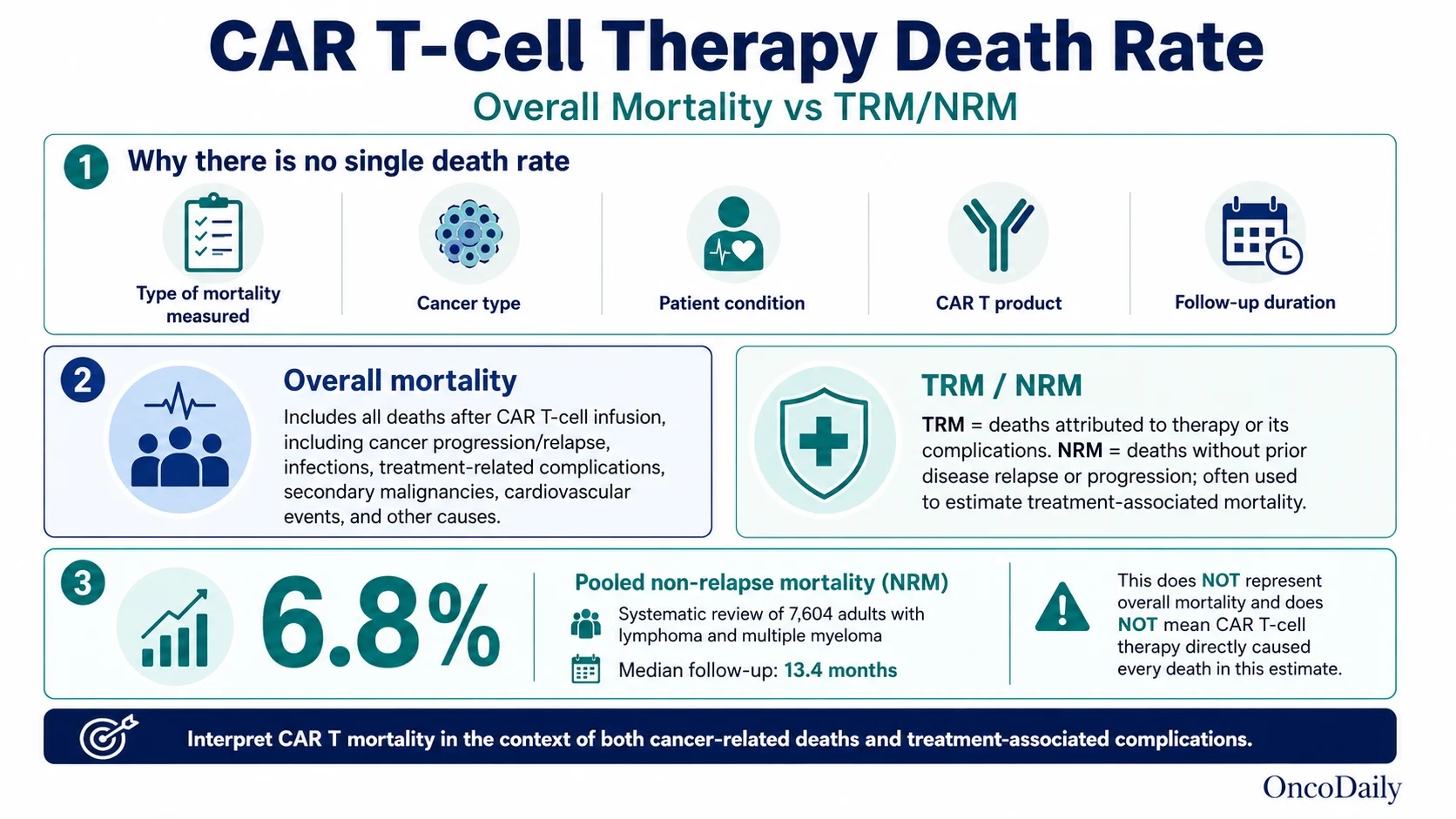
The risk of death after CAR T-cell therapy cannot be described by a single number because outcomes depend on the type of mortality being measured, the cancer being treated, the patient’s condition, the CAR T-cell product used, and the duration of follow-up.
Two measures are particularly important when discussing mortality after CAR T-cell therapy. Overall mortality includes all deaths occurring after CAR T-cell infusion, including those caused by cancer progression or relapse, infections, treatment-related complications, secondary malignancies, cardiovascular events, and other medical conditions. In contrast, treatment-related mortality (TRM) refers to deaths attributed specifically to therapy or its complications, whereas non-relapse mortality (NRM) refers to deaths occurring without prior disease relapse or progression and is commonly used as a practical endpoint for evaluating competing causes of death.
This distinction is essential because CAR T-cell therapy is typically used in patients with relapsed or refractory cancerswho have already received multiple lines of treatment. Therefore, many deaths after CAR T-cell therapy are related to the underlying malignancy rather than treatment toxicity.
A large systematic review including 7,604 adults with lymphoma and multiple myeloma reported a pooled non-relapse mortality of approximately 6.8% at a median follow-up of 13.4 months. This means that approximately 7 out of 100 patients died from causes other than cancer relapse or progression in the analyzed studies. It does not represent overall mortality, nor does it mean that CAR T-cell therapy itself was directly responsible for every death included in this estimate. (Cordas dos Santos et al., 2024)
Overall survival after CAR T-cell therapy is strongly influenced by the ability of treatment to achieve durable cancer control. Patients who achieve long-term remission may experience prolonged survival, whereas those with aggressive disease, early relapse, or treatment complications may have poorer outcomes. Therefore, the ‘death rate’ after CAR T-cell therapy should always be interpreted in the context of both cancer-related mortality and treatment-associated complications.
Treatment-Related Mortality After CAR T-Cell Therapy: How Often Does It Occur?
Treatment-related mortality (TRM) after CAR T-cell therapy is uncommon but clinically important. The risk varies depending on the underlying cancer, CAR T-cell product, patient characteristics, disease burden, and duration of follow-up. In contemporary studies, treatment-related deaths are generally reported in the low single-digit range, although estimates vary between clinical trials and real-world populations.
A more commonly reported measure is non-relapse mortality (NRM), which captures deaths occurring without prior cancer relapse or progression. In the systematic review of 7,604 lymphoma and myeloma patients, pooled NRM was approximately 6.8% at a median follow-up of 13.4 months. (Cordas dos Santos et al., 2024)
Early mortality after CAR T-cell therapy occurs mainly during the period of intense immune activation and immune suppression following lymphodepletion and infusion. Important contributors include severe cytokine release syndrome (CRS), immune effector cell-associated neurotoxicity syndrome (ICANS), infections, immune effector cell-associated HLH/macrophage activation syndrome, and organ complications.
Over time, causes of mortality change. Early deaths are more commonly associated with acute toxicities and infections, whereas later non-relapse deaths are increasingly linked to prolonged cytopenias, immune dysfunction, secondary malignancies, and delayed complications. In pooled analyses, infections represented the largest contributor to non-relapse deaths. (Cordas dos Santos et al., 2024)
How Does Cancer Type and CAR T Product Affect Mortality Risk?
Mortality after CAR T-cell therapy varies between cancer types and products, but these differences are influenced by multiple factors, including disease aggressiveness, tumor burden, previous treatments, immune function, and patient characteristics. Therefore, differences between CAR T products should be interpreted cautiously and do not necessarily mean that one product is universally safer than another.
In a large systematic review including 7,604 patients with lymphoma and multiple myeloma, pooled non-relapse mortality (NRM) differed between malignancies:
- Indolent lymphoma: approximately 5.7%
- Large B-cell lymphoma: approximately 6.1%
- Multiple myeloma: approximately 8.0%
- Mantle-cell lymphoma: approximately 10.6%
The higher NRM observed in some diseases likely reflects differences in disease biology and patient condition. Patients with mantle-cell lymphoma and multiple myeloma are often heavily pretreated and may have greater immune dysfunction, marrow impairment, infection susceptibility, and comorbidities. In contrast, patients with indolent lymphoma may have lower disease-related mortality, making treatment-related complications a larger competing risk. (Cordas dos Santos et al., 2025)
The CAR T-cell target and product also influence the patient population being treated. CD19-directed CAR T-cell therapies are mainly used for B-cell leukemias and lymphomas, whereas BCMA-directed CAR T-cell therapies are primarily used in multiple myeloma. Because these diseases differ substantially in age distribution, prior treatments, disease burden, and immune status, direct comparisons between CD19 and BCMA products should be interpreted carefully.
Some studies have reported differences in NRM between CAR T-cell products; however, these comparisons are difficult to interpret because products are used in different diseases and patient populations. (Cordas dos Santos et al., 2025)
CAR T-cell design may also influence toxicity patterns through differences in cellular expansion, persistence, and immune activation. For example, some studies have reported differences in CRS and ICANS rates between products, but higher toxicity rates do not always translate into higher mortality because treatment effectiveness and disease control also strongly influence survival outcomes. (Neelapu et al., 2018; Cappell et al., 2023)
Overall, mortality risk after CAR T-cell therapy is determined by the interaction between the cancer being treated, the patient’s baseline condition, and the characteristics of the CAR T-cell product, rather than by the product name alone.
You can also read CAR T-Cell Therapy: A New Frontier in Cancer Immunotherapy by OncoDaily.
Who Has a Higher Risk of Death After CAR T-Cell Therapy?
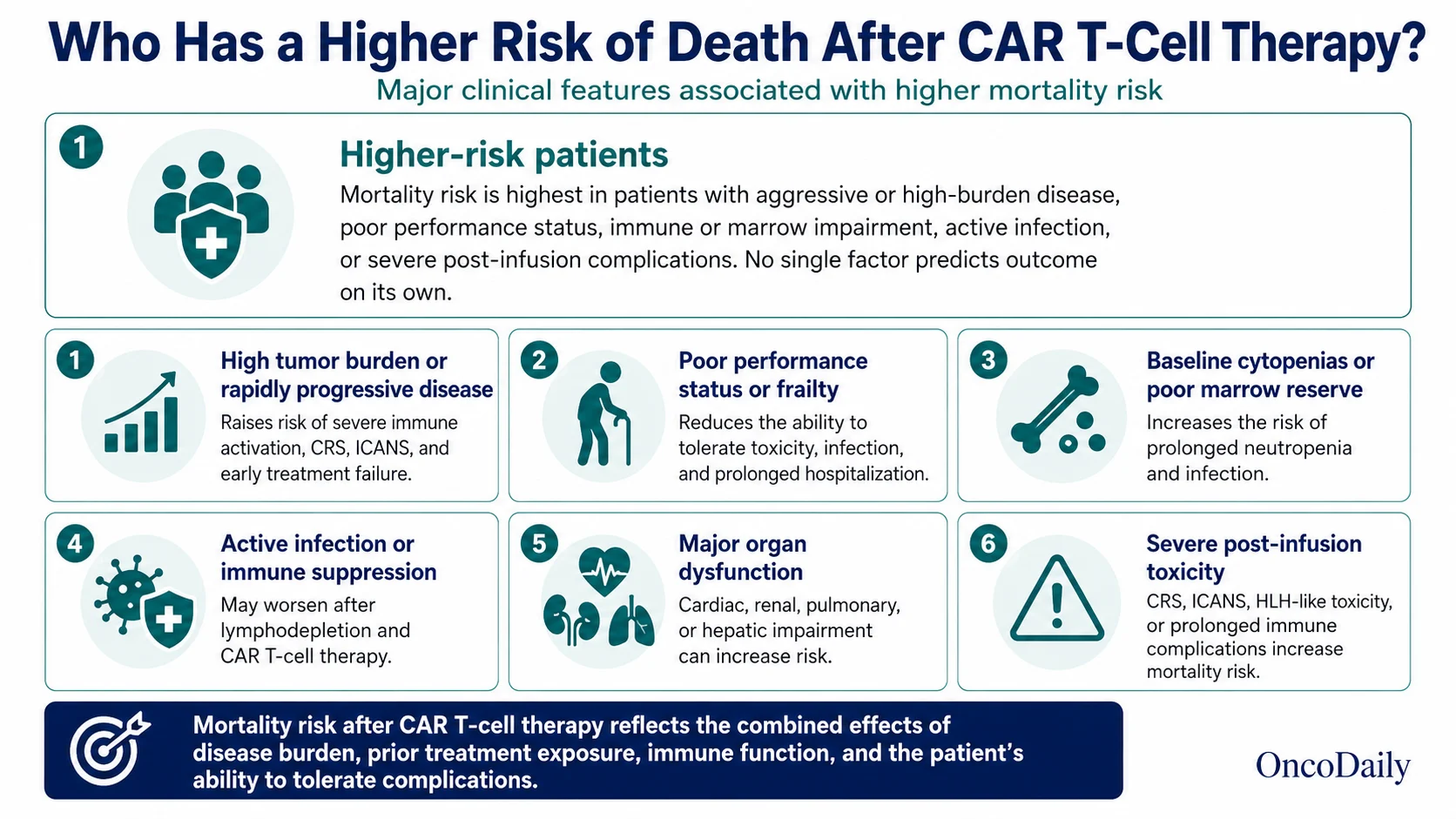
The highest mortality risk after CAR T-cell therapy is generally observed in patients with aggressive or high-burden disease, poor performance status, significant immune or marrow impairment, active infection, or severe post-infusion complications. No single factor predicts an individual outcome; risk results from the combination of disease characteristics, previous treatments, baseline health, and treatment-related complications.
Important risk factors include:
- High tumor burden or rapidly progressive disease, which can increase the risk of severe immune activation, CRS, ICANS, and early treatment failure.
- Poor performance status or frailty, which reduces the ability to tolerate inflammatory toxicity, infections, and prolonged hospitalization.
- Baseline cytopenias or impaired marrow reserve, increasing the risk of prolonged neutropenia and infection.
- Active infection or immune suppression, which may worsen after lymphodepletion and CAR T-cell therapy.
Major organ dysfunction, including cardiac, renal, pulmonary, or hepatic impairment. - Severe CRS, ICANS, HLH-like toxicity, or prolonged immune complications after infusion.
Individual mortality risk is therefore determined by the interaction between disease burden, immune function, prior therapy exposure, and the patient’s ability to tolerate complications rather than by a single clinical factor. (Cordas dos Santos et al., 2024; Lemoine et al., 2023)
What Are the Main Causes of Death After CAR T-Cell Therapy?
The causes of death after CAR T-cell therapy vary depending on whether death is related to cancer progression or treatment-associated complications. Overall mortality is most commonly driven by relapse or progression of the underlying malignancy, while infections are the leading cause among non-relapse deaths.
Cancer relapse remains a major cause of mortality because CAR T-cell therapy is usually given to patients with advanced, heavily pretreated disease. Treatment failure may occur due to factors such as tumor immune escape, loss of the target antigen, limited CAR T-cell persistence, or aggressive cancer biology.
Among non-relapse deaths, infections are the most frequent cause. The increased infection risk is related to previous treatments, lymphodepleting chemotherapy, prolonged cytopenias, B-cell or plasma-cell depletion, hypogammaglobulinemia, and immune suppression from treatments such as corticosteroids. (Cordas dos Santos et al., 2024)
Other important but less frequent causes include:
- CRS, which can cause severe inflammation, hypotension, respiratory failure, and organ dysfunction.
- ICANS, which can result in severe neurologic complications.
- Cardiovascular and respiratory complications related to inflammation, infection, or underlying medical conditions.
- Secondary malignancies, including rare secondary T-cell malignancies requiring long-term surveillance.
Although CRS and ICANS are the most recognized CAR T-cell toxicities, infections and cancer progression remain larger contributors to mortality. (Cordas dos Santos et al., 2024)
How Do CRS and ICANS Contribute to CAR T-Cell Therapy Mortality?
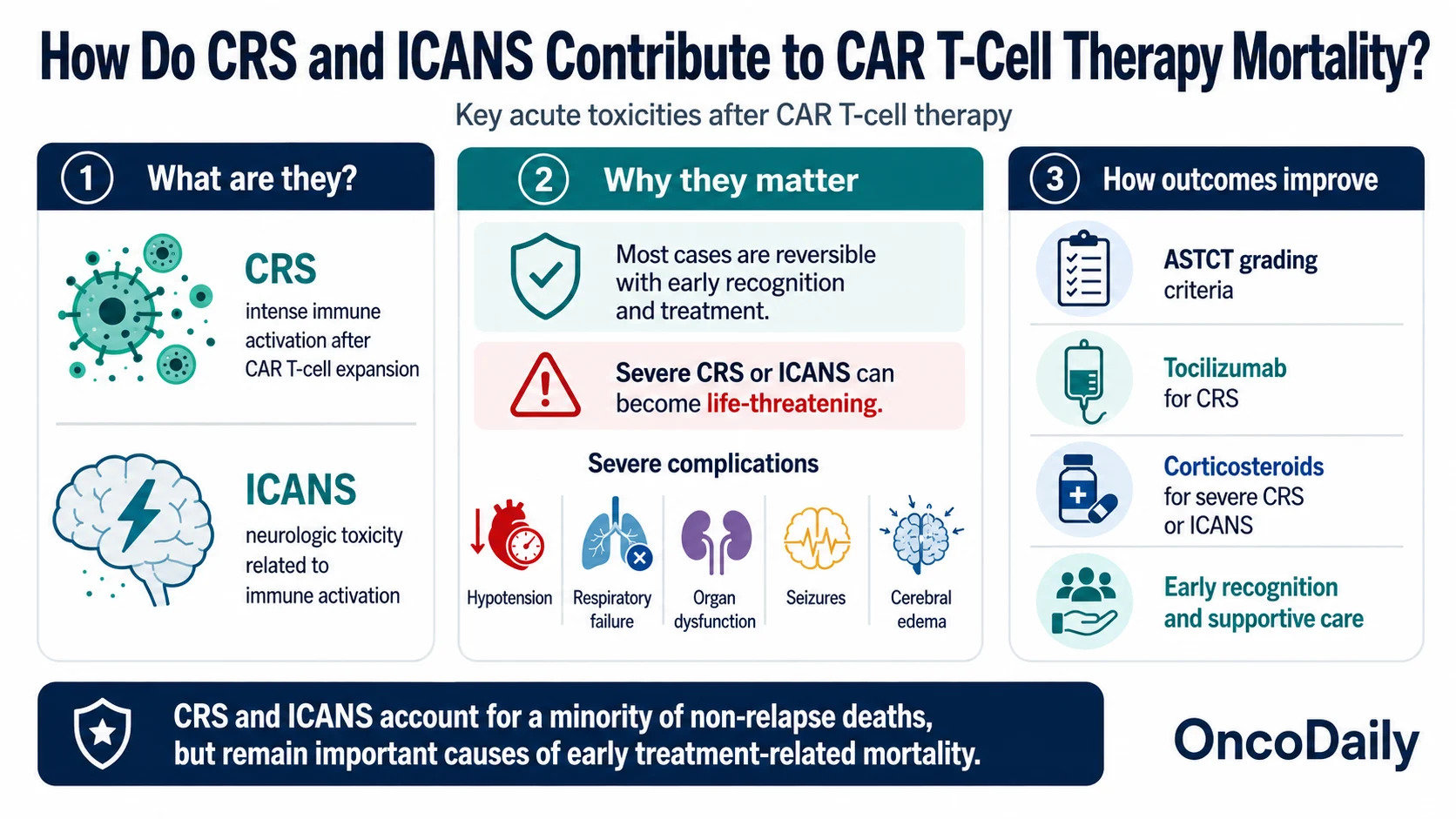
Cytokine release syndrome (CRS) and immune effector cell-associated neurotoxicity syndrome (ICANS) are the two characteristic acute toxicities of CAR T-cell therapy. They occur due to intense immune activation after CAR T-cell expansion and can become life-threatening when severe.
Most cases are reversible with early recognition and treatment; however, severe CRS or ICANS can lead to complications such as hypotension, respiratory failure, organ dysfunction, seizures, or cerebral edema. In pooled analyses, CRS and ICANS accounted for a minority of non-relapse deaths, but they remain important causes of early treatment-related mortality. (Cordas dos Santos et al., 2024)
Standardized grading systems, including ASTCT criteria, along with treatments such as tocilizumab for CRS and corticosteroids for severe CRS or ICANS, have significantly improved the management of these toxicities. (Lee et al., 2019; Brudno and Kochenderfer, 2024)
How Has CAR T-Cell Therapy Become Safer?
CAR T-cell therapy has become safer through improvements in patient selection, toxicity monitoring, infection prevention, and supportive care. Standardized grading systems for CRS and ICANS allow earlier recognition and treatment of complications before they become life-threatening.
The availability of therapies such as tocilizumab for CRS and corticosteroids for severe CRS or ICANS has improved toxicity management. Better infection prevention strategies, monitoring of prolonged cytopenias, and multidisciplinary cellular therapy programs have further reduced treatment-related complications.
Advances in CAR T-cell design and manufacturing continue to improve the balance between anti-cancer activity and toxicity, although careful patient selection and early management of complications remain essential for reducing mortality. (Brudno and Kochenderfer, 2024)
Written by Marine Marachlian, MD
FAQ
What is the death rate after CAR T-cell therapy?
There is no single death rate. Mortality depends on the cancer type, patient condition, CAR T product, and follow-up time.
What is non-relapse mortality (NRM)?
NRM refers to deaths occurring without prior cancer relapse or progression and is used to evaluate treatment-associated risks.
What is the NRM rate after CAR T-cell therapy?
A large systematic review reported an NRM of approximately 6.8% in adults with lymphoma and multiple myeloma.
Are most deaths after CAR T caused by the treatment?
No. Many deaths are caused by progression or relapse of the underlying cancer rather than CAR T-cell therapy itself.
What is the most common cause of non-relapse death after CAR T?
Infections are the leading cause of non-relapse mortality after CAR T-cell therapy.
Can CRS cause death after CAR T therapy?
Yes, severe cytokine release syndrome (CRS) can rarely become life-threatening due to shock, respiratory failure, or organ dysfunction.
Can ICANS be fatal?
Severe ICANS is uncommon but can cause serious neurologic complications, including seizures and cerebral edema.
Who has a higher risk of death after CAR T therapy?
Patients with high tumor burden, aggressive disease, poor performance status, active infection, immune dysfunction, or severe toxicities have higher risks.
Does the CAR T-cell product affect mortality risk?
Different products may have different toxicity profiles, but comparisons are difficult because patients and diseases treated are not the same.
Has CAR T-cell therapy become safer?
Yes. Improvements in monitoring, toxicity management, infection prevention, and supportive care have reduced treatment-related complications.