
When a tumor cell dies, what tells the immune system to recognize and attack the cancer cells that remain? The phase I ASTEROID trial explored this question by combining tolinapant, an investigational inhibitor of apoptosis protein (IAP) antagonist, with pembrolizumab. Six patients with advanced solid tumors had partial responses, and biopsies collected before the first pembrolizumab dose offered an early look at how tolinapant might influence the immune response.
Why target IAPs in cancer immunotherapy?
Pembrolizumab blocks PD-1, an inhibitory receptor on T cells. Tolinapant acts at a different point in the process. It targets proteins that help determine whether a stressed tumor cell survives, how it dies, and which inflammatory signals accompany its death.
Three members of the IAP family are particularly relevant. They regulate cell death through two distinct mechanisms.
- XIAP directly inhibits caspases 3, 7, and 9, enzymes involved in apoptosis.
- cIAP1 and cIAP2 modify signaling proteins, including receptor-interacting protein kinase 1 (RIPK1). These modifications influence whether a cell activates survival or death pathways.
In preclinical studies, Ward and colleagues showed that tolinapant promoted degradation of cIAP1 and cIAP2, antagonized XIAP, and induced TNFα-dependent apoptosis in cancer cell lines. The question for immunotherapy is whether these changes also help the immune system recognize tumor antigens.
How can dying tumor cells trigger an immune response?
Under certain conditions, dying tumor cells expose calreticulin on their surface and release molecules such as HMGB1. These danger signals can help dendritic cells take up tumor material and present its antigens to CD8+ T cells. When this process generates an adaptive immune response against tumor antigens, it is called immunogenic cell death.
RIPK1 provides a possible link between IAP inhibition and this process. When cIAP activity is blocked, RIPK1 can assemble with FADD and caspase-8 into a complex called the ripoptosome. Depending on the cell, this can lead to apoptosis or an inflammatory form of cell death called necroptosis.
Two preclinical studies examined the immune effects of IAP inhibition in different settings. One investigated how tumors respond to radiation, while the other examined innate and adaptive immunity in lymphoma.
- Head and neck cancer. Ye and colleagues found that tolinapant enhanced radiation-induced immunogenic cell death and altered the machinery that processes antigens for immune recognition.
- T-cell lymphoma. Ferrari and colleagues found that IAP antagonism affected both innate and adaptive immune responses in experimental models.
How did ASTEROID test the combination?
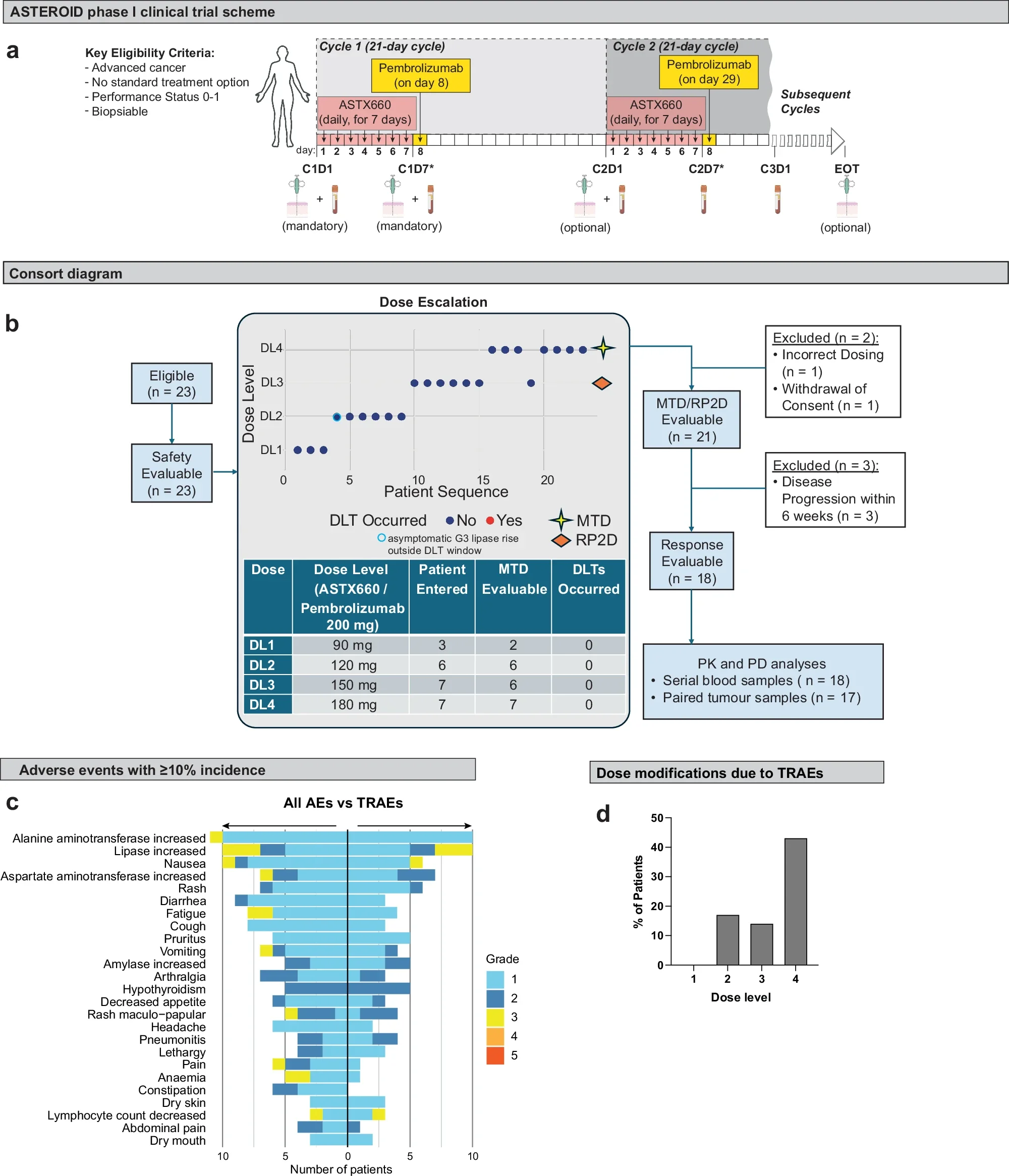
Tiu and colleagues reported Part A of ASTEROID, an open-label, multicenter phase I trial, in Nature Communications. The study enrolled 23 patients with advanced solid tumors between March 2022 and November 2023. Median follow-up was 17 months.
During each 21-day cycle, patients took oral tolinapant once daily on days 1–7 and received intravenous pembrolizumab 200 mg on day 8. This schedule gave investigators a seven-day window in the first cycle to examine changes in the tumor before patients received pembrolizumab.
Clinical activity across tumor types
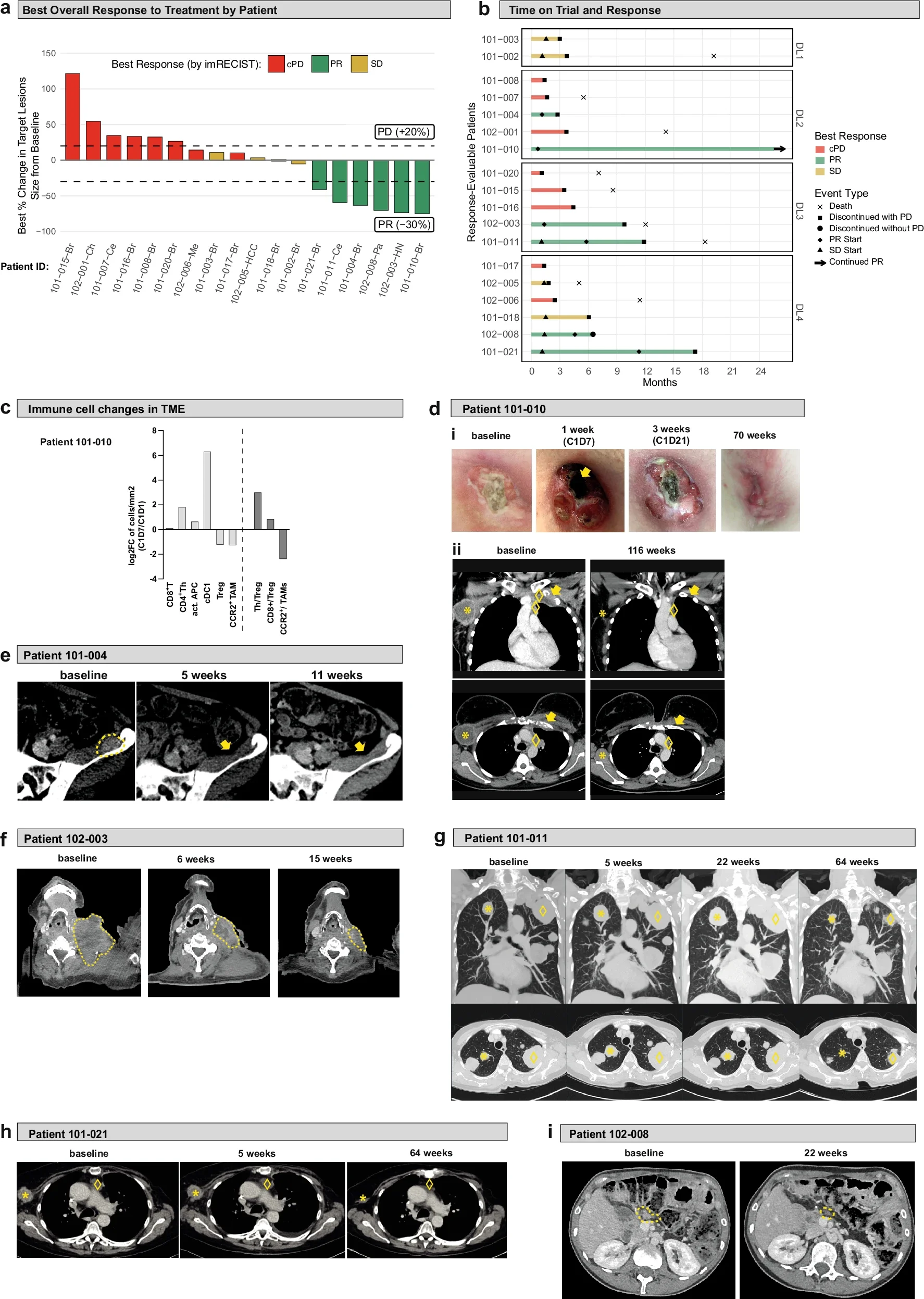
Six patients had a partial response, with several responses lasting more than a year. The trial reported response rates for two populations, making the denominator important when interpreting the results.
- Objective response rate. Six of 21 patients in the efficacy population responded (28.6%). Among the 18 patients who completed at least two cycles and were evaluable for response, the rate was 33.3%.
- Tumor types. Three responses occurred in breast cancer, including two in ER-positive/HER2-negative disease and one in PD-L1-negative triple-negative disease. One response each occurred in cervical adenocarcinoma, oral squamous cell carcinoma, and pancreatic cancer.
- Prior checkpoint inhibition. The patient with oral squamous cell carcinoma had previously progressed on nivolumab. Only four patients in the cohort had received a checkpoint inhibitor, so whether tolinapant can help overcome acquired resistance remains an open question.
Safety and dose selection
Investigators observed no dose-limiting toxicities during the initial six-week assessment and no grade 4 or 5 treatment-related adverse events. Pneumonitis at higher doses was an important finding for subsequent dose selection.
- Common treatment-related events. Rash and elevated alanine aminotransferase each occurred in 43% of patients. Elevated lipase and aspartate aminotransferase each occurred in 30%, and nausea occurred in 26%.
- Grade 3 events. Elevated lipase occurred in 13% of patients. Investigators also reported isolated cases of grade 3 nausea, eosinophilia, and lymphopenia.
- Pneumonitis. Four patients (17%) developed grade 1–2 pneumonitis at higher dose levels. All cases resolved, either spontaneously or with corticosteroids and dose modification.
The model-defined maximum tolerated dose of tolinapant was 180 mg. After considering safety, drug exposure, biological activity, and preliminary efficacy, investigators selected 150 mg once daily on days 1–7 of each 21-day cycle as the initial recommended phase II dose.
What changed before the first pembrolizumab dose?
Inflammatory signaling was already more prominent at baseline in tumors from patients who later responded, particularly in the TNF/NF-κB pathway. After seven days of tolinapant alone, interferon and IL-6/JAK/STAT3 signaling increased in both responders and nonresponders, with more pronounced changes in responders.
Paired biopsies from two patients offered a closer look at what happened inside individual tumors. One showed changes in the immune cells present, while the other provided evidence of the proposed cell-death mechanism.
- Immune-cell changes in breast cancer. In a patient with ER-positive breast cancer who later responded, the day-7 biopsy showed more CD4+ helper T cells and activated type 1 conventional dendritic cells, alongside fewer regulatory T cells and CCR2+ tumor-associated macrophages. This tumor already had high PD-L1 expression and the highest baseline tumor-infiltrating lymphocyte count in the cohort, which limits what the case can tell us about tumors with little preexisting immune activity.
- Evidence of ripoptosome assembly. In a second patient, investigators detected interactions between RIPK1 and caspase-8 in paired biopsies. This finding was consistent with the proposed mechanism of inflammatory apoptosis.
What distinguished responders from nonresponders?
Investigators also examined whether features in blood and tumor tissue were associated with response. The timing of the findings matters. Some differences were evident before treatment, while others emerged after therapy began.
- Circulating chemokines. After treatment, nonresponders had increases in 15 plasma proteins, including seven chemokines associated with immune-cell recruitment. This pattern raised the possibility that recruitment of suppressive immune cells limited the antitumor response.
- T-cell receptor diversity. Responders had greater T-cell receptor diversity in peripheral blood at baseline. Within the tumors, receptor diversity was similar between groups.
- Tumor antigenicity. Responders had a higher median baseline immunopeptidome mutation burden (12 vs. 4, p = 0.0082). Predicted neoantigen burden was also numerically higher (57.7 vs. 16.2), although this difference did not reach statistical significance (p = 0.061).
What does ASTEROID add?
One of ASTEROID’s most informative features was the timing of the biopsies. Sampling tumors after tolinapant and before pembrolizumab allowed investigators to observe early inflammatory changes and, in one patient, evidence consistent with the cell-death pathway the drug was designed to engage.
The clinical question is whether those changes improve the chance or duration of response to PD-1 blockade. Six partial responses in a small, single-arm trial provide a reason to investigate. Larger controlled studies are needed to determine what tolinapant adds to pembrolizumab and whether the immune features observed in ASTEROID can identify patients most likely to benefit.
Written by Mané Sayian, PharmD
Read Full Article Here