
An updated meta-analysis published in Cancer Cell links antibiotic exposure to shorter survival during immune checkpoint inhibitor treatment, highlighting the gut microbiome as a potentially modifiable factor in immunotherapy outcomes.
Immune checkpoint inhibitors (ICIs) have transformed cancer treatment, improving survival across multiple malignancies and expanding into earlier stages of disease. However, not all patients benefit from immunotherapy, and primary or acquired resistance remains a major challenge. While established biomarkers such as PD-L1 expression, tumor mutational burden, and microsatellite instability help guide treatment decisions, increasing evidence suggests that factors beyond the tumor itself can influence therapeutic outcomes. Among these, the gut microbiome has emerged as an important regulator of antitumor immunity, raising questions about how commonly prescribed medications may affect the effectiveness of checkpoint blockade.
Antibiotics are particularly relevant because they are frequently prescribed to patients with cancer, often for infections associated with advanced disease, chemotherapy, or treatment-related complications. Although essential for managing bacterial infections, antibiotics can also disrupt intestinal microbial communities involved in immune regulation, potentially interfering with the biological processes required for an effective response to immunotherapy.
An updated meta-analysis published in Cancer Cell, titled Antibiotics and Outcomes of Cancer Immunotherapy: An Updated Meta-Analysis and Clinical Applications, by Serena Porcari, Laura A. Bolte, Johannes R. Björk, and colleagues from the Seerave Global Oncobiome Network, provides a comprehensive assessment of this relationship. Analyzing 116 independent cohorts involving 97,850 patients, the investigators found that antibiotic exposure was associated with significantly shorter overall survival and progression-free survival among patients receiving ICIs. The study also reviewed the biological mechanisms connecting antibiotic-induced microbiome disruption with immunotherapy resistance and discussed how antibiotic stewardship and emerging microbiome-directed interventions could influence future clinical practice.
Why the Gut Microbiome Matters for Immunotherapy
The gut microbiome consists of diverse microorganisms that interact continuously with the immune system, influencing immune-cell development, inflammatory signaling, and systemic immune responses. Although these microorganisms primarily inhabit the gastrointestinal tract, their effects extend to distant tissues, including tumors, where microbial metabolites and immune signals can influence antigen presentation, T-cell activation, and the activity of immune checkpoint inhibitors.
Previous studies have identified differences in microbial composition between patients who respond to ICIs and those who develop resistance. Certain bacterial populations, including Bifidobacterium species and butyrate-producing bacteria such as Faecalibacterium prausnitzii, have been associated with favorable immunotherapy outcomes in specific clinical settings. Experimental studies have also demonstrated that depletion of intestinal microorganisms with broad-spectrum antibiotics can reduce the antitumor activity of PD-1 and CTLA-4 inhibitors, while fecal microbiota transplantation from responding patients can restore treatment sensitivity in some animal models.
Antibiotic exposure can alter the intestinal microbiome within days, reducing beneficial anaerobic bacteria while allowing other microorganisms, including potentially harmful pathobionts, to expand. These changes may persist long after antibiotic treatment has ended, depending on the antimicrobial agent, treatment duration, and baseline microbial composition. Importantly, the consequences extend beyond changes in bacterial abundance, because antibiotics can also disrupt microbial metabolites and immune-regulatory pathways involved in antitumor responses. This provides a biological rationale for investigating whether antibiotic exposure influences outcomes in patients receiving immunotherapy, although the magnitude of these effects in humans remains uncertain.
Study Design: Evidence From 116 Cohorts and 97,850 Patients
To evaluate the clinical relationship between antibiotic exposure and immunotherapy outcomes, the investigators performed a systematic review and meta-analysis following PRISMA recommendations. The literature search included PubMed, Scopus, ISI Web of Science, and relevant international conference abstracts published between 2015 and 2025, with the search updated through September 2025. The final analysis included 116 independent cohorts from 29 countries, representing 97,850 patients treated with immune checkpoint inhibitors across several malignancies and treatment settings.
Most patients had advanced disease, with 78.5% classified as having stage IV cancer. Non-small cell lung cancer (NSCLC) represented the largest proportion of the population at 75.8%, followed by urothelial carcinoma (9.9%), melanoma (4.1%), hepatobiliary cancers (2.4%), hepatocellular carcinoma (2.1%), and renal cell carcinoma (1.4%). Patients received different immunotherapy regimens, including PD-1 and PD-L1 inhibitors, CTLA-4-directed therapy, dual checkpoint blockade, and combinations of chemotherapy with immunotherapy. Nearly half of the population received chemo-immunotherapy, reflecting the increasing use of combination strategies in contemporary oncology.
Overall, 30,491 patients (31.2%) received antibiotics around immunotherapy initiation, demonstrating how frequently antimicrobial treatment is required in this population. The most commonly reported antibiotics included beta-lactams, fluoroquinolones, and macrolides, with a median treatment duration of 10 days. Most prescriptions were associated with documented infections, particularly respiratory and urinary tract infections, while a smaller proportion involved prophylactic administration. The investigators evaluated overall survival (OS) and progression-free survival (PFS) and performed subgroup analyses to explore whether the observed associations differed according to antibiotic exposure timing, performance status, cancer type, and treatment regimen.
Antibiotic Exposure Was Associated With Shorter Overall and Progression-Free Survival
The meta-analysis demonstrated a significant association between antibiotic exposure and unfavorable survival outcomes among patients receiving immune checkpoint inhibitors. Overall survival data were available from 110 studies involving 96,550 patients, including 30,077 who received antibiotics. The pooled analysis showed that antibiotic exposure was associated with a 49% higher hazard of death compared with no antibiotic exposure (HR 1.49; 95% CI, 1.34–1.65). Progression-free survival was evaluated in 91 studies involving 30,480 patients, including 9,395 exposed to antibiotics, and demonstrated a 44% higher hazard of progression or death (HR 1.44; 95% CI, 1.31–1.58).
These findings are consistent with earlier meta-analyses, despite the substantially larger population included in the updated investigation. However, considerable heterogeneity was observed between studies, reflecting differences in patient characteristics, tumor types, immunotherapy regimens, antibiotic exposure definitions, and clinical circumstances. The investigators emphasized that these results demonstrate an association rather than causation, because patients requiring antibiotics may also have infections, comorbidities, or other unfavorable prognostic characteristics that independently influence survival.
One of the most clinically relevant findings concerned the timing of antibiotic exposure relative to immunotherapy initiation. The strongest association with unfavorable outcomes was observed among patients who received antibiotics during the 60 days preceding ICI initiation. In this subgroup, which included 5,147 patients from 21 studies, antibiotic exposure was associated with shorter OS (HR 1.79; 95% CI, 1.39–2.30) and PFS (HR 1.57; 95% CI, 1.31–1.88). Exposure within a broader period extending from 60 days before to 60 days after treatment initiation was also associated with shorter survival, while antibiotics administered after ICI initiation showed a significant association with OS but a less certain association with PFS.
Although these findings suggest that the period preceding immunotherapy may be particularly relevant, the authors cautioned against interpreting differences between exposure windows as evidence that later antibiotic administration is less harmful. Retrospective studies assessing antibiotic exposure after treatment initiation are susceptible to immortal time bias, while differences in infection severity and baseline health may also influence outcomes. Consequently, the observed temporal pattern remains exploratory and requires prospective validation.
The investigators also examined whether poor baseline performance status could explain the association between antibiotics and survival. Among 7,684 patients with favorable ECOG performance status, antibiotic exposure remained associated with shorter OS (HR 1.43; 95% CI, 1.16–1.77) and PFS (HR 1.43; 95% CI, 1.21–1.69). This suggests that patient frailty alone does not fully account for the observed relationship, although residual confounding, particularly confounding by the indication for antibiotic treatment, cannot be excluded.
Do the Findings Differ Across Cancer Types and Treatment Regimens?
The relationship between antibiotic exposure and immunotherapy outcomes was also examined across different malignancies. In NSCLC, the largest tumor-specific subgroup with available survival data, involving 53,560 patients from 43 studies, antibiotic exposure was associated with shorter OS (HR 1.41; 95% CI, 1.26–1.57) and PFS (HR 1.39; 95% CI, 1.17–1.65). A similar association was observed in urothelial carcinoma, with an OS HR of 1.42 (95% CI, 1.27–1.58), although progression-free survival findings were less consistent. The strongest associations were reported in renal cell carcinoma, where antibiotic exposure was linked to shorter OS (HR 2.05) and PFS (HR 2.27).
In contrast, associations were weaker or statistically uncertain in hepatocellular carcinoma and melanoma. These differences may reflect variation in tumor biology, study populations, antibiotic exposure patterns, and the amount of available evidence rather than a true absence of biological effects in particular cancers. Because the meta-analysis was dominated by patients with NSCLC and advanced disease, the findings are most directly applicable to these populations, while conclusions regarding less represented malignancies require additional research.
The investigators also assessed antibiotic exposure in patients receiving chemo-immunotherapy, an increasingly common approach in lung cancer and other malignancies. Among 49,319 patients treated with chemotherapy and ICIs, antibiotic exposure was associated with shorter OS (HR 1.39; 95% CI, 1.18–1.64) and PFS (HR 1.44; 95% CI, 1.05–1.97). Similar associations were observed among patients receiving immunotherapy without chemotherapy, although the pooled estimates differed. These findings suggest that the relationship between antibiotic exposure and survival extends across multiple immunotherapy strategies, but they do not establish that antibiotics have a stronger biological effect during combination treatment.
How Could Antibiotics Interfere With Antitumor Immunity?
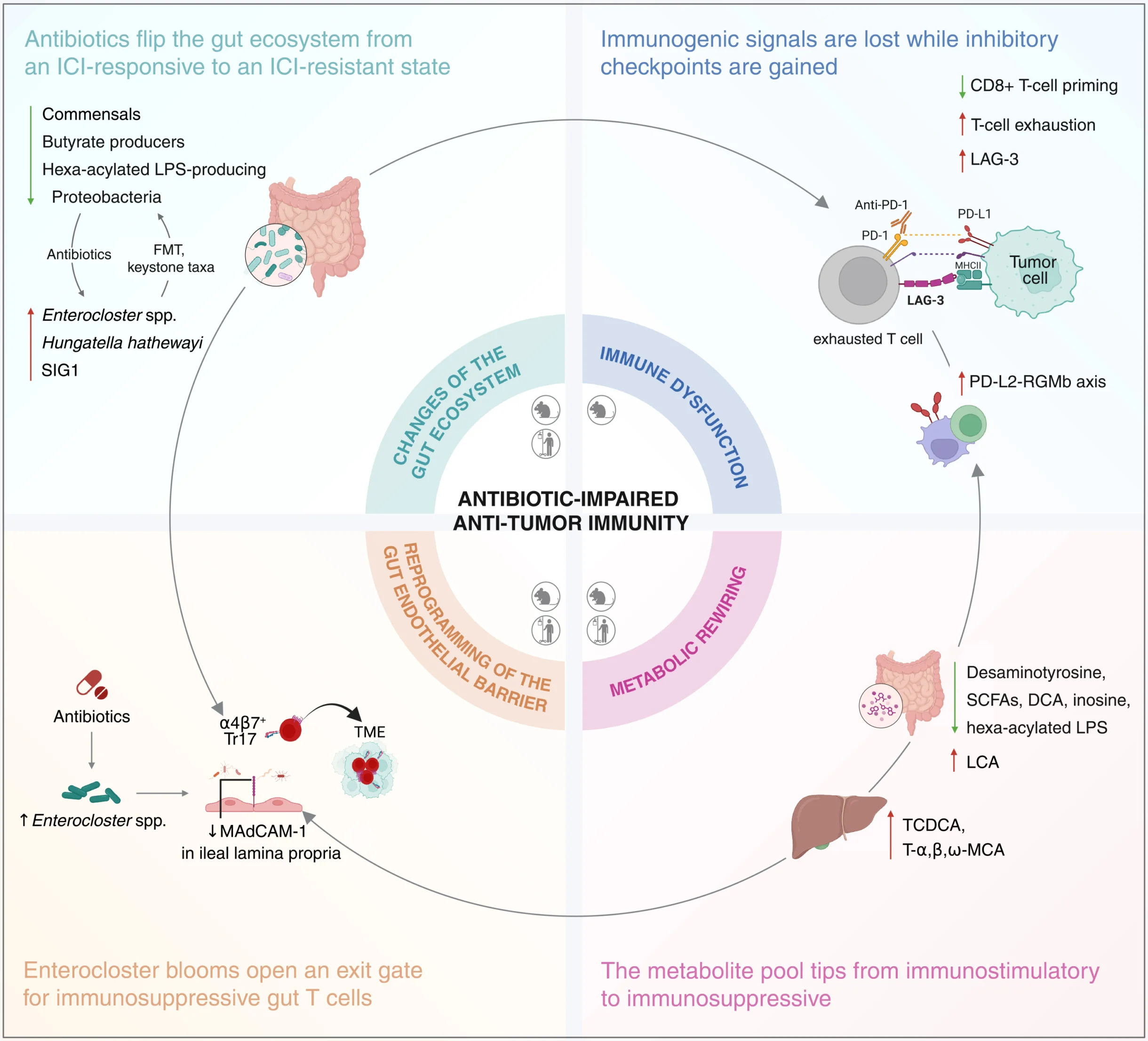
Beyond the epidemiological findings, the authors reviewed experimental evidence describing several interconnected mechanisms through which antibiotic-induced microbiome disruption may impair immune checkpoint inhibitor activity. These mechanisms involve changes in microbial composition, altered immune-cell function, disruption of intestinal immune-cell trafficking, and modifications in microbiome-derived metabolites. Although supported by preclinical studies, their relative contributions to immunotherapy resistance in humans remain incompletely understood.
One important mechanism involves the loss of beneficial microorganisms that support antitumor immune responses. Broad-spectrum antibiotics can deplete bacteria associated with favorable ICI outcomes, including Bifidobacteriumspecies and butyrate-producing organisms such as Faecalibacterium prausnitzii and Roseburia hominis. At the same time, antibiotic exposure may favor the expansion of potentially immunosuppressive microorganisms, including certain Enterocloster species and members of the Enterobacteriaceae family. These microbial changes can influence the activation of dendritic cells, the differentiation of cytotoxic T cells, and the immune signals required for effective tumor recognition.
Experimental studies have demonstrated that antibiotic-induced dysbiosis can reduce the antitumor activity of PD-1 and CTLA-4 inhibitors, while restoration of favorable microbial communities through fecal microbiota transplantation or selected bacterial supplementation can improve treatment sensitivity in certain animal models. However, the relationship is not uniform across all experimental settings. In some models, targeted antimicrobial treatment has improved antitumor immunity by eliminating bacteria that promote local immunosuppression, such as Fusobacterium nucleatum. This highlights the importance of microbial composition and function rather than assuming that all antibiotic-associated changes have identical effects.
Another mechanism involves altered immune-cell trafficking between the intestine and tumor microenvironment. The authors highlighted research on mucosal addressin cell adhesion molecule-1 (MAdCAM-1), which helps retain specific immune-cell populations within intestinal lymphoid tissues. Antibiotic-associated expansion of certain Enteroclosterspecies can reduce intestinal MAdCAM-1 expression, potentially allowing immunosuppressive regulatory T cells to migrate toward tumor-draining lymph nodes and tumors. This redistribution may weaken antitumor immune responses and reduce checkpoint inhibitor effectiveness. Supporting clinical observations have linked lower circulating soluble MAdCAM-1 levels with antibiotic exposure, intestinal dysbiosis, and poorer immunotherapy outcomes, although the pathway requires further validation in patients.
Antibiotics can also alter microbial metabolites that regulate immune activity. Changes in short-chain fatty acids, bile acid metabolism, and other microbiome-derived compounds may influence dendritic-cell activation, interferon signaling, T-cell differentiation, and immune-cell survival. For example, experimental studies suggest that certain microbial metabolites, including desaminotyrosine, can enhance type I interferon signaling and support antitumor immunity, while antibiotic-associated changes in bile acid metabolism may promote immunosuppressive pathways. The authors additionally discussed potential microbiome-independent effects of selected antibiotics on mitochondrial function and inflammatory signaling, which could influence immune-cell activity. Together, these mechanisms provide a biological explanation for the observed associations, but the meta-analysis itself did not include microbiome measurements and therefore could not establish whether dysbiosis directly mediated the survival differences.
Gut Microbiome as a Predictor of Dual Checkpoint Inhibition Benefit in Non–Small Cell Lung Cancer
Does Antibiotic Class or Duration Influence Immunotherapy Outcomes?
The impact of antibiotics on the gut microbiome varies according to antimicrobial spectrum, treatment duration, dose, route of administration, and the patient’s baseline microbial composition. Broad-spectrum antibiotics generally produce greater disruption of intestinal microbial communities than narrower-spectrum agents, while prolonged or repeated exposure may result in deeper and more persistent changes. Even relatively short courses can alter microbial populations involved in immune regulation, particularly in patients with low baseline microbial diversity.
The review highlighted observational evidence suggesting that longer or repeated antibiotic treatment may be associated with poorer outcomes during immunotherapy. In one cohort of 291 ICI-treated patients, multiple or prolonged antibiotic exposure was associated with shorter survival (HR 1.90). However, the updated meta-analysis could not reliably determine the independent effects of specific antibiotic classes, administration routes, or treatment durations because these characteristics were inconsistently reported across studies.
These limitations are important for clinical interpretation. Although some studies suggest that broad-spectrum agents and combination regimens may have greater effects on the microbiome, the available evidence does not justify selecting or avoiding particular antibiotics solely on the basis of potential immunotherapy interactions. Antibiotic choice must remain guided by the suspected or confirmed infection, antimicrobial susceptibility, patient characteristics, and established infectious disease recommendations.
The authors also discussed evidence suggesting that antibiotic exposure may influence immune-related adverse events (irAEs). Previous observational studies have associated antibiotic use with increased risks of immune-mediated toxicity, including colitis, raising the possibility that microbiome disruption could contribute to both reduced immunotherapy efficacy and altered immune tolerance. However, these findings remain observational, and the present meta-analysis did not directly pool irAE outcomes. Further prospective research will be necessary to determine whether specific microbiome changes influence the risk or severity of immune-related complications.
What Do These Findings Mean for Clinical Practice?
The clinical implications of this research require a careful balance between protecting the gut microbiome and ensuring effective treatment of bacterial infections. Antibiotics remain essential in oncology, particularly for patients with serious infections, febrile neutropenia, or other potentially life-threatening complications. The findings should therefore not discourage appropriate antibiotic treatment or lead clinicians to delay antimicrobial therapy when it is indicated.
Instead, the authors emphasize the importance of antibiotic stewardship in patients receiving immune checkpoint inhibitors. This includes confirming bacterial infections whenever feasible, following institutional antimicrobial guidelines, selecting the narrowest effective antibiotic spectrum, and prescribing treatment for the shortest clinically appropriate duration. Reassessment of antibiotic necessity during treatment and collaboration between oncologists and infectious disease specialists may help reduce unnecessary exposure while maintaining effective infection management.
The study also highlights the importance of avoiding antibiotic prescriptions without a clear clinical indication, including unnecessary prophylactic use. However, it does not establish that reducing antibiotic exposure will directly improve immunotherapy survival outcomes. Prospective studies will be needed to determine whether changes in prescribing practices can preserve microbiome function and translate into measurable improvements in cancer treatment efficacy.
Beyond antibiotic stewardship, the review discusses emerging strategies to prevent or reverse microbiome disruption. These include dietary approaches that support microbial diversity, microbiome-based diagnostics, fecal microbiota transplantation, and live biotherapeutic products designed to restore beneficial bacterial communities. Early clinical studies have suggested that microbiome-directed interventions may improve immunotherapy responses in selected patients, while experimental research continues to identify microbial species and metabolites involved in antitumor immunity.
Nevertheless, these approaches remain investigational in the context of antibiotic-associated immunotherapy resistance. Routine microbiome testing, fecal microbiota transplantation, or bacterial supplementation cannot currently be recommended solely to counteract antibiotic exposure during checkpoint inhibitor treatment. Future studies will need to establish which patients are most likely to benefit, identify reliable biomarkers of clinically relevant dysbiosis, and demonstrate that microbiome restoration improves survival or other meaningful treatment outcomes.
What Questions Remain Unanswered?
Despite the large patient population and consistency with previous research, the study has several important limitations. Most included cohorts were observational, making it difficult to separate the potential effects of antibiotics from the underlying conditions requiring antimicrobial treatment. Patients receiving antibiotics may have more severe infections, additional comorbidities, greater disease burden, or other unfavorable characteristics that independently affect survival. Considerable heterogeneity between studies further complicates interpretation, particularly when comparing different tumor types, treatment regimens, and exposure windows.
Another limitation is the absence of microbiome data within the meta-analysis. Although experimental studies provide evidence that antibiotic-induced dysbiosis can impair immunotherapy activity, the clinical analysis could not determine whether microbiome disruption was responsible for the observed survival differences or whether direct drug effects and confounding factors contributed. The investigators were also unable to perform reliable analyses according to antibiotic class, administration route, or duration, and the predominance of advanced NSCLC limits generalizability to other malignancies and earlier treatment settings.
To address these gaps, the authors call for prospective studies that systematically document antibiotic exposure, including timing, indication, drug class, dose, route, and duration, while incorporating longitudinal microbiome sampling and immune profiling. Such investigations could help determine whether specific microbial changes predict immunotherapy resistance, identify clinically relevant exposure windows, and evaluate whether targeted microbiome interventions can improve patient outcomes.
Conclusion
The updated meta-analysis by Porcari and colleagues provides compelling evidence of an association between antibiotic exposure and poorer survival among patients receiving immune checkpoint inhibitors. Across 116 cohorts involving 97,850 patients, antibiotic exposure was associated with a 49% higher hazard of death and a 44% higher hazard of progression or death, with the strongest observed association among patients who received antibiotics during the 60 days preceding immunotherapy initiation.
The accompanying mechanistic evidence suggests that antibiotic-induced disruption of the gut microbiome may influence antitumor immunity through changes in microbial composition, impaired immune-cell activation, altered immune-cell trafficking, and modifications in microbiome-derived metabolites. However, the observational nature of the clinical evidence prevents causal conclusions, and further prospective research is required to determine whether protecting or restoring the microbiome can directly improve immunotherapy outcomes.
For current clinical practice, the most important implication is the need for responsible antibiotic prescribing without compromising infection management. As microbiome research continues to advance, understanding how antimicrobial exposure interacts with antitumor immunity may help refine supportive care strategies and open new opportunities for improving the effectiveness of cancer immunotherapy.
Read Full Article Here